In a media landscape where every advertising surface is contested and consumer attention is a genuinely scarce resource, coaster marketing represents something unusual: a format that delivers extended, relaxed, undistracted brand exposure to a captive audience — for pennies per impression. A custom drink coaster sitting in front of a bar or restaurant patron throughout their visit creates 30-90 minutes of repeated brand contact in one of the most relaxed, social, and brand-receptive states a consumer occupies. This is not a niche tactic. It is a high-performing, dramatically underutilized guerrilla marketing format that savvy brands across multiple categories are deploying with genuine results.
American Guerrilla Marketing executes venue-based and street-level campaigns across 50+ U.S. markets. We operate out of Industry City, Brooklyn, NY, and we integrate coaster programs into broader campaign stacks for clients who want to reach specific urban demographic audiences in their nightlife, dining, and hospitality environments. Coaster campaigns work best not as standalone tactics but as components of a coordinated approach that combines venue-based elements with street-level presence and digital integration. This guide covers how coaster marketing works, who benefits most from it, how to execute it effectively, and how to integrate it with a broader guerrilla marketing strategy.
The Dwell-Time Advantage: Why Coasters Are Different
Most advertising formats measure their effectiveness in seconds of viewer attention: a billboard delivers 2-3 seconds of attention per passing vehicle; a digital display ad receives 0.5-2 seconds of engagement; a television commercial receives 15-30 seconds of exposure to a partially attentive viewer. A drink coaster in a bar or restaurant sits in front of a consumer for the duration of their drink — typically 15-45 minutes per drink, often multiple drinks over the course of an evening. That is 30-180 minutes of brand presence in a single consumer interaction.
The Relaxed Attention Environment
Beyond raw dwell time, bar and restaurant environments create a qualitatively different attention context than most advertising exposures. The consumer is relaxed, social, and in a state of open attention rather than the defensively filtered attention of a commuter or a scrolling social media user. Brand messages encountered in this state of relaxed attention consistently score higher in recall and favorability surveys than comparable messages encountered in more guarded contexts. The combination of extended dwell time and high-quality attention creates an advertising effectiveness profile that coaster marketing’s modest per-unit cost dramatically understates.
Tactile Engagement
Coasters are physical objects that consumers touch, move, look at, and interact with throughout their visit. The tactile engagement with a printed coaster creates a different brand experience from passive visual exposure — picking up the coaster to look at the print, setting down a glass on it, moving it around the table are all forms of physical interaction with the brand presence that reinforce the memory encoding of the message. Research on tactile marketing consistently shows higher recall for brand messages encountered through physical objects compared to equivalent screen-based exposures.
Who Benefits Most from Coaster Marketing
Coaster marketing is well-suited for any brand targeting the social, nightlife, and dining occasion audience — but several categories derive particularly strong ROI from bar and restaurant placement:
Alcohol and Beverage Brands
The natural home of coaster marketing is alcohol brands — spirits, beer, wine, and ready-to-drink cocktail brands placing branded coasters in on-premise venues where their products are sold or could be sold. A spirits brand’s coaster at the bar where a consumer is already making drink choices creates a point-of-decision brand presence that influences the next order directly. Beyond brand familiarity, coaster campaigns for alcohol brands at on-premise accounts can include promotional mechanics (scan the QR code for a free shot, show the bartender for a branded promotional offer) that create direct sales conversion alongside brand awareness.
Entertainment and Event Brands
Concert promoters, event organizers, nightlife venues, and entertainment apps that want to reach bar and restaurant-going audiences in their natural environment find coaster campaigns exceptionally well-targeted. A concert announcement or festival lineup coaster in the bars and restaurants where the target audience already spends Friday and Saturday nights reaches the exact consumer in the exact social context where entertainment purchasing decisions are most commonly made — during the outing with friends where “what should we do next weekend?” is an active conversation.
Consumer Technology and App Marketing
Food delivery apps, dating apps, social media platforms, and consumer technology brands targeting young urban professionals have found coaster campaigns highly effective for QR-driven app downloads and user acquisition. A DoorDash or Uber Eats promo code coaster, a Hinge or Bumble awareness coaster in bars frequented by the target demographic, or a Spotify or Apple Music offer coaster creates a relevant brand touchpoint in a highly targeted demographic environment at costs that compare favorably to digital user acquisition on a cost-per-install basis.
Cannabis Brands in Restricted Advertising Markets
Cannabis brands face significant restrictions on conventional advertising channels — no major digital platforms, limited OOH in many markets, no broadcast. Venue-based marketing in cannabis-friendly states has become an important alternative channel, and coaster campaigns in bars, restaurants, and hospitality venues in legal cannabis markets create brand awareness within the restrictions that govern the category. Our guerrilla marketing experience with restricted product categories gives us specific expertise in compliant, effective cannabis brand venue marketing.
Executing a Coaster Campaign: The Mechanics
Coaster campaigns require three elements: production (printing the coasters), venue placement (securing agreements with target venues), and distribution logistics (getting the coasters into those venues and ensuring they are actually placed for consumer use). The quality of execution on each of these elements determines campaign effectiveness as much as creative design.
Coaster Production: Format and Print Specifications
Standard marketing coasters are typically 3.5-inch or 4-inch round or square format, printed on 80-100pt pulpboard (the absorbent material standard for bar coasters) or premium gloss stocks for non-absorbent decorative coasters. Full-color printing on both sides is standard — the brand-facing side creates the advertising exposure, and a secondary reverse side can carry additional information, QR codes, or promotional mechanics. Quantities of 5,000-25,000 coasters are typical for neighborhood or city-scale campaigns; national programs at major chains may run 100,000-500,000+ units. Per-unit printing costs range from $0.05-$0.25 depending on quantity, print quality, and material specification.
Venue Selection and Placement Strategy
Venue selection is the most critical decision in coaster campaign planning. A coaster in the wrong venue — wrong demographic, wrong occasion, wrong neighborhood — delivers zero effective impressions regardless of how many coasters are physically placed. The right venues are those where your target audience is already present, in the right social frame of mind, with the right occasion fit for your brand message. For a spirits brand, that might be craft cocktail bars in target neighborhoods. For a food delivery app, it might be casual dining restaurants and gastropubs in the delivery zone. For an entertainment brand, it might be the music venues, comedy clubs, and bars that attract the entertainment-oriented social consumer.
QR Code Integration for Measurability
The single most important coaster campaign upgrade of the past five years is QR code integration. A trackable QR code on the coaster — driving to a custom landing page, promotional offer, app download link, or social media follow — transforms a traditionally unmeasurable venue impression into a direct response metric. QR scan rates from coaster campaigns vary widely based on the strength of the offer or content incentive, but well-designed promotional mechanic coasters in target-matched venues consistently produce scan rates of 1-5% of total coasters placed — which at the impression volumes of a well-placed coaster campaign creates meaningful, measurable action volume.
Integrating Coasters with a Broader Campaign Stack
Coaster campaigns work best when they are part of a coordinated broader campaign rather than standalone tactics. The coaster creates the intimate, dwell-time brand encounter inside the venue; a broader campaign stack creates the surrounding context that makes the coaster message land with recognition and positive association rather than in isolation.
Coordinating with Poster campaigns and Street Presence
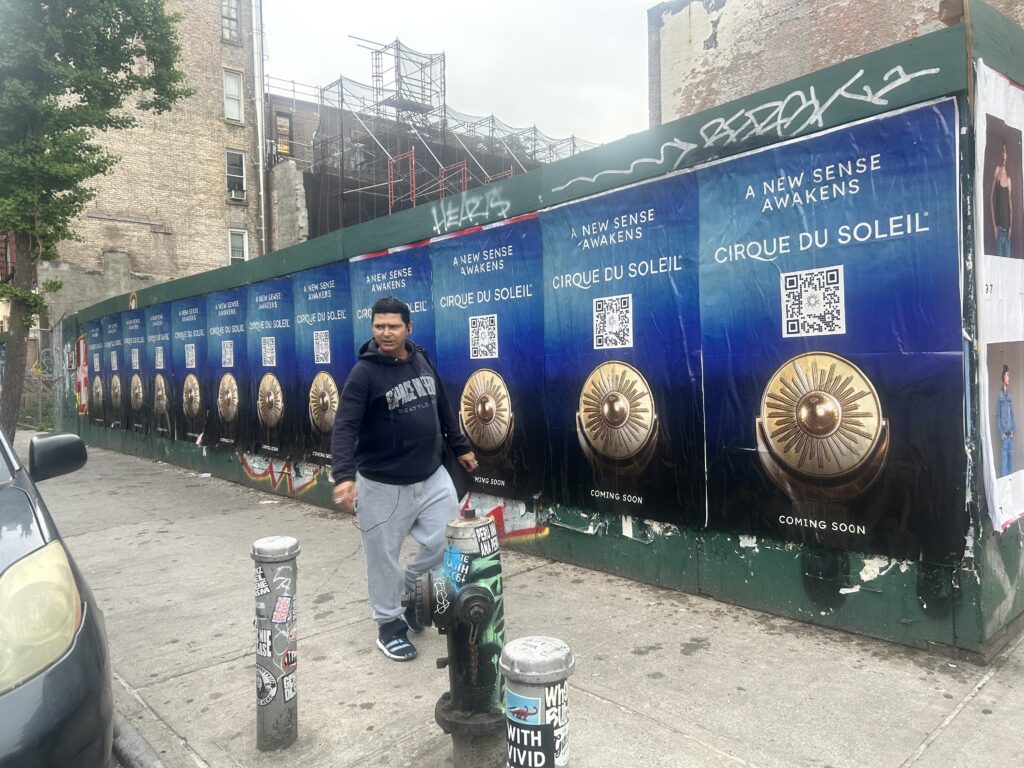
Coordinating a coaster campaign with poster campaigns and street-level presence in the same target neighborhoods creates a campaign that surrounds the consumer — they encounter the brand on the street approaching the venue, again inside the venue on the coaster. The repetition across contexts builds the kind of brand familiarity that single-context exposure cannot achieve. For campaigns targeting specific urban neighborhoods in New York, Chicago, Los Angeles, or other major cities, this coordination is standard practice for our team.
Brand Ambassador Programs in Target Venues
Pairing coaster placement with brand ambassador programs inside target venues — ambassadors sampling products, distributing branded materials, or simply creating brand presence through staff interaction — amplifies the coaster campaign with human-scale engagement. An ambassador who hands a consumer the first coaster with the drink, explains the promotion, and answers questions about the product creates a brand interaction of entirely different quality than a passive coaster discovery. For product launch campaigns in venue channels, this ambassador-plus-coaster approach consistently outperforms coaster-only on both awareness and conversion metrics.
LED Truck Presence in Entertainment Districts
Our LED billboard trucks deployed in entertainment districts where coaster campaigns are running create macro-level awareness that primes audiences before they enter the venues where coasters are placed. A consumer who has seen the LED truck campaign on the street and then encounters the brand’s coaster inside the bar experiences a brand reinforcement effect that converts casual awareness into active consideration. This street-to-venue sequence is one of the more powerful multi-touch patterns in urban guerrilla marketing campaign design.
Measuring Coaster Campaign Performance
Coaster campaign measurement has improved significantly with QR integration but remains more challenging than digital channel measurement. The key metrics for a well-structured coaster campaign include: QR code scan rate (total scans divided by estimated coaster distribution), conversion rate from QR landing page (scans to desired action — app download, promotional redemption, form fill), venue-level performance comparison (identifying which venue types and neighborhoods produce the best scan rates), and post-campaign brand recall in the target demographic through survey research.
Setting Realistic Benchmarks
Realistic coaster campaign benchmarks depend heavily on offer structure and venue matching. Generic brand awareness coasters with no promotional mechanic can expect 0.1-0.5% QR engagement rates. Coasters with compelling promotional offers (discount code, free item, exclusive content) in well-matched venues can reach 2-7% engagement rates. The investment in a strong promotional mechanic and accurate venue selection pays off significantly in measurable engagement — the production cost difference between a generic coaster and a QR-integrated promotional coaster is negligible relative to the engagement differential.
Frequently Asked Questions: Coaster Marketing
What is coaster marketing and how does it work?
Coaster marketing involves custom-printed drink coasters distributed through bars, restaurants, and hospitality venues to deliver brand messages to guests during their visit. Coasters create 30-90 minutes of repeated brand exposure per visit — exceptional dwell time compared to virtually any other advertising format — at costs significantly below comparable digital or OOH media on a CPM basis.
How much does coaster printing cost for marketing campaigns?
Custom coasters cost $0.05-$0.25 per unit for standard 4-inch formats in quantities of 5,000-50,000. A 10,000-coaster campaign covering 20-30 target venues costs approximately $500-$2,500 for printing plus distribution coordination. The CPM of coaster marketing, measured against actual dwell-time exposures, is typically among the lowest of any physical advertising format.
What types of brands benefit most from coaster marketing?
Alcohol brands, entertainment and event brands, consumer technology and app brands targeting young urban professionals, food delivery and restaurant brands, and cannabis brands in markets where direct advertising is restricted. Any brand wanting to reach engaged social consumers in relaxed, dwell-time environments benefits from well-targeted coaster placement.
How do you distribute marketing coasters to bars and restaurants?
Through direct venue partnerships, distribution networks through coaster marketing specialists, or integration with brand ambassador programs that negotiate and manage venue relationships. Venue selection quality — ensuring bars and restaurants match your target demographic profile — is more important than distribution volume for campaign effectiveness.
Can coasters be used for QR code marketing?
Yes, and this integration has significantly increased coaster marketing’s measurability. QR codes driving to promotional offers, app downloads, or social pages create direct response elements that make coaster campaigns trackable. QR scan rates from coaster campaigns consistently outperform those from standard OOH because the consumer has the coaster in hand at the moment of scan action.
How does coaster marketing fit into a broader guerrilla marketing campaign?
Coasters work best coordinated with poster campaigns on venue exterior surfaces, brand ambassador programs inside the venues, and LED truck presence in surrounding entertainment districts. The coaster creates intimate dwell-time brand contact; the surrounding campaign elements build awareness that makes the coaster message land with recognition rather than in cold isolation.
Frequently Asked Questions
What is why coaster printing is the next big thing in marketing?
American Guerrilla Marketing provides why coaster printing is the next big thing in marketing services across 50+ U.S. markets. Every campaign is planned, scouted, executed, and GPS-documented by our field teams. We work with regional brands and Fortune 500 companies on campaigns that require real street-level execution and documented proof of performance.
How does AGM approach in marketing?
Our process starts with a market consultation to understand your goals, target audience, and budget. We then scout locations, handle any required permissions or permits, coordinate production and installation with our local crews, and provide a full GPS-tagged photo report after the campaign runs.
What markets does American Guerrilla Marketing cover for in marketing?
We operate in 50+ U.S. markets including New York, Los Angeles, Chicago, Miami, Houston, Atlanta, Seattle, Denver, Boston, and dozens of secondary markets. Contact us to confirm availability and pricing for your specific market.
How much does a in marketing campaign cost?
Campaign pricing depends on market, format, quantity, and duration. We work with budgets ranging from targeted single-market runs to national rollouts across multiple cities. Use our RFP Builder or contact us directly for a custom quote based on your specific campaign requirements.
How do I get started with in marketing through AGM?
The fastest way to get started is to submit your campaign details through our RFP Builder at americanguerrillamarketing.com, or contact us directly at [email protected] or (646) 776-2770. Our team typically responds within one business day with availability and initial pricing.