
November 20, 2026
Wheatpasting & Poster Campaigns in Spokane, WA
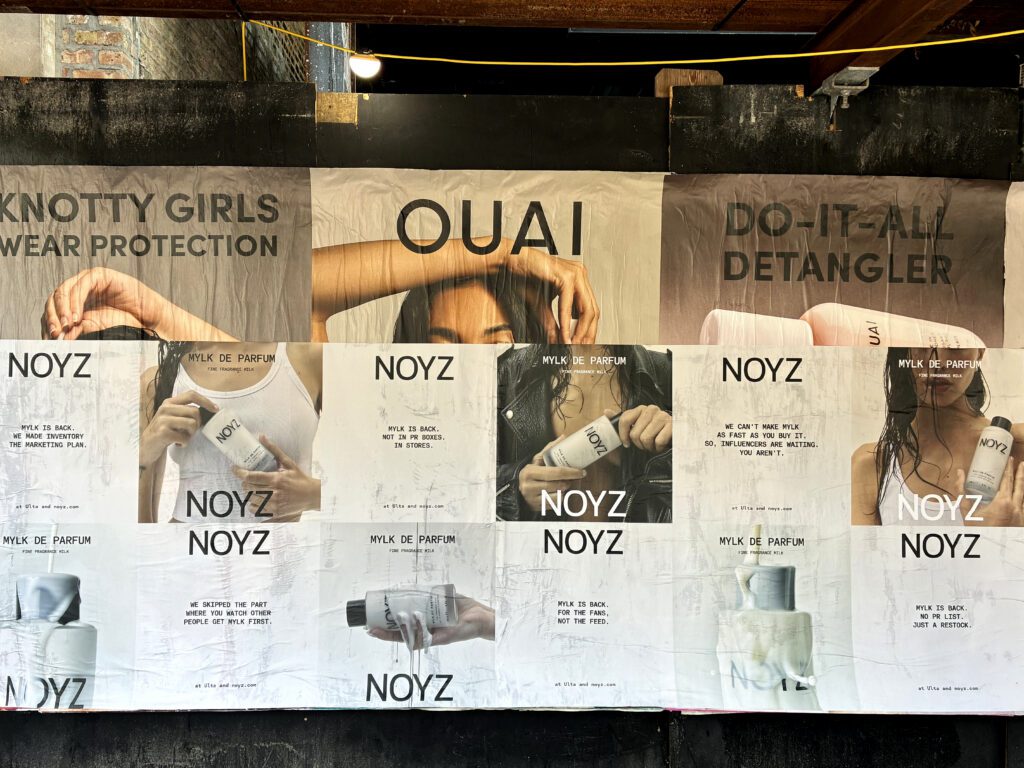
Most of the poster plans that land on my desk for Spokane have one thing in common. They were drawn by someone who has never been to Spokane. They assume a single dense core with a long continuous wall of posting frontage, the way a plan for a much larger city would be drawn, and they assume paste behaves the same in January as it does in July.
Neither of those holds here.
Spokane is a multi-node city with a compact downtown and a ring of small, strongly defined commercial strips that sit a drive apart from each other. Garland, South Perry, Kendall Yards, Browne’s Addition and the blocks around Gonzaga are each walkable on their own. They are not walkable to each other. If you plan Spokane as one route you will either burn the night in the van or you will dump the whole campaign downtown and miss the neighbourhoods where people actually stand still.
And the weather here is not a footnote. Spokane runs a humid continental climate with very cold, snowy winters and short, dry, mostly clear summers. Across the year temperatures typically swing from roughly 26 °F to 88 °F, with December lows near 22 °F and July and August highs near 84 °F. That range is the single biggest constraint on a paste campaign in this city, and it cuts in two opposite directions depending on the month.
This page is about how we actually run poster work in Spokane. Which strips hold attention, who you have to talk to before anything goes up, what the freeze does to a paste line, what the summer sun does to ink, and what I will tell you not to do here.
Spokane is a drive-between, walk-within city
Here is the planning rule I give every Spokane client before we talk about surfaces at all.
Park once per district. Work the strip on foot. Move the vehicle. Repeat.
Downtown Spokane wraps around Riverfront Park and the Spokane River, and it is genuinely compact. One crew on foot can cover the core retail, hotel and office frontage in a single shift without moving the van more than once or twice. That is the easy part of the city.
Everything else is a separate trip. The Garland District sits north of downtown, a small dense commercial strip anchored by the Garland Theater, a cinema that dates to the 1940s, with galleries and antique shops along the frontage. It is the most concentrated run of independent retail frontage outside downtown, and it is maybe a few minutes of walking end to end. South Perry is a near-South Hill neighbourhood strip, independent food and drink led, and it is its own short walk. Browne’s Addition, immediately west of downtown, is a historic residential district that holds the Northwest Museum of Arts and Culture. The Gonzaga area is northeast along the river around E Boone Ave and E Desmet Ave.
Kendall Yards is the exception worth knowing. It sits on the north bank of the river just west of downtown, close enough that it is the one node you can reasonably pair with a downtown shift without losing an hour. It has become one of the city’s strongest food, drink and small-retail corridors, and it runs the Kendall Yards Night Market, a recurring open-air market that pulls a walking crowd into the district on a predictable schedule.
So a realistic Spokane build looks like this. Two people, a van, downtown core on foot first, then across the river into Kendall Yards on the same shift. Garland on a second night. South Perry and the Gonzaga-adjacent commercial frontage on a third. Trying to compress that into one night is how crews end up putting ninety percent of the stock within four downtown blocks and calling it citywide coverage.
The freeze is a hard stop, not a difficulty setting
I will not paste in Spokane in a sustained sub-freezing week, and I will argue with you about it if you ask me to.
Wheat paste is water carrying starch. It needs to wick into the substrate and then dry. In a city that cycles around and below freezing for months, that process fails in a specific and predictable way. The paste skins over at the surface while the water underneath has nowhere to go. Water that does get into the paste line and into the pores of the brick or the plywood expands when it freezes. The first real thaw lifts the edges, and once an edge is lifted the whole sheet is on a clock measured in days.
A poster that fails at the corners looks worse than no poster. It reads as abandoned. In the Garland strip, a half-peeled sheet flapping off a wall is actively working against you.
So the honest seasonal shape of poster work in Spokane is this. Sustained sub-freezing stretches are a no-paste window. Plan those months as vinyl, frame-based placements, window work inside owner-granted glass, or push the spend into a different format entirely. We would rather move you to LED Trucks or projection for a January push than hand you a wall of lifting paper.
Shoulder seasons are workable but need judgement on the night. A day above freezing and a night dropping back below it is the worst combination for a fresh paste line, because the bond has to cure through a freeze on its first night. If the overnight is going below, we either paste early enough to get real cure time in the warmer air or we move the night.
There is a second winter issue that has nothing to do with the bond. Snow, plough spray and de-icing residue load the lower metre of any street-level surface through a Spokane winter. If a placement sits at knee height on a frontage that gets ploughed, I will tell you to raise it or drop it. I have not confirmed the specific de-icing chemistry the city uses, so treat that as a physical caution rather than a claim about any particular product.
Summer in Spokane kills ink, not paper
Flip the calendar and the failure mode flips with it.
Spokane summers are described as short, warm, dry and mostly clear. Annual precipitation is low overall, and a large share of what does fall arrives as winter snow. For a pasted poster that is genuinely good news on one axis and genuinely bad news on another.
The good news first. Low summer rainfall means a well-adhered summer poster in Spokane has a long readable life. This is not a maritime city where a sheet gets soaked every third day and goes pulpy by week two. A sheet that went up clean on a sound surface in June can still be holding structurally in August. The paper is not the constraint.
The sun is. Mostly clear summer skies mean high cumulative UV load, and that lands hardest on south-facing and west-facing stock. What fails is the ink. Uncoated poster stock will visibly fade here well before the paper gives up. Deep blues go chalky. Reds shift. A black-heavy design holds far better than a design carrying a large field of saturated colour.
The practical consequences for artwork, which I would rather tell you before printing than after:
Permission here is a conversation with a shop owner, not a city desk
This is the part of Spokane that surprises out-of-town buyers most, and it is the part that matters most for keeping a campaign clean.
First, the framing I will not move off. Posting is a grey area. It is not something I will describe to you as legal or as illegal. It varies by municipality, enforcement is inconsistent, and the answer in any given spot depends on who owns the surface, what the local ordinance says and whether you have permission. I am not a lawyer and this page is not legal advice.
What I can tell you is the practical shape of the permission question in this specific city.
Spokane’s high-value walking frontage is overwhelmingly privately owned small-business frontage. The Garland strip, South Perry, Kendall Yards. These are owner-operator districts. They have business associations. They have strong neighbourhood identity and the shop owners know each other. The consequence is that in Spokane, the permission conversation is far more often a conversation with an individual shop owner or a district association than a conversation with the city.
That changes how we work here. Owner-granted wall and window placements in those strips are the clean path, and they are almost always the better placement anyway, because the concentrated foot traffic in Garland or South Perry is standing directly in front of those owner-controlled surfaces. The permission-correct placement and the high-performing placement are the same placement.
Riverfront Park and the actively programmed downtown core around it are a different category. That is managed public space with municipal event management attached. Anything in or facing managed park ground should be assumed to sit under event and parks permissions rather than any general street rule, and we treat it that way.
Gonzaga’s campus is private institutional property with its own posted rules and its own patrol presence. The university states that its parking regulations are enforced year-round with heavier patrol during the academic year, which is a fair signal that the campus is actively monitored rather than passively managed. Campus ground and campus-adjacent commercial frontage off campus are two completely different propositions. We work the off-campus side.
And here is an honest gap. I have not established Spokane’s specific enforcement posture toward utility poles, construction hoarding and scaffolding, including how removal is handled in practice and whether enforcement here tends to be complaint-driven or patrol-driven. UNVERIFIED. If a plan depends on pole or hoarding placements in Spokane, that gets confirmed locally before anyone loads a bucket, not after.
What AGM does to reduce risk is the same everywhere and it is not complicated. We seek permission from property owners. We prefer private surfaces. We document what went up and where. We commit to removal. None of that makes a grey area white, and I will not pretend otherwise. It does mean that when a question comes, there is an owner who said yes and a record of the placement.
Build the calendar around Hoopfest, Bloomsday and the basketball season
Spokane’s event calendar is unusually decisive for campaign timing, because one of its events physically takes the downtown grid.
Hoopfest is an outdoor 3-on-3 basketball tournament held in the final week of June. It spreads roughly 450 courts across around 45 downtown city blocks. That is the single largest street-level event in the Spokane year, and it occupies the street grid rather than sitting inside a venue.
So Hoopfest week is simultaneously the best foot-traffic week downtown and the worst vehicle-access week downtown. Both of those are true at once and you have to plan for both.
What that means operationally. Anything vehicle-dependent downtown during Hoopfest week is a bad bet. Vehicle access across those roughly 45 blocks is not reliable and a van-based install route through the core will not run to schedule. If you want downtown presence for Hoopfest, the posters need to be up and cured before the courts go in, not placed during. Plan the install for the preceding week and let the event deliver the audience to work that is already standing.
Bloomsday is the other mass-participation event, a major annual road race in spring drawing a very large participant and spectator field through the city. Same logic. Get placements set before the route fills.
Pig Out in the Park is a multi-day food and free-concert festival in Riverfront Park. Sources I found disagree on its timing, with one placing it on Labor Day weekend and another in late July or early August, so treat it as a late summer window and confirm the current year’s dates directly rather than building a flight around my guess. The Fourth of July celebration is also a Riverfront Park draw.
Then there is the counter-cycle, and it is the thing most out-of-town planners miss entirely. Gonzaga basketball drives recurring winter evening crowds to the campus area through the season, with the McCarthey Athletic Center at 801 N Cincinnati St as the anchor. Spokane’s festival density runs spring through fall and the street empties in winter, but winter’s reliable draws are indoor and arena-based. If you need a Spokane audience in January, the honest answer is that it is gathering at an arena and on the blocks around it, not strolling a commercial strip. Note that this is also the no-paste window, which is exactly why we end up recommending a different format for winter campus-area work.
Night windows and the practical shape of a Spokane shift
Spokane’s neighbourhood strips are small-business districts that go quiet early outside event nights. That makes late-evening work low-friction here most of the year, which is a real advantage over cities where the frontage you want is in front of a bar that is busy until two.
A typical shift runs late evening into the small hours. Two people is the normal crew for a strip like Garland or South Perry. One works the wall, one handles stock, paste and the vehicle, and both keep eyes on the street. Downtown core on a quiet night suits the same pair.
The constraints that actually bite in this market:
Winter driving is the main seasonal logistics problem. A snowy, repeatedly freezing city means reduced night access to unploughed side streets, and ploughing after a snowfall changes which streets are usable on the night. We plan winter routes with the assumption that side-street access is not guaranteed.
Campus parking around Gonzaga is regulated and patrolled year-round, so campus-adjacent work runs off off-campus street parking. That is a small detail that costs a crew half an hour if nobody checked.
Downtown metered-parking hours and overnight parking rules in Spokane I have not confirmed. UNVERIFIED. We confirm current rules locally before a downtown vehicle-dependent shift rather than guessing from another city’s pattern.
And the obvious one. Avoid scheduling vehicle-dependent downtown work during Hoopfest week.
What goes wrong, and what I will talk you out of
The failures in this market are consistent enough that I can list them.
Winter paste. Covered above and worth repeating because it is the single most common bad ask we get for Spokane. If you want paper on walls in a sustained freeze, I will say no and offer you a format that works instead.
Downtown-only plans. Spokane’s downtown is compact and it is genuinely the core, but the neighbourhood strips are where people linger. A plan that puts everything downtown is simpler to execute and weaker in result. I would rather split the stock across downtown, Kendall Yards and Garland than stack it all in four blocks.
Treating Spokane like one arts district. Buyers who want an arts audience ask where the arts district is. Spokane does not have a single formally branded arts district. Arts activity is distributed. The Jundt Art Museum sits at Gonzaga, the Northwest Museum of Arts and Culture is in Browne’s Addition, there is gallery frontage in Garland, and Spokane Arts programming runs around the Kendall Yards market. If you want that audience, we plan a multi-node route, not one strip. Anyone who tells you there is a single arts corridor here to blanket is selling you a simpler story than the city actually has.
Pole and hoarding plans built on assumption. Because I cannot verify the local enforcement posture on those surfaces, I will not build a campaign that depends on them without a local confirmation first. Some buyers find that frustrating. It is still the right order of operations.
Summer artwork that was designed for a screen. Saturated, low-contrast artwork will be a ghost of itself after a few weeks of clear-sky Spokane July. Design for the fade or pay for the laminate.
Overlong flights with no refresh. Low precipitation tempts people into a long flight with no maintenance pass. The paper survives and the message does not.
Pairing posters with a format that works in the Spokane winter
The service that most often belongs alongside poster work in this city is LED trucks and Mobile Billboards, and the reason is seasonal rather than stylistic.
Spokane’s paste window and Spokane’s street-audience window overlap imperfectly. The best pasting conditions are the dry warm months. The reliable winter audience is indoor and arena-based, with Gonzaga basketball pulling evening crowds to the campus area through a season when paste will not cure. A vehicle-based format does not care whether the substrate is frozen. It goes where the crowd is on the night, which in a Spokane winter means the approach and departure routes around an arena rather than a commercial strip at 11pm in the snow.
Scope on either format is driven by the same honest variables. How many surfaces, how many districts, how many nights, how hard the access is, how long the run holds and what removal looks like at the end. Spokane’s multi-node geography pushes on the district count and the night count more than most cities its size, because every additional strip is a separate drive and a separate walk.
Frequently asked questions
When is the best time of year to run a poster campaign in Spokane?
Late spring through early fall. Spokane’s dry, warm, mostly clear summer gives excellent paste cure and low rainfall, so a well-adhered sheet has a long readable life. The constraint in those months is UV fade on ink, not paper failure. Sustained sub-freezing winter weeks are a no-paste window because the bond will not cure properly.
Can you paste in Spokane during winter?
Not during a sustained freeze, and I will push back if asked. Paste needs to cure, and in repeated freeze and thaw cycles it skins over, takes on water and lifts at the edges within days. For winter Spokane campaigns we move to vinyl, owner-granted window placements, frame-based work, or a vehicle-based format that is unaffected by substrate temperature.
Which Spokane neighbourhoods work best for poster campaigns?
Downtown around Riverfront Park for scale, Kendall Yards for a walking food and drink crowd including its recurring night market, the Garland District for concentrated independent retail frontage near the Garland Theater, and South Perry for a neighbourhood food and drink audience. Browne’s Addition and the Gonzaga-adjacent commercial blocks add reach for arts and student audiences.
Is poster advertising allowed in Spokane?
It is a grey area, and I will not tell you it is legal or illegal. It depends on surface ownership, local ordinance and permission, and enforcement is inconsistent. In Spokane the practical path is unusually clear though, because the best frontage is privately owned small-business frontage, so the conversation is usually with a shop owner or district association.
How does Hoopfest affect campaign timing in Spokane?
Hoopfest runs in the final week of June and spreads roughly 450 courts across around 45 downtown blocks. It is the best downtown foot-traffic week and the worst downtown vehicle-access week simultaneously. Install before the courts go in, never during, and avoid scheduling vehicle-dependent downtown work that week entirely.
How long does a Spokane poster actually last?
In a dry Spokane summer, a well-adhered sheet on a sound surface holds structurally for a long stretch because annual precipitation is low. Visible ink fade on uncoated stock usually arrives first, particularly on south and west aspects. In winter, freeze and thaw shortens everything dramatically and lower placements also take plough spray and de-icing residue.
Request a campaign quote
If you are planning poster work in Spokane, tell me which districts matter to you, what the run length looks like and which month you have in mind. The month is the first thing I will ask about, because it decides whether we are talking about paste at all.
We will build a route that respects how this city is actually laid out, park once per district and walk the strip, with permission sought from property owners, placements documented and removal committed to up front.
Request a campaign quote and we will work the Spokane calendar backwards from your launch date.

Ready to Run Your Campaign?
Call us or email us. We’ll tell you exactly what we can do in your market and what it costs.
Related Service
Explore similar advertising solutions offered by American Guerrilla Marketing.
American Guerrilla Marketing — Los Angeles
Street-level campaigns in Los Angeles and nationwide. Wheatpasting, LED trucks, street teams, and more.
(646) 776-2770
Related Articles
-
Wheatpasting & Poster Campaigns in San Francisco
November 20, 2026
-
Wheatpasting & Poster Campaigns in Knoxville, TN
November 20, 2026
-
Poster Campaigns & Wheatpasting in Nashville, Tennessee
November 20, 2026
-
Wheatpasting & Poster Campaigns in Tulsa, Oklahoma
November 20, 2026
-
Wheatpasting & Poster Campaigns in Oklahoma City
November 19, 2026