
November 20, 2026
Wheatpasting & Poster Campaigns in Knoxville, TN
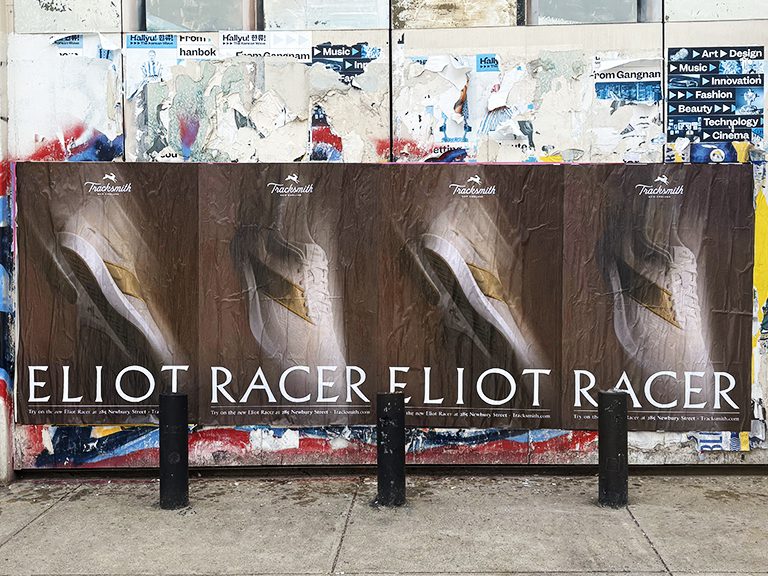
Most people who call us about Knoxville ask for “downtown”. Then we ask three questions and discover they meant Cumberland Avenue, which is a different street, a different audience and a different posting problem entirely.
Knoxville is not one market. It is two, about a mile apart, separated by a university campus, and they behave nothing alike. Downtown is a managed historic destination with a business association, programmed events and frontages people care about. The Strip is a student corridor that was rebuilt by the city to be walked, and it empties out in June.
A poster campaign that treats those two zones as one map will waste half its surfaces.
This page is about how Wheatpasting & Poster Campaigns actually runs in Knoxville: which surfaces exist, what paste does in a city that has no dry season, how the university calendar controls half the city’s attention, and where we tell clients to stop.
I have written it the way I would brief a crew lead who had never worked East Tennessee before.
No pricing here, and no promises about enforcement. Posting is a grey area in every American city and Knoxville is no exception. What I can give you is the operational truth.
Knoxville is two markets, and only one of them is a posting market
Start with downtown. Gay Street runs roughly ten blocks through the central business district and carries the theatre and arts activity. It has been recognised nationally as one of the great streets in America, which tells you something useful before you ever stand on it: this is a street the city is proud of and actively curates.
Market Square is the pedestrian heart just off it, with the farmers market, summer splash pads and the adjoining Krutch Park sculpture walk. The Old City is the nightlife, dining and live music quarter. All three sit within an easy walk of each other.
Every one of those places is beautiful and almost none of it is open posting ground.
Downtown Knoxville has a resident business association, a preservation-minded view of historic frontages, and enough programming that someone is usually looking. Put an unapproved poster on a Gay Street frontage and it will not quietly live out a two-week run. It will be noticed, it will come down, and the building owner will remember it.
So for downtown, our position is simple. Written owner consent or nothing. There are cooperating venues, bar frontages and interior-facing boards in the Old City and around the Square where a venue or promoter poster genuinely belongs, and that is a permission conversation, not a posting run.
Now Cumberland Avenue. Locals call it The Strip. It is the University of Tennessee corridor, and the city rebuilt it under the Cumberland Avenue Corridor Project: narrowed from four lanes to three, sidewalks widened, street trees, street furniture, new crosswalks. It absorbed a large wave of student housing development at the same time.
The rebuild matters to us for two reasons. It made the corridor genuinely walkable, which is the whole premise of a poster campaign. And it put construction on the street, which is where the posting surfaces actually are.
The norm on The Strip is show bills, campus notices and venue posters, mostly on cooperating business frontages and designated boards. That is an established surface culture, not something we invented. The controlling party in practice is the shop, the bar or the property manager. Not a municipal office.
That is the whole Knoxville thesis. Downtown is a permission market. The Strip is a relationship market. Neither one is a free-for-all.
What actually holds on a Knoxville surface
Surface inventory in this city is thinner than buyers expect, and the good surfaces turn over.
The best paste substrates on Cumberland Avenue are construction hoarding and scaffolding wrap. The corridor rebuild and the ongoing student housing builds mean hoarding is a recurring feature of this market rather than an occasional one. Smooth plywood hoarding takes paste beautifully. It is flat, it is porous enough to bond, it is at eye level, and it faces a sidewalk the city deliberately widened.
The catch is that hoarding belongs to a contractor or a developer, not to the city and not to the building’s eventual tenant. We ask the named contractor directly, we get a dated written yes, and we agree a removal date in the same message. If we cannot identify who holds the site, we skip it. There is no version of this where guessing is the right call.
Cooperating business frontages are the second tier. Bar and shop windows, door surrounds, interior-facing board space. These are smaller, they are shared with everyone else’s show bills, and they are won by asking politely and turning up when you said you would.
Designated boards and kiosks around the student quarter carry genuine traffic but also genuine competition. Layering is constant. A poster on a busy board during term has a realistic life measured in days, not weeks, because someone else will paste over it. That is not a Knoxville failing, it is how boards work everywhere, but the density on The Strip during term makes it faster here than a buyer expects.
What we do not post on: utility poles. In Knoxville a pole is frequently a utility asset rather than a city one, which makes it somebody’s private infrastructure by default. We treat poles as off-limits unless the asset owner has said otherwise in writing, and in practice they have not.
Historic masonry downtown is also off the list. Old brick, painted brick and anything with a preservation interest attached is a surface we will not paste, regardless of who says it is fine, because removal risks taking the finish with it.
Paste chemistry in a city with no dry season
Here is the operational fact that defines Knoxville and separates it from the Gulf markets we also work.
Rain in Knoxville is spread fairly evenly through the year rather than concentrated in one season. There is no reliably dry window. In Phoenix you plan around monsoon. In Knoxville you check the forecast per job, every job, all twelve months. Weather checking here is a habit, not a seasonal assumption.
The second fact: Knoxville crosses the freezing line regularly in winter. Typical temperatures run from around 31°F up to around 88°F across the year, rarely dipping below about 17°F. That combination of wet and freezing is the one that kills posters.
Freeze-thaw is real here and it works like this. Water wicks behind a poster edge or into a substrate seam on a mild wet January afternoon. Overnight the temperature drops below freezing and that water expands. The bond at the edge breaks. By morning you have a corner lifted, and once a corner lifts, wind finishes the job inside a day.
So winter application in Knoxville favours dry cold snaps over wet mild days. That sounds backwards to people who assume cold is the enemy. Cold and dry is workable with the right paste mix and patient edge work. Mild and wet is where runs fail.
Summer gives you the opposite problem. Long, hot, muggy months mean humid air that slows cure time. A poster that would be touch-stable in forty minutes in a dry climate can stay vulnerable for well over an hour here. On top of that, afternoon storms arrive on short notice in East Tennessee, which is why we push summer Knoxville work into the small hours rather than the evening.
UV load is moderate rather than extreme. Fade is a slow-burn issue here, not the first failure mode. In the desert Southwest, colour death is what ends a run. In Knoxville, moisture at the edges is what ends a run, almost every time.
Practical consequences for a Knoxville paste job:
Edges get more attention than faces. We overwork the perimeter and the seams because that is where the water gets in.
Spring and autumn are the honest sweet spots. Comfortable temperatures, moderate humidity, no freeze risk, and reasonable cure windows.
We will stand a crew down for weather here more often than clients like. A poster pasted onto a damp substrate ahead of an overnight freeze is a poster you are paying to install twice.
The university term calendar runs half this city
If your Knoxville campaign targets students, the calendar is not a scheduling detail. It is the campaign.
University of Tennessee terms govern the Cumberland Avenue corridor completely. August move-in through spring finals is the live period. Summer is materially quieter on The Strip. A July poster run on Cumberland is a run aimed at an audience that has gone home.
I have talked more than one client out of a summer Strip campaign for exactly that reason, and the conversation is usually short once you say it plainly.
Downtown has its own rhythm and it is independent of the university.
March brings Big Ears Festival, which turns downtown into a multi-venue music event drawing a national audience. For culture-oriented work it is the single highest-value attention window in the city. It is also a week when venue frontages are spoken for well in advance, so it rewards planning months out rather than weeks.
Spring also carries the Dogwood Arts Festival and the Rossini street fair. Comfortable temperatures, strong pedestrian volume, and all of it before the summer heat arrives. Spring is genuinely the best combination of weather and footfall Knoxville offers.
Autumn weekends belong to Vols home football. Visitor volumes into the campus and downtown area are very large on those dates. That is attention, but it is attention arriving with traffic and road closures attached, which is a crew problem I will come back to.
Market Square’s farmers market and summer programming hold weekend footfall through the warm months, which is the one reliable downtown pedestrian driver when the university is empty.
So the planning logic I would give a Knoxville buyer:
Student-facing product, run August through April, peak early in a term when attention is unformed.
Culture, music or hospitality, build toward March and the spring festival run.
General downtown reach in summer, lean on weekend Market Square programming and accept weekday softness.
Permission in Knoxville is a grey area with a short memory
I am not going to tell you what is permitted and what is not in Knoxville, because that varies by municipality, by surface ownership and by who happens to be enforcing. Posting is a grey area in this country and anyone who tells you otherwise is selling something.
What I will tell you is the character of this market, because that is what you actually plan around.
Knoxville is a small enough operating community that a single bad removal story travels. That is the most important sentence on this page. In a city of ten million, a sloppy crew is anonymous. In Knoxville, the bar manager on Cumberland knows the bar manager in the Old City, and the contractor on one student housing site is bidding the next one. Burn a surface here and you have not lost one wall, you have lost a corridor.
So the way AGM reduces risk in Knoxville is unglamorous and consistent.
We work private surfaces with permission from the party who actually controls them. On The Strip that is usually the business operator or the property manager. On hoarding it is the named contractor or developer running the site.
We get it dated and in writing. A verbal yes from someone on a job site is not a record you can produce later.
We agree the removal date at the same time we agree the install. Removal is part of the job, not a favour afterwards.
We document. Photographs at install, photographs at removal, locations logged. If a property manager calls in three weeks, we can show exactly what went up, where, and when it came down.
Downtown gets the strictest version of all of that. Gay Street and Market Square are actively managed as a destination, with historic frontages and a business association paying attention. Unapproved placement there draws notice quickly and we treat it as off-limits without written owner consent. That is not caution for its own sake. It is because the downtown relationships are worth more over a year than any single campaign is worth in a fortnight.
Enforcement in Knoxville, as everywhere, is inconsistent. The deciding factor is almost always who controls the surface. Get that right and most of the risk evaporates.
Crew logistics: two trips, garage staging, and never on a game day
Knoxville crews work this city as two separate builds.
Downtown is the easy one. Gay Street, Market Square and the Old City are all within comfortable walking distance of each other. A single staged park serves the whole downtown build. Two people with a cart and a bucket can work that footprint on foot for several hours without moving the vehicle.
Cumberland Avenue is a separate trip. The corridor itself is very walkable, with shops, bars and restaurants in easy strolling distance, but it sits roughly a mile from the downtown core and campus sits between them. You do not casually walk from one build to the other with equipment. You pack up, you drive, you re-stage.
Parking here is structured rather than casual. The city’s parking authority runs downtown garages and publishes guidance that specifically covers downtown street parking and the Cumberland District. On the campus side, university garages including the 11th Street Garage serve the corridor, with a pedestrian bridge crossing Cumberland Avenue. Plan garage-based staging. Kerbside staging on The Strip after the rebuild is not a reliable plan.
Night windows differ by zone. Downtown clears early outside event nights, so a one o’clock start gets you quiet streets and clean sightlines for documentation photos. The Strip runs late during term, which pushes the usable window later, often past two. In summer the Strip is quiet early, which is the one operational advantage of working it out of season.
Crew size for a typical Knoxville build is two for a focused single-zone run and three if we are covering both zones in one night, because the drive and re-stage eats time. A three-person crew with one on paste, one on placement and one on documentation and lookout moves through a corridor faster than two people doing everything.
Avoid Vols home game days entirely for anything requiring vehicle access near campus. Traffic, closures and crowd volume make it a lost night for crew work. The attention is real, but you install before the weekend, not during it.
What we talk Knoxville clients out of
A short list, built from the way this specific market behaves.
Summer campaigns aimed at students. The Strip is materially quieter when the university is out. If your audience is undergraduates, run August to April and stop asking about July.
Gay Street frontages without written consent. It is the prettiest surface inventory in the city and it is the one we are most conservative about. Downtown is curated and preservation-minded. We will chase owner permission for you, and if it does not come, we move the plan rather than take the risk.
Hoarding on a site where nobody will give a name. Construction hoarding is the best paste surface in Knoxville. It is also somebody’s asset. If we cannot identify and reach the contractor, that surface comes off the map, even when it is the one the client most wants.
Posting into a wet mild January. Clients see cold and assume winter is the problem. Wet is the problem. We will move an install several days to catch a dry cold snap, and that is the right call every time.
Treating poles as inventory. They are frequently utility assets here. We leave them alone.
Expecting a two-week board life during term. Designated boards on The Strip layer fast when students are in town. If you need duration rather than burst, we would rather put the run on hoarding or cooperating frontages and use boards as reach, not as the backbone.
Game day installs. Plan around the home schedule, not through it.
One honest upsell, since this is a city where attention arrives in bursts. Knoxville’s biggest audience moments are festivals and football weekends, and those are exactly the moments when static surfaces are saturated and streets are closed to vehicles. That is where Street Teams & Experiential earns its place: people on foot, in the crowd, handing something to somebody, in a window where a pasted poster is competing with every other poster in town. Paired with a poster run that goes up the week before, it covers both the build-up and the moment.
Frequently asked questions
When is the best time of year to run a poster campaign in Knoxville?
Spring and autumn. Spring gives you comfortable temperatures, strong pedestrian volume, the Dogwood Arts Festival and the Rossini street fair, and in March the Big Ears window downtown. Autumn gives you full university term plus football weekend volume. Summer is hot, muggy and quiet on Cumberland Avenue. Winter is workable but demands dry cold snaps rather than wet mild days.
Why do you treat downtown and Cumberland Avenue as separate campaigns?
Because they are separate audiences with separate surface rules and separate crew logistics. Downtown is a managed historic destination where written owner consent governs everything. The Strip is a student corridor with an established show bill culture controlled by business operators. They sit about a mile apart with campus between them, so a crew works them as two trips, not one.
How long does a pasted poster last in Knoxville?
It depends on the surface and the season more than the paste. On protected hoarding in spring or autumn, a well-worked run holds for a solid stretch. On a busy designated board during term, expect days rather than weeks, because layering is constant. Winter wet plus an overnight freeze is the fastest failure mode, lifting edges first.
Is poster advertising permitted in Knoxville?
This is a grey area, and it varies by municipality, by surface ownership and by who is enforcing on a given week. We do not give advice on that. What we do is work surfaces whose owners have said yes in writing, keep dated documentation of every placement, and commit to a removal date up front. Who controls the surface is the deciding factor.
What time of night does your crew work in Knoxville?
Downtown clears early outside event nights, so one in the morning gives quiet streets and clean documentation photos. Cumberland Avenue runs late during term, which pushes that window past two. Summer flips it, since the Strip is quiet early when the university is out. We stage from garages rather than kerbside in both zones.
Can you post on construction hoarding around the student housing builds?
Often yes, but only with the site’s permission. Hoarding and scaffolding are recurring features of this corridor and they are excellent paste substrates. They also belong to a named contractor or developer. We ask that party directly, get a dated written yes and an agreed removal date, and if we cannot identify who holds the site, we leave it off the plan.
Request a campaign quote
If you are planning a Knoxville run, tell us which audience you are actually after, the student corridor or the downtown destination, and tell us the dates you are working toward. Those two answers shape everything else: the surfaces we chase permission for, the night windows we work, the crew size, and how far ahead we need to start the consent conversations.
We will tell you honestly if the timing is wrong. If you want students in July, or Gay Street frontages with no path to owner consent, we would rather reshape the plan than take your brief and hope.
Request a campaign quote and we will come back with a surface-level plan for Knoxville, including which zone carries the weight, what the removal commitment looks like, and where we think the calendar should put you.

Ready to Run Your Campaign?
Call us or email us. We’ll tell you exactly what we can do in your market and what it costs.
Related Service
Explore similar advertising solutions offered by American Guerrilla Marketing.
American Guerrilla Marketing — Los Angeles
Street-level campaigns in Los Angeles and nationwide. Wheatpasting, LED trucks, street teams, and more.
(646) 776-2770
Related Articles
-
Wheatpasting & Poster Campaigns in Eugene, Oregon
November 20, 2026
-
Wheatpasting & Poster Campaigns in Spokane, WA
November 20, 2026
-
Wheatpasting & Poster Campaigns in San Francisco
November 20, 2026
-
Poster Campaigns & Wheatpasting in Nashville, Tennessee
November 20, 2026
-
Wheatpasting & Poster Campaigns in Tulsa, Oklahoma
November 20, 2026