
November 5, 2026
Wheatpasting & Poster Campaigns in Rochester, New York
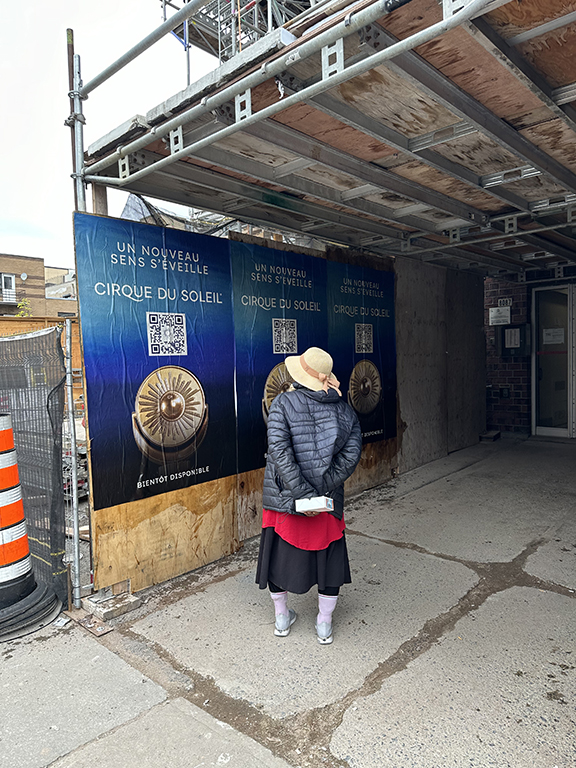
Most Rochester briefs that land on my desk have the same shape. A brand wants paper up across the city for eight weeks, starting in February because that is when the product launches.
I have to tell them that the eight weeks they are imagining will be three weeks of readable posters and five weeks of curled, salt-stained edges. That is not me being difficult. It is lake effect snow, a salted street grid and a freeze-thaw cycle that runs harder here than in most cities we work.
Rochester is a good poster market. It has a compact walkable core, a nightlife district with real density, a festival calendar that runs almost every weekend from May through October, and neighbourhood corridors where a poster reaches people who actually live there.
It is also a market where the calendar decides more than the creative does. Get the season right and paper holds beautifully here. Get it wrong and you are paying a crew to install something the first thaw will peel off the wall.
This page covers how Wheatpasting & Poster Campaigns actually run in Rochester: where the surfaces are, what the weather does to them, how permission works, what a crew night looks like, and what I talk Rochester clients out of.
Where posters actually work in Rochester
Rochester has one genuine nightlife concentration and several neighbourhood corridors. That distinction drives almost every placement decision here, and it is the first thing I explain to a buyer who has only looked at a map.
The East End is the concentrated entertainment quarter. It holds the Eastman Theatre, the Rochester Philharmonic and the Eastman School of Music, along with the Little Theatre and a run of clubs, bars and restaurants. If you want a going-out audience on foot, at night, in volume, that is where it is. Streets in the district are closed during the warmer months for festival use, which tells you the city itself treats the East End as a pedestrian environment in season.
Downtown wraps around it, with live music, theatres and museums, Blue Cross Arena as an anchor, and the Genesee River as the orienting landmark. Parcel 5 is an open downtown event site the city uses as a festival venue. Downtown and the East End together are the working core, close enough that one crew covers both on foot from a single park.
Park Avenue is quieter and largely residential, with a neighbourhood-pub character rather than a club scene. Posters there reach residents, not a nightlife crowd. That is not a downgrade, it is a different audience, and for a local service business or a community-facing launch it is often the better buy.
South Wedge sits in similar territory. It mixes traditional bars, modern lounges, dive bars and more upscale rooms, but it is still neighbourhood in character rather than high-volume nightlife. People who live there notice new paper on the corridor quickly.
The Neighborhood of the Arts is a named arts district recognised in visitor guidance for the city, and the natural fit for cultural, gallery and music creative. A limit worth stating: I could not verify the district’s precise street boundaries from public sources, so we plan placements there from a surface survey on the ground rather than a line on a map. That is UNVERIFIED, and I would rather say so than draw a boundary I cannot stand behind.
The University of Rochester and Rochester Institute of Technology are both major presences in the metro, and student audiences matter. I will not name specific campus corridors, because I could not verify corridor-level detail for either institution, and naming an unconfirmed street is how a buyer ends up with paper in the wrong place.
What a Rochester winter does to paste
Rochester is one of the harder freeze-thaw markets we operate in, and not just because it is cold. Plenty of cold cities are fine for paper. Rochester is difficult because of the specific combination it runs.
The climate is humid continental, with warm summers, cold winters, moderate precipitation spread fairly evenly through the year, and winter moisture arriving largely as snow. The city is known for very snowy winters. About half the annual snowfall comes from the lake effect process, which develops when cold air crosses the warmer waters of Lake Ontario, becomes saturated, and drops narrow snowbands downwind.
The National Weather Service office covering Rochester is explicit that those bands are highly localised and that their position depends on wind direction. That single fact changes how we schedule.
A Rochester winter forecast is not reliable at neighbourhood scale. A clear install window downtown can close inside an hour because the band shifted. In most markets we book winter nights tight and work through. Here we build slack into the schedule and accept that some nights get called off on arrival.
Then there is salt. A snowy winter means a heavy de-icing load, and salt film gets onto masonry, metal and glass everywhere a plough or a boot carries it. Salt film defeats adhesion. Paste does not bond to a contaminated surface, it bonds to the contamination, and the contamination lets go.
So winter and early-spring work here assumes a dirty wall as the default. Surface preparation becomes part of the install. That costs time per surface and means fewer surfaces per crew night, which is a scope conversation worth having before the campaign is booked.
Paper lifespan here follows the season directly. In summer, with dry substrates and comfortable night windows, paper behaves the way paper should. From December to March it is a short-cycle medium that needs refreshing, and anyone running across those months should plan the refresh in rather than treat it as a failure.
If a message genuinely has to survive December through March on a Rochester wall, vinyl is the honest answer, not paper. I say that even though it moves the job out of the poster line, because the alternative is a client watching their campaign curl off a wall in February.
Spring is the trap season in Rochester
This is the single most common way a Rochester poster campaign gets damaged.
Spring brings rapid snowmelt and increasing rainfall, with unpredictable early-season swings and periodic freezes still in play. The air temperature comes up, the afternoons feel workable, and someone looks at a forecast well above freezing and assumes the window has opened.
It has not. The substrates are still wet.
Rapid melt plus rising rainfall keeps walls damp long past the point where the air feels fine. Masonry holds moisture well after the surface looks dry. Paste onto a wall still giving off moisture from the inside and you get edge lift within days, then full sheet failure at the next cold night.
And the freezes are not finished in spring here. A damp wall that freezes behind the paper will push the paper off. No paste formulation solves that, because the failure is happening in the substrate, not in the adhesive.
What we do about it is unglamorous. We touch walls. A crew lead who has worked a Rochester spring can tell by hand whether a brick face is actually dry or just cold and dry on the surface. If it is not ready, we move the placement or move the night. Clients find that frustrating in April. They find it less frustrating than a reinstall in May.
My standing advice for Rochester: if the campaign can wait for May, let it wait for May. The festival season opens then anyway, which means the audience arrives at the same time the surfaces become reliable.
Permission, ordinance and removal in Rochester
This is a grey area, and I am going to treat it as one, because that is what it is.
Rochester is a New York State municipality. Searches did not surface a Rochester-specific published posting ordinance text that I can quote accurately, so I am not going to assert a statute number or tell you what the city’s sign provisions say. That is UNVERIFIED, and a buyer should treat anyone who speaks with certainty about it as someone who has not checked.
What I can say with confidence is structural, and it holds in every market we work. Posting on municipal poles, street furniture and the public right of way is the part of this business that carries risk. There is no basis for assuming Rochester is an exception to that. Enforcement varies by municipality, it varies by neighbourhood, and it varies by who happens to be paying attention that month.
There is one Rochester-specific point that matters a great deal, and it cuts both ways.
The City of Rochester operates a formal special-events permitting function through its Bureau of Communications and Special Events, and it publishes permitted events along with the locations they occupy. That tells you two things.
First, the city has an established channel for authorised temporary use of public space. Activity routed through that channel, in partnership with an event or a venue, sits on far firmer ground than activity that is not.
Second, during permitted events the street space in the East End and at Parcel 5 is actively managed and under closure. Those are exactly the weeks when placement is most visible and most scrutinised. A campaign that drops unpermitted paper into a closed festival street during jazz week is not being clever. It is being noticed.
The route we prefer in Rochester is the same route we prefer everywhere, and it is boring on purpose. Private walls, with a documented agreement from the owner or managing agent, a named contact who knows the campaign is running, defined dates, and a removal commitment that we actually honour.
Construction hoarding and scaffolding get treated as controlled by the contractor or the site owner. They are not open surface. We approach them through the people responsible for them, or we leave them alone.
Removal is not a courtesy here, it is what keeps a market workable. A crew that strips its own paper on schedule gets invited back onto walls. A crew that leaves paper to weather off is the reason the next operator gets a no. In a salt-and-snow market that means scheduling removal before the material has been through enough freeze cycles to bond itself into the masonry.
How a Rochester crew night actually runs
The working core is downtown and the East End, and it is compact. That compactness is the best operational feature this market has. We park once and work out on foot, which removes the single biggest time sink in a spread-out city, which is moving the vehicle between clusters.
A typical core night is a small crew. Two people can cover a tight downtown run. Three is the usual number when the sheet count is real, because the third person handles the ladder work, the lookout role and the paste refill without the install pair having to stop.
The standard slot downtown is after bar close and before the morning commute. That window is genuinely quiet in Rochester’s core, and it is long enough to do proper work rather than rushed work. Nobody is doing their best surface prep at a jog.
Park Avenue and South Wedge are different, and the difference is noise. Both are reached by vehicle from the core, and both are residential in character. A crew working a residential Rochester corridor at three in the morning will be heard. Ladders on pavement carry. Van doors carry. So we work those corridors quiet and brief, we do not idle the vehicle, and we do not treat them as a place to linger.
Winter changes the window entirely. On a cold Rochester night, a wall at three in the morning is frozen, and nothing you paste onto it will hold. The better call in deep winter is often daytime work in the warmest part of the afternoon, when the substrate has had whatever sun the day offered. That trades discretion for adhesion, which is the right trade if the alternative is paper that fails in a week.
Festival weeks need their own plan. During the jazz festival the East End streets are closed, which is excellent for audience and poor for vehicle access. We plan foot-carry from a perimeter park on those nights, which means smaller loads, more trips, and a realistic sheet count that accounts for a crew walking rather than rolling.
One more Rochester detail: spring and autumn evenings here drop temperature sharply after dark, even when the afternoon was warm. Paste behaves differently at eleven at night than it did at six, which is worth knowing before planning a long install.
Timing a Rochester campaign around the city calendar
Rochester runs a defined festival season with something happening almost every weekend from May to October. If you are buying paper in this city and you are not building the campaign around that season, you are buying the wrong weeks.
The Lilac Festival in May opens the season. It is the signal that the city has come outdoors, and it lines up almost exactly with the point at which surfaces become reliable after snowmelt. May is where I tell most Rochester campaigns to start.
The Rochester International Jazz Festival in late June is the highest-density audience week in the city centre. It is staged in the East End and at Parcel 5, across a large number of downtown venues, and the East End streets are closed for it. Dates need confirming directly with the organisers each year, because the city’s permitted-events listing and the festival’s own schedule have not always shown identical date ranges. Treat late June as the target and confirm the exact window before locking a crew night.
The Rochester Fringe Festival is a twelve-day September run and has been listed for mid-to-late September. Again, confirm the year’s dates rather than trusting a number from last season. Fringe is a strong fit for cultural and arts creative, and September in Rochester is a genuinely good install month: dry substrates, comfortable nights, and an audience that is out.
First Night sits in the winter calendar. It is an audience event, but it falls in the constrained season, and anything paper-based around it needs the winter caveats applied honestly.
The practical shape of a Rochester year, as I plan it: May through October is the campaign season, surfaces are dry and night windows are comfortable. December through March is constrained, and argues for vinyl, surface preparation as standard, and schedule slack rather than tight booking. Spring is the trap. It looks open before it is.
What we talk Rochester clients out of
Starting a paper campaign in February. I have already made this case, so I will not repeat it, but it is the most common thing I push back on in this market and it is the one that saves clients the most grief.
Treating a winter forecast as a schedule. Clients used to predictable markets want a fixed install date six weeks out. In Rochester between December and March, a fixed date is a guess. Lake effect bands shift with wind direction, and the honest plan is a target window with named fallback nights.
Buying the East End only. It is the obvious choice and a good one, but it is one district. A campaign that buys nothing but the East End reaches a going-out crowd on the nights they go out, and nobody at all on a Tuesday. If the product has a resident audience, Park Avenue and South Wedge do work the East End cannot.
Chasing public-right-of-way surfaces because they look available. Poles and street furniture are the fastest way to get paper into a sightline and the fastest way to get it removed and to get a property relationship burned. In a city with an active special-events permitting function and managed festival streets, that risk goes up in exactly the weeks a campaign most wants visibility.
Paper where the message cannot afford to fail. If the creative is tied to a date that falls in deep winter, or the message absolutely has to be readable in March, I will steer the client to a vinyl build or to a different format rather than take the booking and hope.
When Rochester is better served by a different format
Winter is the honest case for moving off paper here, and the format that solves the Rochester winter problem is usually LED Trucks & Mobile Billboards.
The thing that breaks paper in a Rochester January is the wall: frozen, salted, wet, cycling. A mobile unit has no wall. It carries its own lit surface, stays readable through a short winter afternoon and the long dark evening after it, and can sit outside Blue Cross Arena on an event night or run the downtown core when nobody is walking far in the cold.
It also solves the geography problem that paper struggles with in this market. Rochester’s working core is compact, but the metro is not, and a campaign that needs reach beyond the walkable centre is asking paper to do something paper is bad at. A truck covers the spread.
I would not sell a truck against paper in July. In July, paper in the East End and the neighbourhood corridors is the better buy. But from December to March, a mobile unit does the job a Rochester wall will not let paper do.
Frequently asked questions
When is the best time of year to run a poster campaign in Rochester?
May through October. That window gives dry substrates, comfortable night install windows, and a festival calendar with something happening almost every weekend. May lines up with the Lilac Festival and with the point where walls have finally dried out after snowmelt. September, around the Fringe Festival, is equally strong and often less crowded for surfaces.
Why is Rochester harder for paste than other cold cities?
It is the combination rather than the cold alone. Very snowy winters, a heavy de-icing salt load, repeated freeze-thaw cycling and localised lake effect snowbands all stack together. Salt film blocks adhesion, and substrates that cycle wet to frozen to wet push paper off from behind. Cold on its own is manageable. This specific mix is not.
Is poster advertising allowed in Rochester?
It is a grey area, and anyone telling you otherwise has not checked. Rochester-specific posting provisions are not something I can quote accurately, so I will not. Enforcement varies by municipality and by neighbourhood. We reduce risk by working private surfaces with documented owner permission, a named contact, defined dates and a removal commitment we actually honour.
Which Rochester neighbourhoods are worth posting in?
The East End is the city’s concentrated nightlife district and reaches a going-out audience on foot. Downtown surrounds it with theatres, museums and Blue Cross Arena. Park Avenue and South Wedge are neighbourhood corridors that reach residents rather than a club crowd. The Neighborhood of the Arts suits cultural creative. Which ones you buy depends on whether you want residents or a night audience.
How big a crew does a Rochester install need?
Two people can cover a tight downtown run, and three is the usual number once sheet counts are real, with the third handling ladder work, lookout and paste refill. Downtown and the East End are compact enough to park once and work out on foot. During festival street closures we plan foot-carry from a perimeter park, which reduces the realistic sheet count per night.
Should we run paper through a Rochester winter?
Only with eyes open. Between December and March, treat paper as a short-cycle medium that needs planned refreshes, assume surface preparation on every wall because of salt contamination, and build schedule slack because lake effect bands shift fast. If the message has to survive those months intact, vinyl or a mobile LED format is the more honest build.
Request a campaign quote
If you are planning a Rochester campaign, the first conversation worth having is about the calendar, not the creative. Tell me the month you want to be live, the audience you are after, and whether you need the going-out crowd in the East End or residents on Park Avenue and in the South Wedge. I will tell you honestly whether paper is the right format for that window, and what I would run instead if it is not.
We handle surface sourcing, owner permission and documentation, install, condition monitoring and removal, and we plan Rochester campaigns around the season rather than against it. Request a campaign quote and we will scope it properly, including the fallback nights a lake effect winter makes necessary.

Ready to Run Your Campaign?
Call us or email us. We’ll tell you exactly what we can do in your market and what it costs.
Related Service
Explore similar advertising solutions offered by American Guerrilla Marketing.
American Guerrilla Marketing — Los Angeles
Street-level campaigns in Los Angeles and nationwide. Wheatpasting, LED trucks, street teams, and more.
(646) 776-2770
Related Articles
-
Wheatpasting in Rain and Humidity: What Works
November 5, 2026
-
Wheatpasting & Poster Campaigns in Bronx, New York
November 5, 2026
-
What Size Are Trends Posters: A Crew Field Guide
November 5, 2026
-
Wheatpasting & Poster Campaigns in Durham, NC
November 5, 2026
-
Wheatpasting & Poster Campaigns in Columbus, Ohio
November 5, 2026