
November 19, 2026
Wheatpasting & Poster Campaigns in Milwaukee, Wisconsin
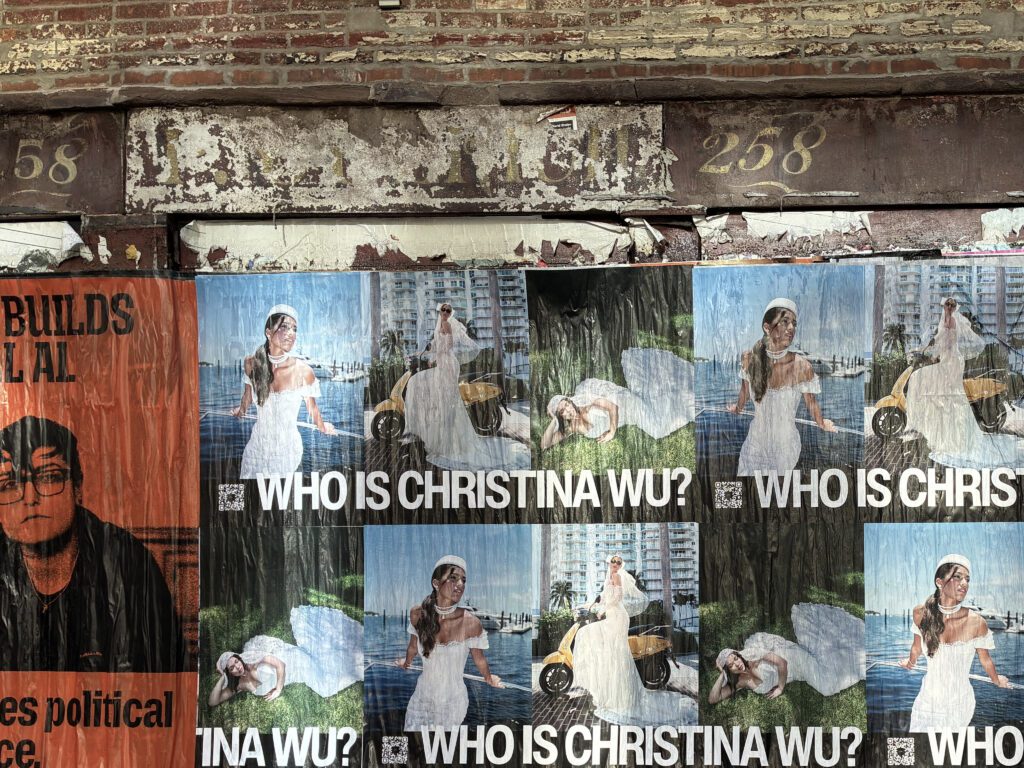
Milwaukee is one of the few markets where I will tell a client the month matters more than the creative.
Paste is a water system. It needs a surface dry enough to accept it, air dry enough to let it cure, and a stretch of hours afterwards where the wall does not keep crossing back and forth over freezing. Milwaukee makes all three conditional, in a way specific to sitting on the edge of Lake Michigan.
The buyers who get burned here are the ones who book a poster campaign for February because that is when the product launches, then call in March asking why half the sheets are curling off a wall on Brady Street.
The buyers who do well are the ones who accept that Milwaukee’s paste year is roughly late spring to early autumn, and who plan the rest of the year around formats that do not care about moisture.
This page is about how we actually run poster work in Milwaukee: which corridors are worth the paper, what the lake does to adhesion, how the permission picture looks in a city with a district-level architectural review board sitting over its best arts frontage, and what we talk clients out of.
The corridors, and why they are four different audiences
Milwaukee is a strongly neighbourhood-identified city. Several of its commercial strips are formally organised as Business Improvement Districts, which matters operationally as well as culturally. These corridors are not variations on one downtown. They are genuinely different crowds.
Historic Third Ward. Widely described as Milwaukee’s arts and fashion district: dense historic warehouse building stock immediately south of downtown, converted to galleries, boutiques, restaurants and creative businesses. This is the city’s highest-value cultural frontage, and it is also its most design-conscious. The warehouse stock means large masonry flanks and the kind of flat raw wall that paste actually likes. It is also, as I will get to, the hardest district in the city to work on a facade without a conversation first.
Brady Street, Lower East Side. Organised as the Brady Street Business Improvement District. Restaurants, shops, taverns, salons and cafés packed into a short, dense, walkable strip. A mature night-economy corridor with an older crowd than Water Street. For poster work, Brady is close to ideal: the strip is short enough that a crew covers it properly rather than thinly, and the audience is out on foot rather than driving past.
Water Street. The downtown bar strip, and consistently characterised locally as the youngest nightlife corridor in the city, skewing heavily to the under-23 and student-age crowd. It sits close to Brady geographically and nowhere near it demographically. If your campaign is aimed at students, Water Street is the corridor. If it is aimed at people with disposable income and a settled routine, it is not, and the walk between the two is short enough that clients confuse them constantly.
Bay View and South Kinnickinnic Avenue. The south-side neighbourhood built around KK, roughly a two-mile stretch of local businesses and modern dining with a strong community identity and an independent-business weighting. The important operational word there is two-mile. KK is a long linear corridor, not a compact cluster, and it does not behave like the other three.
Deer District. The arena entertainment district downtown, with its own programmed calendar including a summer concert series at the Deer Garden. Event-driven mass rather than steady walking crowd.
Downtown core and East Wisconsin Avenue. Office and convention frontage with weekday midday programming, such as the Tunes@Noon series in the courtyard at 411 East Wisconsin Center. Reliable lunchtime foot traffic, a very different rhythm from the night corridors.
Henry Maier Festival Park, 200 North Harbor Drive. The lakefront festival grounds, home of Summerfest, and the single biggest driver of crowd movement in the Milwaukee year.
Practical read: Third Ward for arts and design audiences, Brady for mature nightlife, Water Street for student-age nightlife, Bay View and KK for independent and residential-adjacent audiences, Deer District for event-night mass.
What Lake Michigan does to paste
Milwaukee is humid continental, Köppen Dfa, with four distinct seasons and wide variations in temperature and precipitation over short periods. The lake shapes that climate so strongly that the city effectively has two of them: a moderated lakeshore belt and a more continental inland zone. The lake cools summer highs and warms winter lows while enhancing snowfall through lake-effect events. Reduced lake ice in recent years has increased the time cold air sits over relatively warm open water, which regional reporting links to more storm activity, and open water along the shoreline nudges nighttime temperatures up there.
Local snow and ice management practice for the city states the operationally critical point directly: Milwaukee experiences freeze-thaw cycles that create ice conditions, particularly on walkways and less-travelled areas.
Here is what that means with a bucket in your hand.
Freeze-thaw is the primary destroyer of winter paste here, and Milwaukee’s version is worse than a simple cold city’s. This surprises people. Steady deep cold is survivable, because nothing is liquid and nothing moves. The problem in Milwaukee is the documented short-period temperature swing, combined with lake moderation, repeatedly carrying a surface back and forth across freezing. Each crossing drives another expansion cycle into a damp paste line. Winter paste in Milwaukee should be assumed to fail, and to fail faster than it would in a colder but more stable inland city.
The shoreline and the inland behave differently on the same day. Because the lake creates two climates, Third Ward, Henry Maier Festival Park and downtown east will sit at different temperatures and humidity from inland placements such as Bay View’s inland reaches and the west-side corridors. A marginal freezing day can be workable on the shore and not inland, or the reverse in summer. We check the shoreline forecast, not the city-wide one, and on marginal nights we have sequenced a route specifically so the lakefront placements go up in the better half of the window.
Lake-effect snow adds unpredictability. Lake-enhanced snowfall can load one corridor heavily with little city-wide warning. Tightly sequenced winter routes in Milwaukee are a bad bet. Build slack or do not plan the route.
Salt load is heavy. A city that explicitly manages recurring ice on walkways salts heavily. Assume the lower portion of every street-level surface in a treated corridor is salt-contaminated and abraded through winter, and that salt residue sitting in masonry pores continues to undermine adhesion into the following spring. This is the detail most people miss: the salt problem does not end when the snow does. A wall on a treated corridor in April is still a compromised substrate.
Humid summers need a settled window, and Milwaukee’s forecasts are less dependable than average. Wide variations in precipitation over short periods is exactly the wrong characteristic for a material that needs a predictable curing interval. We favour settled high-pressure spells over nominally dry individual days.
Put together, the paste calendar is: concentrate on late spring to early autumn, treat deep winter as unsuitable for paste-dependent work, and treat the salt-residue weeks in early spring with more suspicion than the temperature alone would suggest.
Permission, review boards and the grey area
This is a grey area and I will not tell you it is legal or illegal. It varies by municipality, enforcement is inconsistent, and the outcome depends mostly on surface ownership and whether you asked.
What I can describe is the structure in Milwaukee, which is more useful than a yes or no.
The city maintains two relevant bodies of municipal code: a chapter governing Signs and Outdoor Advertising, and a chapter governing Use of Public Ways and Places which addresses, among other things, lamp posts and similar street furniture, and which includes provisions on removal of items from the public way. I am naming those chapters only to show which bodies of rule exist. I am not citing section numbers, provisions or penalties, because I have not verified them and will not invent them.
The signal worth reading is that Milwaukee has a dedicated public-ways chapter that contemplates removal. That tells you the city has an established administrative mechanism for clearing things off street furniture. Treat poles and public-way fixtures accordingly, and verify current provisions directly before planning anything there.
The more actionable structural fact is about the Third Ward, and it is unusually specific. The Historic Third Ward has its own Architectural Review Board, which reviews proposals in place of the city’s Historic Preservation Commission for everything except demolition requests.
Think about what that means for a poster campaign. Milwaukee’s best arts frontage, the warehouse masonry that paste loves most, sits behind a named district-level review body rather than a general city process. Facade scrutiny in the Third Ward is materially higher than on an ordinary commercial strip. For facade-attached work there, that board is the relevant conversation, and the lead time is longer. Any operator who tells you Third Ward facades can be handled on the same timeline as Water Street is either not working the Third Ward or not telling you the truth about it.
Elsewhere, the BID structure points the right direction. Brady Street operates as a formal Business Improvement District representing the businesses on the strip. In a BID-organised corridor the practical permission conversation for private wall and window frontage runs through the district organisation and through individual owners, which happens to be both the cleaner route and where the concentrated foot traffic actually is. That alignment is genuinely convenient and we lean on it.
How we reduce risk:
I will flag what I do not know. Milwaukee’s day-to-day enforcement culture, whether it is complaint-driven or patrol-driven, how often removal actually happens, and the city’s posture toward hoarding and scaffolding specifically, were not established by the research behind this page. I would rather say that than guess.
Crew logistics in a drive-between, walk-within city
Milwaukee is car-dependent at the city scale with genuinely walkable corridors inside it. The pattern is drive between, walk within. No single walking shift covers Third Ward, Brady Street, Water Street and Bay View. Budget a vehicle move between each.
Third Ward, Water Street and the Deer District are mutually close, in or beside downtown, and can reasonably be sequenced in one shift with short vehicle moves or a long walk. Brady Street is a short drive north on the Lower East Side and pairs with that group at a push.
Bay View is a separate shift. South Kinnickinnic Avenue runs roughly two miles, which is too long to work end to end on foot efficiently. We plan KK as a sectioned route with staged vehicle repositioning along the corridor rather than a single park-and-walk. Clients who have only seen the corridor on a map consistently underestimate this and ask for Bay View as an add-on to a downtown night. It is not an add-on.
Night windows differ sharply by corridor, and getting this wrong wastes a whole shift:
Crew size follows the corridor shape rather than the sheet count. A short dense strip like Brady is efficiently worked by a small crew on foot from one parked position. A two-mile linear run like KK needs either more people or more nights, because the limiting factor is distance between surfaces rather than time per surface.
I will also note what I have not confirmed: Milwaukee’s specific downtown metered parking hours, overnight parking rules and snow-emergency restrictions. Those get checked against current city information before routing, not assumed.
The Milwaukee calendar
Milwaukee brands itself the City of Festivals and the summer calendar is genuinely dense and lakefront-concentrated. For poster work, the calendar matters twice: once for when the audience is on the street, and once for when the crew cannot get a vehicle near the lakefront.
Summerfest is the anchor, held at Henry Maier Festival Park, 200 North Harbor Drive, across three weekends running noon to midnight. The 2026 edition, its 58th year, ran June 18 to 20, June 25 to 27 and July 2 to 4. It pulls regional traffic to the lakefront across roughly three weeks of late June and early July.
Here is the planning conflict that creates. Those are the best foot-traffic weeks in the Milwaukee year, and they are also the weeks when harbour approaches saturate and a crew with a vehicle cannot work the lakefront and downtown-east efficiently. The answer is not to skip them. The answer is to install before the festival window rather than during it, so the material is already up when the crowd arrives.
The rest of the year:
The overall shape: Milwaukee’s street-level opportunity is heavily summer-weighted and lakefront-weighted, roughly June through August, with the Deer District and arena calendar carrying the winter. That lines up neatly with the paste calendar, which is the one genuinely fortunate thing about this market.
Wisconsin Center convention schedule specifics were not established in the research behind this page. Check them directly if convention audiences matter to the campaign.
What goes wrong, and where we push back
Winter paste campaigns. The most common disagreement we have in this market. A client with a January launch wants posters in January. We will explain the freeze-thaw mechanism, explain that the failure is not cosmetic but structural, and recommend a different format for those weeks. If they insist, we will say plainly that we expect shortened hold and we will not pretend otherwise in the proposal.
Treating Water Street and Brady Street as one buy. They are minutes apart and demographically unrelated. We ask who the campaign is for before we allocate sheets between them, and we have moved an entire allocation off Water Street when the answer came back as a thirty-something audience.
Bay View as a downtown add-on. Two miles of linear corridor is its own shift. Clients who want it bolted onto a downtown night get a thin, scattered presence along KK that reads as nothing.
Third Ward facades on a short timeline. The Architectural Review Board layer is real. If the campaign goes live in three weeks, Third Ward facade work is probably not in it, and we say so at the quoting stage rather than failing quietly later.
Working the lakefront during Summerfest weekends. Great crowd, saturated access. Install before.
Early spring optimism. Temperature comes up and clients assume the season has opened. Salt residue in masonry pores works against adhesion for weeks after the ice goes. We hold paste work later into spring than the thermometer suggests.
Over-concentrating on one corridor. Milwaukee’s neighbourhood identity is strong enough that a campaign visible only downtown reads as a downtown campaign, not a Milwaukee one. Three corridors with distinct audiences almost always outperform one saturated strip.
The format that covers Milwaukee’s dead months
The natural pairing here is Projection Advertising, and the logic is almost too neat.
Milwaukee’s long, dark, frequently overcast winters give an early-opening and long projection window. Milwaukee’s best projection season is precisely its worst paste season. Those two facts mean a brand that wants continuous year-round street presence in this city can run paste from late spring to early autumn and projection through the cold months without ever fighting the weather.
The caveats: lake-adjacent fog and low cloud scatter a beam near the shoreline, so winter projection works better slightly inland than on the harbour. Snow cover raises ambient bounce and costs contrast, so a fresh white night is worse than a clear cold dry one. And projection is a presence format, not a persistence format, which is a different proposition from a sheet that holds a wall for weeks.
For clients who want winter continuity rather than winter saturation, the combination works. For clients who want the same thing paste delivers, in January, in Milwaukee, there is no honest answer that involves paste.
Frequently asked questions
When is the best season for a poster campaign in Milwaukee?
Late spring through early autumn. Milwaukee’s short-period temperature swings carry surfaces repeatedly across freezing in winter, and each crossing drives an expansion cycle into the paste line. Hold off slightly longer in spring than the temperature suggests, because road salt residue in masonry pores keeps undermining adhesion for weeks after the ice has gone.
Which Milwaukee corridors suit poster campaigns best?
Brady Street for mature nightlife on a short dense walkable strip, the Historic Third Ward for arts and design audiences on warehouse masonry, Water Street for a student-age crowd, and South Kinnickinnic Avenue in Bay View for independent and residential-adjacent audiences. Each is a genuinely different crowd rather than a variation on downtown.
Is poster work in Milwaukee permitted?
It is a grey area that varies by municipality, and enforcement is inconsistent. Milwaukee maintains code chapters covering signs and outdoor advertising and covering use of public ways, including removal from the public way. We work private surfaces with written owner permission, document condition, and commit to removal dates rather than relying on any assumption.
Why do Third Ward buildings need longer lead times?
The Historic Third Ward has its own Architectural Review Board, which reviews proposals in place of the city’s Historic Preservation Commission for everything except demolition. That means facade scrutiny there is higher than on an ordinary commercial strip, and the conversation takes longer. We quote Third Ward facade work with that lead time included.
Can Bay View be added to a downtown posting night?
No, and we will say so at planning. South Kinnickinnic Avenue is roughly a two-mile linear corridor, too long to work end to end on foot efficiently. It needs a sectioned route with staged vehicle repositioning, which is its own shift. Bolting it onto a downtown night produces a scattered presence that reads as nothing.
What should we run in Milwaukee during the winter?
Projection advertising is the natural complement. Milwaukee’s long, dark, often overcast winters open an early and lengthy projection window during exactly the months when paste fails. Work slightly inland rather than on the harbour, where lake fog scatters the beam, and expect fresh snow cover to raise ambient bounce and cost contrast.
Request a campaign quote
If you are planning poster work in Milwaukee, start the conversation with your dates. Dates decide more here than anywhere else we work, because the lake decides what a wall will do.
Tell us who the campaign is for and we will tell you which corridors actually hold that audience, which surfaces we can get honest permission on, how long the Third Ward conversation takes if your target frontage is there, and whether your window sits inside the paste season or needs a different format entirely.
Request a campaign quote and we will come back with a corridor-by-corridor plan, realistic install nights, and a removal commitment attached to every surface.

Ready to Run Your Campaign?
Call us or email us. We’ll tell you exactly what we can do in your market and what it costs.
Related Service
Explore similar advertising solutions offered by American Guerrilla Marketing.
American Guerrilla Marketing — Los Angeles
Street-level campaigns in Los Angeles and nationwide. Wheatpasting, LED trucks, street teams, and more.
(646) 776-2770
Related Articles
-
Wheatpasting & Poster Campaigns in Eugene, Oregon
November 20, 2026
-
Wheatpasting & Poster Campaigns in Spokane, WA
November 20, 2026
-
Wheatpasting & Poster Campaigns in San Francisco
November 20, 2026
-
Wheatpasting & Poster Campaigns in Knoxville, TN
November 20, 2026
-
Poster Campaigns & Wheatpasting in Nashville, Tennessee
November 20, 2026