
November 16, 2026
Wheatpasting & Poster Campaigns in Charleston, SC
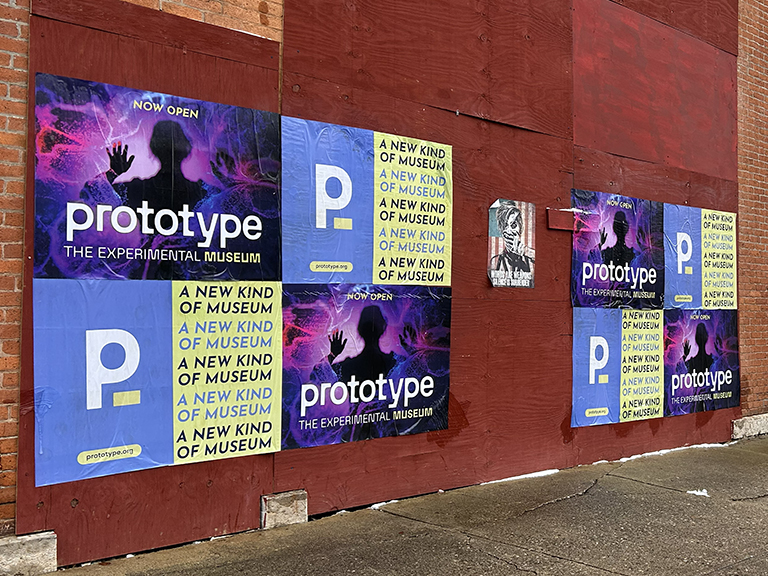
Most people who call us about Charleston have already decided where they want to be. They want Upper King. They have seen photos of the bar crowd spilling out onto the sidewalk on a Friday and they want their poster in that frame.
That instinct is usually right about the audience and usually wrong about the plan. The stretch of Upper King people picture is a handful of blocks. Every wall on it belongs to somebody who knows precisely what that wall is worth. And Charleston, more than almost any market we work, has an institutional habit of looking carefully at anything attached to a building inside its historic districts.
So the conversation we have with Charleston buyers is different from the one we have in a bigger, looser market. Elsewhere the first question is how many surfaces you want. Here the first question is whose wall, and has that person said yes in writing.
I want to be straightforward about what this page is and is not. It is an operator’s account of how Poster Campaigns actually run on this peninsula: the corridors that work, what the humidity does to paste, when the calendar helps you and when it buries you, and what we tell clients not to do here. It is not a permitting guide and it is not advice on what you are permitted to do. Surface rules in this city are a grey area that turns on ownership, district, and who is reviewing. We handle that by getting named permission from named property owners before anything goes up.
King Street reads as three audiences, and a poster run has to pick one
King Street is the organising spine of the peninsula, and locals talk about it in three zones. Lower King is the antiques stretch. Middle King is the fashion and retail stretch. Upper King, generally the blocks north of Calhoun Street, is the design and nightlife stretch.
That matters operationally because the same street is three different campaigns depending on which blocks you work, and the difference is not subtle.
A poster placed on Lower King is seen mostly in daylight by people moving slowly, often visitors, often older, often browsing galleries and antique dealers. A poster two blocks north on Middle King catches a retail shopper mid-errand. A poster on Upper King is seen at night, by a younger crowd, in artificial light, usually in motion, usually in a group.
Those are not variations on one audience. They are three separate media buys that happen to share a street name.
The adjoining peninsula neighbourhoods matter too. Cannonborough and Elliotborough sit just west and north of the Upper King corridor and carry the overflow: cocktail bars, music rooms, smaller restaurants, pubs. The streets are narrower, the buildings are lower, and the pedestrian flow is thinner but more local. If a campaign is aimed at Charleston residents rather than visitors, those blocks often outperform the headline corridor, because the person walking there at eleven at night probably lives within a mile.
Here is how I brief clients on it. Decide first whether you are buying the visitor or the resident. If it is the visitor, you want Lower and Middle King working in daylight and you want the artwork to survive being read from across a street. If it is the resident, you want Upper King plus the Cannonborough and Elliotborough edges working after dark, and you can afford more text because people are standing still outside bars.
Trying to do both with one set of artwork on one set of surfaces is the single most common planning mistake we see in this market. The peninsula is small enough that buyers assume it is one audience. It is not.
What Lowcountry humidity does to paste, and how we work with it
Charleston is subtropical and coastal. Summers are hot and heavy, winters are cool and windy, and the year overall is wet and frequently cloudy. Temperatures mostly sit between the low forties and the high eighties. Relative humidity stays high across the whole calendar, not just in July.
Humidity is the governing variable for paste work here, and it is more important than temperature.
Wheatpaste cures by losing water. In a dry climate the water leaves the paste film quickly and you get a weather-tight bond in a short window. In Charleston, especially on a summer evening, the surrounding air is already carrying a heavy moisture load, so that water has nowhere convenient to go. Cure slows down. A poster that would be effectively locked in within an hour somewhere dry can still be soft hours later here.
That changes how we schedule. Two practical consequences:
First, the exposure window after application is longer, so a late-afternoon or evening thunderstorm matters more. Charleston gets those regularly through the warm months. Rain hitting a half-cured poster lifts corners, and lifted corners are how a poster goes from looking intentional to looking abandoned. We would rather start a summer run earlier in the night and accept a tighter working window than paste late and leave work sitting wet into a storm.
Second, we weight the paste and the technique toward the conditions rather than running one recipe nationally. Thicker application does not fix slow cure. Proper surface preparation, firm working out of air from the centre, and a clean edge seal do more than extra material. Over-pasting a humid wall produces run-off streaking down the facade, which in a city this attentive to its buildings is a genuine problem and not just an aesthetic one.
Hard freeze is rare in Charleston, so the freeze-thaw cracking that tears posters apart in northern markets is not the enemy here. The enemies are moisture ingress, wind-driven rain, and ultraviolet load.
Wind-driven rain is specific and worth naming. Charleston winters are windy, and rain here frequently arrives sideways rather than straight down. Sideways rain finds any edge that is not sealed. On a sheltered wall in a narrow street, a poster can look clean for weeks. On an exposed corner facing open water or a wide intersection, the same poster on the same day can be chewed at the edges within a week.
Then there is salt. Harbour air carries salt inland and salt is hard on metal. If a campaign involves any hardware, frames, hoarding fixings, banner fixings, anything with a fastener, we assume corrosion rather than hoping against it. Fixings that would be fine for a season in a dry inland market want checking sooner here. Where we can, we design around hardware entirely and work on flat prepared surfaces instead.
On lifespan, I will give you the honest frame rather than a number I cannot stand behind. A well-prepared poster on a sheltered peninsula surface, applied in a stable weather window, holds a good deal longer than the same poster on an exposed corner in a wet month. Any operator quoting you a guaranteed duration in this climate without asking which wall and which month is guessing.
Permission first, because Charleston watches its own walls
This is the section that matters most in this city, and it is the one most likely to be glossed over elsewhere.
Charleston treats its built fabric as an asset under active supervision. The city’s Boards of Architectural Review hold jurisdiction over alterations within the historic districts, and signage specifically falls inside that review habit. Most minor items, signage included, are handled at staff level rather than going to a full board. The Board’s own published signage policy states that signage in its jurisdiction is reviewed case by case, and that staff and the Board keep discretion to depart from the written standards depending on a building’s location, character and architectural features.
Read that honestly and it tells you two things.
One, there is a real and active review culture here. This is not a city where nobody is looking.
Two, “case by case” is not a bright line in either direction. It is a grey area. A sympathetic, temporary, well-presented placement on a cooperating private wall is a conversation someone can have. An unannounced placement on a prominent historic frontage is a problem for everybody involved, including the property owner who did not know about it.
We never characterise what is or is not permitted in Charleston. That depends on surface ownership, the specific district, the specific ordinance position, and who is reviewing. Enforcement attitudes vary between municipalities across the Lowcountry and are inconsistent even inside one of them.
What we do instead is reduce the exposure, and that is a concrete operational posture rather than a slogan:
We work from named property owners with written consent, not from assumptions about what looks unattended. We favour private surfaces where somebody with authority can say yes. We document every placement with dated photographs so there is a record of what went up, where, and with whose agreement. We commit to removal dates and we honour them. We treat poles, scaffolding and construction hoarding in the historic core as sensitive by default, and we get the controlling party to agree in writing before anything touches them, because hoarding in particular tends to look like fair game and very rarely is.
One more Charleston-specific point. This is a small operating community with a long institutional memory. The property managers, hospitality operators and venue owners on the peninsula largely know each other. A crew that burns a relationship on one block will find the next three conversations harder. In a sprawling metro you can be anonymous. Here you cannot, and frankly you should not want to be, because the permission-first approach compounds in your favour over time in a market this tight.
The spring squeeze and the August trough
Charleston’s calendar is unusually lopsided, and it should drive campaign timing more than it usually does.
Spring is the peak, and it is stacked. February brings the Southeastern Wildlife Exposition and the Lowcountry Oyster Festival. March brings Charleston Wine + Food and the start of the azalea season. April brings the Cooper River Bridge Run, which puts a very large running field across the harbour and into the peninsula on one morning. The Festival of Houses and Gardens runs through the spring. Spoleto Festival USA, one of the country’s major performing arts festivals, opens in late May and runs into June, spreading performances across venues on and around the peninsula.
Layer onto that the fact that spring is simply the most popular visiting season, with highs in the seventies and eighties and heavy pedestrian volume on King Street.
So spring gives you the most attention and the most competition for it, simultaneously. Practical implication: spring runs need the longest lead time. Property owners get asked for things constantly during those weeks and their calendars fill early. If you want peninsula surfaces for Spoleto or Bridge Run weekend, that conversation should start months out, not weeks.
Late summer is the trough. August is consistently the thinnest stretch of the local calendar, and it is also the hottest, wettest and most storm-exposed. Fewer events, fewer visitors, harder working conditions, slower paste cure, higher chance of a storm inside your cure window.
That is not automatically a reason to avoid it. If the campaign is aimed at residents rather than visitors, August has less competing visual noise on the street and property owners are easier to reach. We have told clients to run in late summer on exactly that reasoning. But you should be choosing it deliberately, not drifting into it.
Autumn recovers as the heat drops. The MOJA Arts Festival runs from late September into early October, celebrating African American and Caribbean arts across venues around the city, and the fall house and garden tours follow. Autumn is in my view the most underrated window here: cooler nights, more stable weather than summer, real foot traffic, and less scramble than spring.
College terms matter too. The College of Charleston sits directly on the peninsula, The Citadel is just across the Ashley side, and the Medical University campus anchors the upper peninsula. Term dates move the evening pedestrian pattern on and around Upper King noticeably. A campaign aimed at a student audience that lands in late December or mid-summer is paying for surfaces when a large part of its audience is not in town.
Crew logistics: park once, then walk
The single most useful logistical fact about Charleston is that the peninsula is genuinely walkable. Visitors are routinely told to explore it on foot, and that advice applies just as well to a poster crew.
A crew can cover King Street from the Lower blocks up through Upper King, plus the Cannonborough and Elliotborough edges, without moving a vehicle repeatedly. That is unusual. In most markets of comparable campaign scope we are doing a sequence of kerbside stops, each one a small parking problem. Here we stage one park and walk a route.
The corollary is that you have to stage it well, because vehicle access and parking on and around King Street are constrained and getting a van close to a specific block repeatedly is harder than walking there. We plan the route first and the parking second, which is the reverse of how we would plan a car-dependent market.
Night windows work well. Upper King’s activity concentrates in the evening, and daytime King Street is dominated by retail footfall that makes working awkward and conspicuous. The practical band is after the bar crowd thins and before morning deliveries start. That is a real window, not a theoretical one, and it is wider on weeknights than weekends.
Crew size depends on surface count and spread, not on the city. What the city changes is pace. On a compact peninsula route a small crew moves efficiently because walking between surfaces is fast. The same crew in a car-dependent market spends a large share of the night driving and parking. That is one of the few genuine operational advantages Charleston offers.
Summer night humidity is a crew factor, not a footnote. Working through a humid August night is physically harder, people slow down, and material handling gets messier as everything stays slightly damp. We plan fewer surfaces per crew per night in high summer than we would in October, for the same crew.
If a campaign needs to reach beyond the peninsula, that is a different exercise entirely. Park Circle in North Charleston, centred on East Montague Avenue, is a genuinely walkable dining and nightlife pocket with its own crowd, and it can work as a second cluster. But getting there means I-26, and the peninsula and Park Circle are separate operating nights, not one route. Mount Pleasant across the Arthur Ravenel Jr. Bridge is a car-dependent environment where a poster-led approach generally makes less sense than a mobile format.
What goes wrong here, and what we talk clients out of
Four things, specific to this market.
**Wanting the most prominent historic frontage.** The photogenic facade that a client points to in a slide deck is very often exactly the surface in the most sensitive spot. We talk clients off those. A cooperating private wall one block over, chosen for sightlines rather than for its architecture, does the same job with none of the friction, and nobody looking at it from the sidewalk knows the difference.
**Underestimating the salt and wind-driven rain on exposed corners.** Clients see a poster holding beautifully on a sheltered narrow street and assume that is the Charleston norm. Then they put the same specification on an open corner facing the harbour wind and it looks tired in a fraction of the time. We now specify by exposure rather than by city, and we will tell you which surfaces in a proposed set are the ones that will age first.
**Treating construction hoarding as free real estate.** The peninsula always has work in progress and hoarding looks like an invitation. It is not. It belongs to a contractor or an owner, it sits in a district with an active review habit, and placements there attract attention precisely because the surface is prominent and temporary. We only work hoarding with written consent from the controlling party.
**Over-concentrating on six blocks.** The most common brief we receive is effectively “Upper King, as much as possible”. A campaign with every surface inside six blocks has an obvious failure mode: the same pedestrian sees the same poster five times in ten minutes, which produces irritation rather than frequency. We would rather spread a run across the King zones plus the Cannonborough and Elliotborough edges and give a walking audience variety along a route.
One more that is less a mistake than a missed option. Charleston’s peninsula is compact and its evening crowd is concentrated, which makes it unusually well suited to pairing a poster run with Street Teams & Experiential work on the same nights. Posters hold the surfaces across the whole run; a street team converts the specific evening. In a market where the entire nightlife core is walkable, those two formats reinforce each other more cleanly than they do in a spread-out city, and the same crew staging works for both.
Frequently asked questions
Is poster advertising permitted in Charleston?
It is a grey area rather than a yes or no. Outcomes depend on who owns the surface, which district it sits in, the applicable local ordinance, and the review taking place. Charleston has an active architectural review culture in its historic districts and signage there is assessed case by case. We work from written property-owner permission and documented removal rather than assumptions.
Which Charleston corridors work best for posters?
It depends on the audience. Upper King north of Calhoun Street plus the Cannonborough and Elliotborough edges reach an evening, largely local crowd. Lower and Middle King reach daytime shoppers and visitors. Park Circle around East Montague Avenue in North Charleston is a separate walkable pocket with its own audience and needs its own operating night.
How long do posters last in Charleston’s climate?
Longer on sheltered interior-street surfaces than on exposed corners facing harbour wind, and longer in autumn than in the wet, stormy late summer. Humidity slows cure, wind-driven rain attacks unsealed edges, and ultraviolet load fades artwork over time. Any duration promised without reference to the specific wall and the month is guesswork.
When is the best time of year to run a campaign here?
Spring carries the heaviest attention, with the Southeastern Wildlife Exposition, Charleston Wine + Food, the Cooper River Bridge Run and Spoleto Festival USA stacked across it, but competition for surfaces is highest then and lead times need to be longest. Autumn around the MOJA Arts Festival and the fall tours offers stable weather and genuine traffic with less scramble.
Can you cover Mount Pleasant and North Charleston as well?
We can, but they are not one route. North Charleston’s Park Circle works as a walkable second cluster reached via I-26, run as its own night. Mount Pleasant sits across the Arthur Ravenel Jr. Bridge and is car-dependent, which usually makes a mobile or vehicle-based format a better fit there than a poster-led approach.
What happens to the posters when the run ends?
We remove them on the committed date. Removal is part of the job, not an optional extra, and in a city with an active review habit and a small, well-connected property community it is the thing that keeps surfaces available for the next campaign. Every placement is photographed and dated so there is a clean record of what went up and what came down.
Request a campaign quote
If you are planning a poster campaign in Charleston, tell us three things: who you are trying to reach (visitor or resident), which weeks you are aiming at, and whether you need the peninsula only or coverage out to Park Circle and beyond. We will come back with a corridor plan, a realistic view of surface availability for those dates, and an honest assessment of what the weather in that month will do to the run.
If your dates fall inside the spring stack, start the conversation early. Surfaces on and around King Street are spoken for well ahead of Spoleto and Bridge Run weekend, and the permission conversations that make this work properly take time.
Request a campaign quote and we will tell you plainly whether Charleston is the right market for what you are trying to do, and which corridor inside it actually fits.

Ready to Run Your Campaign?
Call us or email us. We’ll tell you exactly what we can do in your market and what it costs.
Related Service
Explore similar advertising solutions offered by American Guerrilla Marketing.
American Guerrilla Marketing — Los Angeles
Street-level campaigns in Los Angeles and nationwide. Wheatpasting, LED trucks, street teams, and more.
(646) 776-2770
Related Articles
-
Poster Removal Responsibility: Who Takes It Down
November 16, 2026
-
Wheatpasting & Poster Campaigns in Indianapolis, Indiana
November 16, 2026
-
Poster Campaigns & Wheatpasting in Memphis, Tennessee
November 13, 2026
-
Wheatpasting & Poster Campaigns in Cleveland, Ohio
November 13, 2026
-
Poster Campaign for a Single Release: Install Guide
November 13, 2026