
November 16, 2026
Chalk Stencil Advertising Rules: How It Works
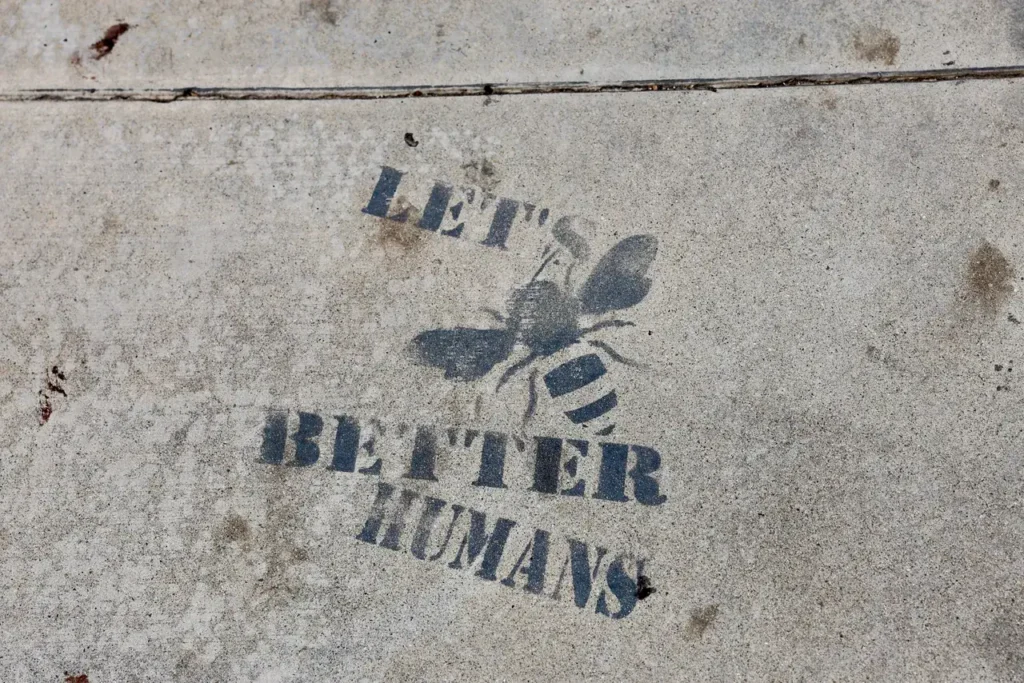
“It is just chalk” is the most expensive sentence in sidewalk advertising.
I hear it on nearly every first call. The logic is that chalk washes off, so nobody can object, so none of the usual permission work applies. Clients treat it as the format with no rules.
It has rules. They are just not the ones people expect, and they come from four different directions at once: the property owner, the municipality, the material itself, and the weather. Miss any one of those and you get a campaign that either does not happen or does not survive the first morning.
This page is the operator’s version of the rules. What chalk stencil advertising actually is, what the material will and will not do, how permission works in practice, what the crew does on the night, and the situations where I tell a client to use something else entirely.
I am not going to tell you what it costs, because the number is never what decides whether this works. Surface, permission and weather decide it.
What people mean by “chalk” and why the word causes trouble
The word covers at least three different materials, and clients rarely know which one they are asking for.
**Dry chalk, applied through a stencil as a powder or stick.** This is what the word literally means. It is the least durable and the least crisp. It is genuinely temporary, it brushes off, and it is almost never what a commercial campaign actually wants because it will not survive a night of foot traffic, let alone a week.
**Chalk based spray, a temporary marking product designed to wash away.** This is what most commercial “chalk stencil” work actually uses. It sprays through a stencil, gives you a reasonably crisp edge, and is formulated to break down with water and weathering over a relatively short period. It is the workhorse.
**Water based temporary marking paints.** More durable again, still designed to come off, but the removal conversation is different and so is the permission conversation. Some clients use “chalk” to describe these, which causes real confusion when a property owner hears “chalk” and then sees something that does not vanish in the first rain.
The rule I apply: never let the word chalk do the talking in a permission conversation. Describe the actual material, how it is removed, and roughly how long it persists. A property owner who agreed to “chalk” and got something more durable is an owner who will never work with you again, and they would be right.
That precision matters internally too. A brand team imagining pastel sidewalk drawings and an agency planning crisp branded stencils are picturing different campaigns.
Rule one: the surface decides more than the material
Sidewalk stencil work succeeds or fails on substrate, and the crew learns this fast.
**Smooth, sound, poured concrete** is the best case. Clean edges, even coverage, predictable removal. Most newer municipal sidewalk sits here and this is one of the few formats where newer concrete is an advantage rather than a problem.
**Older open textured concrete** works, but the edge is softer because the material settles into the texture unevenly. Bold shapes fine, fine detail compromised.
**Brick and pavers** are difficult. The joints break up the image, the mortar and the unit absorb at different rates, and removal is uneven because material sits in the joints after it has gone from the faces. We will run bold shapes on brick. We avoid wordmarks.
**Asphalt** takes the material but reads poorly, because the dark base kills contrast on anything but very light, opaque colours. It also holds material longer than concrete, which complicates the temporary promise.
**Sealed or polished surfaces** are a removal risk in the other direction. Material may sit on the surface and lift easily, which sounds good, but it can also scuff or leave a shadow on a polished finish. Plaza stone and terrazzo are generally a no from me.
**Anything wet, dusty or recently cleaned with a residue** will not take properly. The surface needs to be dry and free of loose grit, which is why the crew sweeps before anything else happens.
Two practical consequences. Request photographs of the actual pavement, not a wide street shot. And accept that the location list will change after survey.
Rule two: permission is still a conversation, and it is a grey area
This is where the “it is just chalk” assumption does the most damage.
Temporary marking on a surface somebody else controls is still a marking on a surface somebody else controls. The fact that it washes off changes how easy the conversation is. It does not remove the need to have it.
On the ordinance side, the honest position is that this is a grey area. Whether a temporary commercial stencil on pavement is treated as advertising requiring a permit, as a temporary marking of no concern, or as something falling under local nuisance or defacement provisions varies by municipality. Many codes were drafted without this format in mind. Enforcement is inconsistent between cities, and sometimes between districts within the same city, often driven by whether a local business group has complained about something similar before.
I am a campaign operator, not a lawyer, and I will not tell you this format is legal or illegal anywhere. That question belongs to your counsel and the relevant local authority, with your specific site, material and artwork in front of them.
What I can tell you is how we reduce the uncertainty, because that part is ours.
**We default to privately controlled surfaces.** Building frontage, private plazas and courtyards, parking areas, campus walkways, event footprints, venue approaches. A private surface with a willing owner removes the biggest unknown in one step.
**We get permission in writing.** Naming the exact surface, the dates, the artwork, the material being used, and the removal commitment. Verbal approval from someone who turns out not to control the frontage is the most common cause of an aborted job in every street format we run.
**We check the layers above the owner.** Leases, management companies, business improvement districts, campus facilities policy, historic district overlays. Owners forget these exist until they surface mid campaign.
**We name the material explicitly.** See above. This is the single most important sentence in the permission email.
**We commit to removal in writing.** Even though the material is designed to break down, we commit to removing it on request. That commitment converts hesitant owners more reliably than any other argument.
**We document everything.** Before and after photographs, timestamps, locations, crew log, copy of the permission.
**The crew has a stop rule.** If someone with apparent authority asks us to stop, we stop, we are polite, we leave the site tidy and we escalate the next day. Nobody has ever won a code argument on a sidewalk at 2am.
Rule three: campuses and events have their own rulebooks
Two of the strongest environments for this format come with their own governance, and ignoring it wastes more time than the municipal question ever will.
Campuses typically have a posting or promotions policy administered by a student affairs or facilities office, often with its own approval form, its own list of approved locations, and frequently a requirement that an on campus sponsor or department is attached to the activity. Some campuses welcome this format on walkways and are easy to work with. Some prohibit exterior commercial promotion outright. There is no way to know but to ask, and the approval cycle is often slower than the campaign timeline assumes. Start that conversation weeks out, not days.
Event and venue environments are usually simpler, because there is a single operator controlling the footprint, but they frequently have exclusivity arrangements with sponsors. A venue that would happily let you stencil its approach may be contractually unable to if a competing category sponsor exists. Ask early and ask specifically.
Both environments share a useful trait: one decision maker. When the answer is yes, the rest of the job is straightforward.
Rule four: weather is a hard gate, not a preference
Water removes this material. That is the entire design intent, and it is also the operational constraint.
Going in, the surface must be dry. Material applied to damp concrete bleeds, loses edge definition and bonds unpredictably.
During the run, rain is the clock. A sustained rain shortly after install can take a stencil campaign down to a ghost overnight. Light rain usually softens it rather than erasing it. There is no reliable rule and I will not invent one.
In freezing conditions we do not work. Applying liquid to a public walkway below freezing creates a hazard and that is a hard stop regardless of what the schedule says.
Summer heat is largely fine and actually helps, because the surface dries fast after application and sets the edge.
The practical planning consequence is that chalk stencil campaigns need a weather window and a contingency night. We build one in as standard. Clients who schedule a single install night with no fallback are gambling, and in a lot of markets the odds are not good.
Multi market programmes roll out staggered for this reason. Anyone promising a synchronised national launch night on this format has not run one.
What a night actually looks like
A standard sidewalk stencil crew is two people. One applies, one handles stencil placement, masking, sweeping and watching the street. Three or four for a high volume night, for anything near a travel lane, or for large format artwork that needs multiple hands to hold registration.
Kit is cut stencils, the marking material, masking for overspray control, brushes or a blower for surface prep, rags, lighting, high visibility gear, and the documentation kit.
The sequence per mark:
Overnight is standard in commercial corridors, roughly from late evening to first light. Not for secrecy, for practicality. You cannot mask a sidewalk properly while people walk through your stencil, and a pedestrian stepping onto a fresh mark takes your artwork down the street on their shoe.
We stop before the morning commute whether or not the list is complete.
Rule five: design for the medium
Artwork decisions have more effect on the result than anything the crew does.
**Generous stroke weight.** Thin lines bleed, break up on texture and are the first thing to disappear.
**Simplify to silhouette.** No gradients, no fine outlines, no drop shadows.
**Open the internal counters.** Enclosed spaces in letterforms close up as material creeps under the edge. Open them wider than brand guidelines would normally allow.
**Scale up.** Sidewalk marks are seen by people looking down from walking height. Bigger reads better and degrades more gracefully.
**Limit colours.** Each additional colour is another stencil layer, another registration step and another chance for misalignment. Single colour work is dramatically faster and cleaner.
**One idea per mark.** A bold logo and a short line. Not a URL, not legal text. QR codes are a maybe at best, and I will not promise scan reliability on textured pavement.
Brand teams push back on simplification regularly. The honest trade is a faithful mark that reads badly or a simplified mark that works. Pavement is not a reproduction surface.
Rule six: removal is part of the job, not an afterthought
Even though the material is designed to break down, removal gets scoped and committed in writing.
In practice removal is usually a wash with water, sometimes with agitation on textured surfaces where material has settled into the pores. Brick and pavers take longer because the joints hold material after the faces are clear.
The reason to commit to it formally has little to do with the material and everything to do with the relationship. An owner who knows you will come back and clean it if asked says yes more readily and lets you return for the next campaign. An owner left to deal with it themselves tells the next crew no.
What we talk clients out of
**Treating chalk as a permission free format.** It is not. The conversation is easier, not absent.
**Single night schedules with no weather contingency.** We build a fallback night in or we do not schedule.
**Detailed brand artwork reproduced faithfully.** Simplify or accept a poor result.
**Multi colour registration on a high volume night.** The maths does not work. You will get fewer, worse marks.
**Long campaigns carried entirely on chalk stencils.** This is a short duration format. Planning a sustained presence on it means repeated install nights, which is a different and much larger operation than clients assume. For a sustained run, printed sidewalk decals hold their appearance far longer and come up on a known schedule.
**Brick plazas with a wordmark.** The joints will eat it.
**Asphalt for anything subtle.** The contrast is not there.
**Any campaign where nobody has asked who controls the pavement.** That question comes first, always.
Where it genuinely shines, and what to pair it with
Chalk stencil work is at its best as a short, high density burst tied to a moment. Event approaches, conference districts, campus weeks, launch weekends, the walk between a transit exit and a venue. You want volume of marks over a short window, in places where people walk slowly and look down.
It is cheap in effort terms per mark once the crew is rolling, it is genuinely temporary, and it is the easiest street format to get a property owner comfortable with. That combination is why it is such a good burst tool.
What it is not is a backbone. For a campaign that needs sustained presence across weeks and multiple markets with consistent appearance, Sidewalk Decals & Stencils in printed decal form carries the load far better. The artwork is identical everywhere, it holds its appearance for a defined period, and it comes up on a known schedule.
The structure I recommend most often is decals for the sustained consistent layer and chalk stencils as a concentrated burst in the days around the moment that matters. The burst creates density when density is worth paying attention for, and the decals keep the campaign present the rest of the time.
Frequently asked questions
Do you need permission for chalk stencil advertising?
You need the surface owner’s permission and we insist on it in writing, naming the surface, dates, artwork, the exact material and the removal commitment. On the ordinance side it is a grey area that varies by municipality and is enforced inconsistently. We default to privately controlled surfaces, we are not lawyers, and we never characterise the format as legal or illegal.
How long does a chalk stencil campaign last?
Short. It is a burst format, not a sustained one. Foot traffic, weather and surface texture all shorten it, and a sustained rain shortly after install can reduce marks to ghosts overnight. For presence across weeks with consistent appearance, printed sidewalk decals hold far better and come up on a known schedule.
What surfaces work best for sidewalk stencils?
Smooth, sound, dry poured concrete gives the cleanest edge and the most predictable removal. Older open textured concrete works with bold shapes but softens fine detail. Brick and pavers break the image at the joints and hold material in them during removal. Asphalt kills contrast, and polished stone or terrazzo carries a finish risk we avoid.
Is chalk the same as temporary marking spray?
No, and the distinction matters in permission conversations. Dry chalk is genuinely temporary and rarely survives commercial use. Most commercial stencil work uses a chalk based temporary spray designed to wash away. Water based marking paints are more durable again. Always name the actual material to the property owner rather than letting the word chalk do the talking.
How many people are on a sidewalk stencil crew?
Two for standard work: one applying, one handling placement, masking, sweeping and street awareness. Three or four for high volume nights, work near travel lanes, or large artwork needing multiple hands on registration. Masking and positioning takes far longer than application, especially on artwork with multiple internal islands in the letterforms.
What happens if it rains during the campaign?
Rain is the clock on this format, since water removal is the design intent. A sustained rain shortly after install can take marks down to ghosts overnight, while light rain usually just softens them. We require a dry surface going in, build a contingency install night into every schedule as standard, and stagger multi market rollouts accordingly.
Request a campaign quote
Send the corridors or footprints you have in mind, photographs of the actual pavement, a note on who controls it, and the window you are working toward. We will tell you which surfaces will hold a clean edge, where the permission work will be straightforward, where a campus or venue policy will set the timeline, and whether a burst of stencils or a printed decal programme fits the brief better.
If the artwork needs simplifying, we will show you what it will actually look like on concrete before anyone commits.
Request a campaign quote and we will start with the pavement.

Ready to Run Your Campaign?
Call us or email us. We’ll tell you exactly what we can do in your market and what it costs.
Related Services
Explore similar advertising solutions offered by American Guerrilla Marketing.
American Guerrilla Marketing — Los Angeles
Street-level campaigns in Los Angeles and nationwide. Wheatpasting, LED trucks, street teams, and more.
(646) 776-2770
Related Articles
-
Sidewalk Decals and Stencils in Baltimore, Maryland
November 16, 2026
-
How Sidewalk Decals & Stencils Runs in Jacksonville
November 16, 2026
-
How Sidewalk Decals and Stencils Runs in Athens
November 13, 2026
-
How Sidewalk Decals & Stencils Runs in Colorado Springs
November 13, 2026
-
How Sidewalk Decals & Stencils Runs in Chicago
November 13, 2026