
November 16, 2026
Poster Removal Responsibility: Who Takes It Down
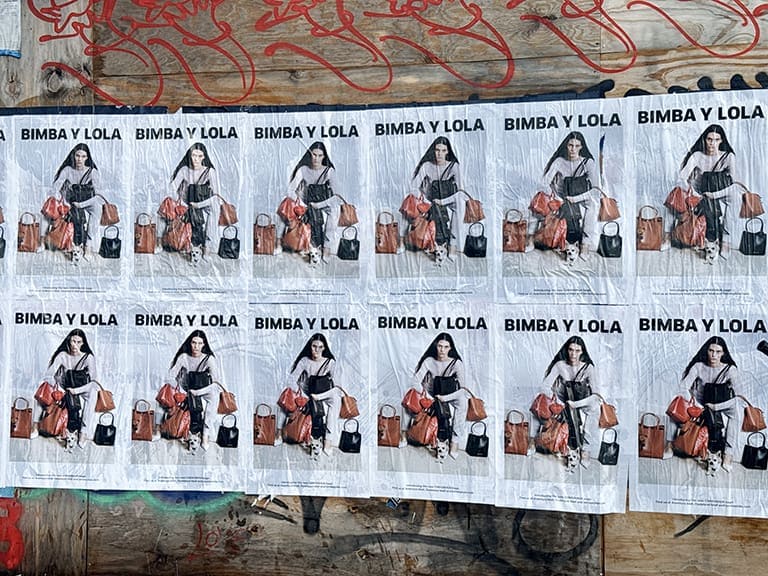
Removal is the line item marketers try to cut and the one I refuse to cut.
I have had the conversation more times than I can count. The campaign is scoped, the surfaces are identified, the creative is approved, and then someone looks at the scope document and asks whether the removal pass is really necessary. Does the paper not just weather off eventually. Is this not something the property owner handles. Could we not just leave it and see.
No, no, and absolutely not.
I am Livy Phillips. I run campaigns at American Guerrilla Marketing. I am not a lawyer and nothing here is legal advice. Posting rules themselves are a grey area that varies by municipality, by surface ownership and by how inconsistently local ordinances are enforced, and I will not tell you that anything is legal or illegal.
What I will do is explain who actually ends up holding the removal obligation, what removal physically involves, what surfaces look like afterwards, how the responsibility question should be written into an agreement before anything prints, and why the brand whose face is on a peeling wall is the one that wears it.
Why removal is a brand problem, not an operations detail
Think about what an abandoned campaign looks like six weeks after it ended.
Paper that was crisp on install night has taken rain, sun and wind. Corners have lifted. A sheet has torn across the middle and the lower half is hanging. The colour has gone chalky. Somebody has pulled a strip off at head height. On a multi sheet block, three panels are gone and four remain, so the artwork is unreadable but the logo is still perfectly legible.
That is the asset now representing your brand on that corner. It will keep representing you until somebody removes it, and the longer it stays the worse it reads.
There is a second order problem that is bigger. Accumulated paper on a corridor generates complaints from residents and business associations. Complaints produce district cleaning contracts and a stricter municipal posture. That posture closes the corridor for everybody, including operators who were doing the work properly with permission.
So removal is simultaneously a brand safety issue, a property relationship issue and a long term access issue. Cutting it saves nothing that matters and costs things that do.
Who actually holds the obligation
This is the question marketers ask and the honest answer is that it depends on the arrangement, which is exactly why the arrangement needs to be explicit.
There are typically three parties who could be understood to hold it. The brand commissioning the campaign. The operator performing the install. The property owner whose surface it is.
Between the brand and the operator, it is a matter of what the engagement says. If the scope of work names removal, names who performs it, and names a date, the question is settled. If the scope is silent, you have an unallocated obligation and an argument waiting to happen.
Between either of those parties and the property owner, it depends on the permission agreement and on local rules, which in many places place property maintenance duties on the owner regardless of who put the material there. That is a significant point for buyers to understand, because it explains why property owners care so much. An owner who grants permission and is then left with the mess may carry the cleanup burden themselves. That is the fear behind almost every no we receive.
I am not going to tell you how this resolves in any particular jurisdiction. I am telling you to write it down. Before print, the engagement should say who performs removal, on what date, to what standard, and what happens if a site has to be pulled mid run.
Every campaign we run carries removal in scope. The run ends, our crew goes back out, the paper comes down, and the removal is documented the same way the install was.
What removal actually involves
It is wet, slow, unglamorous work, and it is harder than installing.
The crew arrives with water, scrapers and bags. Paper gets soaked until the paste releases, then scraped off in sheets and strips, then bagged and removed from site. Nothing gets swept into a gutter.
Removal crews are smaller than install crews, usually two people. A removal pass over a city run is often a single shift. Multi sheet blocks take longer than single sheets, because the panel overlaps hold paste in layers and the lower courses have been weathering longest.
Timing differs from install. We often remove during daylight or early evening rather than in the deep overnight window, because removal benefits from being able to see the surface and because a crew visibly cleaning a wall attracts no concern from anyone.
Weather affects removal as much as install. Cold makes paste release slowly and makes standing water a hazard on the sidewalk. Hot dry conditions in Phoenix or Los Angeles bake paste hard and mean more soaking time per sheet. Rain, counterintuitively, helps: paper that has been rained on for a day comes off faster.
Age works against you in both directions. Paper removed shortly after a run comes off in large pieces. Paper that has been up for months, through freeze cycles and sun, has become brittle and comes off in fragments, which turns a one shift job into something considerably longer.
That is the practical argument for removing on schedule rather than when someone gets around to it.
What the surface looks like afterwards
I tell property owners this before we paste, not after, and I will tell you the same.
Smooth painted concrete and block. Cleans up close to invisible. This is the best case and it is a common surface.
Sealed plywood hoarding. Very good. Barrier board is designed to shed weather and it releases paper well.
Unsealed or raw plywood. Less good. Raw timber absorbs paste and can hold a visible patch, and the grain can raise slightly where it got repeatedly wet. We prefer sealed barriers for that reason.
Clean metal roll shutters. Excellent. Metal releases cleanly.
Modern flat face brick. Usually acceptable, with a faint residue that fades over following weeks.
Soft old brick with deep raked mortar. The problem case. Paste penetrates the pores and the mortar lines, and what remains is a ghost, a faint outline of the poster that is visible at close range and from certain angles in certain light. It weathers out over following weeks but it does not vanish on removal day. I will often decline a permissioned soft brick wall outright for this reason, because the owner relationship is worth more to me than one placement.
Painted surfaces in poor condition. If the paint was already chalking or flaking before we arrived, removal will take some of it with the paper. We photograph condition before install specifically to avoid a dispute about this, and if a surface looks marginal we decline it.
That pre-install photograph is not bureaucracy. It is the single document that protects everybody when an owner asks later whether that patch was there before.
Documentation, and what a removal report should contain
An install without a report is a claim. A removal without a report is also a claim.
What we provide: photographs of every site before install, after install, and after removal, each geotagged and timestamped, with the location list. The client receives all three sets.
That record does several jobs at once. It proves the campaign ran where it was supposed to run. It proves the paper came down and when. It gives the property owner evidence if they are ever asked about their surface. And it gives the brand a defensible account of what it did and when, which matters more than most marketers expect until the day it matters a great deal.
Clients occasionally ask us to drop the removal photography to simplify reporting. We do not. The after-removal set is the only proof that the obligation was discharged, and it is the first thing anyone asks for if a question arises later.
When removal should happen
The timing is campaign dependent and it should be set at planning, not improvised.
For event tied campaigns with a hard date, we typically remove shortly after the event has passed, because the creative stops being useful at that moment and starts being litter.
For brand or product campaigns running a sustained window, removal is scheduled at the end of the run. In practice that is usually a few weeks after install, which lines up well with the physical reality: paper on a good surface with a clean install looks right for a few weeks and starts looking tired after that.
In busy corridors, particularly in New York and in Austin during festival season, the binding constraint arrives sooner. Other operators’ paper goes up over yours. At that point your campaign has effectively ended whether or not the date says so, and there is an argument for removing earlier.
We also build check passes into longer runs. A crew goes back mid run, photographs the sites, and reports what is still intact, what has been papered over, and what has lifted. For campaigns where the surfaces matter, that mid run visibility is worth having, and it lets us make a removal decision based on what is actually on the wall rather than on a calendar.
What goes wrong
Nobody owned it. The most common failure. Scope was silent, the campaign ended, the agency assumed the operator was handling it and the operator assumed the brand had not bought it. Paper stayed up. Months later a property owner called somebody angry.
Removal was scheduled too late. Paper left through a winter freeze cycle or a Phoenix summer goes brittle and comes off in fragments. A job that should have been one shift becomes several, and the surface result is worse.
The surface was wrong for removal and nobody checked. Soft brick, chalking paint, raw timber. All of these are predictable at scout stage. A crew that only thinks about whether a surface will hold paper, and not about what it looks like when the paper comes off, is doing half the job.
Nobody planned for the sites that were never installed. On most campaigns a handful of planned surfaces do not get used, because the barrier came down, the wall was repainted, or the frontage changed hands between scout and install night. If the removal list is built from the original plan rather than the actual install report, a crew goes looking for paper that was never there and misses substitutions that were. The removal list has to be generated from the install documentation, not from the proposal. That sounds obvious. It is the single most common administrative failure I see in this part of the job, and it is why our removal run sheet is built directly from the geotagged install set rather than from the surface plan.
Permission expired before the paper did. An owner granted a four week window, the campaign ran six, and now the brand is somewhere it was not invited. We hold removal dates to the permission dates, not to the marketing calendar.
The campaign was papered over and everyone forgot about it. Covered paper is still your paper underneath. When the top layer comes off in a weather event, your creative is the thing hanging in strips. We remove our own layers regardless of what is on top of them.
What I talk clients out of
Skipping the removal pass. Already covered, and the answer is no. We do not run campaigns that way.
Assuming weather will handle it. It will not. Cured wheatpaste on a sheltered surface is more durable than people expect, and the half-removed state it eventually reaches is uglier than the intact state by a wide margin.
Leaving removal to the property owner as a favour. Some owners offer. I still send a crew. An owner with a scraper and a Saturday afternoon is not going to produce a clean surface, and the relationship damage when they discover that is permanent.
Treating a mid run cover-up as campaign failure. Buyers sometimes want paper replaced immediately when a site gets covered. On contested corridors that becomes an arms race you will not win. The better answer is a surface list with enough depth that no single site carries the campaign, and a realistic view of what dense corridors do.
Buying a longer run than the surface supports. If a corridor turns over every two weeks, buying a two month run on that corridor is buying something that will not exist. I would rather scope a shorter honest run and talk about what else fills the remaining weeks.
Where street teams fit, and why they pair well with removal discipline
For clients who want continued presence after the paper comes down, Street Teams and experiential work are the natural follow on, and they solve a problem posters structurally cannot.
Paper is passive. It sits on a wall and waits. Street teams put people in the same corridors with the same message, and people can respond to context: they can hand something to a specific person, they can be at a venue door at closing time, they can move to where the crowd actually went.
The practical pairing I recommend: paper runs across permissioned corridor surfaces to build recognition over a few weeks, the removal pass goes out on schedule, and a street team works the same corridors during the final week and the week after. By then the creative is familiar to anyone who walks that route, and the team is reinforcing something people already half know rather than introducing it cold.
Street teams also carry no removal obligation, which matters more than it sounds. Nothing is applied to anything. When the shift ends the corridor is exactly as it was. For brands that are nervous about the posting question in a given city, that is often the easier first step, and it generates the corridor familiarity that makes a later paper campaign worth doing.
Crew reality on street teams is different: daytime and evening rather than the one to five in the morning window, larger groups, and a supervisor who reports locations and hours rather than photographs of walls.
Frequently asked questions
Who is responsible for removing posters after a campaign?
It depends on what the engagement says, which is exactly why it should be explicit before anything prints. The scope should name who performs removal, on what date, and to what standard. Separately, local rules in many places place property maintenance duties on the owner regardless of who placed the material, which is why owners care so much. We carry removal in scope on every campaign.
What does poster removal physically involve?
Soaking the paper until the paste releases, scraping it off in sheets and strips, then bagging it and taking it off site. A two person crew can usually cover a city run in a single shift. We often work daylight or early evening rather than overnight, because seeing the surface matters and a crew visibly cleaning a wall concerns nobody.
Will removal damage the wall?
On suitable surfaces, no. Smooth painted concrete, block, sealed hoarding and clean metal shutters clean up close to invisible. Soft old brick holds a faint ghost outline that weathers out over following weeks. Already chalking or flaking paint can lift with the paper, which is why we photograph surface condition before install and decline marginal surfaces.
How long after a campaign should posters come down?
At the end of the agreed run, and never later than the permission window the property owner granted. For event tied campaigns that usually means shortly after the event. Removing on schedule also makes the job easier, because paper left through freeze cycles or strong sun goes brittle and comes off in fragments instead of sheets.
What happens if someone pastes over our posters mid campaign?
On dense corridors it happens, particularly in New York and in Austin during festival season. Covered paper is still your paper underneath, and when the top layer weathers off your creative is what hangs in strips. We remove our own layers regardless of what is on top. Mid run check passes tell us what is actually still on the wall.
What proof do we get that the removal happened?
Photographs of every site after removal, geotagged and timestamped, alongside the before install and after install sets, with the full location list. That after removal set is the only evidence the obligation was discharged, and it is the first thing anyone asks for if a property owner or a brand raises a question months later.
Request a campaign quote
If you are scoping a poster campaign, get the removal terms settled before you get the artwork approved. Who performs it, on what date, to what standard, and what the documentation looks like.
Tell me your markets and your window and I will show you how we scope it, including the surfaces I would decline and why. Request a campaign quote and we will plan the end of the campaign at the same time as the beginning.

Ready to Run Your Campaign?
Call us or email us. We’ll tell you exactly what we can do in your market and what it costs.
Related Service
Explore similar advertising solutions offered by American Guerrilla Marketing.
American Guerrilla Marketing — Los Angeles
Street-level campaigns in Los Angeles and nationwide. Wheatpasting, LED trucks, street teams, and more.
(646) 776-2770
Related Articles
-
Wheatpasting & Poster Campaigns in Charleston, SC
November 16, 2026
-
Wheatpasting & Poster Campaigns in Indianapolis, Indiana
November 16, 2026
-
Poster Campaigns & Wheatpasting in Memphis, Tennessee
November 13, 2026
-
Wheatpasting & Poster Campaigns in Cleveland, Ohio
November 13, 2026
-
Poster Campaign for a Single Release: Install Guide
November 13, 2026