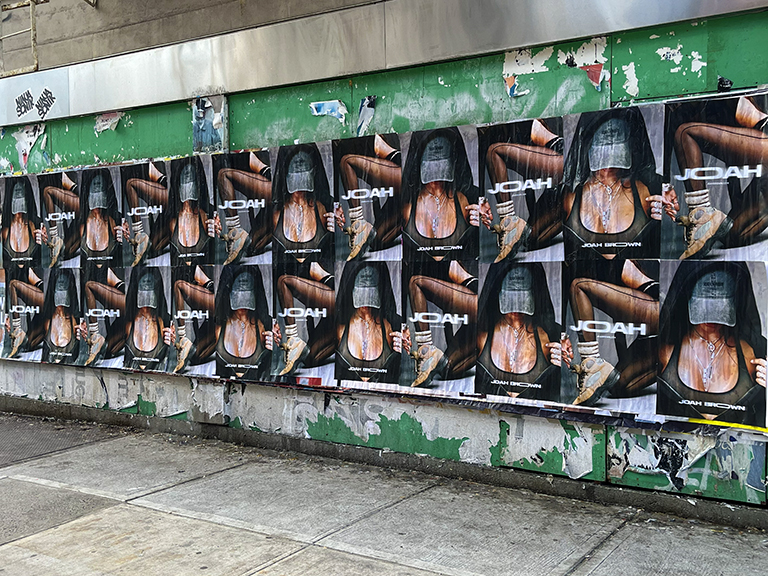
Wheatpasting in Polanco Mexico City: Luxury Brand Strategy starts with matching the right streets, surfaces, audience, and campaign timing. AGM’s field team has coordinated wheatpaste campaigns in Polanco for luxury brands, premium hospitality concepts, and financial services clients. Our operators in CDMX approach Polanco with a more selective wall inventory than in Roma Norte or Condesa — fewer total surfaces but each one carefully chosen for visibility and audience alignment. From our experience running campaigns in Mexico City’s premium colonias, Polanco requires precision over volume.
Polanco is not a wheatpaste-friendly neighborhood in the conventional sense. The streets are manicured, the building owners are attentive, and the Miguel Hidalgo alcaldía runs a more active outdoor advertising enforcement operation than most of CDMX. But brands that need to reach Mexico City’s highest-income consumers — and there are a lot of them concentrated in and around Polanco — can’t simply skip the neighborhood and hope for reach spillover from Roma Norte.
Running a wheatpaste campaign in Polanco requires adapting the playbook. It’s less about volume and coverage, more about precision placement on the right surfaces with the right agreements in place. Done well, a Polanco wheatpaste component delivers something that most other forms of advertising in this neighborhood can’t match: the credibility of being street-level in a zone that doesn’t normally host street-level campaigns.
That contrast is part of the value. When a luxury fashion label or a premium spirits brand puts up flyposting in Polanco, it reads differently than the same campaign running in Roma Norte. It breaks the expected visual register of the neighborhood in a way that earns attention.
Understanding Polanco’s Geography
Polanco is located in the Miguel Hidalgo alcaldía, north of Chapultepec Park and west of the Periférico. Its central spine is Avenida Presidente Masaryk, widely considered Mexico City’s most exclusive shopping street — Louis Vuitton, Hermès, Prada, and their Mexican-market equivalents line the boulevard alongside the flagship restaurants of renowned chefs. North of Masaryk, the colonia transitions to residential blocks organized around a numbered street grid (Calle Anatole France, Oscar Wilde, Molière, Newton) that holds some of the most expensive real estate in the city.
The southern edge of Polanco borders Chapultepec, one of the largest urban parks in the world. Bosque de Chapultepec draws millions of visitors annually and creates pedestrian flow into Polanco on weekends, particularly toward Masaryk and the restaurants on the park’s Polanco side.
Polanco is home to the Soumaya Museum and the Jumex Museum, two of Mexico City’s most prominent contemporary art institutions. Their presence draws culturally engaged audiences who are among the most receptive to quality street campaign work in the colonia.
The Wall Situation in Polanco
Wall availability in Polanco is the first practical challenge any operator faces. The colonia’s residential character means that much of its surface area is controlled by private residents and building associations (condominios) that don’t accept outdoor advertising. The commercial corridor along Masaryk has significant retail frontage that’s entirely glass and aluminum — no paste surface at all.
What does exist:
- Construction hoardings: Polanco has ongoing construction from residential tower projects and commercial renovations. These temporary fencing installations are the most practical campaign surfaces in the colonia, particularly for campaigns that want adjacency to specific project sites without needing a private wall arrangement.
- Preapproved private walls: Operators with established Polanco networks have a limited number of building owners who accept campaigns. These walls tend to be on back streets and secondary corridors rather than Masaryk itself, but their proximity to the colonia’s commercial and cultural core still delivers solid audience exposure.
- Service corridors and loading zones: The rear-facing walls of commercial buildings on Masaryk — in the alley and service access zones — are sometimes available and offer unique adjacency to the most premium retail environment in the city.
What Works and What Doesn’t for Polanco Campaigns
The operational reality of Polanco means you need to adjust expectations compared to what you’d assume from a Roma Norte campaign. Here’s a direct comparison:
| Factor |
Roma Norte |
Polanco |
| Wall availability |
High — many options across wide area |
Limited — operator networks essential |
| Enforcement risk |
Medium — variable by block |
Higher — more active removal in unauthorized zones |
| Audience income level |
Mid-high |
High to very high |
| Campaign volume |
50-200 placements typical |
15-40 placements more realistic |
| Cost per placement |
Standard market rate |
Premium — wall access costs more |
| Best for |
Mass creative, music, fashion, youth |
Luxury, premium, high-ticket offerings |
Strategy: Polanco as Part of a Larger Campaign
The most effective approach to Polanco isn’t running it as a standalone campaign — it’s running it as the premium layer of a city-wide or multi-colonia campaign. The structure works like this:
Roma Norte and Condesa carry the volume — that’s where the campaign gets its reach numbers and where the cultural momentum of a street campaign is built. Polanco adds a targeted premium layer: fewer placements, higher per-unit impact, specifically positioned to hit the high-income consumer zone that the broader campaign won’t reach efficiently through Roma Norte alone.
For a fashion label entering the Mexican market, this structure makes immediate sense. The brand needs Roma Norte for cultural legitimacy and scale. It needs Polanco to be seen by the customers who will actually buy the product at full price. Running both simultaneously creates a campaign that spans the relevant audience spectrum.
The Polanco placements are never going to be your volume story. They’re your precision story — proof that the campaign was thoughtful enough to show up where the right people actually are.
Key Polanco Destinations That Drive Foot Traffic
Campaign placement in Polanco should be oriented around the key destinations that bring people into the colonia and keep them there long enough for street media to register:
Parque Lincoln: The neighborhood park at the core of residential Polanco. Used by families, nannies, dog walkers, and residents throughout the day. Walls adjacent to or visible from the park deliver sustained exposure to the upper-income residential base of the colonia.
The Masaryk restaurant cluster: The blocks around Presidente Masaryk between Molière and Arquímedes hold some of the most prominent restaurants in Mexico City. Lunch and dinner traffic through this zone is heavy with business diners, expense-account meals, and special occasions — a high-income crowd by definition.
Museo Soumaya and Museo Jumex: Both museums are in the Nuevo Polanco area (technically part of the Miguel Hidalgo alcaldía but adjacent to classical Polanco). The foot traffic between these institutions includes art-interested, culturally active visitors who respond to quality visual material in the street environment.
Print Standards for Polanco Campaigns
One thing that matters specifically in Polanco: print quality. The visual environment of the colonia is high-end. A poorly printed, washed-out poster on a Polanco wall doesn’t just underperform — it works against the brand by associating it with low-production-quality execution in a neighborhood that skews toward premium everything.
Campaigns destined for Polanco placement should use higher-quality print stock and ink, particularly if the art involves photography or gradient-heavy design. The incremental cost of premium print production is small relative to the cost of the campaign overall, and the visual impact difference in a high-scrutiny environment like Polanco is real.
Surface Availability and Wall Character in Polanco
Polanco is the most operationally challenging campaign zone in Mexico City — not because of formal regulation, but because of the built environment and maintenance culture. The colonia’s streets are meticulously maintained. Graffiti removal is fast. Building facades on the premium residential and commercial streets are typically finished in materials that don’t accept paste well: polished stone, glass, modern metal cladding, sealed concrete.
Workable surfaces in Polanco are concentrated in specific zones that experienced operators know well. The secondary commercial streets — Presidente Masaryk’s side streets, the blocks behind the Antara fashion mall, the residential street zones west of Newton — have older building stock with rough plaster facades that accept paste adequately. The neighborhood just inside the Polanco boundary on the side streets off Ejército Nacional has similar surface quality at lower competitive pressure from other operators.
Construction hoarding is the most reliable Polanco surface when available. The colonia has seen significant new luxury residential and commercial development, and active construction sites provide temporary hoarding panels that are visible from pedestrian sidewalks. These sites rotate in and out of availability as projects complete, so operators who track active construction in Polanco can maintain rolling access to fresh, clean paste surfaces.
From our experience running campaigns in Mexico City, Polanco campaigns work best when the placement count is smaller and the location selection more precise. A 20-location Polanco campaign in the right 20 locations outperforms a 50-location scatter approach in Polanco because the audience is concentrated on a few specific pedestrian corridors and the most visible walls on those corridors are worth paying for.
Polanco sits within the Miguel Hidalgo alcaldía, which covers portions of some of the highest-income zones in Mexico City. The Masaryk corridor is regularly cited as one of Latin America’s highest-grossing retail streets. Brands targeting the premium Mexican consumer market treat Polanco as a required presence, not an optional addition.
Who You Reach in Polanco
Polanco’s resident and regular visitor population is among the most affluent in Mexico City. Long-term residents include executives, established professionals, families with generational wealth in the city, and Mexico’s diplomatic community (many embassies are located in or adjacent to Polanco). The daytime population expands to include office workers from the colonia’s significant business district, shoppers from across the metropolitan area visiting the Masaryk and Antara retail zones, and restaurant guests at the colonia’s many high-profile dining destinations.
The international dimension of Polanco’s audience is significant. The colonia has a higher concentration of international business visitors and wealthy tourists than any other Mexico City neighborhood. For global luxury brands, Polanco delivers an audience that includes Mexican consumers and international visitors simultaneously — a combination that justifies premium placement costs.
The demographic skew is noticeably older than Roma Norte or Condesa — the Polanco core audience is more heavily weighted toward 35-60 than the 25-42 of the creative colonias. That difference matters for campaign creative and for the types of brands that belong in Polanco versus elsewhere in the city.
Seasonal and Timing Considerations in Polanco
Polanco’s commercial activity is more evenly distributed across the year than the culturally event-driven colonias. The Masaryk shopping corridor sustains high foot traffic year-round, peaking during the holiday season (November through early January) and during major fashion and luxury events on the Mexico City calendar.
Día de Muertos has less impact on Polanco foot traffic than on Roma Norte or Coyoacán. The colonia’s more formal character means the holiday’s street-level celebration is muted compared to the artistic colonias. For brands tying campaigns to Día de Muertos cultural moments, Polanco is the wrong zone — Roma Norte, Condesa, or Coyoacán will deliver more appropriate cultural context and higher foot traffic during the holiday period.
The Mexico City summer (July and August) sees some international visitor volume decline, but Polanco’s domestic business and residential population sustains the colonia through the summer months. Summer also corresponds with Mexico City’s rainy season, which affects afternoon foot traffic on the main commercial corridors — people avoid outdoor walking during the heavy afternoon rains that typically hit between 3pm and 6pm. Morning and evening foot traffic are less affected.
The best Polanco campaign window is October through December — after the summer rain season and during the holiday period that drives luxury retail to peak activity. Fashion brands, luxury product launches, and premium consumer campaigns timed to this window find their target audience at peak engagement and spending.
Past Campaign Performance in Polanco
AGM’s field team has coordinated Polanco campaigns for luxury fashion, premium hospitality concepts, and financial services brands. The consistent observation: Polanco campaigns generate lower organic social media pickup than Roma Norte campaigns but higher direct conversion among the specific audience they’re targeting. A poster on Presidente Masaryk seen by a Polanco resident and repeated Polanco visitor is seen multiple times across different visits — the frequency effect compensates for the lower photographic amplification.
The premium audience in Polanco responds to campaign creative differently than the creative-professional audience in Roma Norte. Designs that signal quality, restraint, and brand heritage work better than designs that rely on visual boldness or cultural irreverence. Polanco campaigns have to belong aesthetically in a neighborhood that takes its visual character seriously.
One specific high-performance pattern we’ve observed in Polanco: campaigns placed on the approach streets to major restaurant destinations on Thursday and Friday evenings see strong exposure from a high-income adult audience arriving for dinner. The combination of traffic slowdown and pedestrian walk-to-restaurant behavior creates excellent viewing conditions for campaign posters in those specific locations.
Polanco vs Condesa: Choosing Between Premium Colonias
The question of whether to run in Polanco, Condesa, or both comes up regularly for premium brand campaigns in Mexico City. These are the two highest-income campaign zones in the city, but they serve different positioning purposes and require different campaign approaches.
Condesa signals cultural credibility. Its Art Deco architecture, park-anchored street life, and mix of creative professionals and affluent residents creates an environment where premium brands feel appropriate without feeling stiff. A fashion brand or lifestyle product campaign in Condesa reads as culturally aware. The audience is sophisticated but not exclusively corporate.
Polanco signals luxury positioning. Presidente Masaryk’s high-end retail concentration, the colonia’s corporate business community, and its formal residential character create an environment where premium pricing and exclusivity positioning work better than cultural playfulness. A financial services brand, a luxury hospitality concept, or a luxury fashion label establishing market credibility belongs in Polanco in a way that a streetwear campaign or independent music release doesn’t.
Many campaigns benefit from running both — and the geographic adjacency makes it operationally straightforward to do so. A campaign that places 25 to 30 posters in Polanco’s key pedestrian zones and 60 to 70 in Condesa captures the luxury signal of Polanco presence while building the deeper awareness that Condesa’s higher pedestrian volume provides. The combined cost is typically $1,400 to $2,200 USD more than a Condesa-only campaign of equivalent total scale — a premium that reflects the Polanco wall access costs and the longer execution route.
When budget forces a choice, our recommendation follows the brand’s positioning: luxury-first brands should not skip Polanco, even at reduced Condesa scale. Lifestyle and creative brands can often skip Polanco entirely and invest the budget in deeper Roma Norte and Condesa coverage with stronger ROI for their specific audience.
When Polanco Strengthens a Campaign and When It Does Not
Pages that rank around Polanco usually center on what the neighborhood signals. That matters enormously for street media. Polanco does not simply offer foot traffic. It offers a specific kind of brand backdrop tied to luxury retail, hospitality, business travel, and affluent daily movement. That can be powerful, but only when it matches the brand.
For many campaigns, Polanco works best as an accent within a broader city plan. It can elevate perception, but it may not deliver the same sense of youth-culture immersion as Roma, Juarez, or parts of Condesa. Searchers need help understanding that distinction because Polanco is well known and often over-assumed.
- Use Polanco when the brand benefits from premium context, retail adjacency, or business-travel visibility.
- Do not force Polanco to carry a campaign that needs raw street texture or mass-market energy.
- Treat the neighborhood as part of a broader route, not always the only route.
- Keep the design polished and disciplined because the surroundings change how rough execution reads.
A useful Polanco page should help a brand decide whether the neighborhood improves the story they are trying to tell. That is the intent that usually sits behind the search.
The bottom line for planners is simple: treat wheatpasting polanco mexico city as a campaign decision with tradeoffs, not as a generic city talking point. The campaigns that usually perform best in CDMX define the audience, route logic, reporting standard, and creative threshold before the first sheet goes to print.
That is also why the best briefs stay specific about neighborhoods, install timing, and proof of posting. In Mexico City, clarity before execution usually matters more than chasing a bigger poster count after the fact.
Frequently Asked Questions
Can you run a wheatpaste campaign in Polanco, Mexico City?
Yes, but Polanco requires more precise execution than other colonias. It sits within the Miguel Hidalgo alcaldía, which enforces outdoor advertising rules more actively than Cuauhtémoc. Campaigns here rely heavily on private property agreements and careful surface selection. The audience payoff is significant for brands targeting high-income consumers.
What kind of brands run wheatpaste campaigns in Polanco?
Luxury fashion labels, premium spirits and wine brands, high-end hospitality concepts, premium automotive launches, exclusive real estate projects, and premium entertainment properties targeting affluent consumers all use Polanco for campaign placement.
Which streets work best for wheatpasting in Polanco?
Avenida Presidente Masaryk is Polanco’s luxury retail spine and the most desirable street for campaign adjacency. Avenida Horacio, the blocks around Parque Lincoln, and the Anatole France and Oscar Wilde streets also offer good wall access with proximity to the colonia’s affluent foot traffic.
Is wheatpasting enforcement stricter in Polanco than elsewhere in Mexico City?
Generally yes. Miguel Hidalgo alcaldía, which governs Polanco, tends to be more responsive to outdoor advertising complaints and has more active removal infrastructure. Campaigns that rely on preapproved private walls run with much lower removal risk than those attempting public-surface placements in this zone.
How does a Polanco wheatpaste campaign complement a Roma Norte or Condesa campaign?
Polanco reaches a different economic tier than Roma Norte and Condesa. Adding it to a campaign extends geographic coverage to Mexico City’s highest-income consumer zone. Many campaigns run a Roma Norte / Condesa core with a Polanco supplement to ensure premium demographic coverage without needing to run the entire campaign budget through the higher-cost Polanco environment.