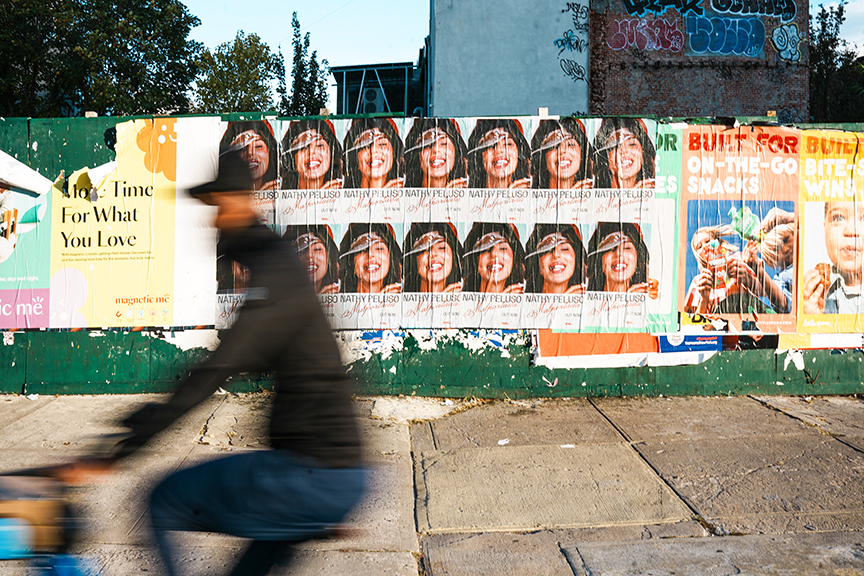
Wheatpasting in Condesa Mexico City: Audience, Streets, and Strategy starts with matching the right streets, surfaces, audience, and campaign timing. Condesa is the kind of neighborhood that looks like it was designed for wheatpaste campaigns. Tree-canopied streets, pedestrians moving at a walking pace, café terraces where people sit and look out at the street — it’s a colonia built for human-scale engagement. A poster on the right wall here gets seen properly, not glimpsed from a moving car.
Condesa sits to the west of Roma Norte, on the other side of Insurgentes. It shares much of Roma Norte’s cultural character — the same creative professional demographic, the same café culture, the same international visitor traffic — but its built environment is different. Where Roma Norte is denser and more commercially active at street level, Condesa is slightly more residential, organized around its two central parks (Parque México and Parque España), with commercial activity concentrated on specific corridors rather than spread uniformly across every block.
That distinction matters for campaign planning. Condesa requires more precise location selection than Roma Norte, but the right locations deliver sustained exposure to exactly the audience most brands are trying to reach.
Who Lives in and Moves Through Condesa
Condesa’s population is among the most affluent in Mexico City’s central colonias. Long-term residents include professionals, academics, creative industry workers, and families who have been in the neighborhood for generations. This layer is supplemented by a substantial expat population — Condesa is one of the top neighborhoods in CDMX for international residents from the US, Europe, and other parts of Latin America.
The daytime population expands considerably beyond residents. The parks draw people from across the city for exercise and recreation. The restaurant scene — Condesa is home to some of the most acclaimed restaurants in Mexico City, concentrated around Michoacán and the park blocks — brings in visitors from Polanco, Pedregal, Santa Fe, and beyond. Weekend foot traffic peaks significantly above weekday levels.
Parque México, the centerpiece of Condesa, spans roughly 10 city blocks and draws thousands of daily visitors. The Avenida Ámsterdam loop that encircles the park — a dedicated pedestrian and cycling boulevard — is one of the most-trafficked walking corridors in the city’s central zone.
The Key Streets and Zones for Placement
Avenida Ámsterdam
The elliptical boulevard that circles Parque México is the defining street of Condesa’s identity. It’s used heavily as a walking and jogging route, with dedicated pedestrian paths separated from vehicle traffic. Walls on the commercial and residential buildings facing Amsterdam get consistent exposure from the walking traffic on the boulevard and the park edge opposite. These are among the most desirable placement locations in the colonia.
Avenida Tamaulipas
The north-south commercial spine of Condesa. Heavy with restaurants, cafés, and boutiques. The blocks between Nuevo León and Sonora are particularly active. Foot traffic extends from early morning coffee runs through late evening restaurant service. This is the street that looks the most like what outsiders picture when they imagine a classic Mexico City commercial corridor — energetic, densely signaged, always moving.
Michoacán
Running east-west through the middle of the colonia, Michoacán sees both pedestrian and vehicle traffic and has good wall availability on its commercial blocks. The connection between Condesa’s restaurant zone and its residential interior makes this street a useful mid-campaign placement zone — less saturated with competing material than Ámsterdam, but with reliable exposure.
Nuevo León
The boundary street between Condesa and Roma Norte, Nuevo León functions as a connector corridor for people moving between the two colonias. Campaigns that want coverage in both neighborhoods often place on Nuevo León as a bridge location — these posters get seen by people from both colonia catchments.
Wall Conditions in Condesa
Condesa’s building stock includes a significant number of Art Deco structures from the 1930s and 1940s — the colonia is known for its well-preserved Art Deco architecture, which is part of what makes it visually distinctive. These buildings have exterior finishes ranging from rough plaster to smooth stucco to tiled facades. Not all of these surfaces accept paste well.
Rough plaster and brick are excellent paste surfaces. Smooth stucco bonds adequately. Tiled facades, polished stone, and modern curtain-wall buildings are essentially un-pasteable. The operational skill in Condesa is identifying which walls are structurally workable and which have the right location quality to justify using them.
Construction sites in Condesa provide a consistent source of hoarding space. The colonia has seen steady residential and commercial renovation activity, and temporary construction fencing often becomes campaign infrastructure during the project duration.
Condesa vs. Roma Norte: The Practical Difference
This question comes up on almost every Mexico City campaign brief. The honest answer is that they’re complementary rather than competing.
- Roma Norte: Denser, more commercially active at street level, higher nightlife concentration, slightly younger demographic skew, more available wall surfaces across a wider area
- Condesa: More residential character, park-anchored pedestrian environment, slightly more affluent demographic, stronger daytime leisure traffic, better for campaigns targeting mid-day and morning exposure windows
A campaign that runs 50 placements in Roma Norte and 30 in Condesa will reach more unique individuals than one that runs 80 in Roma Norte. Geographic distribution of exposure matters as much as total count.
Best Campaign Types for Condesa
Condesa’s audience and environment make it particularly suited for certain campaign types:
- Streaming platform launches: The colonia’s affluent, internationally connected audience is highly platform-active and responds to content marketing that appears credible and culturally aware
- Restaurant and hospitality concepts: New dining openings, chef-driven concepts, and food and beverage launches all find their target audience walking Condesa’s streets daily
- Fashion and lifestyle brands: The aesthetic environment of Condesa — Art Deco architecture, clean streets, park-adjacent ambiance — positions premium brands well
- Music releases targeting adults: The 28-45 demographic that dominates Condesa is the core audience for established Latin artists, jazz festivals, electronic music events, and multi-genre festival announcements
- Fitness, wellness, and tech brands: The active, health-conscious character of Condesa’s park-centric street life aligns well with fitness, wellness, and consumer technology campaigns
Timing Your Condesa Campaign
Condesa’s peak pedestrian periods are more evenly distributed through the day than some other colonias. Morning activity around the park (7am to 10am) is high from joggers, dog walkers, and café commuters. Midday sees visitors for lunch. Evening draws the restaurant and nightlife crowd. This even distribution means that a poster placed in the right Condesa location gets multiple audience windows within a single day.
Overnight placement is standard — crews work between 1am and 5am when streets are quiet. In Condesa, the later end of that window tends to work better because some of the restaurant and bar scenes stay active past 1am on weekends. Operators who know the specific nightlife geography of the colonia plan accordingly.
Surface Availability and Wall Character in Condesa
Condesa’s building stock tells you a lot about where campaigns can and can’t go. The colonia’s famous Art Deco architecture — concentrated particularly around Avenida Ámsterdam and the streets immediately adjacent to Parque México — is visually stunning but operationally challenging. Many of the most prominent facades are polished, tiled, or maintain historic exterior finishes that aren’t suitable paste surfaces.
The practical paste surfaces in Condesa are concentrated in a few specific building types: older mixed-use buildings with rough plaster side walls on the residential streets between the commercial corridors, construction hoardings around the many active renovation projects throughout the colonia, and the blank-wall sections of commercial buildings on Tamaulipas and Michoacán that have simpler exterior finishes than the Art Deco showpieces.
AGM’s operators in CDMX have mapped the workable surface inventory in Condesa carefully over years of campaigns here. What we know from that fieldwork: the blocks on Tamaulipas between Nuevo León and Sonora have the highest density of workable commercial walls in the colonia. The area immediately north of Parque España, where the residential streets of Condesa approach the Roma Norte boundary, has good side-wall inventory that sees strong foot traffic from people moving between the two colonias.
Condesa’s altitude at 7,350 feet above sea level means UV exposure is more intense than at sea level — about 25% higher UV index at equivalent sun angles. Poster inks fade faster at altitude, particularly on south-facing walls with direct afternoon sun. Our team accounts for this when selecting wall positions for long-run Condesa campaigns.
Construction sites are a consistent Condesa opportunity. The colonia has seen major residential and commercial renovation activity for over a decade, and the temporary fencing panels around active sites typically measure 2 meters by various lengths — a clean, uniform, high-visibility paste surface. An operator who tracks active construction addresses can maintain rolling access to some of the highest-visibility surfaces in the colonia at any given time.
Seasonal and Timing Considerations in Condesa
Mexico City’s rainy season runs from June through October, with peak rainfall in July and August. Condesa sits in a slightly lower elevation zone than some northern colonias, but the altitude-driven afternoon storm pattern still hits here regularly. What that means for campaigns: placement dates during rainy season need to account for the 24 to 48 hours immediately after application being the most vulnerable period for a pasted poster.
From our experience running campaigns in Mexico City through multiple rainy seasons, the practical approach is to target execution on nights with clear forecasts, prioritize walls with overhead coverage (overhanging balconies, recessed doorways, covered commercial frontage), and build in a follow-up check within 72 hours to assess which placements need touching up.
Condesa’s Día de Muertos traffic — running roughly October 28 through November 3 — brings a significant foot traffic boost as events and altars appear throughout the colonia and tourists visit. Brands with early November campaign windows benefit from staging placements to go up October 26 to 28, catching the first of the holiday traffic while also reaching the regular weekly audience in the pre-holiday period.
Summer heat (June through August, even with rain) affects paste adhesion on west-facing walls that get prolonged afternoon sun. The high-altitude sun is harsher than the latitude might suggest, and walls that bake in afternoon exposure can see paste dry-cure too quickly, reducing adhesion. Our operators work to prioritize east-facing and north-facing walls for summer campaigns.
The months of February through April consistently deliver the best campaign conditions in Condesa: dry season, moderate temperatures, high foot traffic from the spring event calendar. The Vive Latino festival in March, which typically draws 100,000+ attendees across multiple days, creates a city-wide energy spike that extends well beyond the festival grounds. Campaigns running in Condesa during this window benefit from an strengthend baseline energy in the audience.
Past Campaign Performance in Condesa
We’ve placed campaigns in Condesa for streaming platforms, music labels, fitness brands, and restaurant launches over multiple years of CDMX work. The pattern we observe consistently: Condesa campaigns generate strong engagement among the 28-45 demographic — higher per-poster engagement than Roma Norte, which skews younger. That’s not a knock on Roma Norte; it reflects how different the two colonias’ audiences actually are despite geographic adjacency.
A restaurant concept launch we supported in Condesa ran placements concentrated around Parque México and Tamaulipas — roughly 35 locations across two nights. The client reported that within the first week of opening, a meaningful share of their initial customer base had cited seeing the posters as their first awareness touchpoint. That feedback loop from street to dining room is exactly what Condesa’s residential-commercial mix enables: people who live nearby, see something on their daily walk, and act on it.
Fashion campaigns in Condesa tend to perform best when they cluster around Ámsterdam and the park-adjacent blocks rather than spreading too thin across the whole colonia. Concentration creates a surrounding effect — when someone encounters the same campaign at three separate points along their walk, that frequency builds brand recall in a way that 35 scattered single exposures don’t.
Condesa rewards concentration over spread. A tight cluster of 30 placements around the Parque México zone outperforms 60 posters scattered across the whole colonia. That’s something we learned through actual campaigns here, not from a marketing textbook.
Working With Condesa Property Owners
Building relationships with property owners in Condesa takes longer than in some other colonias, but the payoff is access to walls that competitors can’t reach. The colonia has a significant owner-occupier population — people who have lived in or owned buildings in Condesa for decades — and those owners tend to be selective about commercial activity on their facades.
Our CDMX operator network has spent years building these relationships, and the approach is consistently the same: show examples of past work, be honest about the campaign timeline, and pay on time without negotiating down rates that are already fair. Condesa property owners who are willing to permit wheatpaste campaigns have options — other operators approach them too. Being straightforward and reliable is how you keep access that competitors lose.
The timeline for securing new wall agreements in Condesa is typically 5 to 10 business days from first contact to confirmed access. We don’t recommend cold-approach wall searches for campaigns with under two weeks of lead time unless we’re working from existing inventory. That’s why campaigns planned at least three weeks out have better location options than last-minute briefs.
How to Brief a Condesa-Focused Poster Campaign
Search pages about Condesa usually win by naming the lived character of the neighborhood. That matters for a street campaign because Condesa is not valuable just because it is famous. It is valuable because it concentrates affluent residents, creative professionals, fitness traffic, international visitors, and a day-to-night rhythm that keeps posters in view across multiple use cases.
For campaign planning, the practical question is whether you want Condesa to carry the message on its own or operate as the polished counterweight to a grittier Roma or Centro component. That decision changes the route, the number of posters you need, and the design tone that will feel credible on the wall.
- Use Condesa for lifestyle, food, fashion, streaming, and polished cultural campaigns.
- Brief specific corridors and cross streets instead of treating the whole neighborhood as one zone.
- Plan for cleaner visual surroundings than Centro, which means design details show up more clearly.
- Pair Condesa with Roma Norte when you want overlap without relying on one neighborhood.
The best Condesa campaigns are specific. They know whether they are chasing café traffic, park-edge strolls, nightlife spillover, or retail-adjacent visibility. That level of specificity is what searchers usually need when they land on a neighborhood page.
The bottom line for planners is simple: treat wheatpasting condesa mexico city as a campaign decision with tradeoffs, not as a generic city talking point. The campaigns that usually perform best in CDMX define the audience, route logic, reporting standard, and creative threshold before the first sheet goes to print.
That is also why the best briefs stay specific about neighborhoods, install timing, and proof of posting. In Mexico City, clarity before execution usually matters more than chasing a bigger poster count after the fact.
Frequently Asked Questions
Is Condesa a good neighborhood for wheatpaste campaigns in Mexico City?
Yes. Condesa offers high pedestrian traffic, an affluent and culturally active audience, and a strong café and restaurant culture that generates sustained foot traffic throughout the day and into the evening. Its tree-lined streets and park spaces create dwell time that increases poster visibility.
What streets in Condesa work best for wheatpasting?
Avenida Ámsterdam (the elliptical boulevard that loops around Parque México), Avenida Tamaulipas, Michoacán, and the blocks surrounding Parque España are the primary zones. Ámsterdam in particular offers sustained pedestrian flow from morning joggers, café-goers, and evening restaurant traffic.
How does Condesa compare to Roma Norte for wheatpaste campaigns?
Condesa skews slightly more affluent and residential than Roma Norte. It has lower commercial density on some blocks, which can mean fewer available wall surfaces but also less competition from other campaigns. The audience overlap between the two colonias is high — many campaigns run both simultaneously.
Can you wheatpaste near Parque México in Condesa?
The park itself is public city infrastructure and not an appropriate wheatpaste surface. Walls on the commercial and residential buildings adjacent to the park, however, are among the most desirable in the colonia. Operators with preapproved access to those walls can deliver strong park-adjacent placement.
What brands run wheatpaste campaigns in Condesa?
Streaming services, lifestyle brands, music acts targeting the 28-45 demographic, high-end restaurant and hospitality launches, fitness and wellness brands, and fashion labels all use Condesa for campaign placement. The colonia’s upscale-but-approachable character makes it suitable for premium lifestyle positioning.