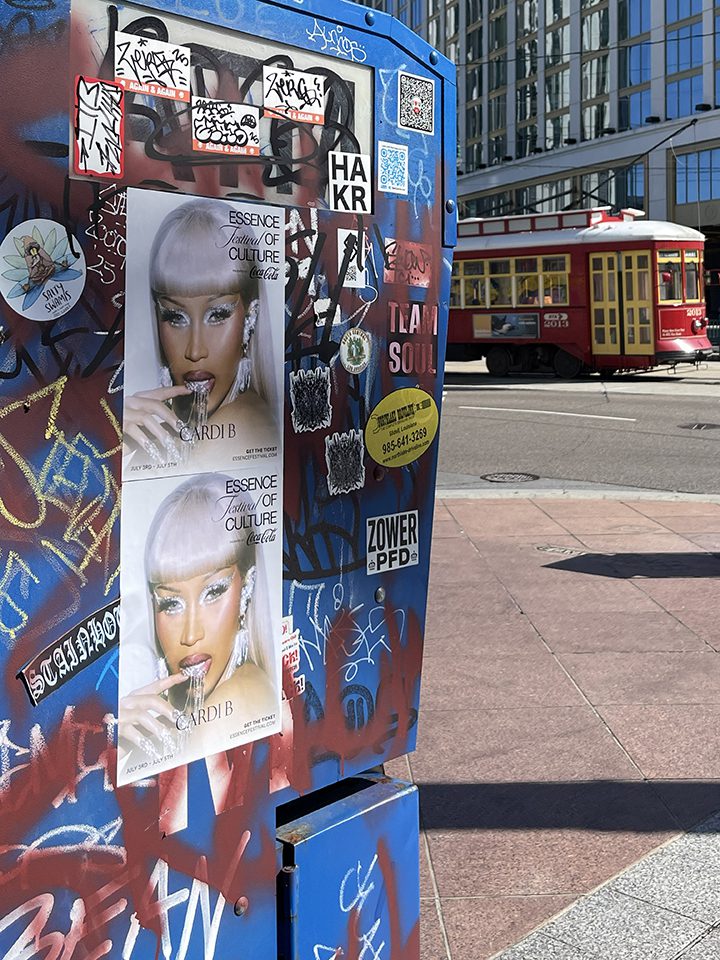
Ask any operator running campaigns in Mexico City where they’d put money if they had one colonia to work with, and the answer is almost always Roma Norte. That’s not because it’s the biggest or the cheapest or the most logistically forgiving — it’s because no other neighborhood in CDMX delivers the same combination of audience quality, pedestrian density, street art tolerance, and placement longevity.
Roma Norte sits in the Cuauhtémoc alcaldía, bordered roughly by Insurgentes to the west, Álvaro Obregón to the north, Sonora to the south, and Insurgentes Sur. Its streets are dense with cafés, independent restaurants, galleries, boutiques, and residential buildings — the kind of environment where people actually walk, look around, and spend time outside. That’s the foundation of a good wheatpaste campaign: a place where people slow down.
The Audience You’re Actually Reaching
Roma Norte’s resident and visitor population skews 25 to 42, with high concentrations of creative professionals, media and marketing workers, musicians, designers, and the international expat community that has settled in this part of the city over the last decade. It’s also a major destination for affluent Mexican visitors from other parts of the city and tourists who specifically seek out its restaurant and cultural scene.
This isn’t a generic urban crowd. Roma Norte residents tend to be brand-aware, culturally engaged, and active across both local and global platforms. When a streaming platform launches a new show, when a fashion label enters the Mexican market, when a Latin artist drops an album before a Foro Sol date — this is the audience that picks up on street campaigns, photographs them, shares them, and talks about them.
Roma Norte alone draws an estimated 40,000+ daily pedestrians across its commercial corridors during peak hours. Weekend foot traffic around Parque España, Álvaro Obregón, and Sonora market zones can run significantly higher. For a wheatpaste campaign, this is concentration that few other Mexico City colonias match.
The Streets That Actually Drive Campaign Performance
Roma Norte is not a uniform environment. Different streets have different functions, different pedestrian volumes, and different relationships with outdoor signage. Here’s how the major corridors break down for campaign planning:
Álvaro Obregón
The main east-west commercial artery through Roma Norte. High foot traffic morning through late evening, heavy with restaurants, bars, and boutiques. The boulevard median with its jacaranda trees creates a walking environment — people use this street on foot, not just passing through. Wall space on the commercial blocks of Álvaro Obregón is prime real estate. Operators who have preapproved walls here can charge more for them, and the investment is usually worth it.
Orizaba
One of the denser pedestrian streets in Roma Norte, particularly on the blocks between Álvaro Obregón and Sonora. Heavy with bar and restaurant traffic in the evenings, residential during the day. Wheatpaste placements here get seen by nightlife audiences, which matters for music releases and event promotions. The streets running off Orizaba — Tabasco, Colima — are secondary placements that extend reach into the residential fabric of the colonia.
Tonalá
A significant commercial and cultural corridor with galleries, design shops, and independent retailers. The audience on Tonalá is slightly older and more design-oriented than the Orizaba nightlife crowd. Good for fashion brands, cultural events, and lifestyle campaigns targeting creative professionals.
Around Parque España and Plaza Río de Janeiro
Both parks generate sustained dwell time. People come to these spaces and stay — reading, meeting friends, walking dogs. Walls within visible range of the parks get extended exposure compared to a street corner that people pass through in seconds. Experienced operators prioritize wall proximity to these anchor spaces.
Surface Conditions and Placement Longevity
Roma Norte’s building stock creates a diverse surface environment. You have rough concrete and brick facades from buildings built in the 1940s through 1980s, which hold paste well and provide good adhesion. You also have newer construction with smoother surfaces and commercial storefronts with glass and tile that can’t be pasted. The skill is knowing which walls work.
On the right wall, a well-applied Roma Norte wheatpaste poster can hold for three to four weeks before it’s covered by new material or weathers significantly. That’s a long run for street-level media. Walls that see heavy foot traffic or are in prime position tend to get targeted by other operators sooner, so there’s a natural competition for space that creates turnover. This is why operators who have preapproved private walls in specific locations can guarantee placement that doesn’t disappear within 48 hours.
The walls around Parque España hold posters better than almost anywhere else in Roma Norte — partial tree cover, lower direct sun exposure, and fewer competing campaigns in that specific microzone. That’s the kind of ground-level knowledge that makes a campaign work.
The Culture Fit: Why Roma Norte Accepts This Medium
One factor that isn’t obvious from the outside is how strongly Roma Norte’s cultural identity aligns with street-level visual communication. This is a colonia that has embraced murals, paste-ups, and street art for decades. Walking down almost any residential block, you’ll encounter large-format murals on building sides, stencil work on utility boxes, and hand-painted signage on commercial facades. This is the visual context your campaign enters.
That means two things. First, there’s a built-in audience appreciation for street art and flyposting as a legitimate medium — locals don’t universally resent it the way they might in a neighborhood where it never existed before. Second, the competition for visual attention is real. Your posters are going up alongside existing murals, other campaign work, and the ambient visual density of an active urban colonia. Design that stands out in that context is different from design that would stand out on a blank wall in a suburban strip mall.
Campaign Timing in Roma Norte
Roma Norte runs at different intensities at different times of year. The highest foot traffic periods are:
- September and October: Mexican Independence Day season plus fall events calendar. High local and tourist presence.
- November and December: Holiday season brings increased restaurant and bar traffic. Nightlife peaks.
- February through April: Spring season, Carnaval period, music festival proximity. High activity.
- The first week of July: Summer travel season peak for international visitors.
Dry season (October through April) is generally better for paste adhesion and poster longevity — Mexico City’s rainy season (May through September) can significantly reduce the life of a pasted poster, particularly in exposed locations. Operators who work in the city through the rainy season know which walls have overhead protection or other factors that mitigate moisture damage.
Combining Roma Norte With Adjacent Colonias
Roma Norte is rarely run as a standalone campaign — it’s typically the core of a broader Cuauhtémoc-focused effort that also pulls in Roma Sur, Condesa, and Juárez. These colonias share audience overlap and are geographically adjacent, so a campaign that posts consistently across all four creates a concentrated effect: the same person walking their normal routes encounters your campaign in multiple locations over multiple days.
That frequency of exposure is the real mechanism behind why street campaigns work. One poster seen once has limited impact. The same brand appearing at three locations across a person’s daily routes over a week builds actual recall. Multi-colonia campaigns that concentrate in the Cuauhtémoc zone are explicitly built around this exposure logic.
What Good Roma Norte Documentation Looks Like
When a campaign finishes in Roma Norte, you should receive photos that are specific enough to verify without visiting the city yourself. That means images that show recognizable street context — a known building, a street sign, a landmark — in the frame along with the poster. GPS coordinates and timestamps are the standard for professional documentation. If an operator is sending you a folder of tightly cropped poster shots with no surrounding context, you have no way to verify where or when those posters went up.
The best operators in this colonia will also flag any locations where placements didn’t hold as planned — walls that turned out to be unavailable, surfaces that didn’t accept paste, competing material that was already in place. That transparency is a sign of a professional operator. Campaign reports that claim 100% perfect execution on every planned location are usually not telling the full story.
Surface Availability and Wall Character in Roma Norte
Knowing which walls to target in Roma Norte is the difference between a campaign that holds for three weeks and one that disappears in four days. Our operators in CDMX have spent years mapping the colonia at the block level, and the picture is more textured than any satellite view suggests.
The building stock along the commercial corridors — particularly the blocks between Álvaro Obregón and Sonora on streets like Orizaba, Tonalá, and Jalapa — has a mix of rough plaster facades from the 1940s through 1960s and newer construction with smooth stucco or glass finishes. Rough plaster is ideal for wheatpasting. Paste bonds deeply into the surface texture, and posters applied correctly will survive rain, humidity, and competing campaigns much longer than on smooth surfaces.
Newer buildings with polished concrete, tile, or glass storefronts at street level are effectively non-starters. No amount of paste quantity compensates for a surface that doesn’t grip. One thing that trips up operators who don’t know the colonia well — those sleek new developments on Insurgentes and the northern edge of Roma Norte look prominent but have very few workable wall surfaces. Impressive addresses, poor campaign environments.
The standout surfaces in Roma Norte are the long blank side walls of older mixed-use buildings — typically 3 to 5 stories, with residential above and commercial below — that have accumulated decades of paint layers and plaster repairs. Those walls are paste gold. AGM’s field team keeps a map of these addresses updated seasonally, because the competitive market for them changes — another campaign finishes, a mural goes up, a building gets renovated.
Roma Norte has approximately 300+ days of sun per year at 7,350 feet altitude. That high-altitude UV exposure accelerates ink fading on posters that aren’t UV-protected — a real consideration for campaigns meant to run 3+ weeks. We recommend UV-resistant inks for Roma Norte campaigns with multi-week lifespans.
Construction hoardings — the temporary fencing panels around active renovation sites — are another consistent placement opportunity in Roma Norte, which has seen steady residential renovation activity for years. These surfaces reset frequently as projects finish, but an operator tracking active construction sites can maintain rolling access to fresh, prominent placement locations across the colonia.
Past Campaign Performance in Roma Norte
From our experience running campaigns in Mexico City, Roma Norte consistently produces the strongest social media pickup of any colonia in CDMX. That’s not instinct — it’s what we observe in photo reports and client feedback cycle after cycle.
A streaming platform launch we coordinated in Roma Norte ran 52 placements across Álvaro Obregón, Orizaba, and the Parque España adjacency. Within 48 hours of the campaign going up, we were tracking user-generated Instagram and TikTok content showing the posters as backgrounds. That kind of earned media doesn’t happen everywhere — it happens specifically in neighborhoods where the resident and visitor demographic is both photographically active and culturally inclined to document street art and marketing campaigns.
Music release campaigns in Roma Norte follow a pattern we’ve seen repeat reliably: placements around the Parque España zone get photographed and shared most heavily, while the Orizaba nightlife blocks deliver the densest immediate foot traffic. The two zones complement each other, which is why we typically recommend splitting placements across both rather than concentrating entirely in one.
Roma Norte campaigns that target the two-week window before a Foro Sol or Auditorio Nacional show — both venues serving the 10,000 to 65,000 capacity range — consistently show better pickup than campaigns run in isolation from event timing. The existing excitement in the fanbase creates a ready audience for street marketing. We’ve seen campaigns go up on a Tuesday and have fans actively hunting for additional locations by Thursday because they saw one poster and started looking.
The Parque España zone generates social pickup that Insurgentes or the metro corridors just don’t match. The people in that park have phones out, they’re looking around, and they share what they find. That’s the mechanism we build campaigns around.
How AGM Coordinates Roma Norte Campaigns Remotely
We run Roma Norte campaigns from our New York office for clients across the US and internationally without either party stepping foot in Mexico City. The coordination runs through a system that’s been refined across dozens of CDMX campaigns.
When a brief comes in, the first conversation with our CDMX operator partner focuses on current wall inventory — which of our preapproved private wall agreements are active, what the competitive posting situation looks like on key blocks, and whether any major events in the campaign window will affect access or visibility. That conversation typically happens over WhatsApp in real time, with the operator often doing a literal walk of Álvaro Obregón and Orizaba while we’re on the call.
The time difference between New York (Eastern) and Mexico City (Central) is one hour during most of the year, which means real-time coordination during business hours is straightforward. Campaign briefs sent by 3pm ET typically get operator confirmation and preliminary planning by end of day CDMX time.
Print files go directly to the CDMX printer. We use print vendors our operators have vetted specifically for wheatpaste stock — newsprint weight, appropriate for paste adhesion, color-accurate output. Turnaround is typically 48 to 72 hours from file submission to printed sheets ready for the crew.
Post-campaign, our operators deliver GPS-tagged photos within 24 hours of the execution night. Each photo includes enough surrounding context to verify location independently — a street sign, a recognizable building, a landmark corner — not just a tight crop of the poster. Those photo reports come into a shared folder, and we review and compile the client-facing report from New York, typically delivered within 48 hours of campaign execution.
How to Use Roma Norte Without Defaulting to It Blindly
Pages that rank for Roma Norte usually win by being specific. Searchers want named streets, neighborhood character, and a practical sense of how the area behaves. For wheatpasting, that specificity matters because Roma Norte is one of the most requested but also one of the most misunderstood neighborhoods in CDMX campaign planning.
Roma works because it concentrates the kinds of people many brands want to reach: creative professionals, nightlife traffic, international visitors, and culturally engaged locals who walk, linger, and notice their surroundings. But that does not mean every campaign should start there by default. The route still has to fit the objective and the message.
- Use Roma Norte for brands that need creative credibility and repeat exposure in a high-attention neighborhood.
- Brief the streets and micro-zones that matter instead of buying the name alone.
- Pair Roma with Condesa, Juarez, or transit support based on the reach target.
- Make sure the creative earns the neighborhood because weak design stands out quickly here.
A search-aligned page should help a planner see Roma Norte as both an opportunity and a choice. If the article makes the street logic and brand fit easier to judge, it is aligned with the way real users search this topic.
The bottom line for planners is simple: treat wheatpasting roma norte mexico city as a campaign decision with tradeoffs, not as a generic city talking point. The campaigns that usually perform best in CDMX define the audience, route logic, reporting standard, and creative threshold before the first sheet goes to print.
That is also why the best briefs stay specific about neighborhoods, install timing, and proof of posting. In Mexico City, clarity before execution usually matters more than chasing a bigger poster count after the fact.
Frequently Asked Questions
Why is Roma Norte the best neighborhood for wheatpasting in Mexico City?
Roma Norte combines high pedestrian density, a sophisticated audience aged 25-45, significant international visitor traffic, and strong street art culture. The colonia has an established tradition of accepting outdoor art and commercial poster campaigns, and its mix of tree-lined streets, cafés, galleries, and bars creates long dwell time that increases poster exposure.
Which streets in Roma Norte are best for wheatpaste campaigns?
Álvaro Obregón, Orizaba, Tonalá, and the blocks around Parque España and Plaza Río de Janeiro are the core zones. Orizaba has heavy foot traffic from restaurants and bars. The parks offer high-dwell pedestrian zones. Sonora and Baja California mark the southern edge and see commuter traffic.
What kind of brands run wheatpaste campaigns in Roma Norte?
Music labels, streaming platforms, fashion brands, restaurant and nightlife concepts, film distributors, and tech companies all run campaigns in Roma Norte. The colonia’s audience skews young, educated, internationally aware, and brand-conscious — matching the target demographic for most lifestyle and entertainment campaigns.
How long do wheatpaste posters typically last in Roma Norte?
On well-chosen private walls, posters in Roma Norte typically hold for 2 to 4 weeks before being covered by new material or weathering. High-foot-traffic locations on commercial blocks can turn over faster as operators compete for prime wall space. Placement timing relative to your campaign dates matters significantly.
How much does a wheatpaste campaign in Roma Norte specifically cost?
A Roma Norte-focused campaign covering 40 to 60 locations typically costs between $900 and $2,200 USD including print and labor. Premium wall locations on Álvaro Obregón or around Parque España may carry higher placement fees. Documentation is typically included in full-service quotes.