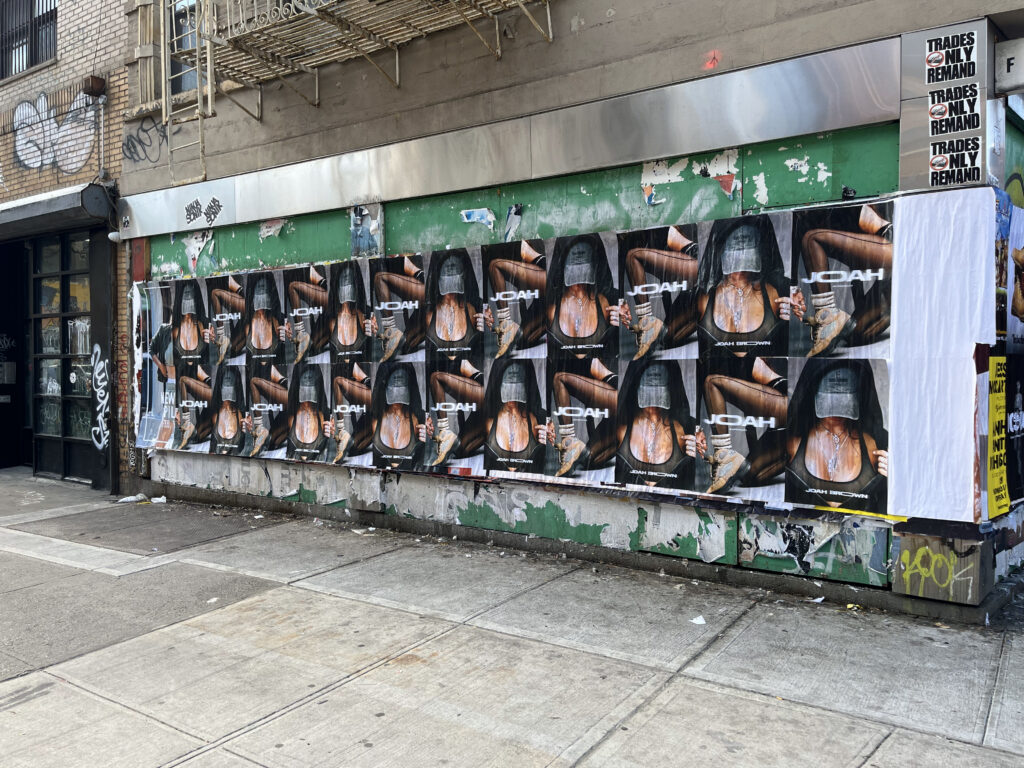
Wheatpaste campaigns are one of the most effective tools for fashion brand market entry in Mexico City precisely because they’re geographically precise. You choose the colonias, you choose the streets, you choose the wall context. A campaign in Roma Norte communicates something different than the same campaign in Polanco, and both communicate something different than a campaign in Doctores. Understanding what each zone does for a fashion brand, and how to use street campaigns to build the right associations in the right places, is the strategic challenge.
Mexico City’s Fashion Geography
The city’s fashion consumer map organizes around several distinct zones:
Polanco: The luxury tier. Presidente Masaryk is Mexico City’s version of Fifth Avenue or the Champs-Élysées — flagship stores for Hermès, Louis Vuitton, Gucci, Prada, and their Latin American counterparts. The consumer in Polanco is genuinely high-income, international in reference, and accustomed to premium price points. This is where a luxury fashion brand entering the Mexican market needs to establish credibility.
Roma Norte and Condesa: The aspirational creative tier. Independent boutiques, emerging designer stockists, vintage and hand-selected secondhand shops, and the stores that carry the brands that people who work in media, design, and creative industries discover first. The consumer here is brand-aware, trend-sensitive, and functions as an early adopter for brands entering the market. Roma Norte credibility often precedes Polanco sales.
Juárez (Zona Rosa and surroundings): A mix of mainstream commercial retail and emerging independent stores, with significant nightlife and youth fashion influence. The LGBTQ+ community’s commercial presence makes Juárez particularly relevant for brands with queer-inclusive positioning.
Doctores and working-class adjacent colonias: Streetwear, urban fashion, and mass-market labels. A different price point and aesthetic universe from Polanco, but a genuine market with purchasing power for the right brand tiers.
Mexico City’s fashion retail sector generates billions of dollars annually. Avenida Presidente Masaryk in Polanco consistently ranks as one of the highest-rent retail streets in Latin America. The opening of a major international fashion brand’s Mexico City flagship is a significant business press event — the right street campaign in the right colonias before a flagship opening amplifies that earned media.
The Market Entry Campaign Structure
For international fashion brands entering the Mexico City market, wheatpaste campaigns typically serve one of three functions:
Teaser / Awareness Phase
Before a flagship opening, major stockist announcement, or e-commerce launch in Mexico, a teaser campaign builds brand recognition in the target colonias. This phase runs 2-4 weeks before the announcement and typically uses brand imagery without specific event information — the name, the aesthetic, the visual identity, without yet explaining what’s arriving or when.
The logic: when the announcement comes (press release, social media, influencer coverage), the Mexico City consumer who’s been walking past your posters in Roma Norte for two weeks already has a visual memory of the brand. The announcement lands on top of that awareness rather than starting from zero.
Launch Phase
The launch campaign is where specific information appears — store location, opening date, collection imagery, e-commerce URL. This runs in the 10 days before and the first week after the launch, concentrated in the colonias adjacent to the physical store (if there is one) and in the broader awareness zones that reach the full target demographic.
Seasonal Reinforcement
Established brands use seasonal wheatpaste campaigns to maintain street presence around collection drops, sale periods, or editorial moments (a cover story, a collaboration announcement). These campaigns run on a lighter footprint than market entry work — fewer locations, tighter colonia focus — but keep the brand visible in the physical environment of its target consumer.
Roma Norte for Fashion: Why It Works
Roma Norte functions as the cultural R&D zone for fashion in Mexico City. The people who walk Álvaro Obregón and Orizaba daily — designers, stylists, buyers, fashion editors, creative directors, and the broader creative professional community — are the ones who shape what’s considered credible in the city’s fashion market. They spot trends early, they talk about brands to each other, and they influence what ends up in coverage, on influencer feeds, and eventually in wider consumer awareness.
A fashion brand that’s visible in Roma Norte before it’s visible anywhere else in the city has taken a specific strategic position: we’re for the people who decide what’s next, not for the people who follow what’s already established. This is the right positioning for emerging labels, for brands repositioning from mass to premium, and for international brands whose global positioning is associated with cultural discovery rather than mainstream success.
Campaign Design for Fashion in CDMX
Fashion campaign imagery for Mexico City requires a specific consideration that gets skipped surprisingly often: cultural resonance. International fashion brands frequently take their global campaign assets — shot on set in Paris or New York with international models in international contexts — and drop them directly onto CDMX walls without adaptation. This works for some brands whose global identity is aspirationally international by definition (luxury brands whose appeal is explicitly European luxury). It works less well for brands that are trying to establish local relevance.
For brands where local cultural connection matters, consider:
- Shooting campaign content in recognizable Mexico City environments — not generic urban backdrops, but locations that CDMX residents will specifically recognize (a Roma Norte café terrace, a Coyoacán market background, an Insurgentes street scene)
- Using Mexican talent in campaign imagery when the brand’s positioning allows for it — Mexican photographers, models, and creative directors
- Incorporating color palettes and visual references that resonate with the Mexican aesthetic context without being superficial or clichéd
- Spanish-language taglines that are actually crafted for the Mexican market rather than translated from English
The Street Campaign as Social Media Content
Fashion campaigns in Mexico City increasingly treat the physical street campaign as source material for digital content. The photograph of a brand’s poster on a Roma Norte wall — paste still wet, morning light, tree-lined street — is a different piece of content than a studio-shot product image. It places the brand in a physical context that communicates: we exist in this city, we’re real, we’re street-level.
Brands that are intentional about this integration document their campaigns specifically to produce content that’s usable on social media — not just for verification but for the brand’s own feeds and the feeds of cultural influencers who are given early access to the campaign documentation. This makes the street campaign do double duty: physical awareness in CDMX and digital reach across the audience segments that follow those influencers.
Which Colonias Fashion Brands Target in CDMX
Fashion campaigns in Mexico City don’t spread evenly across the city. The colonia selection for a fashion brand launch is as much a statement about positioning as it is a logistics decision. Here’s how the major zones break down from a fashion marketing standpoint:
Roma Norte and Condesa: The default starting point for fashion brands entering the Mexican market. The audience — creative professionals, expats, culturally engaged young Mexicans aged 25-42 — matches the target demographic for most fashion campaigns. The street art culture in both colonias creates an environment where editorial poster design is received positively. AGM’s field team has placed fashion campaigns across both colonias for international brands entering CDMX, and the consistent observation is strong social media pickup within 24 to 48 hours of execution.
Polanco: Reserved for luxury positioning. Polanco’s audience is older, more affluent, and more formal than Roma Norte. Street campaigns here work when the brand has established luxury credibility — the visual environment is manicured and competitive, and a campaign that looks out of place with the neighborhood’s aesthetic gets ignored. We’ve placed luxury fashion campaigns on the side streets of Presidente Masaryk with good results when the creative was strong enough to belong there.
Juárez: An emerging fashion campaign zone that sits between Reforma and Roma Norte. Juárez has attracted significant creative and nightlife activity in recent years, with the Zona Rosa adjacent. The audience is younger and more experimental than Condesa. For fashion brands with an edge or streetwear positioning, Juárez adds a specific credibility layer that the more established colonia markets don’t provide.
Escandón and Narvarte: Secondary zones that extend reach into working creative professional neighborhoods adjacent to the primary campaign zones. Lower cost, strong local identity, good for brands that want to signal authenticity beyond the obvious tourist and expat circuit.
Mexico City is Latin America’s largest fashion market by retail spending. The metro area’s 22 million residents include a significant middle and upper-middle class with high fashion expenditure — international brands from Europe, the US, and Asia all treat CDMX as a priority launch market for the region.
How International Fashion Labels Structure CDMX Launch Campaigns
A fashion label entering the Mexican market for the first time typically runs a CDMX wheatpaste campaign as part of a broader launch push that includes digital advertising, influencer partnerships, and sometimes a physical pop-up or store opening. The street campaign serves a specific function in that mix: it establishes physical presence in the city before or alongside the digital activity.
From our experience running campaigns in Mexico City for international fashion brands, the sequence that works best is to execute the street campaign 5 to 7 days before the primary launch date. This timing means that by the time the brand runs digital advertising and activates influencer content, there’s already physical evidence on the streets of CDMX. Anyone who sees the digital campaign and investigates further will find the brand is literally present in their city’s streets. That combination of digital reach and physical presence is more convincing than either alone.
The creative for a CDMX fashion campaign needs to be considered specifically for the street context. What works on Instagram doesn’t necessarily work on a Roma Norte wall. Strong contrast, readable at distance, minimal text, and a visual that can hold attention for 3 seconds on foot — these are the design parameters that translate to effective wheatpaste creative, regardless of how polished the brand’s editorial imagery is in other formats.
Timing Fashion Campaigns Around Mexico City Events
The CDMX fashion calendar has several anchor moments that drive campaign timing for brands that plan carefully. Mercedes-Benz Fashion Week Mexico City typically runs in April and October, and the weeks surrounding those dates see heightened industry attention and strengthend foot traffic in the fashion-adjacent colonias. Launching a street campaign to coincide with Fashion Week puts your brand’s presence in front of buyers, editors, and influencers who are already physically present and in a fashion mindset.
The Vive Latino festival in March, while primarily a music event, draws exactly the audience that fashion brands targeting the 20-35 creative segment want to reach. The festival grounds are in Foro Sol (capacity 65,000), with pre-festival energy concentrated in Roma Norte and Condesa in the weeks before. Fashion campaigns running in those colonias the week before Vive Latino benefit from the strengthend foot traffic and social media activity around the festival.
Día de Muertos (October 31 to November 2) creates a city-wide visual moment with strong street-level attention. Fashion brands that can design campaign creative that acknowledges the holiday — without appropriating the cultural significance — see better pickup during this window. The Roma Norte and Coyoacán zones are particularly active during Día de Muertos, with significant tourist and domestic visitor traffic supplementing the regular resident audience.
Creative Standards for Fashion Campaigns in CDMX
Fashion campaigns in Mexico City’s creative colonias are competing for visual attention in an environment that already has a high density of striking imagery — murals, street art, competing commercial campaigns, architectural detail. Fashion creative that doesn’t belong visually in this environment will be ignored. Creative that finds the right tension between brand language and street context generates the social pickup and word-of-mouth that makes street campaigns worthwhile.
The creative principles that consistently work for fashion campaigns in Roma Norte and Condesa: strong single image with minimal copy, high contrast between the primary visual and the background to maximize legibility from 15 to 20 meters, brand identity mark that’s legible without being the entire design, and a visual that communicates something rather than just announcing the brand name.
Campaign creative should be adapted for the specific colonia environment where possible. A fashion campaign running in both Polanco and Roma Norte benefits from format differences — the Polanco creative can lean toward the refined and understated (matching the colonia’s aesthetic), while the Roma Norte version can afford more visual boldness (matching the colonia’s street art tolerance and the younger demographic’s aesthetic expectations).
Seasonal creative alignment matters for fashion campaigns in CDMX. Mexican fashion culture has its own seasonality that doesn’t map exactly to US or European seasonal collections. Campaigns that acknowledge Mexican seasonal moments — the Día de Muertos visual culture in October, the summer cultural festival circuit, the December holiday commercial peak — outperform campaigns that import US seasonal creative wholesale. Our operators in CDMX flag seasonal context considerations when reviewing campaign briefs from international fashion brands.
What Makes a Fashion Wheatpaste Campaign Feel Credible in CDMX
Fashion searchers usually respond to pages that can translate a city into audience signals. In Mexico City, that means understanding how Roma Norte, Condesa, Juarez, Polanco, and select retail corridors each communicate a different level of accessibility, taste, and cultural alignment. A poster campaign only works for a fashion brand when that alignment feels intentional.
The creative standard is also higher. Fashion posters are read for image language, casting, typography, and cultural tone as much as for basic awareness. A campaign that looks too generic or too adapted from a US asset package can lose the credibility that makes street media valuable in the first place.
- Choose neighborhoods that already align with the product tier and audience self-image.
- Treat poster design as editorial communication, not just a repurposed ecommerce asset.
- Use timing around drops, pop-ups, collaborations, or retail openings to sharpen relevance.
- Build documentation that captures the neighborhood context, not just the poster itself.
That is why the most useful fashion-focused content is less about the abstract medium and more about launch planning. Searchers want to know where to post, when to post, and what kind of neighborhood context helps a brand look like it belongs in the conversation.
The bottom line for planners is simple: treat mexico city wheatpasting fashion brands as a campaign decision with tradeoffs, not as a generic city talking point. The campaigns that usually perform best in CDMX define the audience, route logic, reporting standard, and creative threshold before the first sheet goes to print.
That is also why the best briefs stay specific about neighborhoods, install timing, and proof of posting. In Mexico City, clarity before execution usually matters more than chasing a bigger poster count after the fact.
Frequently Asked Questions
Do fashion brands use wheatpaste campaigns in Mexico City?
Yes. Both international labels entering the Mexican market and established brands reinforcing seasonal campaigns use wheatpaste in Mexico City. The medium is particularly effective for fashion because it creates visual presence in the physical environments where style-conscious consumers live and move, rather than reaching them only through digital channels.
Which colonias are best for fashion brand wheatpaste campaigns in Mexico City?
For aspirational and premium fashion: Roma Norte, Condesa, and Polanco. For streetwear, emerging labels, and youth fashion: Juárez, Doctores, and Roma Norte. For luxury market positioning: Polanco with supplementary coverage in Condesa. The colonia selection should match the brand tier and the specific Mexico City consumer profile being targeted.
How do international fashion brands enter the Mexico City market using street campaigns?
Typically through a two-phase approach: a teaser campaign in the 2-3 weeks before a launch or collection announcement, concentrating in colonias aligned with the brand’s aesthetic and target consumer, followed by a launch campaign at full scale. Street campaigns are often supported by social media content featuring the physical poster presence.
What makes Mexico City an important fashion market for international brands?
Mexico City has a large, fashion-conscious middle and upper-middle class concentrated in central colonias. Polanco is one of the most concentrated luxury retail corridors in Latin America. Roma Norte and Condesa have active boutique scenes with independent retailers and style-conscious consumers who function as early adopters for brands entering the market.
How should fashion brand campaign design be adapted for Mexico City street environments?
Campaign imagery that works in Roma Norte and Condesa should feel culturally contextual — not US or European lifestyle imagery transplanted without adaptation, but imagery that resonates with the specific aesthetic sensibility of Mexico City’s fashion-conscious communities. Models, environments, and styling that acknowledge the Mexican context perform better than generic international campaign assets.