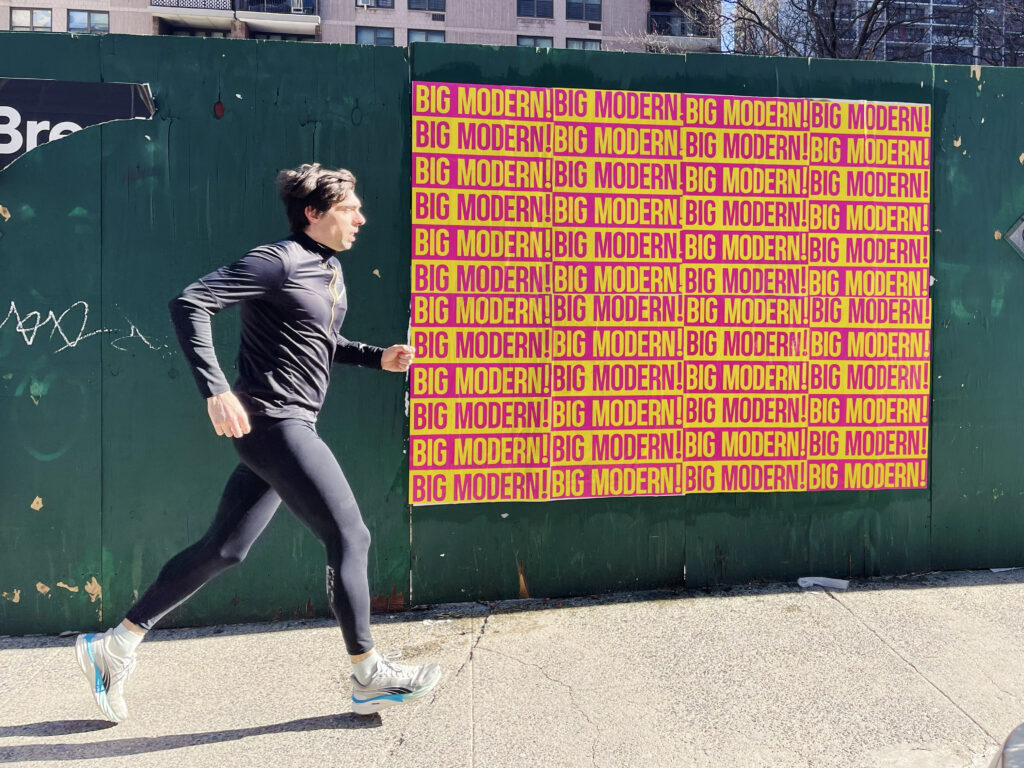
New York City is the original American wheatpaste market. The walls of Williamsburg, the Lower East Side, Bushwick, and the East Village have carried entertainment launches, music campaigns, fashion brands, and cultural moments since before most of the marketing channels those brands now use even existed. The city’s visual street culture is the reference point for every other wheatpaste market in the country — what lands in New York shapes what’s possible everywhere else.
American Guerrilla Marketing is headquartered in Industry City, Brooklyn, which means New York is our home market. Our team has executed hundreds of campaigns across every major neighborhood in all five boroughs. We know which walls photograph well, which blocks generate organic social documentation, where the target audience for any given campaign actually walks, and how to run an overnight that covers the maximum number of key locations before the morning commute begins.
NYC Neighborhoods: Where Wheatpaste Campaigns Work
New York’s neighborhoods are distinct enough that a campaign in the wrong one might as well be in the wrong city. Neighborhood selection determines whether the campaign reaches its intended audience or generates impressions for people who were never the target.
Williamsburg, Brooklyn
Williamsburg is the highest-value single neighborhood for most entertainment, lifestyle, fashion, and consumer brand campaigns in New York. The concentration of media-engaged young professionals, creative industry workers, music fans, and social-media-active residents makes it the most reliable generator of organic campaign photography in the five boroughs. Campaigns in Williamsburg get photographed. Bedford Avenue, Metropolitan Avenue, and the corridors between the L train stations and the waterfront are among the most documented walls in the city.
For any campaign targeting the culturally engaged millennial and Gen Z professional demographic, Williamsburg is the mandatory starting point for a New York wheatpaste campaign.
Lower East Side, Manhattan
The Lower East Side concentrates the nightlife, music venue, and independent cultural scene that defines lower Manhattan’s street culture. Orchard Street, Rivington Street, and the blocks around the Bowery Ballroom, Mercury Lounge, and other live music venues are prime posting territory for entertainment and music campaigns. The LES also has strong fashion and streetwear community presence, making it a dual-audience neighborhood for brands that cross those categories.
Bushwick, Brooklyn
Bushwick has become the epicenter of New York’s visual arts, mural culture, and experimental creative scene. The neighborhood’s existing commitment to large-format visual expression makes it receptive to high-quality poster campaigns that treat the walls as creative territory rather than advertising surfaces. For brands in music, art, design, and independent culture, Bushwick offers both the right audience and the right environment for wheatpaste campaigns that generate genuine social documentation.
East Village, Manhattan
The East Village retains its position as one of New York’s core counterculture neighborhoods, now with a broader professional demographic that maintains the neighborhood’s openness to visual street culture. The blocks around St. Marks Place, Tompkins Square Park, and the Avenue A corridor are active posting zones with high foot traffic and consistent organic photography from the neighborhood’s media-active resident population.
SoHo and Nolita, Manhattan
SoHo and Nolita are the epicenter of New York’s fashion, luxury retail, and lifestyle brand presence. Campaign placements in this zone reach the fashion-engaged consumer and retail professional demographic that every significant lifestyle brand in New York is trying to reach. The visual quality standards are higher here than in other neighborhoods — campaigns that look generic or poorly installed register as brand negatives with SoHo’s design-literate pedestrian traffic.
Park Slope, Brooklyn
Park Slope’s affluent, educated, arts-engaged residential population is a premium target for campaigns in wellness, food, parenting, culture, and lifestyle categories. The neighborhood’s commercial strips on Fifth and Seventh Avenues provide accessible wall inventory alongside high-quality foot traffic that skews toward exactly the demographic that premium consumer brands most want to reach.
Astoria and Long Island City, Queens
For campaigns that need to extend beyond the Brooklyn-Manhattan core while maintaining demographic quality, Astoria and Long Island City offer expanding young professional populations with strong ties to Brooklyn’s creative community. These neighborhoods are growing faster than most established NYC posting zones and offer competitive posting inventory at lower competition levels than Williamsburg and the LES.
The NYC Difference: Why New York Campaigns Amplify Differently
New York’s position as the center of the American entertainment press, fashion media, and advertising industry means that campaigns here generate earned media in ways that equivalent campaigns in other markets do not. A striking installation in Williamsburg gets seen by journalists at publications with national reach who live in the neighborhood. It gets photographed by influencers with significant followings who commute through the area. It gets covered by Brooklyn-specific media that’s read by the exactly creative community that shapes national cultural conversation.
The social media amplification multiplier for New York campaigns is higher than any other U.S. market. Our location selection process factors in each wall’s organic photography history — where campaigns have generated significant social documentation in past campaigns — to maximize the earned media potential of every placement.
Campaign Types That Drive NYC Wheatpaste Results
New York’s scale and diversity create specific campaign opportunities that don’t exist in other markets at the same level. Here are the categories that consistently perform strongest in NYC wheatpaste campaigns:
Entertainment Industry Launches
New York is one of the three essential markets for any major entertainment launch campaign alongside Los Angeles and Chicago. The concentration of entertainment press — Variety, The Hollywood Reporter’s New York office, major newspaper entertainment sections, music media publications — in Manhattan and Brooklyn means that a campaign on the right walls in the right neighborhoods reaches journalists whose coverage generates national earned media. The social amplification multiplier in New York is higher than any other U.S. market because the city concentrates the specific people whose social posts and editorial coverage shape national cultural conversation.
We execute entertainment launch campaigns for streaming platforms, film studios, record labels, and independent artists regularly across New York’s key neighborhoods. The standard approach for a major entertainment launch in New York includes anchor placements on the best walls in Williamsburg and the LES, volume saturation in both neighborhoods and East Village/Bushwick, and coordinated social media timing with the artist or studio’s own accounts to maximize the earned media window from the overnight installation.
Music and Artist Campaigns
The Bowery and LES music venue corridor — home to Mercury Lounge, Bowery Ballroom, Baby’s All Right in Williamsburg, and dozens of other venues — has supported poster culture for music campaigns since before wheatpaste as a branded marketing tactic existed. For music campaign wheatpasting in New York, the venue corridors are mandatory first-tier locations alongside the residential neighborhoods where the target audience lives.
Tour campaigns for artists playing multiple New York venues benefit from campaigns that follow the shows — a Bowery Ballroom show gets Bowery and LES coverage, a Brooklyn Steel show gets Williamsburg and Bushwick coverage, a Radio City or Beacon Theatre show extends into Midtown and the Upper West Side for the broader mainstream audience those venues attract. We build tour-specific location plans that match each venue’s geographic audience concentration.
Fashion and Streetwear Campaigns
SoHo and Nolita are among the highest-value markets in the world for fashion brand wheatpaste campaigns. The geographic concentration of luxury and independent fashion retail, the foot traffic of fashion-engaged consumers and industry professionals, and the social photography activity from fashion influencers who work and shop in the area create an earned media environment that few other market-neighborhood combinations can match.
For streetwear campaigns, the intersection of SoHo, Nolita, and the Lower East Side creates a geographic zone where streetwear culture, music culture, and fashion culture overlap in the same pedestrian corridors. A campaign concentrated in this zone with strong creative reaches multiple overlapping audience communities from a single set of placements.
B2B and Conference Perimeter Campaigns
New York hosts more major professional conferences than any other U.S. city, from technology conferences at the Javits Center to financial industry events at Midtown hotels to media and advertising industry events at venues throughout Manhattan. Conference perimeter wheatpaste campaigns in New York — targeting the corridors between conference venues, primary hotels, and the lunch and dinner destinations conference attendees use — represent some of the most precise audience targeting available in the market.
For B2B brands attending major New York conferences, we build location plans around the specific conference geography: the Javits Center neighborhood for technology trade shows, the Midtown hotel corridors for finance and professional services conferences, the Chelsea and Meatpacking District for fashion and media industry events. Each geography calls for a different location plan based on the actual movement patterns of conference attendees.
NYC Campaign Costs and Budget Planning
New York is one of the most competitive wheatpaste markets in the country, which affects campaign costs relative to other markets. Premium wall locations in Williamsburg and SoHo command higher rates than equivalent walls in smaller markets, and the complexity of multi-borough overnight operations adds logistical overhead that single-neighborhood campaigns in smaller cities don’t carry.
Typical NYC wheatpaste campaign cost ranges by scope:
- Single-neighborhood (Williamsburg or LES only): $3,000 to $7,000 depending on volume and format
- Two-neighborhood (Williamsburg + LES or East Village + Bushwick): $6,000 to $14,000
- Multi-neighborhood city coverage (three to five neighborhoods): $12,000 to $30,000+
- Full five-borough campaign with anchor placements: Custom quote based on scope
These ranges include location scouting, print production coordination, overnight installation labor, and GPS-tagged documentation. Rush timelines and premium format upgrades carry additional fees that we disclose transparently in every campaign quote.
Multi-Borough Campaign Coordination
Major NYC campaigns often need to cover multiple boroughs simultaneously. A campaign that appears only in Brooklyn misses the LES and SoHo audiences. A campaign concentrated in Manhattan misses Williamsburg and Bushwick. For campaigns where city-wide presence is the objective, we coordinate multi-crew overnight operations that cover target neighborhoods in Brooklyn and Manhattan (and Queens when the demographic calls for it) in a single overnight window.
Multi-borough coordination is one of the operational areas where working with a professional campaign partner makes the most difference. Simultaneous installation across six or eight neighborhoods requires crew coordination, route planning, and documentation management that a DIY campaign approach can’t maintain at consistent quality.
Working with AGM in New York: What to Expect
American Guerrilla Marketing is headquartered in Industry City, Brooklyn. New York is our home market and the market where we have the deepest location network, the most experienced crew relationships, and the most established documentation and reporting processes. Here is what working with our team on a New York campaign actually involves:
Location Network Access
Our Brooklyn and Manhattan location networks include hundreds of active permitted posting walls across all major neighborhoods. When a campaign brief comes in targeting Williamsburg, we’re working with an inventory of locations we’ve established, scouted, and posted on across hundreds of campaigns — not starting from scratch to identify available walls. That existing network translates directly into faster planning timelines and more reliable location availability than a first-time entry into the market could offer.
Campaign Brief to Launch
Our standard New York campaign timeline: brief review and location plan within one business day, creative review and print initiation on day two, print delivery and scouting confirmation by day four to five, overnight installation by day six to seven. Rush campaigns can compress to three to four days for established clients with approved creative. Documentation is delivered by end of business the day after installation.
For complex multi-borough campaigns with custom format requirements, we add one to two days to the standard timeline for the additional coordination overhead. Multi-borough campaigns covering four or more neighborhoods or combining poster campaigns with street team activations or mobile LED trucks add coordination complexity that the standard timeline doesn’t accommodate without extension.
Reporting Standards
NYC campaign documentation is delivered as a complete campaign report organized by borough and neighborhood. Each location entry includes: the location address, neighborhood designation, GPS coordinates, installation timestamp, and a photograph of the completed placement. For clients with internal or agency reporting templates, we adapt our documentation format to match their requirements at no additional charge.
For campaigns with multiple client stakeholders — brand marketing, agency of record, PR team — we can deliver tiered reports: a management summary with campaign totals and selected photography for executive review, and a full location-by-location detail report for team-level analysis. Transparency in documentation is a core operating standard, not an optional upgrade.
NYC Seasonal Considerations
New York’s four-season climate creates practical campaign timing considerations. Spring and fall are the strongest seasons for outdoor campaigns — moderate temperatures, manageable weather, and the cultural activity peaks that come at both transitions. Summer campaigns face heat and humidity but benefit from the city’s peak tourist traffic and outdoor activity concentration. Winter campaigns require adjusted paste formulations and installation technique but can achieve excellent results in properly managed execution.
The September-October and March-April windows are consistently the highest-value periods for New York wheatpaste campaigns, aligning with the cultural activity peaks that make the city’s creative community most active and most receptive.
NYC Campaign Documentation
Every placement in every NYC campaign receives GPS-tagged photo documentation with installation timestamps. Post-campaign reports are organized by borough and neighborhood, with location addresses and photographs for every placement. For clients with multiple stakeholders reviewing campaign performance, we provide both neighborhood-level breakdowns and a consolidated city-wide summary.
New York Wheatpaste as a National Campaign Anchor
For national campaigns that need to establish cultural credibility before rolling out to secondary markets, New York wheatpasting serves a specific function beyond its direct market value: it establishes the campaign’s legitimacy as a national cultural statement. Press coverage generated by a New York campaign travels nationally. Social documentation from Williamsburg and the LES reaches audiences in Chicago, Los Angeles, and every other market where the brand plans to subsequently activate.
This “NY first” sequencing strategy is used deliberately by entertainment brands launching touring campaigns, consumer brands building national DTC presence, and B2B brands establishing market credibility before regional expansion. Starting the campaign in New York’s highest-value neighborhoods creates an earned media base that makes every subsequent market campaign feel like part of a nationally significant rollout rather than an isolated local activation.
Our team can coordinate the New York phase of a national rollout with subsequent market campaigns in any sequence — simultaneous national launch, sequential city-by-city rollout, or a phased regional expansion. The same GPS documentation standards and reporting formats apply across all markets in the campaign, so the consolidated national report provides the same level of accountability in Nashville or Denver that the New York campaign provides in Williamsburg.
Integrating Wheatpaste with Other NYC Street Campaign Tactics
- Brand ambassador street teams in Williamsburg and the LES the morning after installation for direct audience engagement
- Sidewalk stencil campaigns at key pedestrian junctions in the same posting zones for horizontal surface coverage
- Mobile LED billboard trucks routing through Bedford Avenue, the Bowery, and SoHo for moving-media amplification
- Large-format building-scale installations on premium walls at major intersections for anchor placements that drive the campaign’s visual signature
Frequently Asked Questions
What are the best neighborhoods for wheatpasting in NYC?
Williamsburg and Bushwick in Brooklyn for the creative, music, and arts community. Lower East Side and East Village in Manhattan for a mix of nightlife, music, and cultural audiences. SoHo and Nolita for fashion and lifestyle brands. Astoria and Long Island City in Queens for broader Brooklyn overflow reach. Neighborhood selection should align with the campaign’s target demographic.
Is wheatpasting legal in New York City?
Wheatpasting on private property with owner permission is legal in New York City. AGM operates exclusively on permitted posting locations — walls where we have active agreements with property owners. We maintain an established network of legal posting locations across all five boroughs.
How much does a wheatpaste campaign in NYC cost?
Single-neighborhood NYC campaigns typically run $3,000 to $7,000. Multi-neighborhood campaigns covering Williamsburg, LES, and additional zones run $10,000 to $30,000 depending on volume and format. We provide itemized quotes for every project.
How quickly can you launch a wheatpaste campaign in NYC?
Standard lead time is five to seven business days from creative approval. Rush campaigns can launch in two to three days for established clients. We manage location confirmation, print coordination, crew scheduling, and documentation.
What time do you install wheatpaste campaigns in NYC?
Our NYC crews install overnight, typically between midnight and 5 AM, to minimize pedestrian interference and ensure campaigns are fresh and complete for the morning commute — the highest-volume foot traffic window in most target neighborhoods.
How do I get proof of my NYC wheatpaste campaign?
Every placement receives GPS-tagged photo documentation with the installation timestamp and location address. Post-campaign reports are organized by borough and neighborhood, with photographs of every placement for client review.