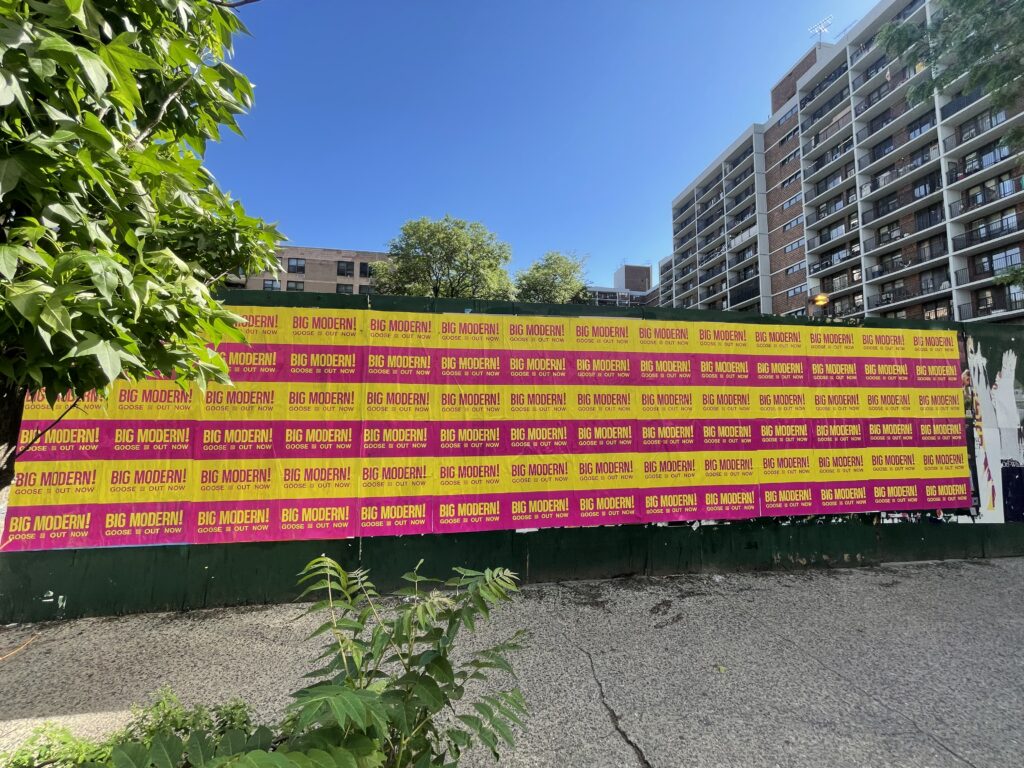
From brief to wall, here is the complete operational guide to running a wheatpaste campaign that actually delivers what it promises in the neighborhoods that matter.
A wheatpaste campaign is a coordinated outdoor marketing effort using large-format paper posters applied to walls with a paste adhesive across a defined set of locations in one or more cities. When it is planned and executed well, a wheatpaste campaign creates genuine street-level presence for a brand, artist, album, film, or product in the neighborhoods where the target audience actually lives and moves through daily.
We have been planning and executing wheatpaste campaigns professionally for over a decade. In that time we have run campaigns for major record labels, national consumer brands, film studios, footwear companies, emerging fashion houses, and cultural institutions. The campaigns range from targeted ten-location runs in a single neighborhood to 300-location national programs hitting eight cities simultaneously.
This guide covers every stage of a wheatpaste campaign from initial brief through to final delivery. If you are planning a campaign and want to understand what is actually involved, what the decision points are, and how to avoid the most common mistakes, read this first.
The single most important step in a wheatpaste campaign has nothing to do with walls, paste, or printing. It is getting the objective right before any other decision is made. The objective shapes every downstream decision: which markets, what scale, what format, what timeline, and what creative direction.
Common Campaign Objectives
Most wheatpaste campaigns fall into one of these categories:
Launch announcement: A product, album, film, store, or brand going public on a specific date. Timing is critical. The campaign needs to be live before or coincident with the launch moment.
Geographic penetration: A brand trying to establish physical presence in specific cities or neighborhoods. Less time-dependent, more location-density focused.
Event drive: A concert, festival, event, or pop-up needing local promotion in the surrounding market. Usually concentrated within a two to four mile radius of the venue.
Cultural credibility: Brands entering a new market segment or demographic and using street-level presence as a signal of cultural investment. The aesthetic quality of the campaign matters as much as the scale.
Sustained awareness: Multi-month programs where the brand maintains a continuous poster presence in target neighborhoods, refreshing locations as posters age out.
Defining Success Before the Campaign Starts
We ask every client before a campaign begins: what does success look like? The answer shapes how we scope the work. A campaign that is successful if it generates organic social content documentation requires different placement thinking than one that is successful if it achieves maximum location density in a corridor. A campaign that is successful if it is photographed for press requires an anchor placement strategy different from a volume-coverage campaign.
Stage Two: Market and Neighborhood Selection
Choosing markets is a combination of audience data and operational reality. The audience data tells you where your target consumer is concentrated. The operational reality tells you what is possible in that market in terms of placement quality, crew capability, and timing.
Primary US Markets We Operate In
Market
Top Neighborhoods for Campaigns
Best For
Lead Time Needed
New York City
Bushwick, Williamsburg, LES, Crown Heights
Music, fashion, food/bev, film
7-10 days
Los Angeles
Melrose, Fairfax, Arts District, Silver Lake
Streetwear, music, entertainment, lifestyle
7-10 days
Chicago
Wicker Park, Bucktown, Logan Square, Pilsen
Music, food, cultural events, lifestyle
10-14 days
Miami
Wynwood, Design District, Little Havana
Events, fashion, lifestyle, tourism
10-14 days
Austin
East 6th, South Congress, North Loop
Music, events, food/bev, tech brands
10-14 days
Neighborhood-Level Targeting
Within any market, the specific neighborhoods we target depend on the campaign audience. A footwear release campaign in New York hits different blocks than a restaurant opening campaign in the same city. We use our knowledge of pedestrian flow patterns, demographic concentration by neighborhood, and the existing visual culture of specific corridors to recommend placement zones that align with the campaign’s audience profile.
Stage Three: Format and Scale Decisions
Format and scale decisions determine print production requirements, crew needs, and campaign budget. The key decisions are: how large are the individual installations, and how many locations are needed to achieve the campaign objective.
Format Options
The standard campaign format is a four-panel build producing a 48″ x 72″ finished face. This is large enough to read from across a standard street or from a vehicle passing at low speed, small enough to fit in a standard available wall section, and manageable at volume for print production and field crew.
Larger formats, six-panel, twelve-panel, and full wall coverage, are used for anchor placements that need to serve as a visual landmark rather than just a distributed presence point. An anchor placement on a prominent corner in Bushwick or along Melrose Ave serves a different function than a volume placement in an adjacent block. Both have value; they serve different strategic purposes.
Location Count and Campaign Density
Campaign density refers to how many placements are clustered in a given area. High-density execution in a single neighborhood creates the sense that the campaign is everywhere, which is a specific effect that some campaigns need. Lower-density execution spread across a broader geography creates different coverage. The right answer depends on the objective.
As a rough guide: 10 to 20 locations in a single neighborhood is a noticeable presence. 30 to 50 locations across a market feels like saturation. 100+ locations across a multi-market program is a national statement. These are not rules, but they are useful calibration points when scoping a first campaign.
Stage Four: Creative Development and Artwork Review
The creative for a wheatpaste campaign needs to be designed for the medium, which means designed for large-format paper, natural light, rough surfaces, and street-level viewing at variable distances. Work that is beautiful on a laptop screen is not automatically work that translates well to a 48″ x 72″ poster on a brick wall at 9 PM.
What We Look For in Artwork Review
When client artwork comes in, we review it against a checklist before sending anything to print:
Resolution: minimum 150 DPI at final output size
Color mode: CMYK, not RGB
Bleed: minimum 0.25 inches, live area 0.5 inches inside trim
Type legibility: primary message readable at fifteen feet minimum
Contrast: sufficient differentiation between background and primary elements under variable lighting
Vector elements: logos, wordmarks, and primary type in vector format or supplied as embedded vector
If artwork fails the review, we communicate specific issues to the client’s creative team with guidance on corrections. No prints go to production if we know the artwork will underperform in the field.
Creative for Multi-Panel Builds
Multi-panel builds require artwork designed for the assembled format, not just for a single panel. The seams between panels need to fall in places where the image can accommodate a slight alignment variation. Perfect seams are achievable on smooth surfaces with careful installation, but on rough brick there is always some minor texture variation that affects seam visibility. Artwork that accepts this variation, such as designs with organic shapes, full bleed gradients, or imagery that reads from a distance without requiring pixel-perfect alignment, performs better across a variety of surface types.
AGM Field Note: For any multi-panel build, we produce a digital mockup of the full assembled poster before approving for print. This catches scaling issues, type legibility problems, and seam placement concerns before paper is loaded. The mockup review adds a day to the production timeline but eliminates the most common class of print errors we see in the field.
Stage Five: Location Scouting
Location scouting is where the strategic map meets physical reality. The neighborhoods we identified in Stage Two become actual addresses and specific wall sections during the scout phase.
What the Scout Covers
Each scout visit assesses: surface quality and substrate type, visibility from the dominant pedestrian approach angle, available wall height and width relative to the chosen poster format, competing visual noise in the immediate area, and any site-specific conditions that affect paste application or poster longevity. We record this information for every candidate site and use it to build the final execution site list.
How We Prioritize Sites
Sites are prioritized by pedestrian flow density, surface quality, and audience match. A high-flow site on a mediocre surface ranks lower than a moderate-flow site on an excellent surface in the right neighborhood. We balance these factors to produce a site list that delivers both volume and quality of placement.
Contingency Sites
Every campaign site list includes 15 to 20 percent contingency locations. Field conditions change. A wall that was clean during the scout has fresh paint over it on execution night. A building has scaffolding going up. The contingency list means crews are never stuck on execution night without alternatives.
Stage Six: Print Production
Print production is the largest single cost variable in most wheatpaste campaigns. The key decisions are: print method (wide-format inkjet or offset litho), paper weight and stock, and quantity including production buffer.
Wide-Format Inkjet vs. Offset Litho
Wide-format inkjet is the standard production method for most brand campaigns. It handles variable quantities, produces at any size, and turnaround times are fast, typically two to five business days for standard quantities. The color output is excellent and the print quality matches the visual demands of street-level viewing.
Offset litho becomes cost-competitive at high quantities, typically 500 sheets or more of a standard size. It produces a denser, more saturated color result and is the traditional production method for poster campaigns at scale. Lead time is longer, typically seven to ten business days, which affects campaign scheduling.
Paper Specification
Standard campaign paper is 60 lb to 80 lb uncoated. This weight absorbs paste efficiently, bonds well to brick and concrete, and holds its shape during application without becoming stiff. Heavier stocks are used for premium productions or situations where durability is the priority. Lighter stocks are occasionally used when the design calls for a translucent or layered aesthetic.
Stage Seven: Field Execution
Execution night is the culmination of every prior stage. The quality of the preparation determines how execution night goes.
Night-Before Preparation
Paste is prepared the day before using a cooked starch base, cooled and stored in sealed buckets. Print panels are organized by location and panel number, rolled in labeled tubes. Vehicles are loaded with paste, brushes, squeegees, poles, panel tubes, water, and documentation equipment. Crew members have been briefed and have individual site lists covering their assigned zone.
Application Process
At each site, the process follows a consistent sequence: surface inspection and any necessary pre-cleaning, first paste coat to the wall in the poster footprint, paste allowed to tack slightly, paper positioned from top edge and smoothed downward, sealing coat applied over the full surface with attention to edges. For multi-panel builds, panels are applied from bottom to top with minimal overlap at the seams.
Documentation at Each Site
Every placement is photographed immediately after installation: one wide shot and one close shot minimum. Photographs include enough surrounding context to identify the location and show the scale of the installation. For campaigns with specific documentation requirements, we shoot additional angles or create video walkthroughs of key placements.
Real-Time Campaign Reporting
During execution, each crew team reports completed locations through a shared logging system. We track progress against the full site list in real time. If a site cannot be executed for any reason, the contingency list activates and the crew moves to the next available option. By the end of the execution window, we have a complete log of every confirmed placement.
AGM Field Note: We do not consider a placement complete until it is photographed and logged. This creates a chain of accountability from the site list through the execution log through the final campaign report. There is no ambiguity about what went up and where.
Stage Eight: Campaign Delivery and Reporting
Within 48 to 72 hours of campaign completion, we compile and deliver the campaign report. The report includes all placement photography organized by location, geo-tagged maps for campaigns where spatial documentation is relevant, execution notes covering any site changes or field decisions made during execution, and a summary of what was executed versus what was planned.
How Clients Use Campaign Documentation
Campaign photos are genuinely useful marketing assets. We have seen clients publish execution photography as social content that generates organic engagement and brand story content. The documentation also serves for internal presentation, press kit use, and partner communications where the brand wants to demonstrate real-world marketing investment.
Campaign Timing and Lead Time
Most wheatpaste campaigns require two to three weeks of lead time from initial brief to execution. The minimum viable timeline for a single-market campaign with clean, ready-to-print artwork is approximately ten business days. Multi-market campaigns, campaigns requiring extensive scouting in new markets, or campaigns with complex multi-panel builds need more time.
The most common timeline problem is late artwork delivery. Print production cannot start until artwork is approved. A client who delivers artwork three days late on a ten-day timeline is forcing a seven-day production window that may require expedited print fees or execution schedule compression. Building a realistic artwork delivery milestone into the campaign timeline from the start prevents this problem.
Budget Structure
Wheatpaste campaign budgets have three primary cost areas: print production, field crew and execution, and location sourcing where applicable. In our proposals, we present these as integrated campaign costs rather than separate line items, so clients have a clear total investment figure rather than needing to estimate and combine costs from different vendors.
Scale drives cost, but not linearly. A 100-location campaign does not cost ten times a 10-location campaign. Field labor and crew coordination have fixed components that make larger campaigns more cost-efficient per placement. Brands running their first wheatpaste campaign often discover that the step up from 20 locations to 50 costs significantly less per location than the initial 20-location scope.
Common Campaign Planning Mistakes and How to Avoid Them
After more than a decade and hundreds of campaigns, we have seen the same planning mistakes repeat across brands and agencies of every size. Understanding them before you are in the middle of a campaign is the most direct path to avoiding them.
Late Artwork Delivery
The most common and most costly planning failure is artwork that arrives late. Print production cannot start until artwork is approved. A campaign with a ten business day production timeline that receives artwork on day six has four business days for print, which typically requires expedited production fees and may still compress the timeline to the point where field execution quality suffers. Build a realistic artwork delivery milestone into the campaign timeline from the beginning, with explicit acknowledgment from the creative team that late delivery has campaign-level consequences.
Artwork Not Built for the Medium
The second most common problem is artwork designed for digital screens applied to a large-format print context without being rebuilt for the medium. Small type, low contrast between figure and ground, imagery that depends on screen luminosity to read, and RGB color mode files are all symptoms of this problem. Creative teams that do not have large-format print experience frequently make these mistakes without realizing it. Our artwork review process is specifically designed to catch them before production, but catching them requires enough time in the timeline to allow for revisions.
Unrealistic Location Expectations
Clients occasionally arrive with a specific list of locations they want, sometimes based on social media photographs they have seen of other campaigns, that may not be available or may not be the right locations for their specific campaign. The corner of such-and-such in Bushwick that they have seen in every music campaign photo may already be committed to another campaign, or may be on a wall that has been repainted and is no longer available. We scope campaigns based on what is actually available and what actually serves the campaign’s audience, not based on a wishlist that may not match field conditions.
Insufficient Lead Time for Multi-City Programs
Multi-city programs require more lead time than single-city campaigns, and the lead time requirement scales with the number of markets, not just with the location count. Briefing crews in multiple cities, coordinating print shipping across markets, and aligning execution timing across different time zones all require planning time that brands often underestimate. Three to four weeks of lead time for a multi-city program is the minimum for smooth execution. Less than that creates a cascade of timeline compression that typically results in reduced campaign quality across at least one market.
Working with AGM on Your Campaign
Our engagement process is designed to move from initial brief to confirmed campaign proposal quickly, and from confirmed proposal to execution with the discipline that large-scale field operations require.
How We Scope Campaigns
When a new brief comes in, we ask a set of specific questions that shape the scope: What city or cities? What neighborhoods within those cities, or should we recommend based on the objective? What is the campaign objective (launch, awareness, event, saturation)? What is the desired execution date? How many locations? Is there existing artwork or is production being handled through the campaign scope? What is the format preference, and has a mockup been considered?
From the answers to these questions, we build a proposal that covers: location targets and format recommendation, print production scope and timeline, crew requirements and execution logistics, documentation and reporting delivery, and total campaign investment. Most proposals are delivered within one to two business days of receiving a complete brief. Complex multi-city proposals may take three to four business days to scope accurately across all markets.
What We Need from You
To develop an accurate campaign proposal, we need: a target market or markets, a campaign objective, a desired execution date, a rough sense of the location count target or the geographic scope you are trying to cover, and any existing creative assets or artwork direction. Everything else, format recommendations, location scouting, print production management, crew coordination, and reporting, is something we handle on our end. The cleaner and more specific the brief we receive, the faster and more accurate the proposal we can return.
Repeat Campaigns and Sustained Programs
The first campaign with any vendor is always the most expensive per location because the learning curve, logistics setup, and relationship-building all happen within that first program. Brands that run repeat campaigns with us at regular intervals, monthly, quarterly, or seasonally, benefit from the accumulated operational efficiency of a working relationship where crew know the sites, scouting covers only new or changed locations, and the production workflow is established rather than being built from zero each time. We explicitly encourage brands to think about their first wheatpaste campaign as the foundation of an ongoing program rather than a one-time experiment.
Campaign Communication During Execution
During campaign execution, we provide real-time updates as locations are confirmed complete through the night. Clients who want live updates during execution can be added to the reporting channel. Most clients prefer to receive the consolidated campaign report after execution is complete rather than monitoring real-time crew progress, which is also available. The morning after execution, we communicate any site changes and the final confirmed location count before the formal report is compiled and delivered.
Frequently Asked Questions
How much does a wheatpaste campaign cost?
Campaign costs depend on market, format, quantity, and scope. We scope each campaign individually and provide a clear proposal based on the specific brief. Contact AGM for a custom quote.
How long does it take to plan and execute a campaign?
The minimum lead time for a single-market campaign with ready artwork is approximately ten business days. Two to three weeks is a more comfortable timeline that allows for artwork review, print production, scouting, and crew briefing without compression. Multi-city campaigns benefit from three to four weeks of lead time.
What cities do you operate in?
We operate in every major US market. Our primary markets with established crews and pre-scouted inventory are New York, Los Angeles, Chicago, Miami, and Austin. We also execute campaigns in Atlanta, Dallas, Nashville, Denver, Seattle, Portland, and other cities with appropriate lead time.
Can you run a campaign in multiple cities simultaneously?
Yes. Multi-city campaigns are coordinated with local crews executing concurrently across all active markets. We manage the coordination centrally, brief each market crew, and deliver a consolidated report covering all markets after campaign completion.
What do I need to provide to start a campaign?
A campaign brief covering: target market or markets, campaign objective, desired execution date, approximate location count target, and any existing creative or artwork direction. We work from this to develop a full campaign proposal. Artwork can come later in the process, but the earlier it is ready the smoother the production timeline goes.
How do I know the campaign was executed as planned?
We deliver a campaign report after execution that includes placement photos for every site, organized by location, plus geo-tagged placement maps for larger campaigns. Every placement is photographed at the time of installation. There is no estimate or summary, only confirmed documented placements.
What happens if a site cannot be accessed on execution night?
Every campaign site list includes contingency locations. If a primary site is unavailable for any reason, the crew moves to the next available contingency option in the same zone. We communicate any site changes in the campaign report so clients have a complete and accurate picture of what was executed.
Can you handle print production as part of the campaign?
Yes. We manage print production end-to-end as part of the campaign scope, including artwork review, print vendor selection, quality control, and delivery to crew. Clients can also supply pre-printed materials if they prefer to handle production separately, though we recommend integrated management to ensure quality consistency.
Duration varies by surface, weather, and location wear. In most markets, well-applied posters remain visually intact for four to six weeks. Drier markets like Los Angeles see longer durations. Winter weather in northern markets creates more wear. We communicate realistic duration expectations for each market at the time of campaign scoping.