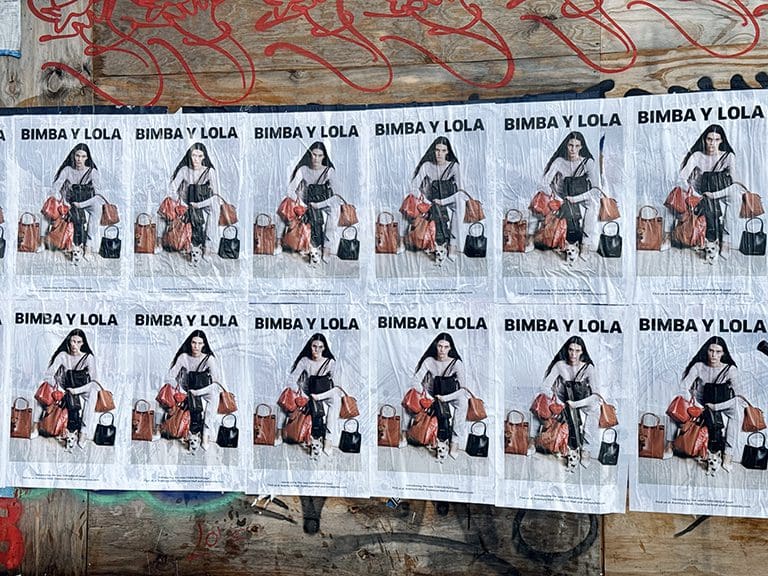
Wheat Pasting Posters: Street Advertising Guide 2026
We’ve been wheat pasting posters across New York City for years. We’ve applied them to the painted brick walls behind the J train elevated track in Bushwick. We’ve covered the long hoarding stretches along the construction corridor on Atlantic Avenue between 3rd and 4th avenues in Brooklyn. We’ve worked the SoHo alley walls between Spring and Broome with a bucket and a roller brush at 1 AM on a Tuesday. The craft has been the same since before any of us started, but the strategy around it has evolved considerably.
This guide is the most complete document we can write about wheat pasting posters as a format for street advertising. We cover the craft, the strategy, the neighborhoods, the design requirements, the pricing realities, and the mistakes that cost campaigns their effectiveness. If you’re planning a campaign or just trying to understand the format before you call anyone, start here.
The Craft of Wheat Pasting: From Kitchen to Street
Wheat pasting is a method of adhering paper to outdoor surfaces using a paste made from wheat starch and water. The method predates modern adhesives by centuries and has been used for everything from political propaganda to concert announcements. It persists because it works. When done correctly, wheat pasting bonds paper to a surface so completely that attempting to remove it tears the paper rather than lifting it cleanly.
How the Paste Is Made
Our paste formula is cooked wheat starch paste. We combine wheat starch with cold water at a ratio that produces a paste between the consistency of heavy cream and light yogurt. The mixture is then brought to a gentle boil on a hot plate while being stirred continuously. As the starch cooks, it thickens and becomes translucent, which is the sign that the starches have fully activated and the paste has achieved full adhesive strength.
The cooked paste is more durable than cold-mixed paste. It penetrates the paper fiber more deeply, bonds to the substrate more strongly, and dries to a harder finish. Some practitioners add a small amount of white school glue to the mixture for additional tack on difficult surfaces. We use this approach on smooth painted surfaces where penetration is limited and surface adhesion matters more.
Surface Preparation and Assessment
Not every wall holds a wheatpaste poster equally. Our crews assess surface type, existing surface condition, exposure to weather, and proximity to competing placements before we commit to a location. Here’s what we’ve learned from working hundreds of surfaces across New York’s five boroughs.
Painted brick is our preferred surface. The paint provides a sealed base that allows the paste to cure against a clean substrate, and the slight texture of the brick gives the dried poster enough mechanical grip to resist peeling even in humid conditions. The long painted walls on the east side of Flushing Avenue in Williamsburg, the painted surfaces along the LIRR cut in Flatbush, and the brick walls of former manufacturing buildings in Long Island City are all excellent wheat pasting surfaces that we return to campaign after campaign.
Raw concrete works well in dry conditions. Porous concrete absorbs the paste quickly, which creates strong adhesion but can also cause the paste to absorb unevenly, producing patches where the poster lifts slightly during the first few hours of cure time. We apply a sealer coat to raw concrete surfaces before the poster goes up to even out absorption.
Plywood hoarding is excellent. Construction hoarding panels are ubiquitous in New York’s constant building environment, and they’re among the most valuable wheat pasting surfaces in the city. The large flat surface area accommodates big multi-panel installations, and the temporary nature of construction hoardings means they’re frequently repainted, giving us a fresh surface for each campaign cycle.
The Three-Coat Method
Our standard installation procedure is three coats. The first coat goes directly on the wall as a base primer, wetting the surface and creating an adhesive layer. The poster is applied immediately to the wet base coat, smoothed from center to edges to eliminate air pockets. The second coat goes directly on top of the poster while the base coat is still wet underneath, saturating the paper from both sides. A final sealer coat goes on once the second coat has partially dried, typically 20 to 30 minutes after application, creating the hard laminate finish that gives a well-executed wheat paste its durability.
Skipping the sealer coat is the most common mistake made by inexperienced crews. A poster applied without a sealer coat will begin to curl at the edges and lift at the corners within a day or two, particularly in humid or rainy conditions. The sealer coat costs an extra three minutes per poster and extends the effective life of the placement by two to three weeks.
Location Strategy: Building a Coverage Plan That Works
The paste and the paper are craft variables. The location is a strategic variable, and it’s the one that determines whether your campaign generates the exposures you’re paying for.
Traffic Volume vs. Audience Quality
High traffic volume and high audience quality are not the same thing. Times Square has some of the highest pedestrian traffic in the world, but if you’re launching a music album targeting Afrobeats fans in Brooklyn and Queens, Times Square is not your audience. We plan location coverage based on where the target demographic actually goes, not where the most people in the city happen to be.
For a music campaign targeting the Brooklyn underground scene, we’d concentrate placements around the venues on Flatbush between Cortelyou and Church, the blocks surrounding the Knitting Factory on Metropolitan in Williamsburg, and the residential-commercial mix around the Halsey Street J train stop in Bushwick. These aren’t the highest-traffic locations in the borough, but they’re where the specific audience lives, socializes, and moves every day.
Mapping the Campaign Footprint
We build a campaign map before every install. The map shows proposed locations with notes on surface type, exposure, foot traffic direction, and proximity to competitive placements. We share this map with clients before the install night so they understand what they’re getting and where.
A standard 100-poster campaign in Brooklyn might cover the following corridors: Bedford Avenue from Metropolitan to North 7th in Williamsburg, with concentrations around the L train exits at Bedford Avenue and Lorimer Street stations. Franklin Avenue from Eastern Parkway to Empire Boulevard in Crown Heights. Flatbush Avenue from Grand Army Plaza to Church Avenue. Vanderbilt Avenue between Atlantic and Pacific in Prospect Heights. Myrtle Avenue through Bushwick from Knickerbocker to Wyckoff, with supplemental placements on the side streets feeding the M train corridor.
That’s roughly 15 distinct location clusters across four neighborhoods, which creates the saturation effect that makes a poster campaign feel omnipresent to the target audience. When people see your poster at the subway entrance in the morning, again at the coffee shop corner at noon, and again walking home in the evening, it creates a frequency of impression that’s nearly impossible to replicate with any comparable media spend.
Timing Placements Around Events and Seasons
Wheat pasting posters in advance of a specific event or release date requires precise timing. Too early and the poster goes stale before the event. Too late and the message doesn’t have time to generate awareness. Our general rule is that posters should go up seven to ten days before the target date for a campaign meant to drive event attendance or release-date awareness.
For campaigns with no specific target date, a rolling refresh cycle works better. We install the first run, assess how placements are holding after two weeks, refresh or replace compromised placements, and plan a second install of new creative around the three-week mark. This approach keeps the campaign feeling active rather than stale and maximizes the effective impression window of the print investment.
Poster Design for the Street: What Works and What Wastes Print Budget
We’ve seen a lot of beautiful design fail on the street. The street is a specific medium with specific requirements, and creative that ignores those requirements produces beautiful posters that nobody reads.
The 3-Second Rule
A person walking at normal pace covers about 4 feet per second. From the moment a pedestrian enters the sightline of your poster to the moment they’ve passed it, they’ve had roughly 3 seconds of potential exposure. In those 3 seconds, they’ll read one thing clearly if the design is right. Just one.
That one thing should be your primary message. It needs to be legible from 12 feet in high ambient light, with no dependence on color contrast alone (color-blind viewers are a meaningful portion of the audience). Type needs to be large enough that it reads at distance before the viewer is close enough to catch the fine detail.
Hierarchy and Reduction
The best street posters we’ve seen are the ones where somebody made hard choices about what to remove. A poster that shows an album artwork, an artist name, a release date, a tracklist, a streaming service logo, a label logo, a website URL, a QR code, and a city name is a poster that communicates nothing because the eye has no hierarchy to follow.
A poster that shows a face at the scale of the entire sheet, an artist name in large type at the bottom, and nothing else is a poster that communicates identity immediately and creates a stop. The curious viewer steps closer, reads the fine print if there is any, and takes action.
Reduction is a design discipline. Give your designer a limit: one primary image, one primary text element, one secondary text element. Everything beyond that has to justify its presence by making the primary message stronger.
Print Specifications for Street Formats
Wheat Pasting Poster Format Specifications
Format Name
Dimensions (inches)
Print Resolution
Recommended Paper Weight
Best Use Case
Half Sheet
17 x 22
150 dpi minimum
60 lb uncoated text
Close-range reading, boutique corridors
Standard One-Sheet
24 x 36
100 dpi minimum
60 to 70 lb uncoated text
General street placement, high variety
Large Format
40 x 60
72 dpi minimum
70 to 80 lb uncoated text
Transit zones, commercial corridors
Double Sheet
48 x 72
72 dpi minimum
80 lb uncoated text
Long walls, high-visibility sites
4-Sheet (tiled)
8 ft x 10 ft
25 to 35 dpi
60 lb uncoated text (4 sheets)
Warehouse walls, hoarding, murals
Color and Ink Considerations
Standard four-color process printing is the most economical option for most campaign sizes. Pantone spot colors add cost per sheet but deliver more accurate brand color reproduction and can include fluorescent inks that pop in daylight and under artificial light.
We’ve seen fluorescent yellow, orange, and pink perform exceptionally well in evening and nighttime environments because they read brightly under streetlight and vehicle headlights. If your campaign is designed to be seen in the evening economy zones around bars and venues, consider whether your design can incorporate at least one fluorescent element.
Black-and-white printing is the lowest-cost option per sheet and, in the right context, the highest-impact. A well-composed black-and-white photograph or illustration on a large format street poster in a neighborhood like the East Village or Greenpoint reads as intentional and artful in a way that registers with audiences who’ve learned to filter out commercial color campaigns.
Campaign Lifecycle: From File to Post-Install
A wheat pasting poster campaign has five distinct phases. Understanding the lifecycle helps set realistic expectations and avoid the timeline compressions that lead to rushed installs and compromised placements.
Phase 1: Design and Print Production
Design needs to be finalized and print-ready before anything else moves forward. We recommend clients have final approved files ready before beginning location scouting because design dimensions affect location selection. A horizontal format poster targets different wall types than a vertical one.
Print production for standard campaigns of 50 to 250 posters takes two to four business days from file submission, depending on size and quantity. Rush production is available at additional cost and can reduce turnaround to 24 to 48 hours for some formats, though we always build in a buffer day because rush print delays, while rare, can cascade into install timing problems.
Phase 2: Location Scouting and Coverage Map
Our field team scouts all proposed locations in person before the install. Scouting includes surface assessment, foot traffic observation, photography, and conflict checking against existing campaign placements. The output is a coverage map with location-level notes delivered to the client for review before the install is scheduled.
Phase 3: The Install
Install nights are organized with the precision of a logistics operation. Crews are divided by geographic cluster to minimize transit time between locations. Materials are pre-staged at a central point and distributed to crews before the install window begins. Each crew carries a pre-printed location list, their allocated poster count, paste, brushes, and documentation equipment.
We typically run installs from 11 PM through 4 AM to minimize interference with foot traffic and to give paste maximum cure time before morning activity. Our crew leads check in via group text at each location cluster so we have a real-time sense of progress across the map.
Phase 4: Documentation and Delivery
Every placement gets a photo. We deliver the full photo report within 48 hours of install completion. The report is organized by neighborhood and shows each placement in context, with street address, timestamp, and a second angle showing the placement’s visibility and relationship to the surrounding environment.
Phase 5: Refresh and Maintenance
We schedule refresh visits for campaigns with a duration of three weeks or longer. The refresh team visits each placement, assesses condition, replaces compromised posters, and notes any significant changes to the surrounding environment that might affect the remaining campaign window. Refresh reports are delivered within 48 hours of each refresh visit in the same format as the initial install report.
Industries and Campaign Types: Who Uses Wheat Pasting Posters and Why
Wheat pasting posters work across a range of industries, but they work best for brands and campaigns where cultural credibility, local presence, and visual impact matter more than precise demographic targeting.
Independent Music and Major Label Campaigns
Music campaigns are where wheat pasting posters live. Album releases, tour announcements, single drops, festival line-ups. The format connects to the cultural tradition of street advertising in music in a way that feels authentic rather than forced. A poster for an artist who grew up in Crown Heights placed on the walls of Crown Heights has a resonance that a digital ad targeted to Crown Heights residents simply cannot replicate.
We’ve executed campaigns for independent artists with 200-poster runs concentrated in two or three neighborhoods, and we’ve managed larger scale campaigns for major label artists covering four or five boroughs with runs of 500 to 1,000 pieces. The approach scales; the fundamentals stay the same.
Fashion and Retail
Fashion brands use wheat pasting posters for season launches, pop-up announcements, and collaborations. The visual demands of fashion campaigns are high, and street format requires specific shoot direction. We advise fashion clients to develop street-specific creative rather than adapting existing lookbook content, because the aesthetic requirements of the two formats are fundamentally different.
Film and Streaming Platforms
Streaming services and studios use street poster campaigns to establish physical presence for content launches. The format has become standard practice for prestige drama releases, award-season campaigns, and high-profile series launches. The organic photography generated by well-designed street campaigns in neighborhoods like SoHo and Williamsburg creates earned media reach that extends the paid campaign’s footprint significantly.
Food, Beverage, and Consumer Goods
CPG brands entering the New York market frequently use wheat pasting poster campaigns as a cost-efficient way to establish visual presence before or alongside a retail launch. The format is particularly effective for brands targeting the 22-to-38 demographic that dominates the consumer culture of Brooklyn, the Lower East Side, and Astoria. These audiences are highly engaged with street visual culture and receptive to campaigns that feel authentic to the medium.
Event Promotion
One-time events with specific dates, concerts, art openings, markets, festivals, use wheat pasting posters because the format creates urgency and local presence at the same time. A 300-poster run in the neighborhoods surrounding a venue one week before an event creates a concentration of exposures in the audience most likely to attend that no other media buy can match at equivalent cost.
Frequently Asked Questions
What are wheat pasting posters?
Wheat pasting posters are large-format printed sheets adhered to outdoor surfaces using a paste mixture. They’re one of the oldest and most durable forms of street advertising, used for concert promotion, brand campaigns, and political messaging.
What paper is used for wheat paste posters?
Newsprint, uncoated bond, and lighter offset stocks work best for wheat pasting. Heavier coated stocks can delaminate when wet. Print suppliers experienced with street postering understand the right specs for field application.
How are wheat paste posters applied in the field?
A paste mixture is brushed onto the surface, the poster is applied, and another coat is brushed over the top. Experienced crews work quickly and apply from the center outward to prevent air bubbles. Multiple layers increase durability.
What markets does AGM run wheat paste poster campaigns in?
AGM executes wheat paste poster programs in New York, Los Angeles, Chicago, Houston, Atlanta, Austin, Philadelphia, and additional markets. Call (646) 776-2770 to discuss your target geography.