June 30, 2026

Wheatpasting & Poster Campaigns

Wheat Paste Posters: Sizes, Design Specs, and How to Run a Campaign

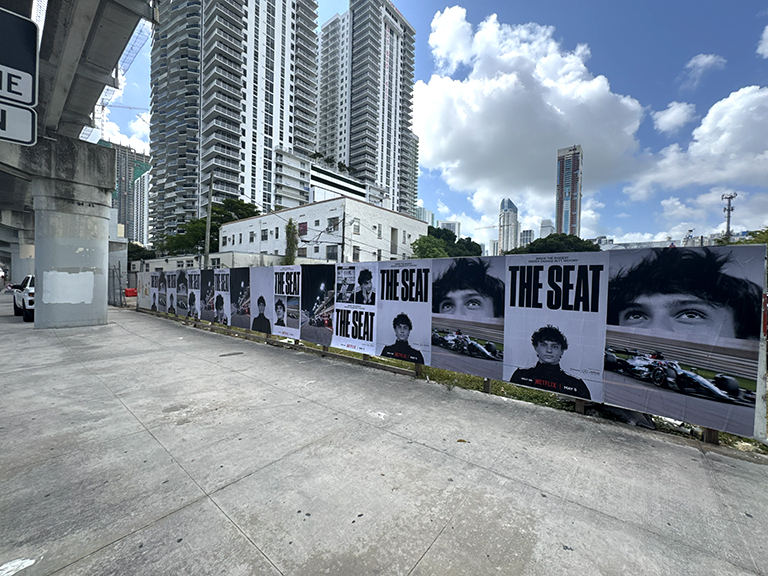
Wheatpaste poster campaign in Mexico City - American Guerrilla Marketing

Wheat Paste Posters: Sizes, Design Specs, and How to Run a Campaign

A wheat paste poster campaign can generate hundreds of thousands of street-level impressions at a CPM between $0.50 and $2.00 in a dense urban market. That’s below what almost any other outdoor format costs at equivalent reach. The reason brands keep coming back to this format is simple: it works at a price point that traditional outdoor advertising can’t touch, and it lands in the exact physical spaces where target audiences actually spend time.

This guide covers everything you need to run a wheat paste poster campaign from scratch: standard sizes and what they’re used for, paper specs, design requirements, how campaigns are planned and installed, where they perform best, what they cost in 2026, and answers to the questions brands ask most often before their first run.

Wheat paste delivers CPMs between $0.50 and $2.00 in dense urban markets. A run of 100 large-format posters can generate 200,000+ impressions in a two-week campaign window.

What a Wheat Paste Poster Is

Wheatpasting is the process of bonding paper posters to outdoor surfaces using a paste made from wheat starch or a commercial methyl cellulose equivalent. The paste is applied to the surface, the poster is placed, and then a second coat goes over the top. That sandwich technique seals the edges, and when it dries, the poster bonds directly into the surface material. Done correctly, it holds through rain, wind, and sustained foot traffic for two to four weeks.

The term “wheat paste poster” refers to any printed paper poster installed this way. It’s distinct from vinyl adhesive wraps, pressure-sensitive stickers, and fabric banners. Wheat paste posters are printed on paper stock, installed with paste, and left in place for the duration of a campaign window. The medium originated in political organizing and music promotion in the 1960s and 1970s and was adopted by the entertainment industry for album and film campaigns before spreading into consumer goods, fashion, tech, food and beverage, cannabis, and events.

The format’s durability is directly tied to paper selection and paste application. Uncoated stock absorbs the paste into the fiber, creating a mechanical bond with rough surfaces like plywood, concrete, and painted brick. Glossy or coated stock resists absorption and tends to fail at the edges first, especially in wet weather. Professional crews use the right stock and apply paste in two coats. DIY campaigns that skip the top coat or use glossy stock fail faster.


Standard Wheat Paste Poster Sizes

Three sizes account for the large majority of wheat paste poster campaigns run in the U.S. Each serves a different campaign objective, and the right choice depends on your goal, budget, and the surface types available in your target geography.

Format Dimensions Best Use
Standard 24″ x 36″ High-density saturation, tight budgets, multi-neighborhood coverage, stacked with snipe runs
Mid-Format 36″ x 48″ Transit corridors, storefronts, mid-scale hoarding panels, campaigns that need more visual weight than 24×36 without committing to full large-format pricing
Large Format 48″ x 72″ Construction fencing, building walls, anchor intersections, maximum visual impact, social photography generation

24×36 runs best for saturation. A 200-poster 24×36 campaign covers substantially more geography than 100 posters at 48×72 for a comparable budget. This format works in dense corridors where you want repeated exposure: the same person sees the poster at their subway entrance, at their corner store, and outside their office building. Repetition is the mechanism, and 24×36 makes it affordable to build that frequency.

36×48 is the intermediate option for campaigns where standard size reads too small but full large format isn’t warranted. It works well on storefronts, transit shelter panels, and the narrower hoarding panels that appear around smaller construction projects in urban cores. The format is common in campaigns targeting retail corridors where wall space is constrained and 48×72 won’t fit without overlapping other posted material.

48×72 is the format that stops foot traffic. At pedestrian height on a construction fence or building wall, a 48×72 wheat paste poster fills the visual field of anyone passing within 15 feet. Brands use this size for anchor placements at the highest-traffic intersections in a campaign geography, for spots where posters get photographed and shared on social media, and for campaigns where visual dominance at a small number of key locations is more important than broad neighborhood coverage.

Many campaigns use both 24×36 and 48×72 together: 48×72 at anchor crosswalks and construction sites, 24×36 filling in the surrounding blocks. This creates a layered street presence that reads more like a market takeover than a standard media buy.

Poster Weight by Format

Size Recommended Paper Weight Notes
24″ x 36″ 60-70 lb uncoated text stock Lighter weight absorbs paste efficiently, handles well in high-volume installs, minimal warping on rough surfaces
36″ x 48″ 70-80 lb uncoated text stock Added weight keeps large panels flat during wet paste application, reduces edge curl in humid conditions
48″ x 72″ 80-100 lb uncoated text or newsprint-weight Heavier substrate holds shape at full panel size; newsprint-weight works well on rough plywood where absorption is high

When you work with American Guerrilla Marketing, print production is handled in-house as part of campaign pricing. You don’t manage a print vendor, source paper, or ship materials. The campaign price covers everything from print through installation and documentation.


Design Principles for Wheat Paste Posters

Wheat paste posters operate in a specific visual environment that rewards simple, high-impact design and punishes complexity. A poster that looks detailed and refined on screen can completely lose its message at street scale in outdoor light. Here’s what actually works when designing for this format.

High Contrast Is Non-Negotiable

Posters viewed at 10 to 30 feet in direct sunlight, shade, and nighttime lighting conditions all need strong contrast between foreground and background. Fine lines, subtle gradients, and mid-tone-heavy photographic treatments lose definition in variable outdoor light. Design for legibility under the worst lighting condition you expect, not the best. If the poster reads clearly in dim light, it reads everywhere.

Limit Text to 7 Words or Fewer

The most effective wheat paste posters communicate one message in the time it takes a pedestrian to walk past. At a normal walking pace of 3.5 mph, someone walking along a 20-foot panel has about 4 seconds of exposure. That means one brand name, one date, one URL, or one phrase. Paragraph-length copy on a street poster doesn’t get read. A name and a date is often enough, and often more effective than anything longer.

Flat Color Over Complex Photography

High-contrast photography with distinct subject-to-background separation works at street scale. Complex photographic images with a lot of mid-tone variation and fine detail don’t. Flat color fills, bold graphic treatments, and high-contrast duotone photography reproduce well at large format on uncoated stock in outdoor conditions. If the design includes photography, increase contrast and reduce mid-tone complexity before going to print.

Primary Message in the Upper Two-Thirds

Wheat paste posters are installed at eye level to chest height. Text at the bottom of a 48×72 poster sits at shin height and gets cut off by foot traffic, parked vehicles, and viewing angles on narrow sidewalks. Keep your primary visual element and most important text in the upper 60 to 70 percent of the layout. The lower third can carry secondary information or a URL, but the message that needs to land should be up.

Simple Typography at Maximum Size

Type that reads clearly on screen often needs to be significantly larger for outdoor application. A general rule: if you can read the text comfortably at arm’s length on a printed proof, it’s probably still too small for a 48×72 installation. Increase type weights, reduce the number of font variations, and test the design printed at scale before finalizing.

If you need design support, AGM offers design add-ons starting at $650 for 24×36 and $750 for 48×72. The design team works from brand guidelines and campaign briefs with a 3 to 5 business day turnaround for initial concepts.


File Specs for Print Production

Getting files right before production avoids reprints and delays. Here are the standard specs for wheat paste poster files at each size.

Spec 24″ x 36″ 36″ x 48″ 48″ x 72″
File format PDF, AI, or PSD PDF, AI, or PSD PDF, AI, or PSD
Resolution 300 DPI at full size 200 DPI at full size 150 DPI minimum at full size
Color mode CMYK CMYK CMYK
Bleed 0.25″ on all sides 0.25″ on all sides 0.25″ on all sides
Safe zone 0.25″ from trim edge 0.25″ from trim edge 0.25″ from trim edge
Fonts Embed or outline all Embed or outline all Embed or outline all

A note on resolution at 48×72: 150 DPI at full size is the functional minimum, not the ideal. If your source files are designed at 300 DPI and you’re scaling up, check that the effective DPI at output size doesn’t drop below 150. Images sampled below that threshold will show degradation on print at close range, even if they look acceptable on screen.


How a Wheat Paste Campaign Works, Start to Finish

Understanding the operational flow helps you plan timelines and avoid last-minute pressure on print production and approvals.

  1. Brief and targeting. You provide a campaign brief covering your audience, geographic focus, campaign objective, flight dates, and creative direction. AGM uses this to identify the specific neighborhoods, corridors, and surface types that fit your profile. This takes 1 to 3 business days.
  2. Location scouting. The team scouts the target geography to identify permitted surfaces and high-traffic placements. In cities where AGM runs regular campaigns, this draws on an established location network. In newer markets, scouting may add 2 to 4 business days.
  3. Print production. Once creative is approved, production runs 3 to 5 business days for standard orders. Rush production is available on select sizes.
  4. Installation. Field crews install posters over 1 to 3 nights depending on volume and geographic spread. Nighttime installation is standard in dense urban markets because it minimizes pedestrian interference and allows fresh posters to set before morning foot traffic hits them.
  5. Documentation. Every installation is photographically documented. AGM delivers a geo-tagged photo report showing installed locations, placements, and condition post-installation. This gives you visual proof of delivery and content for your own reporting.
  6. Refreshers. Standard campaign pricing includes refreshers to replace posters that have been covered, torn, or weathered during the campaign flight. Refreshers maintain coverage across the full two-week window.
  7. Optional maintenance. For monthly campaigns, extended maintenance coverage is available at $3,500 for the final two weeks. This keeps active management of placement quality beyond the standard campaign window.

From brief to first poster going up: 7 to 10 business days for a straightforward single-market campaign with approved creative. Multi-market campaigns or those requiring custom scouting run 14 to 21 days from brief to installation.


Where Wheat Paste Posters Perform Best

This format works in dense, walkable urban environments where the target audience moves through specific corridors on foot. The higher the pedestrian density and repeat foot traffic in a given area, the better the return on the investment.

Top-performing environments:

  • Retail corridors with high walkability scores (SoHo in NYC, the Arts District in LA, Wicker Park in Chicago, the Mission in San Francisco)
  • Transit station adjacencies and transfer points where foot traffic concentrates at predictable times
  • Entertainment districts with evening pedestrian traffic from bars, restaurants, and venues
  • Active construction zones with large hoarding surfaces in commercial corridors
  • University-adjacent neighborhoods with dense young adult foot traffic

Weaker environments:

  • Car-dependent suburbs where impressions require vehicular sightlines. Wheat paste reads at 10 to 20 feet, not at 40+ mph.
  • Industrial or light-commercial zones with low consistent foot traffic
  • Areas without permitted surfaces or significant active construction

The strongest campaigns pair wheat paste placement with the actual pedestrian geography of the target audience. Tight saturation in the 3 to 5 neighborhoods where the audience spends time consistently outperforms generic coverage across an entire city. Wheat paste also works well stacked with other street formats: a 24×36 wheatpaste run combined with a 9×12 snipe run across the same geography creates layered exposure at two scales and surface types, increasing recall and making the campaign feel larger than either format alone.

Construction site hoarding at signalized intersections generates 30 to 90 seconds of uninterrupted poster exposure per passerby. That’s dwell time no other outdoor format delivers at this price point.

Premium Surfaces by City

Construction sites are the most valuable wheat paste real estate in any American city. When pedestrians wait for a light at a busy crosswalk, they stop moving. They stand in front of whatever surface is there for 30 to 90 seconds. A 48×72 wheat paste poster on construction fencing at an active pedestrian crossing gets sustained attention that no other outdoor format reliably delivers at this price. Corner placements with crosswalk exposure are the first locations AGM scouts in any new market.

New York City: Fulton Street, Houston Street, Canal Street, and Bowery

NYC has more active construction hoarding in its commercial corridors than almost any other American city. Four corridors consistently offer premium plywood and hoarding surfaces for wheat paste campaigns.

Fulton Street between Broadway and Gold Street in Lower Manhattan has had near-constant construction hoarding through the Fulton Center development and subsequent building projects. Foot traffic is dense with office workers, tourists, and transit commuters, and the hoarding surfaces run for full city blocks. Posters here catch everyone moving between the Fulton subway complex and the waterfront or Brooklyn Bridge.

Houston Street on the northern edge of SoHo carries a rotating inventory of construction sites from ongoing development between Broadway and Hudson Street. This is one of the most sought-after wheat paste corridors in the country because it sits at the intersection of SoHo’s retail foot traffic and a major crosstown artery. Construction sites here tend to stay up for months, so the surface stays consistent rather than getting repainted or torn down mid-campaign. Poster longevity on Houston Street hoarding consistently runs two to three weeks.

Canal Street from Broadway to West Broadway runs through Tribeca and Chinatown with consistent construction fencing around ongoing development in both neighborhoods. The corridor draws tourists, residents, and the restaurant industry workers who commute through it daily, making it one of the more demographically diverse placements in the city.

Bowery between Houston and Delancey has a long-running inventory of permitted wall surfaces from the legacy of commercial signage space in the corridor. The foot traffic here includes Lower East Side residents, Nolita and SoHo spillover, and the nightlife audience moving between venues in the area. Large-format posters on Bowery walls have historically been used by every major entertainment brand operating in New York.

Los Angeles: Arts District, Melrose Ave, and Fairfax

In LA’s Arts District, building walls and ground-level fencing around ongoing residential and mixed-use development east of the LA River offer large flat surfaces in a neighborhood that draws design-conscious foot traffic from the food, fashion, and tech industries. The porous brick and painted concrete walls in this neighborhood absorb paste particularly well, and poster longevity here consistently runs longer than smoother urban surfaces. NE 1st Street and Traction Avenue are the primary installation corridors within the district.

Melrose Ave from Fairfax to La Brea has a consistent rotation of construction hoardings around retail and mixed-use projects. The foot traffic is fashion and entertainment oriented, with a strong 18 to 35 demographic. The corridor is particularly valuable for campaigns targeting the creative and entertainment industries because the audience here is concentrated and brand-aware.

Fairfax Ave from Melrose to Beverly runs through a corridor with high-density street culture foot traffic anchored by the Fairfax District’s streetwear retail cluster. Posters here reach an audience that actively follows brand releases and street culture media, making it a preferred corridor for consumer goods, apparel, and entertainment campaigns targeting the 18 to 30 segment.

Chicago: Riverwalk Corridor, Wicker Park, and Milwaukee Ave

Chicago’s ongoing Riverwalk expansion and adjacent construction along the riverfront have created consistent hoarding surfaces along Wacker Drive and the river-approach paths from the Loop toward the north. The Riverwalk foot traffic includes office workers, tourists, and weekend pedestrians, and the corridor has above-average dwell time because people tend to slow down near the water. Posters facing the river-approach paths perform well for brand recall because pedestrians have limited competing visual stimuli at eye level.

Wicker Park’s Milwaukee Ave corridor from Division to North Ave is one of the most concentrated pedestrian retail strips in the city. The foot traffic here skews young and urban, with high repeat daily exposure from neighborhood residents who commute through the corridor. Construction fencing around the ongoing residential and mixed-use development along Milwaukee Ave between Damen and Western has consistently provided premium hoarding surfaces for the past several years.

Division Street from Milwaukee Ave to Damen Ave sees consistent foot traffic from the Wicker Park and Ukrainian Village neighborhoods and offers a secondary run for campaigns targeting the same demographic through a different pedestrian corridor.

Miami: Biscayne Blvd, Wynwood, and NW 2nd Ave

Biscayne Blvd between downtown and Midtown has had consistent construction hoarding from the high-density residential and mixed-use development projects that have run along the corridor for the past decade. Foot traffic here includes Edgewater and Midtown residents, and the corridor carries vehicle traffic from the Julia Tuttle causeway, which gives 48×72 posters secondary vehicular impressions on top of the pedestrian exposure.

NW 2nd Ave from NW 24th to NW 29th Street is the primary pedestrian corridor in Wynwood, running through the center of the arts district between the gallery clusters and the food and beverage strip. Foot traffic here spikes heavily on weekends and during art events, and the corridor’s reputation as a brand-aware, design-conscious space makes it one of the highest-quality impression environments in South Florida. Construction fencing and permitted wall space are abundant on the east-west side streets off NW 2nd Ave.

NW 25th Street and NW 26th Street between NW 2nd and NW 5th Ave run through the interior of Wynwood’s gallery and dining cluster with high weekend foot traffic and significant social media photography activity. Campaigns that need social media documentation beyond the official post report often concentrate placements here because poster installations in Wynwood get picked up organically by neighborhood accounts and brand-tracking publications.


2026 Campaign Pricing

Wheat paste poster pricing covers print production, location scouting, installation, campaign management, documentation, and a standard refresher run. The following are AGM’s current rates for 2026 campaigns.

Package Starting Price What’s Included
100 posters, 24″ x 36″ From $4,500 Print production, scouting, installation, documentation, one refresher run
100 posters, 48″ x 72″ From $10,500 Print production, scouting, installation, documentation, one refresher run
200 posters, 48″ x 72″ From $13,500 Print production, scouting, installation, documentation, one refresher run
Design add-on, 24″ x 36″ $650 Custom poster design from brand guidelines or brief, 3 to 5 business day turnaround
Design add-on, 48″ x 72″ $750 Custom poster design from brand guidelines or brief, 3 to 5 business day turnaround
Extended maintenance (monthly campaigns) $3,500 Two additional weeks of active placement management beyond standard window
CPM for wheat paste in dense urban markets: $0.50 to $2.00. Comparable CPMs for traditional outdoor formats in the same markets typically run $4.00 to $12.00.

Pricing scales with market, volume, and campaign complexity. Multi-city campaigns covering three or more markets are quoted on a consolidated basis. Contact AGM directly or call (646) 776-2770 for a quote on your specific campaign parameters.


Legal Considerations

Wheat paste poster campaigns in the U.S. operate across a spectrum from fully permitted placements to unpermitted urban posting. The legal landscape varies significantly by city, surface type, and property ownership.

Permitted surfaces include construction hoarding and plywood fencing where the property owner or general contractor has authorized poster placement, designated free-expression zones in some cities, and private commercial walls where the building owner has given consent. AGM’s campaigns operate on permitted surfaces. The documentation report delivered after installation confirms placement locations, and the campaign is designed to stay within legal posting parameters in each market.

Unpermitted posting on public property, utility poles, and surfaces without owner consent is illegal in most U.S. jurisdictions and carries fines that vary by city. In New York City, fines for unauthorized posting can reach $75 per poster under the Administrative Code. Chicago, Los Angeles, and Miami have comparable enforcement frameworks.

For brands that need full legal compliance across all placements, AGM builds campaigns entirely around permitted surfaces. The trade-off is that permitted inventory is more limited than unpermitted geography, so campaign density may be lower in some markets. For brands that operate in the entertainment and consumer goods sectors where some street culture authenticity is acceptable, AGM can advise on the typical enforcement environment in each target market.

If you have questions about how legal considerations apply to your specific campaign, address them during the brief stage. AGM handles this conversation routinely.


Ready to Run a Wheat Paste Poster Campaign?

AGM has been running wheat paste campaigns across New York, Los Angeles, Chicago, Miami, and other major markets for over a decade. Print, installation, documentation, and campaign management are all handled in-house. Standard lead time is 7 to 10 business days.


Frequently Asked Questions

What size are wheat paste posters?

The two most common wheat paste poster sizes in U.S. campaigns are 24×36 inches and 48×72 inches. A third format, 36×48 inches, is used for mid-scale applications where standard size reads too small and full large format isn’t needed. The 24×36 size is the standard for high-density saturation campaigns covering multiple neighborhoods. The 48×72 is the large format used for anchor placements on construction fencing and building walls where maximum visual impact is the objective. Custom sizes are available, though standard sizes are faster to produce and more cost-efficient.

How much do wheat paste posters cost?

A full wheat paste poster campaign including print production, installation, documentation, and a refresher run starts at $4,500 for 100 standard-size (24×36) posters in a single market. Large-format campaigns (48×72) start at $10,500 for 100 posters. Pricing covers the complete campaign execution; there are no separate media fees for permitted placements. Design is available as an add-on starting at $650. CPM in dense urban markets typically runs between $0.50 and $2.00, which is substantially lower than comparable traditional outdoor formats. Contact AGM at (646) 776-2770 for a quote on your specific market and volume.

What paper is used for wheat paste posters?

Uncoated or matte-finish paper is the standard for wheat paste. The fiber absorbs paste and creates a mechanical bond with rough outdoor surfaces. For 24×36 campaigns, 60 to 70 lb uncoated text stock is standard. For 36×48, 70 to 80 lb. For 48×72, 80 to 100 lb stock or newsprint-weight is used. Glossy and coated stocks resist paste absorption and tend to fail at the edges faster, particularly in wet conditions. If you’re providing your own print for a professional installation, avoid any coated or semi-gloss finish. When working with AGM, print production and paper selection are handled in-house as part of campaign pricing.

How long do wheat paste posters last?

A properly installed wheat paste poster on a stable outdoor surface holds for two to four weeks under typical urban conditions. The primary variables are surface type, paste application quality, and weather. Uncoated stock on rough plywood or porous concrete installed with a two-coat paste application and a full top coat holds the longest. Smooth painted surfaces, heavy rain in the first 48 hours after installation, and direct sun exposure on glossy stock shorten lifespan. AGM campaigns include a refresher run to replace posters that have been covered, torn, or weathered during the campaign flight, maintaining coverage across the full two-week window.

What’s the difference between a 24×36 and a 48×72 wheat paste poster?

The difference is primarily visual scale and campaign strategy. A 24×36 poster is roughly the size of a standard movie poster. At pedestrian height on a building wall or fence panel, it’s clearly visible to anyone within 15 feet but doesn’t dominate the visual field. A 48×72 poster is four times the area and reads at 30 to 40 feet. It fills the visual field of anyone passing within 15 feet. For campaign strategy: 24×36 runs at higher density for the same budget, covering more locations and building frequency with the same audience. 48×72 concentrates impact at fewer locations, typically anchoring the highest-traffic intersections or construction fencing in a corridor. Many campaigns use both: 48×72 at anchor placements, 24×36 filling in the surrounding geography.

What file format should I submit for my wheat paste poster design?

PDF, Adobe Illustrator (AI), or layered Photoshop (PSD) files are all accepted. Color mode should be CMYK for all sizes. Resolution should be 300 DPI at full size for 24×36, 200 DPI for 36×48, and 150 DPI minimum for 48×72. Include 0.25 inches of bleed on all sides and keep critical elements 0.25 inches inside the trim edge. All fonts should be embedded or outlined before export. If you’re working in RGB for screen and sending to print, convert to CMYK before submitting; the color shift from RGB to CMYK can be significant on designs using bright blues, purples, and oranges.

Can wheat paste campaigns run in multiple cities at once?

Yes. AGM runs multi-market campaigns regularly, covering New York, Los Angeles, Chicago, Miami, Austin, Atlanta, and other markets on a single coordinated schedule. Multi-city campaigns are quoted on a consolidated basis. The brief, scouting, production, and installation are managed centrally, and documentation is delivered as a combined report covering all markets. Contact AGM to discuss timing, volume, and market-specific targeting for multi-city runs.

Are wheat paste posters legal?

Wheat paste campaigns on permitted surfaces are legal. Permitted surfaces include construction hoarding where the property owner or general contractor has authorized placement, designated public posting zones, and private walls with owner consent. Posting on public property, utility poles, or surfaces without owner consent is illegal in most U.S. cities and carries per-poster fines. AGM campaigns operate on permitted surfaces, and the documentation report confirms placement locations. If your campaign requires full legal compliance across all placements, that’s discussed during the brief stage and built into the targeting strategy.

Ready to Run Your Campaign?

Call us or email us. We’ll tell you exactly what we can do in your market and what it costs.

American Guerrilla Marketing — Los Angeles

★★★★★ 5.0 · 34 Google reviews

Street-level campaigns in Los Angeles and nationwide. Wheatpasting, LED trucks, street teams, and more.

(646) 776-2770