What Size Are Regular Posters? | American Guerrilla Marketing
Regular posters in the United States come in a handful of sizes that have become the defaults through industry practice. The most regular poster size – the one that comes to mind when most people picture a campaign poster – is 24 x 36 inches. But regular means different things depending on the context: a regular concert venue poster is 18 x 24 inches, a regular movie poster is 27 x 40 inches, and a regular retail display poster is 22 x 28 inches. Each of these is regular within its specific use case.
At American Guerrilla Marketing, we execute outdoor street campaigns, wheatpasting, event marketing, and brand activations across 50+ US cities. We work with regular poster sizes every day and advise clients on which format makes sense for their campaign objectives, budget, and placement environment. This guide covers what regular looks like across every common poster application so you can make an informed decision before going to print.
The size question is not complicated once you know what each format delivers. The challenge is knowing the full picture rather than defaulting to the most familiar size because it is what you know.
US poster sizes form a clear hierarchy from smallest useful format to largest practical outdoor format. Here is where each falls in the spectrum:
Size
Format Name
Category
Context
11 x 17 in
Tabloid / Half-sheet
Small poster
High-volume distribution, bulletin boards
12 x 18 in
Small poster
Small poster
Close-range indoor display
18 x 24 in
Medium poster
Regular indoor
Bar/venue, retail window, event promotion
22 x 28 in
Retail standard
Regular retail
Store displays, retail frame standard
24 x 36 in
Standard poster
Regular street/outdoor
Street campaigns, outdoor advertising
27 x 40 in
One-sheet
Cinema regular
Movie theater lobbies
36 x 48 in
Large format
Above regular
Premium outdoor, large events
48 x 72 in
Extra large
Specialty
Building displays, premium locations
Regular Campaign Posters: 24 x 36 Inches
For street campaigns, event advertising, and general-purpose outdoor marketing, the regular size is 24 x 36 inches. This is the format print vendors default to, the size that fits standard outdoor poster frames, and the dimension that delivers the right balance of visual impact and production economics at street level.
What makes 24 x 36 regular
The 24 x 36 format is regular in the most practical sense: it is the size that costs the least to produce at professional quality, it fits the most display hardware, and it delivers adequate visual impact for the widest range of outdoor placement environments. Print vendors have optimized their large-format press configurations around this size. Campaign installers can apply a 24 x 36 poster quickly in high-quantity runs because the format is manageable and consistent.
At 24 x 36, a well-designed poster with a bold headline is legible from 20-25 feet. In a city street environment, that means a viewer across the street can read the key message before they get close. For brand awareness, event promotion, and product launch campaigns, that viewing distance is the threshold between making an impression and being ignored.
When 24 x 36 is the right regular size
Use 24 x 36 when: your placements are outdoors or on walls at pedestrian-distance viewing range. Your campaign needs visual presence that competes in an urban advertising environment. You want the most widely available print vendor options and the most competitive print pricing per square inch. The campaign brief says “standard poster” without further specification – 24 x 36 is what that means.
Regular Indoor Posters: 18 x 24 Inches
For indoor applications – bars, music venues, coffee shops, retail windows, gyms, and any indoor display environment – the regular poster size is 18 x 24 inches. It fits most standard retail display frames, is large enough to communicate at indoor viewing distances of 5-12 feet, and costs less to produce than 24 x 36, which matters for campaigns distributing materials to dozens or hundreds of indoor venues.
Regular size for event and concert promotion
Concert promotion, album release campaigns, club nights, and festival promotion predominantly use 18 x 24 for the venue and bar distribution component of the campaign. When a promoter runs 200 posters to 40 venues, the 18 x 24 format covers the indoor distribution efficiently. The 24 x 36 is reserved for outdoor street placements around the venue or in the target neighborhood. Our street team deployments for music and entertainment clients regularly use this two-size approach: 24 x 36 for outdoor, 18 x 24 for indoor.
Regular Retail Posters: 22 x 28 Inches
In retail environments, the regular poster size is 22 x 28 inches. This is driven by the retail display hardware standard – most US retail store display frames and poster holders are sized for 22 x 28. Walk through the signage aisle at any retail store and the 22 x 28 format is what the manufacturer assumed.
For brands running in-store promotions, point-of-purchase campaigns, or retail partner distribution campaigns, confirming the retailer’s display frame dimensions before ordering is essential. If the chain uses 22 x 28 display holders, your 24 x 36 poster will not fit. If they use a custom size, you need to know that before the print run. The 22 x 28 is regular only because retail hardware makers converged on it – it is not universal across all retail environments.
Regular Movie Poster Size: 27 x 40 Inches
Cinema posters follow a different regular size standard than campaign posters. The one-sheet at 27 x 40 inches is the regular format for US theater lobbies. Every backlit display case in a US movie theater is sized for the 27 x 40 one-sheet. Film studios produce theatrical release posters at this size by default.
For home display, the 24 x 36 format is more practical because it fits standard retail frames. Most mass-market film posters sold at retail are 24 x 36, even though the theatrical release version is 27 x 40. The conversion from theatrical to retail format is standard practice in the film merchandise industry.
Regular Poster Sizes by Industry Sector
Each industry sector has developed a sense of what is regular for their specific poster applications. Here is how regular translates across sectors.
Music and nightlife
Regular: 18 x 24 for indoor venue distribution. 24 x 36 for street-level outdoor. 11 x 17 for saturation flyer distribution in target neighborhoods. Multi-size campaigns combining all three are standard practice for major concert and event promotions.
Film and entertainment
Theater: 27 x 40 one-sheet is the only regular size. Retail/home: 24 x 36. Marketing campaigns for streaming releases: 24 x 36 outdoor, 18 x 24 for transit and venue, 11 x 17 for guerrilla seeding.
Consumer products and CPG
Retail POP: 22 x 28 to fit standard display hardware. Street sampling events: 24 x 36 for outdoor presence. In-store: 18 x 24 for window displays and secondary locations.
Fashion and streetwear
Street campaigns for brand drops and collection launches: 24 x 36 primary, 18 x 24 secondary. Pop-up event marketing: 24 x 36 outdoor presence, 18 x 24 and 11 x 17 for surrounding area saturation. Our guerrilla marketing campaigns for fashion clients typically use 24 x 36 as the regular street size.
Food and beverage
Restaurant and bar promotion: 18 x 24 or 11 x 17. Retail grocery displays: 22 x 28. Street campaigns for new product launches: 24 x 36 outdoor. Festival and event activation: 24 x 36 for visibility at crowd distances.
How Regular Poster Sizes Relate to Design
The aspect ratio of each regular size determines how a design will look and what compositions are possible. Understanding the aspect ratio prevents the common mistake of designing in one size and then trying to adapt to a different format without redesign.
Regular portrait formats
Most regular poster sizes are portrait (taller than wide). The 24 x 36 format has a 2:3 ratio. The 18 x 24 format has a 3:4 ratio. These are different ratios – a design built for 24 x 36 cannot be scaled directly to 18 x 24 without cropping or adding white space. Plan for the final size from the beginning of the design process.
Designing for multiple regular sizes simultaneously
For campaigns that will use both 18 x 24 and 24 x 36, design the larger format first. The 24 x 36 master design can be adapted to 18 x 24 by adjusting the content layout for the different aspect ratio. This is faster than building two completely independent designs when the same creative concept underlies both sizes.
Typography rules for regular poster sizes
For 24 x 36: headline minimum 120-150pt for 20-foot legibility. For 18 x 24: headline minimum 80-100pt for 10-foot legibility. For 11 x 17: headline minimum 60-72pt for 6-foot legibility. Body copy on a regular outdoor poster should be set no smaller than 36pt (24 x 36 format) or 24pt (18 x 24 format). If the content requires text smaller than these minimums, it is not appropriate for poster format – use a different channel for that information.
Regular Poster Sizes and Print Paper Selection
The regular poster size determines the paper stock requirements. Different regular sizes are typically printed on different paper weights and types based on how they will be used after printing.
Regular paper weight by size
11 x 17 (regular small): 60-80 lb text, uncoated for outdoor use, 80 lb text or matte for indoor. 18 x 24 (regular indoor): 80-100 lb text for indoor dry display; 80 lb uncoated for any outdoor or wheat paste applications. 24 x 36 (regular outdoor): 80 lb uncoated text for wheatpasting; 100 lb matte for dry display; 80 lb uncoated for high-volume production runs. 27 x 40 (regular cinema): 100 lb text, typically gloss or satin for backlit display cases.
Ink specifications
For outdoor regular poster sizes (24 x 36 and larger), pigment-based inks perform significantly better than dye-based inks because they resist water and UV fade. Most commercial large-format inkjet presses use pigment inks – confirm with your vendor. For indoor regular sizes (18 x 24, 11 x 17), dye-based inks are acceptable because the exposure to weather and UV is minimal or nonexistent.
Regular Poster Size and the Street Campaign Experience
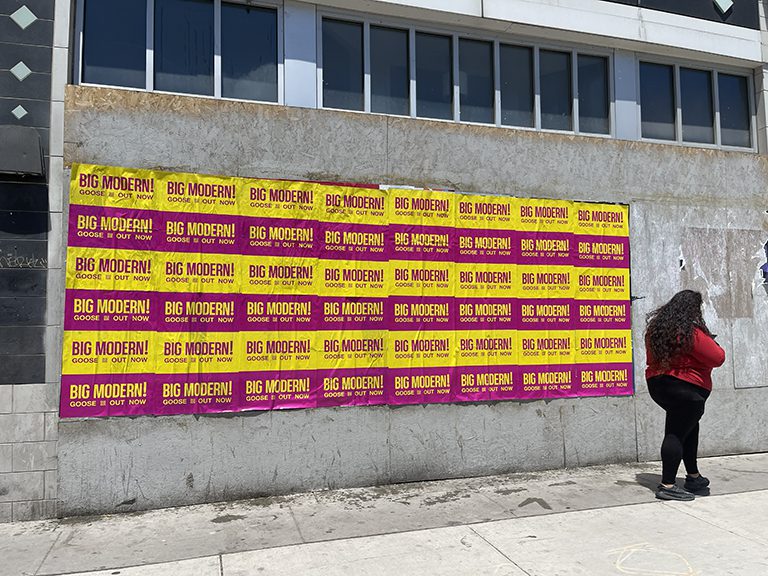
The experience of walking past a well-executed 24 x 36 wheatpaste poster in a city neighborhood is what makes the regular outdoor size work for brand building. It is not just about specs and print quality – it is about presence, surprise, and the way a well-placed street poster makes an impression on someone who was not looking for advertising.
Our guerrilla marketing campaigns use the regular 24 x 36 format because it is the smallest size that commands genuine visual presence at street level. A campaign of 500 regular-size posters across 30 locations in a target neighborhood creates a feeling of brand ubiquity that a digital impression cannot replicate. The physical presence of a regular poster at eye level, on a wall people pass daily, creates a different kind of brand memory than a scroll-past digital ad.
The regular 18 x 24 achieves something different: density. A bar or venue covered in regular-size 18 x 24 event posters communicates that something is happening in the city. Our street team operations distribute regular indoor-size posters to hundreds of venues across a market for major event campaigns – the cumulative effect of the same design in every venue is what builds the event’s cultural presence.
Regular Poster Sizes: Ordering Guide
When ordering regular posters from a commercial print vendor, the ordering process should specify everything explicitly. Here is a complete ordering spec for each regular format.
24 x 36 regular outdoor poster order spec
Size: 24 x 36 inches, portrait. Paper: 80 lb uncoated text. Printing: CMYK, large-format inkjet, pigment ink preferred. Quantity: specify your total. Bleed: 0.125 inch on all sides. File format: PDF or PDF/X-1a. Color mode: CMYK. Resolution: 300 DPI minimum. Delivery: rolled in poster tubes (no folding). Lead time: standard 3-5 business days, confirm with vendor.
18 x 24 regular indoor poster order spec
Size: 18 x 24 inches, portrait. Paper: 80 lb text (uncoated or matte depending on application). Printing: CMYK. Quantity: specify. Bleed: 0.125 inch. File: PDF. Color mode: CMYK. Resolution: 300 DPI. Delivery: flat-pack in boxes or rolled depending on quantity – confirm with vendor.
Regular Poster File Specifications
Print-ready file specifications for the most common regular poster sizes:
11 x 17 inches: 3300 x 5100 pixels at 300 DPI. CMYK. PDF or high-quality JPEG for offset print. Bleed: 0.125 inch on all sides.
18 x 24 inches: 5400 x 7200 pixels at 300 DPI. CMYK. PDF preferred. Bleed: 0.125 inch on all sides. Safe zone: 0.25 inch from trim.
24 x 36 inches: 7200 x 10800 pixels at 300 DPI. CMYK. PDF/X-1a or PDF/X-4. Bleed: 0.125 inch on all sides. Safe zone: 0.25 inch from trim.
27 x 40 inches: 8100 x 12000 pixels at 300 DPI. CMYK. PDF. Bleed: 0.125 inch on all sides.
For large-format inkjet printing (36 x 48 and above), 150 DPI at full size is acceptable. The large-format inkjet process is more forgiving of lower resolution than offset print because the print is typically viewed from greater distances.
Regular Poster Sizes and Venue Placement Logistics
Deploying regular-size posters across a campaign market requires understanding the logistics of placement at scale. The regular size affects how many posters fit in a standard transport tube, how many a crew member can carry to a location, how much paste is required per poster, and how long installation takes per location. These practical variables determine the real-world cost and efficiency of deploying regular poster formats at campaign scale.
Regular 24 x 36 posters transport rolled in 3-inch diameter poster tubes. A standard 37-inch tube holds 8-12 rolled 24 x 36 posters comfortably. A crew member can carry 2-3 tubes per trip, or 16-36 posters. At a production pace of 45-90 seconds per poster for experienced installers, a crew of two can deploy 60-80 regular 24 x 36 posters in a 2-hour window. For campaigns requiring 200+ placements, multi-crew coordination is standard practice.
Regular 18 x 24 posters are more compact and transport more efficiently. A standard poster tube holds 15-20 rolled 18 x 24 posters. Installation pace is faster – typically 30-60 seconds per poster for indoor venue distribution. For indoor distribution campaigns, one person can efficiently deliver and place 18 x 24 regular posters across 20-30 venues in a half-day.
What size are regular posters?
Regular posters in the US are most commonly 24 x 36 inches for outdoor and street campaigns, and 18 x 24 inches for indoor applications. These two sizes account for the majority of posters printed and distributed in US marketing campaigns.
What is a regular poster size for an event?
For event promotion, the regular poster size is 18 x 24 inches for indoor venue distribution (bars, clubs, coffee shops) and 24 x 36 inches for outdoor street-level placements. Concert and music venue posters typically use 18 x 24 as the indoor standard.
What size are regular concert posters?
Regular concert posters are typically 18 x 24 inches for indoor venue and bar promotion. For outdoor street-level concert campaigns, 24 x 36 inches is standard. Some collectors’ show posters and limited-edition prints use 18 x 24 as the art print format.
Are regular posters the same as standard posters?
Yes – regular and standard poster sizes refer to the same formats. The most regular/standard US poster sizes are 24 x 36 inches (primary street format) and 18 x 24 inches (indoor and retail format). These are the sizes most print vendors stock and price as defaults.
What size are regular retail store posters?
Regular retail store posters are typically 22 x 28 inches (to fit standard retail display frames) or 18 x 24 inches. For floor-standing retail displays, 24 x 36 is common. The right size depends on the specific display hardware in the retail environment.
What is the regular poster size for bedroom wall display?
The regular poster size for bedroom or home wall display is 24 x 36 inches, which fits standard poster frames sold at most retailers. The 18 x 24 format is also common and fits smaller standard frames.
What are the regular poster sizes outside the US?
Outside the US, regular poster sizes follow the ISO A-series metric system. The regular campaign poster size internationally is A1 (23.4 x 33.1 inches / 594 x 841 mm), which is the international equivalent of the US 24 x 36. A2 (16.5 x 23.4 inches) is the international equivalent of the US 18 x 24.
Campaign Architect — American Guerrilla Marketing
Frequently Asked Questions
What size are regular posters?
Regular posters in the US are most commonly 24 x 36 inches for outdoor and street campaigns, and 18 x 24 inches for indoor applications. These two sizes account for the majority of posters printed and distributed in US marketing campaigns.
What is a regular poster size for an event?
For event promotion, the regular poster size is 18 x 24 inches for indoor venue distribution (bars, clubs, coffee shops) and 24 x 36 inches for outdoor street-level placements. Concert and music venue posters typically use 18 x 24 as the indoor standard.
What size are regular concert posters?
Regular concert posters are typically 18 x 24 inches for indoor venue and bar promotion. For outdoor street-level concert campaigns, 24 x 36 inches is standard. Some collectors’ show posters and limited-edition prints use 18 x 24 as the art print format.
Are regular posters the same as standard posters?
Yes – regular and standard poster sizes refer to the same formats. The most regular/standard US poster sizes are 24 x 36 inches (primary street format) and 18 x 24 inches (indoor and retail format). These are the sizes most print vendors stock and price as defaults.
What size are regular retail store posters?
Regular retail store posters are typically 22 x 28 inches (to fit standard retail display frames) or 18 x 24 inches. For floor-standing retail displays, 24 x 36 is common. The right size depends on the specific display hardware in the retail environment.
What is the regular poster size for bedroom wall display?
The regular poster size for bedroom or home wall display is 24 x 36 inches, which fits standard poster frames sold at most retailers. The 18 x 24 format is also common and fits smaller standard frames.
What are the regular poster sizes outside the US?
Outside the US, regular poster sizes follow the ISO A-series metric system. The regular campaign poster size internationally is A1 (23.4 x 33.1 inches / 594 x 841 mm), which is the international equivalent of the US 24 x 36. A2 (16.5 x 23.4 inches) is the international equivalent of the US 18 x 24.