
July 24, 2026
University Guerrilla Marketing: Recruitment, Enrollment, and Brand-Building Through Street Campaigns
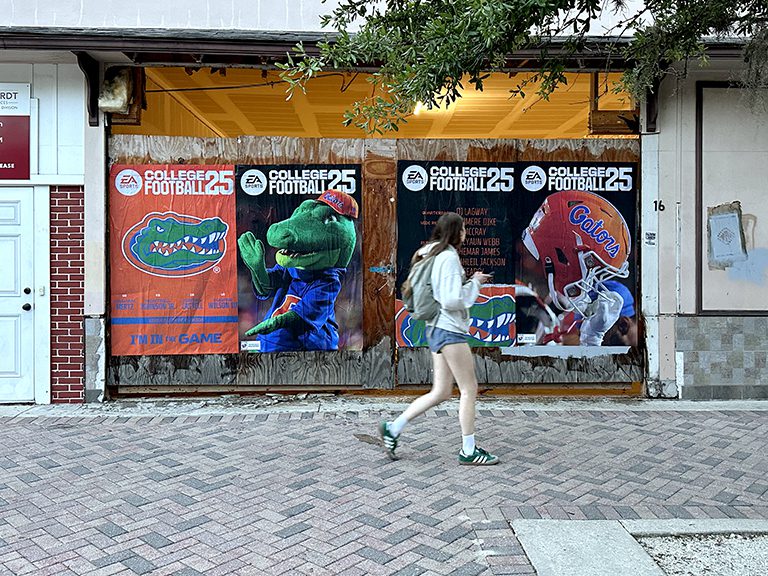
College campuses and their surrounding neighborhoods represent some of the most concentrated audience environments in U.S. cities. A square mile around a major university contains tens of thousands of 18-24 year-olds who live, eat, shop, commute, and socialize in a relatively constrained geography — making campus-adjacent guerrilla marketing one of the most efficient formats for reaching the student demographic with repeated, relevant exposure.
This guide covers two distinct use cases for university guerrilla marketing: universities using street-level campaigns for enrollment, recruitment, and brand-building, and commercial brands using campus-adjacent formats to reach the student audience as consumers. The tactics overlap but the objectives and geographic focus differ in important ways.
Our team at American Guerrilla Marketing deploys campus-adjacent campaigns in university markets across 50+ U.S. cities from our base in Industry City, Brooklyn. The frameworks here reflect what we’ve learned from running both university enrollment campaigns and commercial brand campaigns in student-dense environments.
Why Campus Environments Are Valuable for Street Marketing
The concentration of a defined demographic in a walkable, transit-connected environment is exactly what makes guerrilla marketing effective. In campus environments, that concentration is extreme: a single university can place 20,000-60,000 students within walking or cycling distance of a campus core. This creates poster placement, street team deployment, and experiential activation opportunities with very high target audience concentration per square mile.
The Walkability Factor
Campus-adjacent neighborhoods are almost uniformly more walkable than the general urban market. Students commute to class on foot or by bicycle, shop and eat on foot in neighborhood commercial corridors, and move through a relatively small geographic area with high daily frequency. This walkability means that poster campaigns in campus neighborhoods generate higher effective frequency against the target audience than equivalent placement densities in less walkable contexts — the same person walks the same three blocks to campus multiple times a week.
Social Media Density
College-age audiences are among the highest social media users in any demographic. Street-level creative that is visually distinctive, culturally relevant, or participatory generates organic social documentation from campus audiences at rates that older demographics don’t produce. A well-designed sidewalk stencil installation or experiential activation near a campus generates social content from the audience that extends reach beyond the physical installation footprint.
University Enrollment and Recruitment Campaigns
Universities are among the most active users of street-level marketing, both for undergraduate enrollment campaigns targeting high school students in specific feeder markets and for graduate program recruitment campaigns targeting working professionals in specific industries.
Undergraduate Enrollment: Reaching Prospective Students and Parents
Undergraduate enrollment campaigns face a geographic challenge: prospective students are distributed across the country, not concentrated near campus. Effective enrollment campaigns deploy in the high school feeder markets that produce the strongest application pools — typically major metro areas with strong secondary school systems. Poster campaigns in neighborhoods near top feeder high schools, brand ambassador deployments at college fairs and student events, and guerrilla activations at venues and events where prospective students and their parents are present reach this audience in their home markets before they’ve made campus visit decisions.
Graduate Program Recruitment: Reaching Working Professionals
Graduate and professional program enrollment campaigns target a different audience — working professionals in specific industries who have both the qualification and the life circumstances to consider further education. These campaigns activate in professional corridors: office districts, transit hubs serving business parks, and neighborhoods with high concentrations of the target professional demographic.
An MBA program targeting finance professionals deploys differently than a nursing program targeting healthcare workers or a law school targeting recent college graduates. The geographic target shifts from campus-adjacent neighborhoods to the professional contexts where each target audience concentrates. Transit advertising at stations serving financial districts, ambassador deployments at professional networking events, and poster campaigns in office corridor neighborhoods are all relevant formats for graduate enrollment campaigns.
Campus Brand Awareness Campaigns
Universities also run brand awareness campaigns in their local markets — shaping public perception of the institution, highlighting research achievements, or building community relationships in the neighborhoods surrounding campus. These campaigns typically activate in the campus-adjacent commercial corridors and transit environments that the university community and the surrounding neighborhood share.
Commercial Brand Campaigns Targeting Student Audiences
For commercial brands, campus environments offer access to the 18-24 demographic at a concentration that’s hard to replicate in general market campaigns. The challenge is reaching this audience in ways that feel authentic rather than intrusive — students are particularly sensitive to brands that feel like they’re trying too hard or that don’t genuinely understand the culture they’re entering.
Off-Campus Residential Corridor Campaigns
Most college students don’t live in campus housing, particularly after freshman year. They live in the neighborhoods surrounding campus — specific streets and blocks that concentrate student population at high density. Identifying and mapping these residential corridors is the starting point for commercial brand campaigns targeting student audiences.
Poster campaigns on the commercial streets between student housing and campus, sidewalk stencil campaigns on the walking routes that students follow multiple times a day, and brand ambassador deployments at the coffee shops, dining spots, and transit stops that student populations use — all of these formats reach students in their actual daily environment rather than in the controlled campus environment where formal advertising often feels intrusive.
Entertainment and App Launch Campaigns Near Campus
Entertainment brands — film studios, music labels, gaming companies — are among the most active users of campus-adjacent street marketing, for the obvious reason that the 18-24 demographic is their primary audience. App launches in particular benefit from campus-adjacent ambassador deployments that can drive trial and download behavior directly: a well-briefed ambassador team that can demonstrate an app or offer a download incentive generates higher conversion rates than awareness-only formats.
Food, Beverage, and Consumer Brand Activations
Food and beverage brands use campus-adjacent experiential activations to drive sampling, trial, and social sharing among student audiences. Product sampling near campus dining areas, branded activations at student gathering spaces, and ambassador-driven distribution campaigns in campus neighborhoods all perform well for brands where the product experience itself is the most compelling argument for trial.
Seasonal Timing for University Campaigns
Campus environments have strong seasonal patterns that should drive campaign timing decisions. Move-in week and the first two weeks of each semester are the highest-engagement windows for campus campaigns — students are orienting to their environment, open to new discoveries, and more receptive to brand encounters than at any other point in the academic calendar.
Back to School (August-September)
The late August to mid-September window is the most valuable period for reaching incoming students before their spending patterns, brand preferences, and social habits are established. Campaigns that reach students during this orientation window have an outsized opportunity to establish brand relationships that persist throughout the academic year.
Spring Semester Launch (January)
The spring semester launch is a secondary opportunity similar to fall, though without the new-student volume. Returning students are reengaging with their campus environment after winter break, making them receptive to brand encounters in the first two to three weeks of the semester.
Event-Adjacent Windows: Homecoming, Finals, Graduation
Major campus events — homecoming, finals periods, graduation weekend — create concentrated audience moments that support time-sensitive campaign activations. Graduation weekend in particular brings parents, family members, and alumni to campus in addition to the student population, creating a temporarily expanded demographic footprint that can support broader consumer brand campaigns.
Frequently Asked Questions
What is university guerrilla marketing?
American Guerrilla Marketing provides university guerrilla marketing services across 50+ U.S. markets. Every campaign is planned, scouted, executed, and GPS-documented by our field teams. We work with regional brands and Fortune 500 companies on campaigns that require real street-level execution and documented proof of performance.
How does AGM approach guerrilla marketing?
Our process starts with a market consultation to understand your goals, target audience, and budget. We then scout locations, handle any required permissions or permits, coordinate production and installation with our local crews, and provide a full GPS-tagged photo report after the campaign runs.
What markets does American Guerrilla Marketing cover for guerrilla marketing?
We operate in 50+ U.S. markets including New York, Los Angeles, Chicago, Miami, Houston, Atlanta, Seattle, Denver, Boston, and dozens of secondary markets. Contact us to confirm availability and pricing for your specific market.
How much does a guerrilla marketing campaign cost?
Campaign pricing depends on market, format, quantity, and duration. We work with budgets ranging from targeted single-market runs to national rollouts across multiple cities. Use our RFP Builder or contact us directly for a custom quote based on your specific campaign requirements.
How do I get started with guerrilla marketing through AGM?
The fastest way to get started is to submit your campaign details through our RFP Builder at americanguerrillamarketing.com, or contact us directly at [email protected] or (646) 776-2770. Our team typically responds within one business day with availability and initial pricing.

Ready to Run Your Campaign?
Call us or email us. We’ll tell you exactly what we can do in your market and what it costs.
Related Services
Explore similar advertising solutions offered by American Guerrilla Marketing.
American Guerrilla Marketing — Los Angeles
Street-level campaigns in Los Angeles and nationwide. Wheatpasting, LED trucks, street teams, and more.
(646) 776-2770
Related Articles
-
Street Poster Advertising Ottawa: A Complete Campaign Guide
September 17, 2026
-
Activation Marketing: How Brands Win at Street Level
September 13, 2026
-
Experiential Marketing Firms Chicago | American Guerrilla Marketing
September 12, 2026
-
Pop Up Experiential
September 12, 2026
-
Mobile Pop Up
September 12, 2026