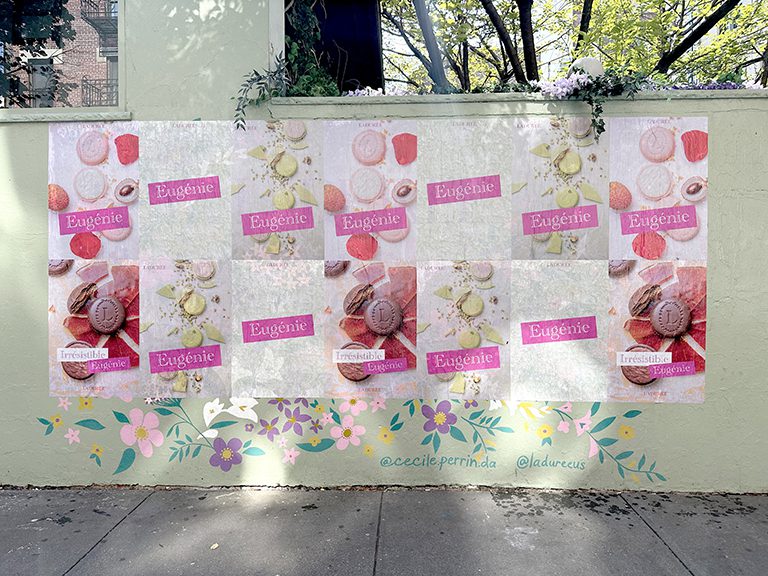
Typical Poster Size Dimensions: Every Format You Will Actually Need
Typical poster size dimensions in the US follow a relatively consistent set of standards, but the range is wider than most people realize. From the 11 x 17 inch tabloid format used in high-volume street campaigns to the 48 x 72 inch large-format poster used for premium outdoor placements, each size in the spectrum serves a specific function. Choosing the wrong format – whether too small for the viewing environment or too large for the budget – is one of the more common and avoidable errors in campaign planning.
At American Guerrilla Marketing, we execute poster campaigns across street environments in 50+ US markets. Our Industry City, Brooklyn base of operations handles material coordination for campaigns that range from a few hundred posters to multi-city runs of thousands. We work with every format in the typical poster size range, from the compact 11 x 17 to large-format installs that cover entire wall sections. This guide covers what each typical size actually delivers and where it belongs in a campaign plan.
These are not theoretical specs. They are the dimensions our team uses, orders, and evaluates on a campaign-by-campaign basis. The guidance here reflects field experience, not just print industry charts.
Standard US poster sizes span a wide range. Here is the complete picture before diving into each size individually:
Size (Inches)
Category
Aspect Ratio
Max Reading Distance
8.5 x 11
Flyer (not poster scale)
1:1.29
4 feet
11 x 17
Small poster / tabloid
1:1.55
6 feet
12 x 18
Small poster
1:1.5
7 feet
18 x 24
Medium poster
1:1.33
12 feet
22 x 28
Retail display standard
1:1.27
14 feet
24 x 36
Standard street poster
1:1.5
20-25 feet
27 x 40
Cinema one-sheet
1:1.48
25 feet
36 x 48
Large format
1:1.33
35-40 feet
48 x 72
Extra large format
1:1.5
50+ feet
11 x 17 Inches: The High-Volume Small Poster
The 11 x 17 inch format – often called tabloid – is the entry-level poster dimension. At this size, you can produce large quantities at low per-unit cost, which makes it the right choice when campaign coverage volume is the priority. It is the format of choice for high-frequency street seeding: covering as many surfaces and bulletin boards as possible with a consistent campaign presence.
Where 11 x 17 works
Indoor bulletin boards, door poster slots in residential buildings, coffee shop community boards, store windows where passersby are within arm’s reach, and event flyering in dense pedestrian areas. The format also works for secondary materials in multi-size campaigns – when you have a key 24 x 36 poster at a premium location, 11 x 17 saturation in the surrounding blocks extends the visual footprint at low incremental cost.
Where 11 x 17 fails
Outdoor walls and surfaces where viewers pass at normal street distance (10-15 feet or more). At these distances, 11 x 17 disappears. The headline may be readable on a clear day but the overall visual impact is negligible. Our wheatpasting campaigns use 11 x 17 only for secondary indoor locations, never as the primary format for wall placements.
18 x 24 Inches: The Versatile Mid-Size Format
The 18 x 24 inch poster is the most versatile format in the typical size range. It works indoors and outdoors, it prints economically, and it occupies a visual footprint that is enough to command attention from 10-12 feet. For campaigns covering retail windows, indoor commercial spaces, and outdoor locations where viewers pass within close range, 18 x 24 delivers the right balance of impact and economics.
Design considerations for 18 x 24
At 18 x 24, you have 432 square inches of display surface. This is enough for a strong visual, a clear headline, and supporting copy. Keep the design simple: one dominant image or graphic element, one headline at 100pt+ for readability at 10 feet, and a supporting message or call-to-action at 40-60pt. Body copy below 36pt is not reliably readable at street distance, even at this size.
The 18 x 24 aspect ratio (3:4) is similar to the standard iPad screen, which makes it natural for designs originally created for digital ads. However, screen designs rarely translate directly to print without adjustments for resolution and color mode.
24 x 36 Inches: The Standard Campaign Format
The 24 x 36 inch poster is the benchmark. It is what “standard size” means in a campaign context. When a brand says they want to run a poster campaign without specifying dimensions, this is the size the campaign will be executed in. It is the default for street-level guerrilla marketing, event promotion, brand launch campaigns, and any application where visual presence at street level needs to compete with other advertising in the environment.
Why 24 x 36 is the default
At 24 x 36 inches, a poster is visible and readable from across a two-lane city street under normal conditions. A headline set at 150-200pt is readable from 20+ feet. The format rolls into a 3-inch diameter tube for transport, which makes it practical for installers working across dozens of locations in a day. Most large-format print vendors have optimized their presses and pricing for this format, making it the most cost-efficient size per square inch of print area relative to formats above and below it.
Paper weight for outdoor use
For outdoor street applications and wheatpasting, we use 80 lb uncoated text paper at 24 x 36 inches. Coated stocks (matte or gloss) look better in the hand but perform worse when pasted – coated paper absorbs paste less effectively and can peel or bubble. Uncoated 80 lb text paste-soaks well, bonds to surfaces cleanly, and survives weather exposure better than heavier coated stocks. For indoor use where the poster will be framed or displayed dry, 100 lb text or heavier works well.
27 x 40 Inches: The One-Sheet
The 27 x 40 one-sheet is a cinema industry standard that has limited use outside theatrical marketing. The tall, narrow format was designed for backlit display cases in movie theater lobbies. The proportions create a distinctive visual format that the film industry has used to standardize lobby display for decades.
For general campaign use, the 27 x 40 format is not ideal because most outdoor poster frames and display holders are sized for 24 x 36, not 27 x 40. If you have a theatrical campaign, a film release, or a project where the one-sheet format is specifically appropriate, this is your size. For everything else, 24 x 36 is the practical choice at this scale.
36 x 48 Inches: Large Format Territory
The 36 x 48 inch format enters the large-format category. At four times the area of an 18 x 24 poster, this format is used for high-impact outdoor placements, construction wall campaigns, and locations where visibility from greater distances is the priority. Our mural advertising and large-format outdoor campaigns regularly use 36 x 48 prints as tiled installations on building walls.
Cost vs. impact at 36 x 48
A 36 x 48 poster typically costs 3-4 times as much to print as a 24 x 36. The installation takes longer and often requires two people for large outdoor wall applications. The visual impact premium is real – a 36 x 48 poster commands attention from 35+ feet and dominates in a competitive outdoor environment. The decision to use 36 x 48 instead of 24 x 36 should be driven by the specific location: if the wall is on a busy corner with high traffic at 20-30 foot viewing distances, the larger format is worth it. If the location only draws close-range viewers, 24 x 36 will perform equally well at lower cost.
48 x 72 Inches: Premium Outdoor Scale
The 48 x 72 inch format approaches transit shelter advertising scale. At 48 x 72, a poster is visible and readable from 50+ feet in good light. This format is used for premium outdoor locations: building corners, major intersection walls, and high-pedestrian-traffic urban environments where the budget justifies maximum visual scale.
Print and installation for 48 x 72 requires specialized equipment and two-person installation teams. Most print vendors quote this size as a large-format or specialty order. AGM coordinates 48 x 72 and larger formats for clients requiring maximum street presence at specific premium locations, typically as the centerpiece of a broader multi-format campaign.
Aspect Ratios Across Typical Poster Dimensions
Aspect ratio matters when you are adapting designs between sizes. Understanding the aspect ratio of each typical format helps you anticipate what will and will not adapt cleanly.
2:3 ratio formats (1:1.5)
Formats with a 2:3 ratio: 12 x 18 inches, 24 x 36 inches, 48 x 72 inches. Designs created for any of these three sizes adapt cleanly to the others without cropping – the proportions are identical. A design built at 24 x 36 can be scaled directly to 12 x 18 (half size) or 48 x 72 (double size) without any composition changes.
3:4 ratio formats (1:1.33)
Formats with a 3:4 ratio: 18 x 24 inches, 36 x 48 inches. A design built at 18 x 24 scales directly to 36 x 48 without composition changes. However, adapting between a 3:4 format and a 2:3 format (like 18 x 24 to 24 x 36) requires content adjustment because the height-to-width relationship is different.
Non-standard ratios
Some formats have unique aspect ratios: 11 x 17 is 1:1.545, 22 x 28 is 1:1.273, 27 x 40 is 1:1.481. These do not share their ratio with other common sizes, so adapting from these formats to any other size requires deliberate design adjustment rather than simple scaling.
Typical Poster Dimensions by Campaign Type
Different campaign types gravitate toward specific typical sizes. Here is how our team typically sizes materials for different campaign contexts.
Street and urban campaign
Primary format: 24 x 36 inches. Secondary format: 18 x 24 or 11 x 17 for high-volume indoor placements. Large-format premium locations: 36 x 48 or 48 x 72. The mix depends on budget, market, and the density of available placements.
Event and concert promotion
Primary format: 18 x 24 or 24 x 36 depending on indoor vs. outdoor venue context. Secondary: 11 x 17 for community board saturation. Day-of-show: 11 x 17 for high-frequency close-range placement near the venue.
Brand launch campaign
For brand launches where maximum visibility is the priority, AGM typically recommends 24 x 36 as the primary format with 36 x 48 at 2-3 premium locations per market. The 24 x 36 covers the campaign area broadly; the 36 x 48 creates landmark moments in the campaign map. Our billboard advertising team can also complement poster campaigns with traditional outdoor media for maximum reach.
Retail and point-of-sale campaign
Standard retail display: 22 x 28 or 18 x 24 to fit retail frame hardware. For floor-standing displays: 24 x 36. For large retail environments (big box, grocery): 36 x 48 on free-standing displays. Match the format to the display hardware the retailer provides – size before design.
Typical Poster Dimensions and Their Historical Context
The typical poster dimensions used today did not emerge from a formal standards body. They developed through accumulated practical experience in the print industry, transit advertising systems, cinema lobbies, and street-level marketing. Understanding why these dimensions became typical helps explain why they remain the defaults and under what circumstances it makes sense to depart from them.
The 24 x 36 origin story
The 24 x 36 inch format became the typical outdoor poster dimension through the convergence of several practical factors in the mid-20th century US print industry. Large-format printing equipment was optimized for rolls and sheets that could efficiently produce this size with minimal paper waste. The format fit the growing inventory of outdoor display frames being installed in US cities. Transit authorities that provided bulletin board space often specified 24 x 36 as their standard insert size. And the visual communication research of the period showed that a 24 x 36 poster could be read from 20-25 feet – exactly the distance at which pedestrian viewers would have time to register a message before walking past.
The 18 x 24 indoor origin
The 18 x 24 inch indoor format became typical because it fit the constraints of indoor commercial environments: bar walls with limited horizontal space between shelves and fixtures, window display areas in retail storefronts, and bulletin board systems in universities and community spaces. The 18 x 24 format also reduced the visual dominance of advertising relative to the retail or hospitality environment it was placed in – at 24 x 36 outdoors, the poster is meant to dominate; at 18 x 24 indoors, it is meant to coexist with the environment.
Typical Poster Dimensions for Design Software Templates
Design software templates use typical poster dimensions as their standard document presets. Understanding how these presets translate to print helps prevent confusion between screen display and final output.
Canva typical poster sizes
Canva offers preset templates for typical poster dimensions: 24 x 36 inches (called “Large Poster” in Canva’s template library), 18 x 24 inches, and 11 x 17 inches. These templates are set up at 300 DPI for print-quality output. The Canva poster templates are designed for the typical use cases: event promotion, brand campaigns, and event flyers.
Adobe Illustrator and InDesign typical poster document presets
Adobe design software does not include specific poster preset sizes in the default document template library – US print posters are typically set up as custom documents. In Illustrator, the standard approach is to create a new document at the exact poster dimensions (e.g., 24 x 36 inches) with 0.125 inch bleed. In InDesign, the print intent document with custom page size is the starting point. Professional design templates for typical poster campaigns are often shared within agencies rather than relying on Adobe’s built-in presets.
Typical Dimensions for Digital Posters vs. Print Posters
Digital posters – displayed on screens, websites, and social media – use different typical dimensions than print posters. Understanding the difference prevents the confusion of trying to use a print poster dimension for a digital display application.
Typical digital poster dimensions by platform: Instagram Story (vertical): 1080 x 1920 pixels (9:16 ratio). Instagram and Facebook Feed Post: 1080 x 1350 pixels (4:5 ratio). Pinterest Pin: 1000 x 1500 pixels (2:3 ratio – same as 24 x 36 print ratio). LinkedIn Document: 1080 x 1350 pixels. Twitter/X Image Post: 1200 x 628 pixels (landscape). Digital OOH Screen (landscape): 1920 x 1080 pixels. Digital OOH Screen (portrait): 1080 x 1920 pixels.
The Pinterest Pin format is the closest digital equivalent to the typical 24 x 36 print poster (both use 2:3 ratio). All other common digital poster formats use different aspect ratios than the typical print poster formats. For cross-channel campaigns, design separate assets for print and digital rather than adapting one to the other. The typical dimensions are different enough that adaptation compromises both formats.
What are typical poster size dimensions?
Typical US poster dimensions range from 11 x 17 inches (small/high-volume) to 24 x 36 inches (standard street poster) to 36 x 48 inches (large format). The most commonly used campaign size is 24 x 36 inches. The 18 x 24 is the second most common for indoor and mixed-use applications.
What is a typical small poster size?
Typical small poster sizes are 11 x 17 inches (tabloid) and 12 x 18 inches. These are used for high-volume street campaigns, bulletin boards, door posters, and indoor applications where viewing distance is short (under 8 feet).
What is a typical medium poster size?
The typical medium poster size is 18 x 24 inches. It is large enough for outdoor use at moderate viewing distances and is the standard for indoor retail displays, window campaigns, and mid-scale event promotion.
What is the typical aspect ratio of a poster?
The most common US poster aspect ratios are 2:3 (used in 18×24 and 24×36 formats) and 3:4 (used in 18×24 and 36×48 formats). Most standard poster sizes fall in the portrait orientation range of 1:1.3 to 1:1.5 aspect ratio.
What are typical outdoor poster dimensions?
Typical outdoor poster dimensions for street campaigns are 24 x 36 inches as the primary standard. For large-impact outdoor placements, 36 x 48 inches is used. For premium outdoor or building-scale displays, 48 x 72 inches and larger formats are used.
What is the typical viewing distance for different poster sizes?
Approximate comfortable reading distances by size: 11 x 17 inches – up to 6 feet; 18 x 24 inches – up to 12 feet; 24 x 36 inches – up to 20-25 feet; 36 x 48 inches – up to 35-40 feet. These are guidelines for legibility of body text. Headlines at large type sizes are readable at greater distances.
How do I know what poster size to order for my campaign?
Match the size to your viewing environment. For street campaigns and outdoor placements where viewers pass at 10-20 feet, use 24 x 36 as the baseline. For high-volume indoor distribution where viewers are within 6-8 feet, 18 x 24 or 11 x 17 works. For premium locations with maximum visibility, go larger.
Campaign Architect — American Guerrilla Marketing
Frequently Asked Questions
What are typical poster size dimensions?
Typical US poster dimensions range from 11 x 17 inches (small/high-volume) to 24 x 36 inches (standard street poster) to 36 x 48 inches (large format). The most commonly used campaign size is 24 x 36 inches. The 18 x 24 is the second most common for indoor and mixed-use applications.
What is a typical small poster size?
Typical small poster sizes are 11 x 17 inches (tabloid) and 12 x 18 inches. These are used for high-volume street campaigns, bulletin boards, door posters, and indoor applications where viewing distance is short (under 8 feet).
What is a typical medium poster size?
The typical medium poster size is 18 x 24 inches. It is large enough for outdoor use at moderate viewing distances and is the standard for indoor retail displays, window campaigns, and mid-scale event promotion.
What is the typical aspect ratio of a poster?
The most common US poster aspect ratios are 2:3 (used in 18×24 and 24×36 formats), 3:4 (used in 18×24 and 36×48 formats), and the cinema one-sheet ratio of approximately 27:40. Most standard poster sizes fall in the portrait orientation range of 1:1.3 to 1:1.5 aspect ratio.
What are typical outdoor poster dimensions?
Typical outdoor poster dimensions for street campaigns are 24 x 36 inches as the primary standard. For large-impact outdoor placements, 36 x 48 inches is used. For premium outdoor or building-scale displays, 48 x 72 inches and larger formats are used.
What is the typical viewing distance for different poster sizes?
Approximate comfortable reading distances by size: 11 x 17 inches – up to 6 feet; 18 x 24 inches – up to 12 feet; 24 x 36 inches – up to 20-25 feet; 36 x 48 inches – up to 35-40 feet. These are guidelines for legibility of body text. Headlines at large type sizes are readable at greater distances.
How do I know what poster size to order for my campaign?
Match the size to your viewing environment. For street campaigns and outdoor placements where viewers pass at 10-20 feet, use 24 x 36 as the baseline. For high-volume indoor distribution where viewers are within 6-8 feet, 18 x 24 or 11 x 17 works. For premium locations with maximum visibility, go larger.