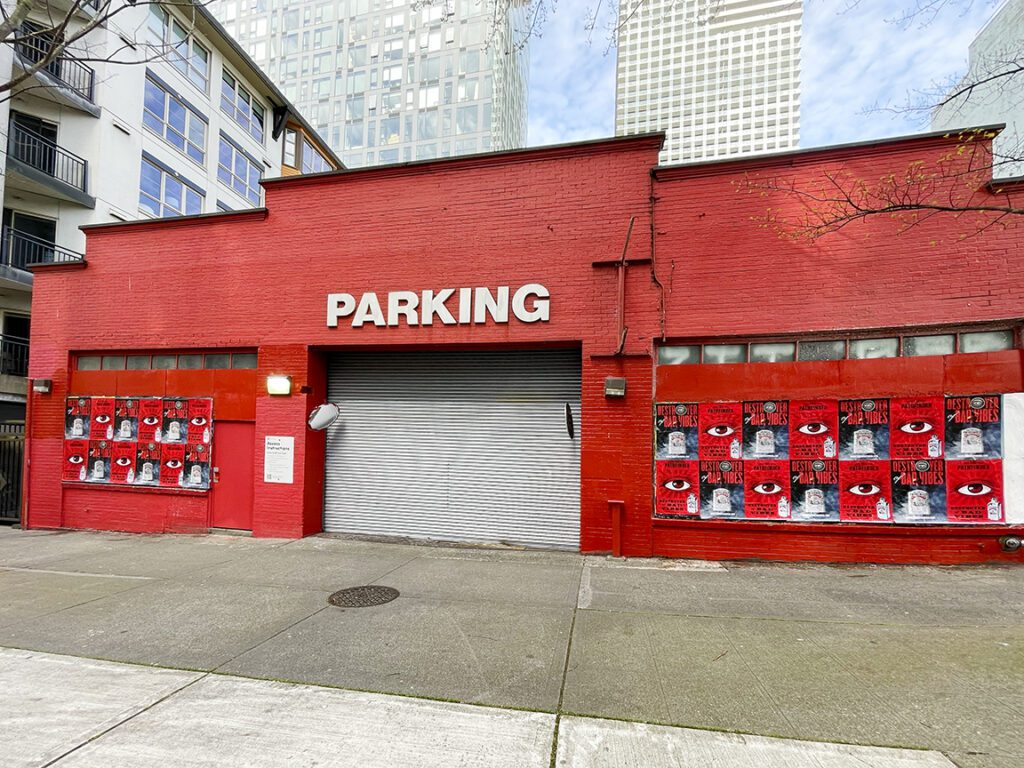
The conventional trade show marketing conversation starts and ends at the exhibit booth. Which booth builder are you using? How many square feet is your space? What’s your display concept? Those are legitimate questions, but they are all questions about what happens inside the exhibit hall, which is one of the most crowded, most competitive advertising environments in existence. Every other exhibitor at your show is also answering those questions, also spending money on booth design, also trying to interrupt the same tired attendee in the same building.
A trade show marketing agency worth working with shifts that conversation. The real opportunity at any major convention is not inside the hall. It is in the convention district: the entrance plazas, the approach routes, the hotel lobby zones, the lunch destinations two blocks from the venue, the streets that attendees walk every day of the show to get from their hotel to the building and back. That geography is largely uncontested. While every exhibitor is inside competing for floor space, the streets outside are open.
At American Guerrilla Marketing, we build convention district marketing programs that operate in exactly that space. Our team handles street-level ambassador deployments, mobile advertising, product sampling logistics, and projection campaigns for brands at major trade shows across the US. This guide explains what a real outside-the-hall trade show marketing agency does and how we structure those programs.
The Convention District as a Marketing Environment
Every major trade show creates a temporary, highly concentrated marketing environment around the convention center. For three to five days, tens of thousands of industry decision-makers move through the same streets, eat at the same restaurants, stay in the same hotel blocks, and shuttle between the same venue and hotel circuit. The convention district’s attendee density during a major show rivals some of the highest-traffic urban locations in the country.
That density is exploitable. A brand that positions a strong team in the right locations in the convention district during a major show can intercept a significant percentage of the attendee population outside the hall, in environments where they are not actively deflecting marketing, where the brand appears novel rather than competing with 500 other booths, and where the interaction can be designed around the right moment in the attendee’s day rather than the chaos of the show floor.
Why Outside-the-Hall Reaches More Attendees
Inside a convention hall, you reach the attendees who walk your aisle, which is a fraction of total attendance. Most attendees never reach every part of a large show floor. Outside the hall, the approach corridors, hotel zones, and lunch destinations concentrate the full attendee population in predictable locations across predictable time windows. A well-staffed outside-the-hall program can reach more unique attendees per day than a mid-aisle booth at a 30,000-person show.
What a Trade Show Marketing Agency Actually Builds
The tactical toolkit for convention district marketing includes several components that work independently or as an integrated program. We design the mix based on the venue geography, the event’s attendee profile, and the brand’s objectives.
Brand Ambassador Programs at Convention Centers
Our brand ambassador teams deploy at the highest-traffic non-venue locations in the convention district. Entrance plaza positions during morning approach hours intercept the maximum number of attendees in the minimum time window. Shuttle stop positions capture a stationary, dwell-time-rich audience. Hotel lobby positions reach attendees during the morning and evening transitions. Each position uses a conversation approach calibrated to the moment: brief and high-energy at the entrance plaza, more conversational and detailed at the shuttle stop.
Product Sampling at Convention Hotels and Approach Routes
For brands with a physical product to put in attendees’ hands, product sampling outside the hall is one of the highest-ROI trade show tactics available. The outside-the-hall sampling environment is less competitive, more relaxed, and produces higher recall than booth sampling for most product categories. We handle all logistics: product transport, on-site storage, branded packaging coordination, crew management, and post-event distribution reporting.
LED Billboard Trucks on Convention Routes
Mobile LED billboard trucks running on the primary attendee routes outside the convention center provide high-reach, high-impression brand exposure throughout the show day. An LED billboard truck on a convention approach route during morning and evening transit windows reaches essentially the entire attendee population multiple times per day, with content that can be updated between deployments to create messaging variety across the show’s duration.
Sidewalk and Street-Level Visual Presence
Sidewalk stencils and street-level visual elements on the approach corridors leading to the convention center create a persistent brand presence that registers with every pedestrian attendee who walks the route. Unlike ambassador interactions, which are brief and sequential, sidewalk visual elements work continuously across all show hours without staffing cost after installation. They are most effective as a complement to ambassador and sampling programs, reinforcing the brand impression before and after direct interactions.
Projection Advertising on Convention Center Exteriors
Evening projection advertising on convention center exterior walls or adjacent building surfaces reaches the full attendee population during the post-show networking window, when dinner reservations and evening events concentrate attendees in the streets around the venue. High-lumen projection on a large surface creates a genuinely striking brand impression that stands out from every other convention marketing tactic running simultaneously, because nothing else at the show operates at that visual scale in that environment.
How We Structure a Convention Marketing Program
Every program starts with a location survey. Before we staff a single position or move a single piece of equipment, we walk the convention district, map the attendee movement patterns, identify the highest-traffic non-venue locations, and document the tactical opportunities in the specific geography around that venue. Every convention center is different. LVCC is different from Javits, which is different from McCormick Place, which is different from OCCC. The playbook adapts to the venue.
Day-by-Day Convention Marketing Deployment
Convention show days typically follow a predictable structure: heavy morning approach traffic, a split attendance pattern during show hours, and a concentrated departure and evening networking period. Our daily deployment structure aligns with these windows. Morning crews concentrate on entrance plazas and hotel zones. Midday crews shift to lunch destinations and outdoor break areas. Evening crews focus on departure routes and the restaurant and bar zones where convention networking continues after the show floor closes.
Integration with Exhibit Booth Programs
For brands with an exhibit presence, we integrate the outside-the-hall program with the booth strategy. Ambassador teams direct interested attendees to the booth by name, hall, and booth number. Sampling programs include collateral cards with the booth location. LED truck content includes the booth number during show hours, shifting to broader brand messaging during evening deployments. QR codes on all collateral track attribution back to the street-level program, giving brands a clear picture of how much of their booth traffic came from the convention district marketing versus organic floor traffic.
Trade Show Marketing vs. Exhibit Floor Marketing: A Direct Comparison
The cost comparison between exhibit floor marketing and convention district marketing is significant. A 10×10 booth at a major trade show typically costs $5,000 to $20,000 for the space alone, plus booth construction, furniture, staffing, and show services that can bring the total to $40,000 to $100,000 or more. A comprehensive outside-the-hall marketing program at the same show typically runs $15,000 to $50,000 and reaches a larger percentage of the total attendee population with a lower cost per impression.
The two approaches serve different objectives. Booth marketing is conversion-focused: attendees come to the exhibit, engage with the product and team, and enter a sales pipeline. Convention district marketing is awareness- and traffic-focused: it creates brand exposure across the full attendee population and drives top-of-funnel awareness that converts over a longer cycle. The most effective convention marketing programs use both, with the outside-the-hall program feeding top-of-funnel volume into the booth’s conversion process.
The Convention District Marketing Funnel
Convention district marketing, when designed correctly, functions as a top-of-funnel awareness and traffic-generation system that feeds into the booth’s conversion function. Understanding the funnel structure is what allows brands to design programs where each tactic serves a specific role rather than treating all outside-the-hall marketing as undifferentiated brand presence.
The awareness stage of the convention district funnel is served by the broadest-reach formats: LED billboard trucks on approach routes and hotel corridors, sidewalk stencils on pedestrian approach paths, and projection advertising on convention center exterior walls during evening hours. These formats generate impressions at scale across the full attendee population, building brand recognition before any individual interaction occurs. The awareness stage is not designed to convert; it is designed to prime the audience for the interactions and booth visits that follow.
Engagement Stage: Ambassador and Sampling Programs
The engagement stage is served by brand ambassador deployments and product sampling programs at the entrance plazas, hotel zones, and lunch destinations around the venue. These tactics create direct human or product interactions with individual attendees, moving them from passive awareness to active engagement with the brand. An attendee who has seen the brand’s LED truck on the morning approach and then receives a product sample at the entrance plaza has progressed through two funnel stages before setting foot on the show floor. That pre-conditioning produces measurably different booth interaction quality compared to attendees who arrive at the booth cold.
Conversion Stage: Booth and Digital Follow-Up
The conversion stage, handled by the booth team and digital follow-up mechanics, benefits from everything the awareness and engagement stages have built. Attendees who arrive at the booth having already encountered the brand through street-level marketing are not starting from zero. They arrive with a question, a sample memory, a visual impression, or a brief human interaction that creates a conversational context the booth team can build on. Our ambassador teams are trained to create this pre-conditioning intentionally, directing interested attendees to the booth with specific framing that sets up the booth team for a higher-quality conversion conversation.
Permitting and Compliance in Convention District Marketing
Street-level marketing in convention districts operates in a regulatory environment that varies by city and venue. Most US cities allow ambassador deployments and product sampling on public sidewalks and pedestrian zones without specific permits for small teams. Larger team deployments, amplified audio, or activities that occupy significant sidewalk space may require permits from the city, the convention center authority, or both.
Mobile billboard truck deployments require compliance with city-specific vehicle advertising regulations and may require DOT routing approvals in some markets. New York City has specific billboard truck regulations in Midtown that require advance coordination. Las Vegas’s Strip is under Clark County jurisdiction with its own permit structure. Chicago’s McCormick Place area has specific event-related route guidelines that affect LED truck deployment planning.
Our operations team handles all permit coordination for every market we operate in. Brands working with us do not need to navigate the city-specific regulatory landscape for each show — we manage that as part of the program management service. The permits are in order before the first crew member deploys, and our documentation confirms compliance for every element of the program.
Trade Shows We Have Covered
Our team has executed outside-the-hall marketing programs at some of the largest and most competitive trade shows in the US. At CES in Las Vegas, we have run multi-tactic programs including ambassador deployments, LED truck routes, and projection campaigns across multiple concurrent shows. At SEMA in Las Vegas, we have managed sampling programs at the LVCC North and South Hall entrances across full five-day shows. At NRF in New York, we have deployed ambassador teams at the Javits Center main entrance and the Hudson Yards Esplanade throughout the show’s three-day run.
Each show develops a documented tactical playbook. Brands that return to the same show in subsequent years benefit from that institutional knowledge: we know which positions produce the highest interaction rates, which time windows are most productive, and what the permitting requirements look like at each venue. That accumulated knowledge is part of what our guerrilla marketing team brings to every convention program.
Frequently Asked Questions
What does a trade show marketing agency do outside the exhibit hall?
A trade show marketing agency operating outside the hall manages brand ambassador deployments, product sampling at approach zones, LED billboard trucks on convention routes, sidewalk advertising near the venue, and projection campaigns on convention center exteriors. These tactics reach the full attendee population in the less competitive space outside the building.
What is the difference between a booth builder and a trade show marketing agency?
A booth builder creates your presence inside the exhibit hall. A trade show marketing agency creates your presence in the full convention district — the entrance plazas, hotel zones, approach routes, and public spaces surrounding the venue. Both serve different functions. Brands that dominate their trade shows use both.
How does American Guerrilla Marketing measure trade show campaign performance?
We measure performance through units distributed by location and shift, QR code attribution connecting street-level activity to booth visits, GPS-documented crew location and hours, timestamped photo documentation, and optional lead quality comparison between attendees who received a street-level interaction and those who did not.
Can you run a trade show campaign for a brand without an exhibit booth?
Yes. Outside-the-hall trade show marketing does not require an exhibit presence. Brands without booths use street-level programs to generate awareness and drive digital follow-up across the full convention attendee population, often at a fraction of the cost of exhibit floor participation.
What trade shows does American Guerrilla Marketing have experience with?
We have executed programs at CES, SEMA, NAB, NRF, Salesforce Dreamforce, RSA Conference, New York Comic Con, NeoCon, PACK EXPO, MAGIC, and dozens of other major industry shows across the US. Each show has a documented tactical playbook based on our on-the-ground experience at that venue.
How much does a trade show marketing program cost?
Programs range from $8,000 for a single-day ambassador deployment at a regional show to $75,000 or more for a multi-tactic, multi-day program at a major national show. We provide detailed estimates based on your specific show, venue, objectives, and tactic mix. Contact us at (646) 776-2770 to discuss your next event.