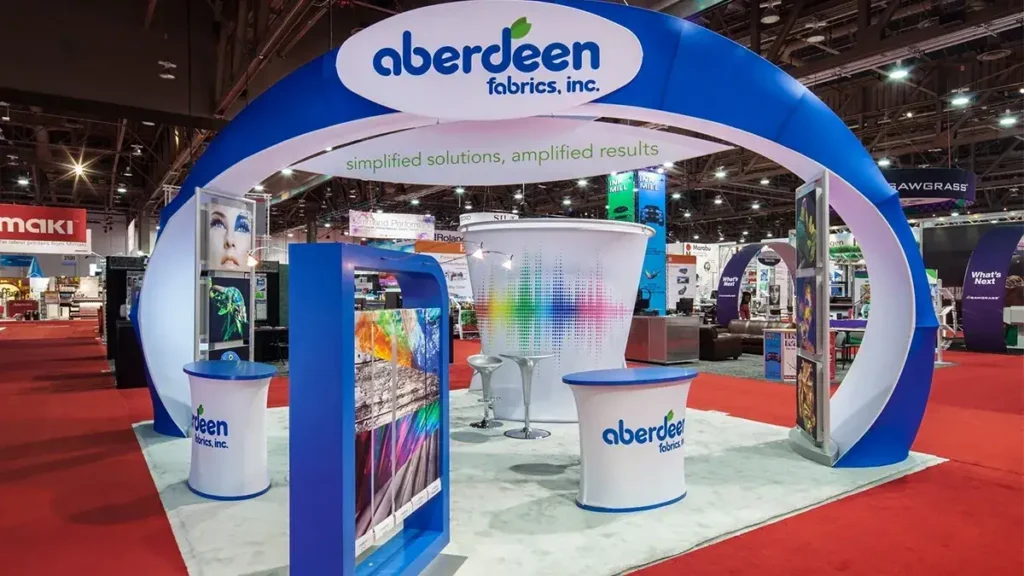
A trade show floor is one of the most competitive advertising environments on earth. Hundreds of brands compete for the attention of the same attendees, often in 10×10 or 10×20 foot squares of real estate. Most booths look the same: a back wall with a logo, a table with brochures, and someone standing there hoping people will stop. The brands that win trade shows think about the floor differently — as a live advertising medium where your booth is the creative, the experience is the offer, and every attendee interaction is a lead generation moment.
At American Guerrilla Marketing, we approach trade show presence the same way we approach street-level campaigns — with the understanding that bold, unexpected creative earns attention that conventional approaches don’t. We’ve helped brands extend their trade show footprint beyond the booth with guerrilla marketing tactics in the surrounding venue environment, turning the convention center and its adjacent hotel corridors into an advertising canvas that reaches attendees before they ever reach the floor.
This guide covers how to design a trade show booth strategy that generates maximum impact — from booth design principles to pre-show campaigns, live activations, and post-show follow-up systems.
The Trade Show Advertising Challenge
Attendees at a major trade show may walk past hundreds of booths in a day. Their attention is scarce, their schedule is packed, and they’ve been trained by experience to ignore the visual noise of a typical convention floor. Breaking through this noise requires understanding how trade show attention actually works.
The Three-Second Rule
Trade show attendees make a split-second decision about every booth they pass: relevant or not, interesting or not, worth stopping or keep moving. That decision happens in roughly three seconds of visual processing. Everything about your booth design — the visual hierarchy, the headline messaging, the colors, the use of space — needs to communicate your core value proposition in that three-second window. If an attendee can’t immediately understand who you are and why they should care, they keep walking.
Competing on the Floor
Understanding who you’re competing against on the floor determines what level of differentiation you need. If your neighbors are established enterprise brands with massive custom-built exhibits, a modest modular booth requires significantly more creative ingenuity to generate comparable attention. Researching the exhibitor list and floor map before finalizing booth design allows you to calibrate your approach against the competitive environment you’ll actually be working in.
Trade Show Booth Design Principles That Drive Traffic
Booth design is trade show advertising. The physical structure, the graphics, the layout, and the experience created within the booth are your creative — and they work or fail based on how well they attract, communicate, and engage.
Visual Pull and Booth Height
Vertical elements — tower structures, hanging signs, elevated displays — create visibility above the visual noise of the floor. Attendees on the other side of the convention hall can see a tall visual element that they can’t see on a standard 8-foot backdrop. If your show rules allow hanging signs or tall structures, use them. A compelling visual at height draws people from a distance in ways that floor-level displays simply can’t.
Distinctive Color Strategy
Color is the fastest visual communication tool you have. A booth using a distinctive, unexpected color scheme stands out from the sea of corporate blue and gray that dominates most trade show floors. Choosing a bold, differentiated color palette — one that works within your brand standards but leans toward visibility over convention — is one of the highest-impact decisions in booth design. We consistently see brands with visually distinctive color strategies generate more organic floor traffic than neighbors with larger booth footprints and more conventional aesthetics.
Experience Design Over Display
The booths that generate lines and conversation on trade show floors aren’t the ones with the biggest backdrops. They’re the ones with interactive experiences — live demonstrations, hands-on product trials, VR experiences, games, creative giveaway mechanics, or performances that draw crowds. An experience that makes attendees say “you have to see the booth” generates word-of-mouth that no brochure can match. Designing your booth around an experience — rather than around display — fundamentally changes how you think about the space and almost always improves traffic results.
Pre-Show Marketing: The Real Competitive Advantage
The brands that consistently win at trade shows don’t wait for the floor to open. They’ve been advertising to registered attendees for six to eight weeks before the show starts. Pre-show marketing is where measurable competitive advantage is built.
Registered Attendee Outreach
Most trade shows sell or provide access to registered attendee lists. Direct outreach to relevant attendees — through email, LinkedIn connection requests, or show-specific networking platforms — before the floor opens generates pre-scheduled meetings that ensure your most important prospects visit your booth rather than getting lost in the floor traffic. Brands with a full meeting calendar before the show starts generate dramatically more qualified leads than those relying on organic traffic.
Digital Advertising to Attendee Audiences
Social media advertising targeting the show’s registered attendees or the geographic area during the show period reaches your audience before they hit the floor. LinkedIn campaigns targeting attendees by job title and industry, Meta campaigns geo-targeting the conference city in the week leading up to the show, and email marketing to your existing contact base who are attending all contribute to pre-show awareness that drives booth traffic.
Guerrilla Marketing Around the Venue
For major conferences, the advertising opportunity extends beyond the convention center. Hotel lobbies where attendees are staying, restaurants near the venue, and the streets around the convention center are all environments where your brand can appear in the days leading up to and during the show. Poster placements near venue entrances, sidewalk stencil campaigns in the surrounding blocks, and brand ambassador presence at popular networking spots all extend your show presence beyond the booth. Reaching attendees in multiple physical environments creates frequency that makes your brand feel omnipresent at the show before they’ve even visited your booth.
Live Booth Activation Strategies
Once the floor opens, the booth needs to perform. Live activation strategies turn a passive display into a dynamic experience that generates crowds and conversation.
Live Demonstrations
Live product demonstrations create real-time proof of value that brochures can’t deliver. A well-executed demonstration draws a crowd, creates social media content as attendees photograph and video the performance, and establishes credibility through visible competence. Schedule demonstrations at regular intervals throughout the day and promote the schedule — “Next demo at 2:30 PM” — through booth signage and social media to generate planned attendance.
Interactive Lead Generation Mechanics
Traditional lead collection — badge scanning and business card collection — generates volume but often produces low-quality lists of people who had marginal interest. Interactive lead generation mechanics — contests, interactive surveys, personalized product recommendations, or qualification quizzes — create engagement that naturally filters for higher-quality prospects. Someone who spends five minutes interacting with your booth experience is a fundamentally better lead than someone who walked past and had their badge scanned.
Social Media Integration
Design booth experiences with social sharing in mind. A distinctive visual backdrop, a clever interactive element, or a creative giveaway mechanic can generate organic social content that extends your booth’s reach far beyond the attendees who visit in person. Every photo posted from your booth by an attendee reaches their network — potential customers and prospects who aren’t at the show. Our team designs physical activations for maximum social media yield, and the same principles apply at a trade show booth.
Post-Show Follow-Up: Where ROI Gets Decided
Most trade show ROI is won or lost in the post-show follow-up period. The booth generates leads. The follow-up converts them. Brands that don’t have a systematic post-show outreach process in place before the show starts consistently underperform brands that do, even when their booth performance is comparable.
Lead Qualification and Prioritization
Not all trade show leads are equal. Develop a simple qualification framework — based on role, company size, timeline, and stated need — and apply it to all leads collected during the show. Prioritize follow-up based on lead quality, not just the order in which leads were collected. The most qualified leads should receive personalized follow-up within 24 to 48 hours of the show’s close, when interest is still fresh.
Multi-Touch Follow-Up Sequence
A single post-show email rarely converts leads. A multi-touch follow-up sequence — an initial email plus a LinkedIn connection request within 48 hours, a follow-up call or email within 5 to 7 days, and a content share or case study within two weeks — maintains contact across multiple channels and dramatically improves conversion rates. Integrate brand ambassador outreach for the highest-priority accounts to add a personal touchpoint to the digital sequence.
Frequently Asked Questions About Trade Show Booth Advertising
What makes a trade show booth effective?
An effective trade show booth generates foot traffic through bold visual design, delivers a clear brand value proposition within seconds of approach, creates an engaging experience that draws attendees in, and converts floor conversations into qualified leads through a structured follow-up process.
How do you attract more visitors to a trade show booth?
Attract visitors through pre-show outreach to registered attendees, bold booth design that creates visual pull from across the floor, live demonstrations or interactive experiences that draw crowds, and strategic promotional offers that give attendees a concrete reason to stop and engage.
How much should a company spend on a trade show booth?
Trade show booth budgets vary widely. A basic modular booth starts around $5,000 to $15,000. Custom-built large-format exhibits can run $50,000 to $250,000 or more. The right investment depends on the show’s strategic importance, the competitive environment on the floor, and the expected lead quality and volume.
What is guerrilla marketing at trade shows?
Guerrilla marketing at trade shows includes unconventional tactics deployed in and around the event venue — ambient advertising in hotel lobbies and convention center common areas, street-level activations near venue entrances, and unexpected brand experiences that generate buzz and social sharing beyond the booth itself.
How do you measure trade show advertising ROI?
Trade show ROI is measured through lead volume, lead quality and conversion rates to sales pipeline, cost per qualified lead, brand impressions generated, and post-show revenue attributed to show-generated leads. Total cost including booth, travel, staff, and production should be measured against these outputs.
What are the best booth formats for small companies at large trade shows?
Small companies competing at large trade shows can maximize impact through highly distinctive design that creates visual pull from neighboring booths, targeted pre-show outreach to qualified attendees, and experience-focused booth design that creates conversation without requiring large floor space.
How important is pre-show marketing for trade show success?
Pre-show marketing is critical. Exhibitors who actively reach out to registered attendees before the show through email, LinkedIn, and targeted advertising typically generate 30% to 50% more qualified booth traffic than those who rely solely on organic floor traffic. The most successful trade show campaigns start 6 to 8 weeks before the show opens.
Frequently Asked Questions
What is trade show booth advertising think outside the box?
American Guerrilla Marketing provides trade show booth advertising think outside the box services across 50+ U.S. markets. Every campaign is planned, scouted, executed, and GPS-documented by our field teams. We work with regional brands and Fortune 500 companies on campaigns that require real street-level execution and documented proof of performance.
How does AGM approach the box?
Our process starts with a market consultation to understand your goals, target audience, and budget. We then scout locations, handle any required permissions or permits, coordinate production and installation with our local crews, and provide a full GPS-tagged photo report after the campaign runs.
What markets does American Guerrilla Marketing cover for the box?
We operate in 50+ U.S. markets including New York, Los Angeles, Chicago, Miami, Houston, Atlanta, Seattle, Denver, Boston, and dozens of secondary markets. Contact us to confirm availability and pricing for your specific market.
How much does a the box campaign cost?
Campaign pricing depends on market, format, quantity, and duration. We work with budgets ranging from targeted single-market runs to national rollouts across multiple cities. Use our RFP Builder or contact us directly for a custom quote based on your specific campaign requirements.
How do I get started with the box through AGM?
The fastest way to get started is to submit your campaign details through our RFP Builder at americanguerrillamarketing.com, or contact us directly at [email protected] or (646) 776-2770. Our team typically responds within one business day with availability and initial pricing.