
November 3, 2026
Digital Billboard Truck: How It Actually Works
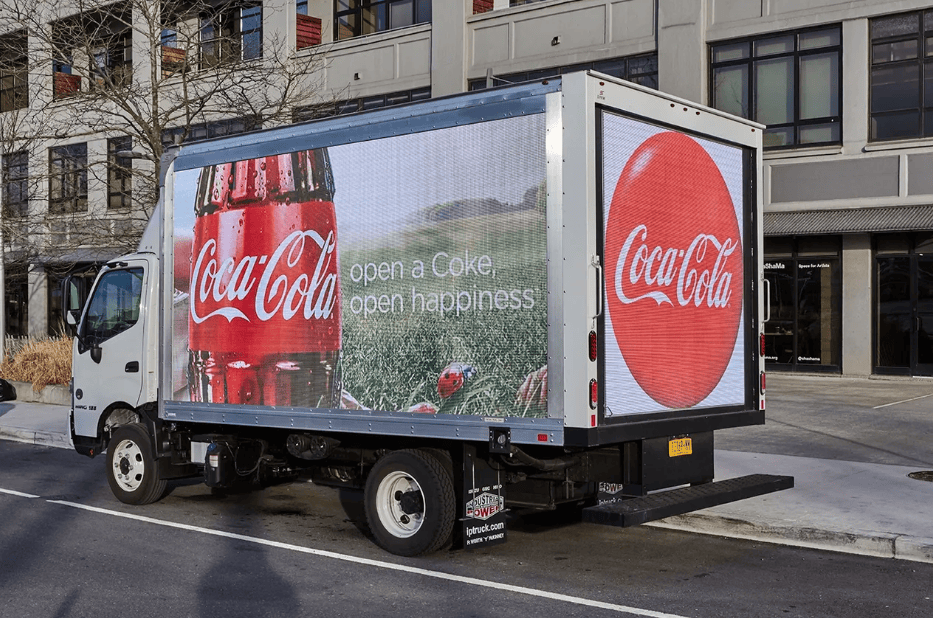
Search for a digital billboard truck and you get two completely different conversations tangled together.
Half the results want to rent you a run. The other half want to sell you a vehicle. Nobody separates them, so buyers end up reading spec sheets for a purchase they were never going to make, or booking a run with no idea what the hardware on the truck actually is.
Let me separate them properly, because the questions are not the same.
If you are renting, what matters is routing, dwell, dayparts, screen specification and what proof you get at the end. If you are buying, what matters is panel quality, power, serviceability, driver cost and whether your utilisation justifies owning an asset that depreciates while parked.
I run these vehicles for client campaigns. I am going to be useful about both, and honest about the one I think most people asking should actually do.
What is physically on the truck
A digital billboard truck is a chassis carrying one or more LED panels, a power source, a media player and a mounting structure. Each of those has a failure mode and each is worth understanding before you book or buy.
The panels. Modular LED cabinets bolted into a frame. Modular matters, because when a cabinet fails you swap that cabinet rather than the whole screen. A build using proprietary cabinets nobody stocks is a build that sits idle waiting for parts.
The configuration. Rear only, rear plus both flanks, or all faces. Rear only serves following traffic. The flanks serve pedestrians and cross traffic, and on any campaign weighted toward people on foot the flanks carry most of the value. A rear only vehicle on a pedestrian brief is delivering a fraction of what you think you bought.
The power. Usually an onboard generator, sometimes a battery system, occasionally a hybrid. Generators are reliable and have a noise and fuel profile that matters more than vendors admit. A loud unit idling outside a restaurant terrace at nine in the evening is a complaint. Battery systems are quieter and introduce a runtime ceiling you have to plan the night around.
The player and scheduling. The device driving content. What you want to know is whether it logs playback, whether content can be changed remotely mid campaign, and what happens when connectivity drops. A player that keeps running from local storage when the connection dies is worth a lot on a long night.
The structure and weatherproofing. The panels live outdoors at highway speed through rain, road spray, vibration and temperature swing. Sealing and vibration isolation are what separate a build that lasts from one that develops dead pixels across a season.
Pixel pitch and brightness, explained without the jargon
These two numbers decide whether anyone can read your ad, and most sales conversations skip them entirely.
Pixel pitch is the distance between the centres of neighbouring LEDs, measured in millimetres. Smaller pitch means more LEDs packed in, finer detail and a shorter minimum viewing distance. Larger pitch means coarser detail and a longer minimum distance before the image resolves.
The useful rule is that pitch should match the distance your audience actually views from. A tight pitch panel is what you want when people are standing on the same sidewalk, a few paces away, reading detail. A coarser pitch is perfectly appropriate when the audience is across several lanes of traffic, and paying for fine pitch in that situation buys you nothing a viewer can perceive.
So the question to ask is not what pitch is this, in isolation. It is what pitch is this, and what standoff distance was it built for, and does that match where my audience will be standing. An operator who cannot answer that is not thinking about your campaign.
Brightness is measured in nits. Outdoor panels need a lot of it, because they are competing with the sun. The number that matters is not peak brightness in a datasheet, it is whether the screen holds legibility in direct afternoon light with the sun behind the viewer. Any screen looks spectacular at night. The test is three in the afternoon in July.
The flip side is that brightness must come down after dark. A panel run at full output on a night street is harsh, draws complaints from residents and businesses, and overexposes in every phone photo taken of it. Since a meaningful share of a truck’s value is people photographing and sharing it, blowing out those photos is a self inflicted loss. Automatic dimming with a sensor, or at minimum a disciplined manual schedule, is something to insist on.
A third factor nobody mentions: refresh rate. Low refresh panels flicker and band badly on camera even when they look fine to the eye. If the campaign depends on people filming the screen, ask about refresh rate explicitly.
Renting a run: what actually determines results
The screen is the least interesting part of a rental decision. Routing is the whole game.
Value on a truck campaign comes from time spent in front of people moving slowly enough to read something, not from distance covered. A vehicle in traffic is glanced at from behind by drivers watching the road. A vehicle in a secured position beside a crowd leaving a venue is read, considered and photographed.
So a good run is built as a sequence of timed stops with driving used to connect them.
We establish where the audience physically is and at what hour. Then we shortlist positions serving those moments and scout them in person at the relevant time, because satellite views hide tree canopy, loading zones, scaffolding and the grade that tilts a panel toward the sky. Then we secure the positions that matter, getting agreement in advance from the property owner or lot operator wherever the ground is private. Then we order the stops by time, calculating drive legs against real traffic so the vehicle is in place before the moment rather than during it. Then we brief alternates for every important position, because sightlines get taken and streets close.
Crew is one trained operator who drives, judges positions, repositions when the view is blocked, manages the screen and shoots documentation. For briefs that need interaction rather than exposure, we add a street team of two to six working the sidewalk around the vehicle.
Dayparts, honestly. Evening into night is where a screen wins outright, because a lit surface on a dark street has effectively no competition. Weekend retail hours and campus midday work. Commuter peaks produce exposure but almost no dwell. Mid morning is dead almost everywhere.
Weather. Weather rated screens run through rain. Sidewalks empty, which removes the audience that dwell depends on, so a wet night is a mileage night rather than an attention night. High wind matters for a vehicle presenting that much flat surface to a crosswind, and some exposed positions stop being sensible to hold. Hard freezes and extreme heat both stress panels and power systems, so we check and reseat more often in those conditions.
Buying a truck: the honest version
Some people searching this term want to own one. Here is what the sales listings do not dwell on.
The vehicle is the smaller half of the commitment. A screen truck needs a driver who is licensed appropriately for the chassis, insurance that covers both a commercial vehicle and a mounted advertising asset, fuel, maintenance on two separate systems, somewhere to park something that size, and a technician who can diagnose a dark cabinet without a week of downtime.
Utilisation decides everything. An asset earns only when it is working. If your own campaigns would run it a handful of nights a month, it spends most of its life depreciating in a yard. Owning starts to make sense when utilisation is genuinely high and sustained, which in practice means you are either running continuous campaigns yourself or renting it out between them, and renting it out means you have just entered the operating business.
Build quality varies enormously and is hard to assess from a listing. Cabinet serviceability, sealing against road spray, vibration isolation, power sizing with headroom rather than exactly at load, cable routing you can actually reach. These are the things that determine whether year three is cheap or miserable, and none of them photograph well.
Lead times are real. A purpose built vehicle is a fabrication project, not a stock purchase.
Resale is thin and specialised. You are selling into a small market of operators who know exactly what they are looking at.
My honest view for most brands: rent. You want nights on specific streets in specific cities, not a depreciating asset and a staffing problem. Owning makes sense for operators and for organisations with genuinely continuous year round use in a single home market. For everyone else, the flexibility of booking the right vehicle in the right city beats owning one vehicle that is always in the wrong city.
Content, specs and what to send
Creative for a truck screen is judged in motion, at odd angles, partly obscured, by people not trying to look.
Ask for the spec before design begins: exact pixel dimensions per face, frame rate, accepted file formats, maximum file size and the colour profile the player expects. Getting this on day one prevents the most common cause of delays on launch night.
Permission, ordinance and the grey area
Rules affecting advertising vehicles vary considerably between municipalities, and I am not going to tell you what applies in your market.
The variability has a consistent shape. Some cities address vehicle mounted advertising in their codes directly. Others reach it through parking regulations, idling limits, commercial loading rules, noise provisions or sign ordinances. Some treat a parked display vehicle differently from a moving one. Some treat an illuminated panel differently from a printed one. Enforcement varies further by district, by hour and by whether somebody complained.
Illumination and generator noise both raise the complaint probability, and complaints attach to the brand on the screen rather than to the operator. That is the practical reason we take brightness and idling seriously, not just a courtesy.
It is a grey area and we work accordingly. Permission secured in advance for stops that matter. Preference for private ground on extended dwell. Operator briefed on the local character before the run. Every position documented. And a refusal to hold a position that would drag a client’s name into a dispute with a neighbourhood.
We are not lawyers and give no legal advice. If your category is sensitive, bring your counsel in ahead of the run and we will give them a complete account of how we operate.
How the format behaves in different cities
A screen truck is not equally useful everywhere, and the differences are worth knowing before you pick markets.
New York is the strongest pedestrian environment in the country and the hardest place to hold a position. In Manhattan you are also competing with an enormous amount of existing illuminated signage, so the screen earns more on the outer borough corridors through Williamsburg, Bushwick, Astoria and Long Island City where foot traffic is heavy and lit competition is thin.
Los Angeles has limited pedestrian scale digital inventory outside Hollywood, Downtown and Santa Monica, which is exactly why a travelling screen covers ground fixed panels never reach, provided the route minimises freeway time between pockets.
Chicago gives real walkable density along Michigan Avenue and Milwaukee Avenue, with a winter that genuinely shortens the sidewalk season at both ends.
Miami runs late, pushing the productive window later than almost anywhere, with summer storms demanding schedule flexibility.
Austin concentrates around Sixth Street, Rainey and the campus edge, where the event calendar matters more than the street map.
Nashville’s Broadway corridor is extraordinarily dense on a weekend night and correspondingly difficult to hold a vehicle position on.
In car weighted markets like Houston, Phoenix and Atlanta, viewing distances are longer, dwell is scarcer, and a coarser pitch panel aimed at roadside standoff makes more sense than a fine pitch screen built for the sidewalk.
What we talk clients out of
One night bookings. A single night is a photograph, not a campaign. Recognition needs repeated exposure in the places people already go.
Spreading a modest scope across an entire metro. Thin coverage is noticed in no neighbourhood. Concentrated coverage on two or three corridors feels unavoidable to the people who matter.
The most famous intersection in the city. Saturated with signage, dominated by visitors, and your screen becomes one of thirty lit things competing for the same eye.
A screen on a daylight only campaign. You are paying for illumination you never use and adding power and software failure points for nothing. Printed panels are the better tool for a daytime brief, and I will say so.
Mileage guarantees. Distance is the wrong unit. Ask for dwell time at named positions instead.
Treating modelled impressions as counted facts. Planning numbers come from traffic and audience modelling. They are reasonable for comparing options and they are not receipts. The receipts are the play log, the GPS track and the photographs.
Buying a truck to run six nights a year. Covered above. This is the most expensive version of a problem that renting solves.
What to run on the same streets
A screen truck is a moment. It arrives, owns a corridor for an evening and leaves. The light goes with it.
That is why we almost always pair a truck programme with Wheatpasting & Poster Campaigns on the same corridors. Pasted surfaces keep working on the same pedestrians every single day for weeks after the vehicle has gone, converting one strong night into sustained recognition. The creative system is shared, so the design work does not double.
Street Teams & Experiential turns a parked screen from something seen into something people engage with, and it is the largest multiplier on dwell value available.
Sidewalk Decals & Stencils handle the final approach toward a specific entrance.
LED Trucks & Mobile Billboards is the service line covering the vehicle work itself, from routing through to the delivery record.
Frequently asked questions
What is a digital billboard truck?
A commercial vehicle carrying LED panels that display advertising, driven on a planned route and parked in chosen positions. The build includes the panels, a mounting structure, an onboard power source and a media player that schedules content. Configurations range from a single rear screen to panels on the rear and both flanks.
What pixel pitch do I need?
Match the pitch to the distance your audience views from. Tighter pitch resolves detail for people standing on the same sidewalk. Coarser pitch is entirely appropriate when viewers are across several traffic lanes, and paying for fine pitch there buys nothing anyone can perceive. Always ask what standoff distance a given panel was built for.
Is a screen readable in daylight?
Good outdoor panels hold legibility in direct sun, but the datasheet peak brightness figure is not the test. The real test is afternoon light with the sun behind the viewer. Screens should also dim after dark, since full output at night is harsh, generates complaints and overexposes in the phone photos that carry the campaign further.
Should we rent a truck or buy one?
For most brands, rent. Owning brings a driver, insurance, fuel, maintenance on both the vehicle and the screen, parking and technical support, and the asset only earns while it is working. Buying makes sense for operators or for continuous year round use in one home market. Renting also lets you book the right vehicle in the right city.
Can content be changed during a campaign?
On most builds yes, which is one of the screen’s genuine advantages over print. Content can rotate by daypart and be updated remotely. Ask whether the player keeps running from local storage if connectivity drops, because a long night with no connection should not mean a dark screen for hours.
What proof of delivery should we expect?
A play log showing your creative ran with timestamps, a GPS track of the route actually driven, timestamped photographs of the vehicle in position with the screen visible, and a dwell record for each significant stop. Any failure or lost position belongs in that record honestly rather than being quietly billed as delivered.
Request a campaign quote
Tell us the cities, the nights and the audience rather than a vehicle specification. We will tell you which configuration fits, whether a screen genuinely beats printed panels for your brief, which corridors are worth holding in that specific market, and what you will receive as proof at the end.
If the honest answer is that a screen truck is the wrong spend for what you are trying to achieve, we will say that too, before the booking rather than after it.
Request a campaign quote and we will come back with dwell positions, a daypart plan, the exact creative specification for the panels and a description of your delivery record.
Livy Phillips American Guerrilla Marketing Nationwide poster, snipe, decal, projection and LED truck campaigns americanguerrillamarketing.com

Ready to Run Your Campaign?
Call us or email us. We’ll tell you exactly what we can do in your market and what it costs.
Related Services
Explore similar advertising solutions offered by American Guerrilla Marketing.
American Guerrilla Marketing — Los Angeles
Street-level campaigns in Los Angeles and nationwide. Wheatpasting, LED trucks, street teams, and more.
(646) 776-2770
Related Articles
-
Mobile Billboard Campaign Minimums: An Honest Breakdown
November 3, 2026
-
Renting vs Buying an LED Truck: Where Each One Works
November 3, 2026
-
Box Truck Advertising: How It Actually Works
November 3, 2026
-
LED Billboard Truck Builds: How the Screen Actually Gets
November 3, 2026
-
Used LED Billboard Truck for Sale: Buyer Guide
November 3, 2026