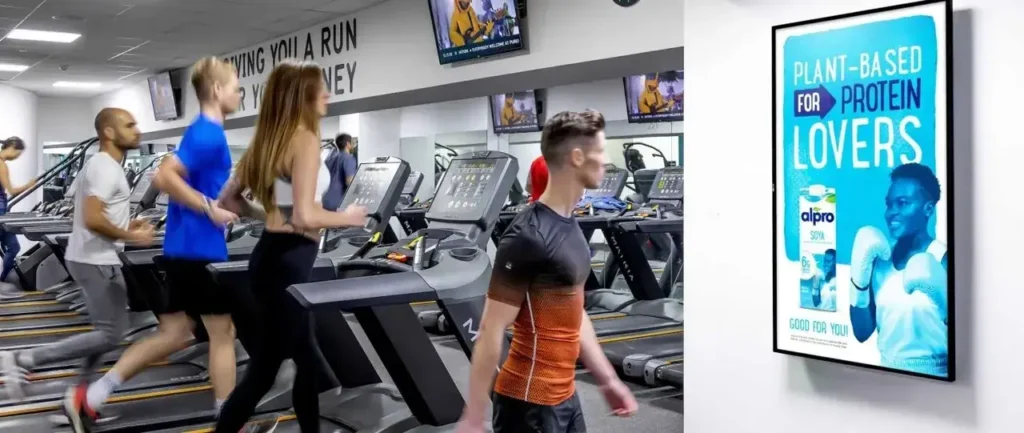
Gym advertising has to work harder than almost any other local business category. The product is highly personal, the competition is fierce across all price points, and the churn problem means that maintaining member count requires constantly replacing the members who leave with new ones coming in. A gym that does not advertise consistently is not standing still. It is shrinking.
In 2026, the fitness business landscape is more fragmented than ever. National franchise chains, boutique studios, at-home workout platforms, outdoor fitness trends, and AI-powered training apps all compete for the same pool of fitness-motivated consumers. The gyms and studios that win in this environment are not necessarily the ones with the most equipment or the lowest price. They are the ones that are most consistently visible to their target audience and most effectively communicate what makes them worth choosing over all the alternatives.
This guide covers how to build a gym advertising program that drives membership growth, retains existing members, and creates the community identity that generates the referrals that are still the most cost-effective acquisition channel available to most fitness businesses.
Understanding the Gym Member Decision Process
People join gyms when motivation and convenience align. The motivation spike is usually tied to a life event or calendar moment: New Year’s resolutions, summer approaching, a health concern, a life change. The convenience factor is almost always geographic: people choose gyms they can actually get to regularly, which means most gym members live or work within 3-5 miles of the facility they join.
These two realities define gym advertising strategy. You need to be visible to the right people (those within your geographic radius) at the right time (when their motivation is high). Advertising that reaches people 10 miles away at a random time of year will underperform advertising that saturates the neighborhoods within walking distance of your gym during peak motivation windows.
Peak Motivation Seasons
Gym advertising investment should front-load into the periods when consumer motivation for fitness is highest. January, the New Year’s window, is the largest and most well-known. The spring “summer body” season from April through June is the second major window. The back-to-school period in August-September, when adults reestablish routines, is the third. Intensifying advertising campaigns 2-4 weeks before these peaks captures prospects at the moment they are most receptive, rather than advertising into low-motivation periods and hoping for the best.
Local Advertising Channels for Gyms
Gym advertising is local advertising. Even for national fitness brands, every individual gym location competes in a specific local market and needs advertising that reaches the people in its immediate geographic area.
Google Search for Local Gym Queries
Someone searching “gym near me,” “CrossFit [neighborhood],” “yoga studio Brooklyn,” or “personal trainer [city]” is expressing active intent to find a fitness facility. Capturing that search traffic with a well-structured Google Ads campaign tied to a strong landing page or Google Business Profile is the highest-converting digital channel available for most gym businesses.
Google Business Profile is free and should be fully optimized before any paid advertising begins. Current hours, current membership offers, high-quality interior photos, class descriptions, and a strong review profile make your listing competitive for “gym near me” searches without paid placement.
Facebook and Instagram for Community and Conversion
Social media serves two distinct purposes for gyms: building the community identity that makes your gym feel like a place worth belonging to, and running conversion campaigns that drive new member trials and signups. Both are important, and conflating them produces mediocre results on both dimensions.
Community content, real members, real classes, real transformations, real coaches, builds the trust and aspiration that make your gym compelling to people who are considering joining. Conversion content, specific offers with clear calls to action and urgency, drives the actual signups. A social advertising program that runs both types in parallel, using organic and boosted content for community and paid campaigns for conversion, consistently outperforms programs that try to do both in the same ad format.
Out-of-Home Advertising Near the Gym
Physical advertising in the neighborhoods surrounding your gym creates the repeated impression that moves people from vague awareness to active consideration. Someone who walks past a strong gym advertisement on their commute every day for a month has had more brand exposure than someone who sees a social media ad twice. That cumulative physical exposure builds the familiarity that makes your gym the first one they think of when motivation strikes.
Our team deploys sidewalk stencil campaigns near gyms and fitness studios to create hyperlocal brand presence in the streets where target members live and commute. For gyms near running paths, parks, and recreation areas, strategically placed poster campaigns reach fitness-motivated audiences in contexts already associated with physical activity.
Transit and Commuter Advertising
Transit advertising reaches commuters who are already using the transit routes that pass near your gym. A gym advertising on the transit cards or platform posters for the subway stop nearest its location is reaching the exact audience most likely to pass the gym on their way to and from work every day. This format builds the routine association between the commute route and the gym that drives the convenience factor so critical to gym member decisions.
Advertising a New Gym Opening
A gym opening without a pre-launch advertising program is starting cold in a market that does not know it exists. The most successful gym openings build awareness and a founding member base before doors open, so the energy on opening day reflects genuine community interest rather than a quiet first week.
Pre-Launch: 4-8 Weeks Out
The pre-launch phase should combine social media content that documents the build-out and generates anticipation, a founding membership offer that rewards early commitment with pricing or perks, email capture campaigns to build a list before launch, and neighborhood-level OOH advertising in the surrounding streets. For high-profile openings, LED billboard trucks routed through the neighborhood in the weeks before opening create the visibility that makes the gym feel like a community event rather than a commercial transaction.
Grand Opening Activation
A grand opening event with free classes, facility tours, founder pricing, and community giveaways drives first-visit conversions. Brand ambassador teams in the surrounding neighborhood on opening day direct foot traffic to the facility and create the street-level buzz that extends the opening beyond the facility walls into the community.
Guerrilla Marketing for Gyms and Fitness Studios
Fitness brands align naturally with public space because fitness itself happens in public space. Running routes, parks, sidewalks, and neighborhood streets are places where fitness-motivated audiences are already active. Advertising in those environments reaches them in the right mindset at the right moment.
Sidewalk stencils near park entrances, running path markers, and pedestrian corridors around gyms create brand impressions for fitness-motivated audiences without requiring them to be online. Poster campaigns in residential neighborhoods within 2-3 miles of the gym reach the geographic audience most likely to become members. Street team activations at community fitness events, charity runs, and outdoor workout groups build personal connections that convert at higher rates than any digital ad format.
Our team has executed guerrilla marketing campaigns for fitness brands across multiple markets. We GPS-track and document every deployment so you can see exactly where and how your brand was placed in the community.
Member Retention as an Advertising Multiplier
Acquiring a new gym member costs significantly more than retaining an existing one. The math of gym business economics makes retention advertising, email programs, loyalty rewards, community events, and member referral incentives, as important as acquisition advertising. A gym with 80% annual retention needs a third fewer new members to maintain its membership count than a gym with 60% retention. That difference in acquisition burden translates directly to advertising cost savings.
Member referral programs are the highest-ROI advertising channel available to most gyms. A member who refers a friend is providing social proof to someone who already trusts them, at zero media cost. Advertising that celebrates the community, shows member success, and rewards referral behavior feeds this engine without requiring incremental paid spend.
Frequently Asked Questions About Gym Advertising
What are the most effective advertising channels for gyms and fitness studios?
The most effective channels are Google Search for local intent queries, Facebook and Instagram for community content and promotions, local OOH advertising near the gym, Google Business Profile for local discovery, and email marketing for member retention. Hyperlocal targeting within a 3-5 mile radius is essential for most gyms.
When is the best time to advertise a gym?
New Year’s (January), spring body season (April-June), and back-to-school (August-September) are the highest-intent seasons. Running intensified campaigns ahead of these windows captures prospects at peak motivation. Year-round baseline advertising maintains visibility between peaks.
How do you advertise a new gym opening?
Begin advertising 4-8 weeks before opening. Pre-launch tactics include founding membership offers, social content documenting the build-out, email capture campaigns, OOH advertising in the surrounding neighborhood, and outreach to local employers and complementary businesses. A grand opening event with free classes drives first-visit conversions.
How much should a gym spend on advertising?
Industry benchmarks suggest 5-10% of monthly revenue for established gyms. New gyms in launch mode often invest 10-15% of projected revenue. Digital advertising for local gym searches starts at $500-$2,000 per month for most markets.
What makes gym advertising creative most effective?
Gym advertising that performs best features real members and real results rather than stock photography. Authentic transformation stories, community moments, class footage, and coach personalities drive the emotional connection that converts prospects. Limited-time membership offers with clear calls to action outperform vague brand messaging for direct conversions.
How can independent gyms compete with franchise chains through advertising?
Independent gyms compete by owning their community positioning. Hyperlocal OOH, authentic community content on social media, strong member referral programs, and strategic partnerships with local employers create a local presence that national chains cannot replicate. The independent gym’s community identity is a competitive advantage when communicated consistently.
What role does guerrilla marketing play in gym advertising?
Guerrilla marketing is particularly effective for gyms because fitness brands naturally resonate in the public spaces where physical activity happens. Sidewalk stencils near parks and running routes, poster campaigns near transit stops, and brand ambassador activations at community events create neighborhood-level awareness at costs that fit independent gym budgets.
Frequently Asked Questions
What is the power of gym advertising how to grow your fitness business?
American Guerrilla Marketing provides the power of gym advertising how to grow your fitness business services across 50+ U.S. markets. Every campaign is planned, scouted, executed, and GPS-documented by our field teams. We work with regional brands and Fortune 500 companies on campaigns that require real street-level execution and documented proof of performance.
How does AGM approach fitness business?
Our process starts with a market consultation to understand your goals, target audience, and budget. We then scout locations, handle any required permissions or permits, coordinate production and installation with our local crews, and provide a full GPS-tagged photo report after the campaign runs.
What markets does American Guerrilla Marketing cover for fitness business?
We operate in 50+ U.S. markets including New York, Los Angeles, Chicago, Miami, Houston, Atlanta, Seattle, Denver, Boston, and dozens of secondary markets. Contact us to confirm availability and pricing for your specific market.
How much does a fitness business campaign cost?
Campaign pricing depends on market, format, quantity, and duration. We work with budgets ranging from targeted single-market runs to national rollouts across multiple cities. Use our RFP Builder or contact us directly for a custom quote based on your specific campaign requirements.
How do I get started with fitness business through AGM?
The fastest way to get started is to submit your campaign details through our RFP Builder at americanguerrillamarketing.com, or contact us directly at [email protected] or (646) 776-2770. Our team typically responds within one business day with availability and initial pricing.