Tailgate marketing operates in a brand activation environment with characteristics that almost no other format can replicate. The audience is stationary or slow-moving. They are voluntarily assembled in an outdoor zone. They are in an active social state, engaged with their group, and present for two to three hours before the event begins. The dwell time, the social energy, the outdoor accessibility, and the geographic concentration of that audience is rare. It does not exist at concerts. It does not exist at basketball games with the same scale. NFL game days at major stadium complexes are the premier environment for this type of activation.
Our team at American Guerrilla Marketing has executed tailgate activations at several major NFL and college football venue complexes. The specific geography of each lot, the approach routes that funnel vehicle traffic into the stadium zone, the pedestrian corridors that connect parking to the gates, this is operational knowledge that does not come from reading a marketing brief. It comes from being in those specific places at specific times, understanding the rhythm of how the pre-game geography develops and where the audience concentrates at each moment in that window.
This guide covers the tailgate marketing discipline in operational detail: why the format works, which venue environments produce the strongest results, how activations are staffed and executed, and what the difference is between a brand that shows up in the right place and one that parks a sampling unit in an empty corner of the lot and waits.
Why Tailgate Marketing Works as a Brand Discipline
The conditions that make tailgating effective as a social ritual are the same conditions that make it effective as a marketing environment. The audience has nowhere to go. They have planned to be in this specific geography for several hours. They are already engaged in consumption behavior, eating, drinking, socializing, and they are in a receptive state for experiences that add to the pre-game social moment. A brand that shows up with something genuine to offer in that context is not interrupting. It is participating.
This is the fundamental distinction between tailgate marketing and most other outdoor advertising formats. A billboard on the highway interrupts attention. A sampling tent in a tailgate zone joins a party. The audience is not moving past the activation. They are there. The time and physical proximity that most outdoor advertising formats have to fight for are simply available in the tailgate environment.
The Dwell Time Advantage
The average NFL tailgate window runs two to three hours before kickoff. Compared to the 30 to 90 seconds of exposure that most outdoor advertising formats achieve, the tailgate activation window is a different category of opportunity. A brand can not just achieve awareness in that window. It can achieve trial, conversation, and genuine product experience. The audience can taste a product, ask questions of brand ambassadors, share samples with their group, and develop a real impression of the brand before they ever see a piece of traditional advertising for it.
MetLife Stadium: East Rutherford, New Jersey
MetLife is one of the most operationally complex tailgate environments in professional football. The stadium sits within a large-scale parking complex accessed via multiple approach routes from Route 3 and the New Jersey Turnpike. The lot geography is extensive, with multiple named lot sections that attract different audience profiles based on access route and proximity to the stadium.
The Lot Geography at MetLife
The Blue lots closest to the stadium gates draw season ticket holders with established tailgate setups. These lots are high-density social environments with organized tailgate groups, elaborate setups, and audiences that have been doing this specific activity for years. The outer Gold and Red lots draw a different profile, more casual game attendees arriving in the later end of the pre-game window. Activation strategy at MetLife requires understanding which lot section matches the target audience profile, not just which lot has the most people.
The Pedestrian Approaches
For activations targeting pedestrian traffic rather than drive-in tailgaters, the NJ Transit station approach at the Meadowlands Sports Complex is the most valuable position. The train load from Penn Station and Secaucus carries significant audience volume, and the walk from the platform to the stadium is a high-concentration pedestrian corridor with several natural deceleration points where engagement is practical.
Arrowhead Stadium: Kansas City, Missouri
Kansas City represents the tailgate marketing environment at its most developed. Arrowhead Stadium has one of the most established tailgate cultures in professional football, with lots that open five hours before kickoff and audiences that treat the pre-game gathering as a primary event in its own right, not a precursor to the game. The Truman Sports Complex lot layout is extensive, with multiple defined sections and a pedestrian geography that creates natural activation zones.
The Truman Sports Complex Lot Layout
The Arrowhead lot is organized in sections lettered A through M, with the closest sections to the stadium gates being the most densely occupied and the most competitive for activation positioning. The outer sections, particularly those near the Blue Ridge Cutoff and I-70 approach, tend to fill with earlier-arriving and more casual tailgaters who are often the most receptive to brand activation because they have maximum dwell time ahead of them.
Best Windows for Activation
In Kansas City, we target the window beginning three hours before kickoff and running until 90 minutes before doors open. The early window captures the most established tailgate setups before they become fully self-contained social units. A brand that arrives while tailgaters are still setting up inserts itself into the setup ritual. A brand that arrives when tailgates are fully established has to work harder to break into an already-complete social moment.
SoFi Stadium: Inglewood, California
SoFi Stadium presents a different tailgate geography than the traditional parking-lot-dominant NFL environments. The venue was designed with the entertainment district in mind, and the surrounding Hollywood Park development creates a mixed retail, restaurant, and entertainment zone that operates simultaneously with the tailgate culture in the parking areas. Activation strategy at SoFi requires working across both environments: the parking lot tailgate culture and the pedestrian entertainment district approach.
The Hollywood Park Walk
The pedestrian approach through the Hollywood Park development is one of the strongest activation corridors in the Southern California NFL market. Fans arriving by rideshare, transit, or on foot from the surrounding area walk through the entertainment district en route to the stadium. This is a high-density pedestrian flow in an outdoor commercial environment, a different geography than the parking lot tailgate but with high engagement potential for the right brand format.
Staffing a Tailgate Marketing Activation
Tailgate marketing crews are structured differently than venue district street teams. The crew needs to move through a geography that is simultaneously open and complex, navigating the spatial politics of established tailgate setups while maintaining a visible and approachable brand presence. We staff tailgate activations with crews who have experience in outdoor sampling and face-to-face engagement, not generic event staff who have never worked a parking lot activation.
Crew Size and Coverage
A standard tailgate activation runs four to eight crew members depending on the lot size and campaign objectives. Smaller crews of three to four work specific high-density zones. Larger crews of six to eight can cover multiple lot sections and the pedestrian approach simultaneously. We always include a field supervisor who maintains coverage map awareness and adjusts crew positioning as the lot fills and the crowd distribution shifts during the pre-game window.
Materials and Sampling Logistics
Tailgate marketing activations require different materials logistics than street team deployments. Sampling product needs cold chain management for food and beverage items. Branded give-aways need to be packaged for outdoor distribution and appropriate for the sports fan context. Equipment including coolers, distribution carts, and branded display elements needs to be staged and mobile enough to operate in a parking lot environment. We build the logistics plan around the specific materials and the specific lot geography before the activation date.
Sampling Operations in the Tailgate Zone
Product sampling in a tailgate environment is one of the most effective trial generation formats available to CPG brands. The audience is in active consumption mode. They are already eating and drinking. Introducing a new product into that context carries significantly lower resistance than sampling in a retail aisle or a transit station. The social dynamics of the tailgate amplify the trial opportunity: when one person in a group tries a product and has a positive reaction, the group follows.
We execute sampling operations with dedicated sample handlers, brand ambassador conversationalists who engage the trial moment with context about the product, and documentation crews capturing the engagement for post-campaign reporting. The documentation is not just for reporting purposes. The photo and video content captured in the organic tailgate environment is often the most compelling brand content the campaign generates.
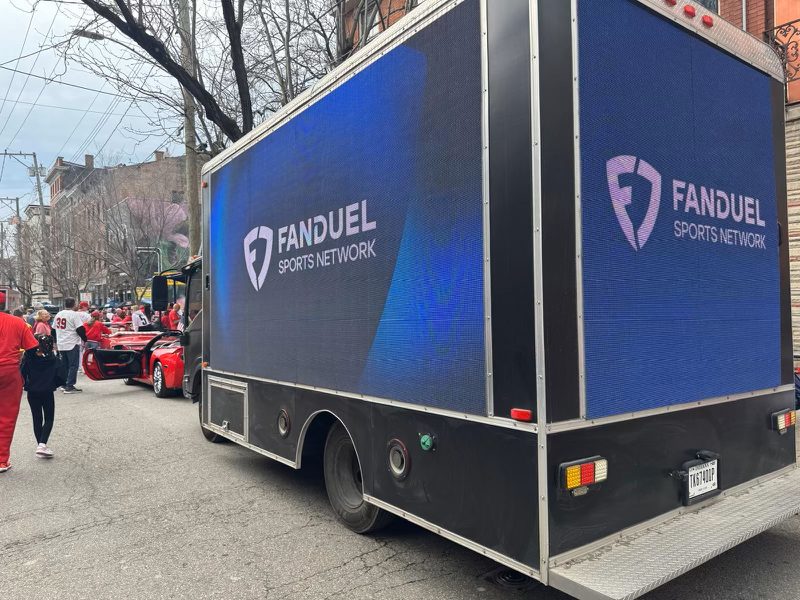
Our guerrilla marketing services include full tailgate activation programs that combine sampling with brand ambassador deployments and LED billboard trucks working the stadium approach routes during the peak arrival window. The combination creates a layered presence that surrounds the audience in the full geographic envelope of the event.
Regulatory and Venue Coordination
Tailgate marketing activations operate within a regulatory framework that varies by venue, team, and municipality. Stadium-controlled parking areas require advance coordination or official partnership. Public street zones adjacent to venues operate under municipal rules that may require permits. Certain sampling categories, particularly alcohol products, face additional regulatory requirements that vary by state and locality.
Professional tailgate marketing agencies navigate these frameworks as a baseline competency, not an afterthought. Our team researches the specific regulatory environment for each venue and market before building the activation plan. A tailgate activation that gets shut down two hours in because of a permit issue is not just a failed campaign. It is a cost with no return and a crew that has wasted a game day.
Measuring Tailgate Marketing Performance
Tailgate marketing performance measurement is more tractable than many brands expect going in. We track samples distributed by lot section and time window. We log engagement counts and document qualitative feedback from the field team on audience reception. Where promotional codes are distributed, we track redemption rates. GPS-documented photography provides proof of presence at every position throughout the activation window.
For brands running multi-game tailgate programs, we build comparative performance data across games, venues, and lot positions that informs optimization across the season. The first activation generates a baseline. Subsequent activations in the same market improve on it with better position selection, better timing, and better crew briefing based on what we learned in the field.
Brand Categories That Perform in Tailgate Environments
Not every brand has an obvious place in a tailgate activation, but more categories than most marketers expect can find a natural entry point. Understanding which categories have an authentic reason to be in a tailgate environment is the first step to building an activation that fans receive as welcome rather than intrusive.
Food, Beverage, and Snack Brands
Food and beverage brands have the strongest natural fit in the tailgate environment. The audience is actively eating and drinking for hours before the game. A brand that can insert a quality sample into that eating and drinking occasion becomes part of the ritual rather than an interruption of it. New snack products, functional beverages, sports nutrition brands, and premium food categories all have natural tailgate entry points. The social sharing dynamic of the tailgate, where a new sample gets passed around the group, means that one brand interaction often becomes five or six direct product experiences from a single initial engagement.
CPG Products with Outdoor or Sports Adjacency
Consumer packaged goods with relevance to the outdoor or sports context find natural tailgate entry points even when they are not food or beverage products. Sunscreen and skin care in warm-weather markets, over-the-counter products with tailgate relevance, personal care items that fit the outdoor social context, these categories can position naturally in a tailgate environment with the right sampling format and crew briefing. The key is the relevance connection: the product needs to make sense in the context of people who are standing in a parking lot for three hours before a game. Products that require explanation of why they belong there are working against the format.
Entertainment and App Brands
Entertainment products including streaming services, sports-adjacent apps, gaming brands, and media products can execute tailgate activations through interactive experiences rather than physical samples. A gaming brand that sets up a competitive experience in the tailgate zone, a streaming service that offers a free trial sign-up with immediate value for the fan, or a sports analytics app that offers insights relevant to today’s game creates engagement that fits the tailgate social environment even without a physical product to sample.
Post-Game Tailgate Activations
The post-game parking lot window is one of the most underutilized opportunities in tailgate marketing. After the game, a significant portion of the tailgate audience remains in the parking lot for 30 to 90 minutes, waiting for vehicle traffic to clear, continuing social gatherings with their group, and processing the game. The post-game tailgate window is quieter than the pre-game peak, but the audience is still present, social, and more settled than the arrival-window crowd. For brands targeting a more relaxed engagement, the post-game window provides dwell time without the urgency and energy competition of the pre-game environment.
Post-game activations work particularly well for brands with a longer engagement format: surveys, sign-ups, or experiences that require a few minutes rather than a 30-second interaction. The fan who just watched a four-hour football game and is sitting in a lawn chair waiting for traffic to clear is in a very different headspace than the same fan arriving two hours before kickoff.
Vehicle-Based Brand Presence in Stadium Parking Zones
Beyond the on-foot sampling and distribution crew, vehicle-based brand presence in stadium parking zones adds a visual scale element that purely pedestrian activations cannot achieve. Branded vehicles, including wrapped trucks, sampling vans, and mobile display units, create fixed brand presence points in the parking geography that serve as landmarks the tailgate crew works around and reference points that make the brand visible from across the lot. A wrapped brand vehicle in the tailgate zone communicates brand investment in the fan experience in a way that a crew of six people with product samples does not. The two formats together, mobile crew and branded vehicle anchor, produce a presence that is significantly more visible and more memorable than either alone.
Vehicle-based presence also solves the cold chain and materials logistics challenge for sampling activations. A refrigerated van staged in an approved position serves as the crew’s resupply point for cold-chain products, keeps product at safe temperature throughout the deployment window, and provides a branded visual anchor that fans can orient toward when asking where to find the activation. The logistics function and the visual presence function serve each other, making the vehicle investment doubly efficient for brands running cold-chain sampling programs.
Frequently Asked Questions
What is tailgate marketing?
Tailgate marketing is brand activation in the parking areas and approach zones surrounding sports stadiums before major games. It takes advantage of the extended dwell time, outdoor accessibility, and high social energy of pre-game gatherings to create face-to-face brand engagement with a concentrated audience.
Which sports events work best for tailgate marketing?
NFL games produce the strongest tailgate marketing environment because of the large parking footprints, long pre-game arrival windows, and the tailgate culture embedded in football fandom. College football games at major programs offer similar conditions. NBA and MLB games have shorter pre-game windows and different venue geographies.
Do you need stadium permission for tailgate marketing?
Stadium parking lots are typically controlled by the venue or team. Brand activations inside controlled lot perimeters require advance coordination or official sponsorship. Activations on public streets and public-access zones adjacent to venues operate under different rules. Professional agencies navigate these distinctions on a market-by-market basis.
What types of products work well in tailgate marketing?
Food and beverage products are the strongest performers in tailgate environments because the audience is actively eating and drinking. CPG brands, snack and beverage companies, and alcohol brands benefit most directly. Non-food brands that can offer genuine utility or entertainment value in the tailgate context also perform well.
How do you measure tailgate marketing results?
Tailgate marketing results are measured through samples distributed, engagements logged, promotional code redemptions, photo documentation of brand placements, and post-activation survey data when applicable. Professional activations produce GPS-documented photo reports from each deployment location.
How much does tailgate marketing cost?
Tailgate marketing activations typically range from $3,000 to $15,000 per event depending on crew size, materials quantity, sampling product costs, equipment, and whether the activation includes a branded presence element. Multi-event packages reduce per-event costs.