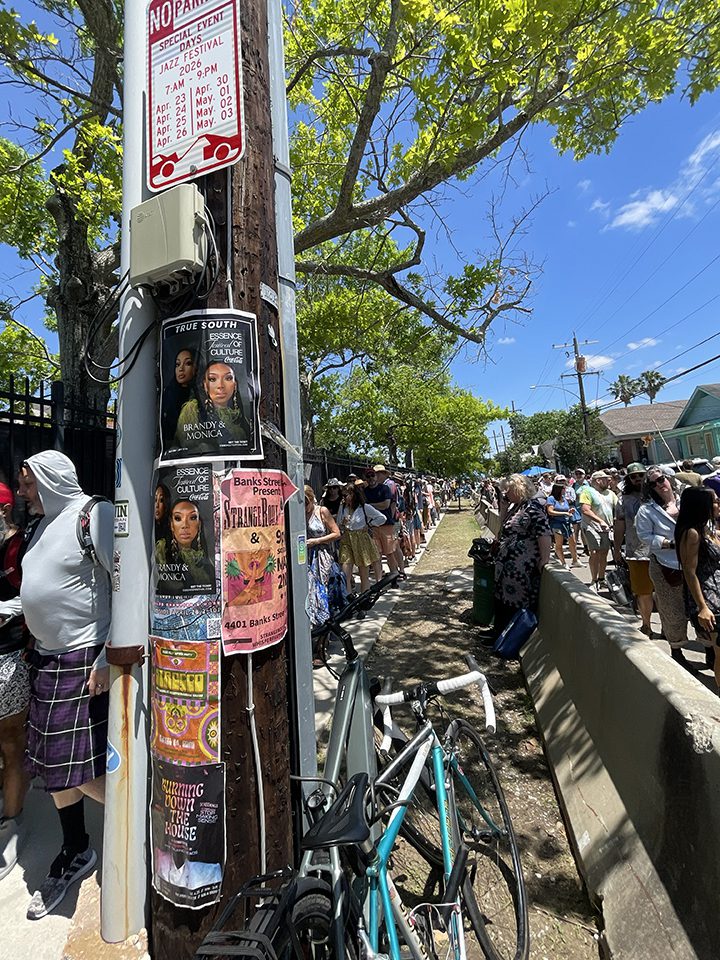
Most writing about tour street teams stops at the concept: hire people, give them flyers, send them into the venue district. What gets skipped is everything that determines whether a street team moves the needle or produces a stack of discarded promotional cards on a bar counter near the venue entrance. The gap between those two outcomes is not luck. It is operational discipline built across dozens of markets over years of live event activations.
Our team at American Guerrilla Marketing has deployed street crews before major concerts and live events at venues including Madison Square Garden in New York, the United Center in Chicago, Barclays Center in Brooklyn, the Staples Center in Los Angeles, and dozens of amphitheaters, theaters, and festival grounds across the country. We know what the pedestrian corridors look like two hours before doors open at each of those venues. We know which transit exits funnel the highest volume of incoming audience, which bars are saturated with fans before showtime, and which positions along the approach route produce genuine engagement rather than polite avoidance.
This guide covers the full tour street team operation from start to finish: how we recruit in each market, how briefing day is structured, what deployment looks like during a live activation, and what separates a field crew that generates results from one that generates expense reports.
What Tour Street Teams Actually Do
A tour street team is a field crew deployed in the physical geography surrounding a live event venue. Their job is to engage the audience in the wild, before they reach the venue, in the spaces where they are moving, gathering, and forming social energy around the event. Effective tour street teams do three things: they put promotional material into the hands of people who are already going to the show, they reach people in the venue district who are not yet sure what they are doing that night, and they create visible, physical brand presence in the blocks that define the event geography.
Street Teams Versus Brand Ambassadors
The terms are often used interchangeably but they describe different operating modes. Brand ambassadors typically work at branded stations or booths, engaging people who approach a fixed point. Street teams are mobile. They move through the geography, approach people directly, and operate without a fixed physical anchor. For tour activations, the mobile format is almost always more effective because the audience is distributed across a wide area and moving. A fixed brand ambassador station in a venue district will serve the people who happen to walk past it. A deployed street team works the entire perimeter.
Our brand ambassador agency programs and street team deployments often run in combination for larger activations, with mobile crews working the outer perimeter and a branded presence closer to venue entry points.
Recruitment: How We Staff Tour Street Teams City by City
Tour street team staffing is a local problem with a national solution. Each market has its own labor pool, its own event culture, and its own knowledge base about the specific venues, neighborhoods, and transit systems that define the activation geography. Generic staffing through a national temp agency produces a crew that knows nothing about the venue, nothing about the audience, and nothing about where to stand to intercept the highest-value foot traffic moments.
The Local Network Approach
We recruit tour street team staff through local event industry networks, not through generic job platforms. Our recruits are people who attend live events in their market, who know the venue geography from the inside, and who have worked promotional or field marketing roles before. In New York, we draw from people embedded in the concert and nightlife industry. In Chicago, from the music and entertainment workforce around venues like the Riviera, Thalia Hall, and the United Center. In Los Angeles, from the entertainment production labor pool that understands the specific geography of the Forum, Kia Forum, Hollywood Bowl, and Crypto.com Arena approaches.
What We Look For in Street Team Candidates
The characteristics that make a tour street team member effective are specific. Strong verbal engagement skills matter more than any other attribute. A street team member who is physically present but passive, waiting for people to approach them, generates almost no results. We look for people who can initiate conversation naturally, who have genuine knowledge of or interest in the campaign’s subject matter, and who can work quickly and independently without constant supervision. We also require prior documentation of field marketing work. Experience matters in this format. Enthusiasm alone does not move materials.
Briefing Day: What Happens Before Deployment
The briefing is where a street team activation either gets set up for success or set up for mediocrity. We run structured briefing sessions the morning of activation day. These are not optional. The crew that shows up without a briefing is a crew that will make poor decisions in the field, station themselves in the wrong locations, and fail to deliver the campaign message with any consistency.
The Morning Briefing Structure
Our standard tour street team briefing covers: campaign objectives and talking points, geographic coverage map with specific position assignments, materials inventory and individual carry allotments, documentation standards including photography requirements and GPS check-in protocol, escalation contact for field supervisors, and end-of-day reporting requirements. The briefing typically runs 45 to 60 minutes. For multi-team deployments at major venues, we run both a lead crew briefing and a full crew session so that team leads can address position-specific questions before the general briefing closes.
We also review the venue approach geography in briefing. We show the crew where the transit exits are, which streets carry the highest pedestrian volume at the specific hours of their deployment window, where the pre-show social gathering points are, and which areas to avoid because they are either low-traffic or likely to create friction with venue operations.
Deployment: What a Live Activation Looks Like Hour by Hour
Tour street team deployment follows the rhythm of the event. The geography changes in character as the day progresses and the audience assembles. Early afternoon deployment in a venue district looks nothing like the 90 minutes before doors. Understanding the progression and positioning the crew accordingly is where professional operators separate from improvised teams.
Early Window: Two-Plus Hours Before Doors
In the early window, we focus on the transit corridors and the surrounding neighborhood restaurant and bar geography. Fans arriving early are typically the most engaged. They are in the event mindset already. They respond well to promotional materials, they engage in conversation, and they share what they receive with others in their group. Early-window positions prioritize transit exits, parking approach routes, and the first major pedestrian cross streets before the venue zone.
Peak Window: 90 Minutes to Doors
The peak window is when the venue district concentrates. The bars near the venue are filling, the pedestrian density on approach streets increases sharply, and the social energy is at its highest. This is when we move the crew tighter into the venue geography, focusing on the high-density pedestrian positions within two to three blocks of the entrance. Materials distribution volume is highest in this window. Verbal engagement focus shifts from general promotion to specific calls to action.
Post-Show Window
The post-show deployment window is underused by most operators. We maintain a reduced crew through the exit flow for campaigns where the post-show audience represents a value target, including campaigns for upcoming shows in the same market, recording releases timed to the event, or campaigns where the departing audience includes non-ticket holders who were in the venue district during the event. Post-show engagement is brief but the audience is concentrated and often receptive.
Materials Handling and Distribution Standards
How materials are handled and distributed affects campaign effectiveness directly. A crew that dumps materials at a table and waits is not a street team. It is a pamphlet stand. Our distribution standards require active individual engagement for every material handout. Each crew member carries a designated quantity based on their position assignment and deployment window. Materials are not left on bar tops, counters, or tables unless it is a specific leave-behind format designed for that placement.
Carry Loads and Rotation
Crew members carry enough material to stay active for approximately 30 to 45 minutes before rotating back to the materials point for resupply. This keeps the team moving and prevents any individual from becoming stationary. Stationary street team members reduce their engagement rate significantly. Movement through the geography is a feature of effective deployment, not a convenience.
GPS Documentation and Reporting
Every tour street team activation we run produces a GPS-documented photo report. Crew members photograph their positions at deployment time, at peak activity moments, and at wrap. Documentation includes timestamped photos from each assigned position, material distribution counts by crew member, and a post-activation summary with field notes on audience response, material reception rates, and position performance observations.
This documentation serves two purposes. It provides the campaign stakeholder with proof of performance. And it feeds our own operational database that informs positioning decisions in future activations at the same venues. A venue where we have run three prior tours has a position map that is significantly more refined than a first deployment. Our reporting makes each subsequent activation smarter.
Multi-City Tour Coordination
Scaling a street team operation across a multi-city tour introduces logistics that single-market activations do not face. Materials need to ship to each market on a schedule that accounts for venue date, delivery lead time, and local crew briefing timing. Briefing standards need to be consistent across markets even when the crew members are entirely different people. Documentation needs to aggregate across markets in a format that allows the campaign team to compare performance city by city.
Market Sequencing and Lead Time
We build tour street team schedules working backward from venue date. Materials ship a minimum of five business days before activation. Crew recruitment is locked a minimum of ten days out. Briefing packs are finalized seven days out and distributed to market leads for review before the activation date. For tours running consecutive dates in different cities, the operations team maintains a rolling 72-hour horizon to manage last-minute adjustments without disrupting the schedule.
Consistent Standards Across Markets
The crew in Nashville is not the same people as the crew in Denver. But the briefing they receive, the documentation they produce, and the performance standards they are held to are identical. Consistency across markets is not a bureaucratic preference. It is the thing that makes multi-city reporting meaningful. If standards vary by market, the data does not compare.
When Tour Street Teams Work Best
Tour street teams produce the strongest results in specific conditions. High-density venue districts with walkable approach geographies give the crew room to work. Shows with audiences that arrive early and gather socially before doors open provide the longest engagement window. Campaigns where the promotional material has genuine value, a discount, an exclusive, a physical item, generate significantly higher engagement than generic flyer distributions.
The format works across genres but the specific geography and timing vary. A hip-hop show at a downtown arena generates a different pre-show geography than a country festival at a suburban amphitheater. Arena shows with assigned seating produce different arrival timing than general admission events. We adapt the deployment model to the specific event format. The principles are consistent. The tactical execution is always specific to the venue and the show.
Our guerrilla marketing services include full tour support programs that combine street teams with wheatpasting and poster campaigns in the venue district, sidewalk stencils on high-traffic approach routes, and LED billboard trucks circling venue perimeters during peak arrival windows. The combination of physical formats working together in the same geography amplifies the impact of each individual element.
Tour Street Teams for Independent Artists and Labels
The format is not exclusive to major label tours. We run tour street team activations for independent artists building their audience, for regional acts touring the markets where they have existing followings, and for record labels supporting new releases with physical market presence. The operational model scales down to single-market activations with crews of four to six people. The documentation, briefing, and position standards are identical regardless of scale.
Independent artists benefit from the format in a specific way that major label activations sometimes miss: the street team is often the only physical, real-world marketing presence the artist has in any given market. For a touring artist without label support, a four-person street team working the venue district on show night is the difference between 80% capacity and a sold-out room. That gap matters more at the developing artist level than at any other stage of a career.
Measuring Tour Street Team Performance
Performance measurement for tour street teams is more tractable than many clients expect. We track materials distributed by position and time window. We document engagement rates observed by field supervisors. We compare pre-campaign ticket sales trend to post-activation sales in markets where that data is available. For campaigns where unique promotional codes are distributed, redemption rates provide a direct conversion measurement.
The baseline measurement we provide to every client is the photo-documented proof of presence, materials distribution counts, and field notes on audience engagement quality. Advanced measurement protocols can be layered on for clients who need tighter ROI accounting. The key is establishing measurement frameworks before the campaign, not after, so that the documentation collected in the field matches what the reporting analysis will require.
Common Tour Street Team Mistakes
Understanding what makes a tour street team genuinely effective requires being clear about what makes one ineffective. The mistakes that produce weak results are systematic, not random. They appear across campaigns run by operators who have not built their practice from real field experience at real venues.
Wrong Position Selection
The single most common tour street team failure is incorrect position selection. Crew stationed in the wrong location within the venue district, even if the venue district is the right general area, generates a fraction of the engagement that properly positioned crews achieve. A crew on the low-traffic side of the venue entrance, or in a commercial zone that looks active on a map but does not carry fan pedestrian traffic at show time, produces numbers that look like a street team failure but are actually a planning failure. Position selection requires field knowledge of how specific venues generate audience movement at specific times. That knowledge comes from being there, not from planning documents.
Passive Distribution
A stationary street team member who waits for people to approach them is not a street team. It is a display stand that can walk. Effective tour street team members move, approach, and initiate. The engagement rate of a crew member who actively approaches and engages every person in their path is dramatically higher than a crew member who stands with materials available and waits for interested parties. We brief this distinction explicitly and supervise for it in the field. Passive crew behavior is addressed immediately by field supervisors because it is the most preventable and most costly performance failure in field marketing operations.
Crew Unfamiliar with the Campaign
A street team member who cannot speak naturally about the campaign they are representing produces weaker engagement than one who knows the artist, knows the show, and can have an authentic conversation about why the person they are approaching should care. For tour street team work, this means ensuring the crew actually knows the music, the artist, and the campaign narrative. We build this context into our briefings deliberately because a crew member who is genuinely interested in what they are promoting is always more effective than one who is executing a job description.
Frequently Asked Questions
What does a tour street team actually do?
Tour street teams distribute promotional materials, drive foot traffic into venues, engage fans face-to-face in the blocks surrounding show venues, and build pre-show energy in transit hubs and pedestrian corridors. They operate before, during, and immediately after events in the venue district.
How many cities can a tour street team cover?
There is no practical ceiling. We maintain active field networks across 50+ U.S. markets. For major national tours, we can staff and deploy teams in every tour market from New York to Los Angeles, with consistent briefing standards and GPS documentation across every stop.
What materials do tour street teams typically distribute?
Common materials include show flyers, promotional cards, branded merchandise samples, and physical discount or presale codes. The format is driven by campaign goals. Distribution quantity and documentation standards are established during briefing.
How far in advance should I book a tour street team?
Two to three weeks lead time is the standard minimum for a single market. For multi-city tours, four to six weeks allows time for crew recruitment, briefing coordination, and material shipping to each market. Rush deployments are possible with additional logistics.
How do tour street teams document their work?
Professional tour street teams provide GPS-tagged photography from deployment locations, timestamped documentation of crew presence at key positions, and post-activation reports with materials distribution counts and engagement observations.
What makes a tour street team effective vs. just decorative?
Effective tour street teams are stationed at the right choke points for pedestrian flow, briefed on specific talking points for the campaign, and rotated through positions during the deployment window. Teams placed in low-traffic corners or not actively engaging passersby produce little measurable impact.
How much does a tour street team activation cost?
Tour street team activations typically range from $1,500 to $6,000 per market depending on crew size, deployment duration, and market geography. Multi-city packages reduce per-market costs. Contact us for a quote based on your tour schedule.