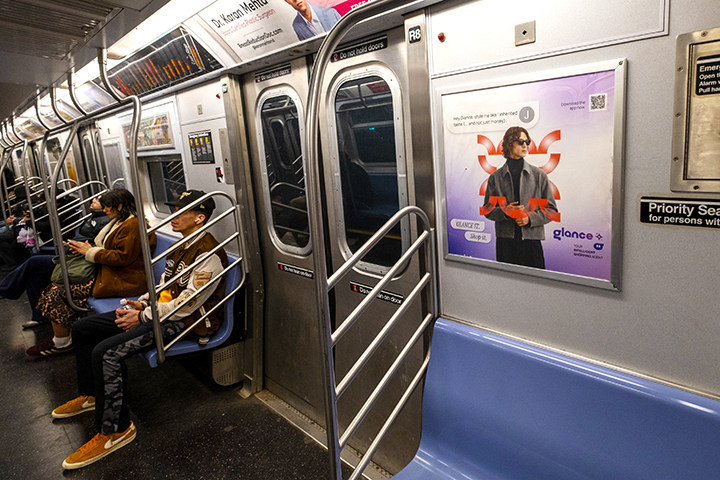
Washington DC’s WMATA Metro system is one of the most architecturally distinctive and demographically targeted transit advertising environments in the country. The coffered concrete vault stations, designed by Harry Weese in the 1970s, create an immersive visual environment where advertising stands out against the brutalist architecture in ways that more cluttered transit systems do not allow. More importantly, the Metro’s ridership profile — federal government employees, congressional staff, lobbyists, consultants, technology workers, and a substantial commuter population from Virginia and Maryland — represents one of the most professionally concentrated urban transit audiences in North America.
This guide covers the DC Metro advertising environment in practical terms: the highest-value stations for different campaign objectives, the advertising formats available through Outfront Media (WMATA’s advertising contractor), cost ranges, the regulatory environment for transit-adjacent guerrilla campaigns in the DC market, and how above-ground street-level campaigns can extend Metro advertising reach into the neighborhoods adjacent to key stations.
The DC Metro: System Overview and Ridership
The WMATA Metro operates six color-coded rail lines across 91 stations in Washington DC, Virginia, and Maryland. Daily ridership exceeds 600,000 on peak days, with the highest concentration on weekday morning and evening commute windows. The system serves the downtown federal government campus, the Capitol Hill complex, Dupont Circle’s professional and nonprofit corridor, the emerging neighborhoods of Shaw and Columbia Heights, and the suburban commuter populations of Northern Virginia and Montgomery County, Maryland.
The Metro’s unique architectural environment — deep underground stations with high vaulted ceilings and minimal visual clutter — creates an advertising context unlike New York or Chicago subway environments where advertising competes with dense surface visual complexity. In DC’s Metro stations, a well-designed platform poster commands attention without the visual competition that characterizes busier transit systems.
Metro Center: The Highest-Traffic Station
Metro Center serves four lines — Red, Orange, Silver, and Blue — making it the system’s primary transfer hub and the single highest-traffic station in the WMATA network. The station processes approximately 40,000 to 50,000 daily riders on weekdays, with concentrated traffic during morning and evening commute peaks. Advertising placements at Metro Center achieve the broadest possible system-wide DC Metro reach because the transfer dynamics mean that riders from every line pass through the station’s corridors.
Metro Center is the appropriate station choice for campaigns targeting a broad DC professional audience without specific geographic or demographic targeting. The advertising formats available include platform-level posters, escalator panels, mezzanine-level large-format displays, and digital screens throughout the station. Station domination packages at Metro Center command premium rates due to the station’s impression volume.
Gallery Place/Chinatown: Events and Entertainment Targeting
Gallery Place serves three lines — Red, Green, and Yellow — and is located directly adjacent to Capital One Arena (formerly Verizon Center), the home of the Washington Capitals and Wizards. The station’s proximity to the arena, Penn Quarter’s restaurant and bar district, and the Smithsonian American Art Museum makes it a strong targeting location for entertainment, consumer, and lifestyle brands.
Event-driven campaigns timed to major sporting events, concerts, and Washington DC cultural programming benefit from Gallery Place’s direct arena adjacency. Advertising at this station during Capitals playoff games, major concerts, or other Capital One Arena events reaches an entertainment-engaged audience that is not the typical federal commuter profile of the system at large. The demographic skews younger and more consumer-focused than Metro Center’s professional commuter audience.
Union Station: Commuters and Travelers
Union Station serves the Red line and functions as the primary intermodal hub connecting WMATA Metro, Amtrak, MARC commuter rail, and VRE commuter rail. Daily pass-through volume including all transit modes makes Union Station one of the highest-footfall locations in the DC region. The Amtrak ridership layer adds an out-of-town traveler and business visitor audience that is distinct from the Metro commuter base.
Union Station advertising reaches both the core DC commuter demographic and a significant population of business travelers, government visitors, and Amtrak intercity passengers. For brands targeting policy audiences — lobbyists, government relations professionals, congressional staff who arrive by Amtrak from New York, Boston, and Philadelphia — Union Station is a particularly targeted placement.
L’Enfant Plaza: Federal Government Workforce
L’Enfant Plaza is WMATA’s second-largest transfer hub, serving Orange, Silver, Blue, Yellow, and Green lines. The station sits at the center of the federal government office campus, directly adjacent to the Department of Homeland Security complex, the Department of Transportation, and the Smithsonian Institution’s administrative offices. The ridership profile is heavily weighted toward federal employees, government contractors, and civil servants across the executive branch.
For B2B technology companies, government services contractors, defense and aerospace firms, and policy advocacy organizations, L’Enfant Plaza is the most targeted Metro station available. The audience that passes through this station daily is among the most professional and policy-engaged transit ridership in any American city.
Dupont Circle, Columbia Heights, and Shaw: Street Campaign Adjacency
The neighborhoods directly above DC Metro stations — particularly Dupont Circle, Columbia Heights, Shaw, H Street NE, and Adams Morgan — represent the strongest guerrilla marketing environments in the DC market. These walkable, culturally active neighborhoods are where DC’s professional and creative class lives, socializes, and engages with the physical environment at a level that makes street-level campaigns effective.
Running a wheatpaste campaign in Shaw or Columbia Heights while advertising in the adjacent Metro stations creates above-ground and below-ground impression frequency that reinforces brand recognition across both commute and neighborhood contexts. The audience that sees the brand underground on their morning commute and encounters it again on their neighborhood street or at a local bar is significantly more likely to have that brand register as a recognized market presence.
Our wheatpaste poster campaigns in the DC market concentrate on the walkable corridors of these neighborhoods: the 14th Street corridor from U Street through Columbia Heights, the Shaw/Howard University zone along 7th and 9th Streets NW, the H Street NE corridor east of Union Station, and the Adams Morgan dining and nightlife zone on 18th Street. These corridors create strong impression environments for brands targeting the DC professional and creative audience.
Transit-Adjacent Sidewalk Stencils and Street Teams
Transit station exits in DC’s walkable neighborhoods create high-concentration moments for sidewalk stencil and street team deployments. The pedestrian flow from Metro exits into the adjacent neighborhood creates a brief window of channeled foot traffic — everyone exiting the station walks the same path for the first half-block. That concentration is exactly what sidewalk stencils and positioned street teams are designed to capture.
Our sidewalk stencil deployments at Metro exits position brand messages directly in the foot traffic path of the exiting crowd. The ground-level impression at the exact moment the audience is transitioning from underground to street level creates an unusually high-attention moment — people look around and orient when they emerge from a transit station, and a well-placed stencil is visible in that orienting gaze.
Brand ambassador deployments at high-traffic Metro exits — Metro Center, Gallery Place, Dupont Circle — during commute hours create direct contact moments with the system’s dense professional ridership. We brief teams on the station’s specific audience profile and the appropriate conversational approach for the commute window versus the evening window.
LED Trucks in Washington DC
LED billboard trucks on the primary DC corridor routes — Pennsylvania Avenue from Georgetown to Capitol Hill, K Street through the K Street lobbying corridor, and Connecticut Avenue through the Dupont Circle professional zone — generate high impression volume from both vehicle and pedestrian traffic on DC’s major arterials. Our LED billboard trucks are permitted for DC’s street dimensions and can operate in the downtown core during daylight hours.
Event-driven LED truck deployments around Capital One Arena, the Kennedy Center, and the Walter E. Washington Convention Center reach event audiences in the evening hours when foot traffic in these zones peaks. For brands targeting the DC political and advocacy audience, routes around the Capitol Hill complex during congressional session periods reach a concentrated policy-professional audience.
DC Campaign Timing and Political Calendar
Washington DC’s advertising environment is uniquely influenced by the political calendar. Congressional sessions, federal agency budget cycles, major regulatory announcements, and election cycles all create campaign windows with specific audience concentration and message relevance dynamics. Political advocacy and government relations campaigns in DC need to time their street presence to the specific congressional calendar moments when their message is most timely.
For non-political campaigns, the spring and fall seasons (March through June, September through November) are the peak DC professional market periods when Congress is in full session and the city’s professional population is at maximum concentration. Summer congressional recess disperses a significant portion of the Capitol Hill audience. We advise clients on optimal campaign timing relative to both the political calendar and DC’s seasonal audience dynamics.
Budget and Campaign Planning
DC Metro advertising through Outfront Media requires working with their sales team directly for space booking. We advise clients on format selection and station prioritization based on campaign objectives and can coordinate with Outfront on the client’s behalf. Individual station poster placements at major stations start around $2,000 to $4,000 per four-week period. Station domination packages at Metro Center or Gallery Place run $75,000 to $150,000+ per four-week period.
Guerrilla marketing campaigns in the DC market — wheatpaste, street teams, stencils, LED trucks — are scoped and executed directly through our operations. A focused neighborhood campaign covering Shaw, Columbia Heights, and Dupont Circle runs $8,000 to $18,000 for a five-day deployment. Combined Metro advertising advisory plus guerrilla campaign execution engagements are available for clients seeking a fully coordinated DC campaign approach.
Station-Specific Audience Profiles: Matching Location to Objective
Not all DC Metro station audiences are the same, and the mismatch between a brand’s target audience and a station’s actual ridership profile is one of the most common planning errors in Metro advertising. Metro Center’s broad reach — all four major lines — makes it the right choice for campaigns targeting the widest possible DC professional audience, but it is not the most efficient choice for campaigns targeting a specific segment of the Metro ridership.
Federal Triangle station, adjacent to multiple federal department headquarters, delivers a concentrated government employee audience that is more narrowly defined than Metro Center’s mixed ridership. Foggy Bottom, serving George Washington University and the World Bank, reaches an international professional and academic audience. Tenleytown serves the American University and consumer residential community in upper northwest DC. Bethesda and Silver Spring serve the Maryland suburban commuter populations. Each station has a demographic signature that reflects the neighborhoods and institutions it serves, and campaign planners who match station selection to audience objective achieve better targeting efficiency than those who default to the highest-traffic stations for every campaign.
We advise Metro advertising clients on station selection based on their specific campaign objectives. For a fintech brand targeting financial services professionals, the K Street and Farragut North cluster is more efficient than Metro Center despite lower total ridership. For a university marketing campaign, Tenleytown and Columbia Heights are more efficient than L’Enfant Plaza despite the latter’s higher daily throughput. Audience match is the right optimization metric, not raw impression volume.
The DC Market’s Unique Political Advertising Context
Washington DC is the only major American city where political advertising is a dominant commercial category. Lobbying organizations, trade associations, advocacy groups, and federal contractors use DC transit and street-level advertising to reach congressional staff, agency decision-makers, and the broader policy community throughout the legislative calendar. This creates a distinctive competitive environment: during peak legislative and regulatory periods, DC’s premium OOH inventory is heavily contested by political and advocacy advertisers, which affects availability and pricing for commercial brands.
Commercial brands advertising in DC during peak congressional periods should book well in advance or consider guerrilla marketing formats as an alternative to traditional OOH that is unaffected by political advertising demand. Our street-level campaigns in DC’s walkable neighborhoods — Shaw, Columbia Heights, Dupont Circle, H Street NE — are not subject to the same inventory pressure as transit OOH during legislative peaks, making them a reliable alternative when Metro advertising inventory is constrained.
For advocacy organizations and trade associations whose own advertising is political in nature, the DC transit environment is the strongest reach channel available. Metro station dominations at Metro Center or L’Enfant Plaza reach the congressional staff and government employee audience with the broad, sustained visibility that the format’s high daily impression volume produces. Combined with street-level guerrilla programs in the Capitol Hill residential neighborhoods where congressional staff live, these campaigns can create total-environment brand presence across the political professional community.
Neighborhoods Beyond the Metro: DC Street Campaign Zones
Washington DC’s walkable neighborhoods beyond the transit corridor offer strong guerrilla marketing environments for brands targeting DC’s professional and cultural audience. Shaw, the neighborhood east of the 9th Street NW corridor, has undergone significant demographic change in the past decade and now hosts a concentration of young professionals, restaurant industry workers, and creative professionals that makes it one of the strongest wheatpaste and street team environments in the city. H Street NE, east of Capitol Hill, is DC’s most energetic nightlife and creative corridor, reaching a demographic that skews younger and more ethnically diverse than most other DC campaign zones.
Adams Morgan, along 18th Street NW, is DC’s established bar and nightlife district for the young professional demographic. Evening campaigns here — Thursday through Saturday from 8 p.m. to midnight — reach the most concentrated leisure-time audience in the city. The Columbia Heights Metro-adjacent corridor extending north from Adams Morgan adds a significant Latino community audience that is distinct from the professional commuter base of most DC transit zones.
For brands with campaigns targeting DC’s general consumer audience rather than the political professional, these neighborhood street campaigns often provide better demographic targeting than Metro station placements, which skew heavily toward government employees and lobbyists. Our guerrilla marketing services team advises clients on which DC zones match their target audience profile before any campaign scope is finalized.
Frequently Asked Questions
How does subway advertising work in Washington DC?
Washington DC Metro advertising is managed through Outfront Media under a WMATA contract. Available formats include platform posters, large-format station dominations, digital screens, escalator panels, and system-wide card placements. Campaigns are booked in four-week periods and priced by format type, station selection, and inventory volume.
Which DC Metro stations have the highest advertising value?
Metro Center (Red/Orange/Silver/Blue) is the highest-traffic transfer station for broad reach. Gallery Place/Chinatown is strong for events and entertainment audiences. Union Station is ideal for commuters and travelers. L’Enfant Plaza targets the federal government workforce. All four represent the core of any comprehensive DC Metro campaign.
What are the advertising formats available in DC Metro stations?
Formats include platform posters, escalator wrap panels, digital network placements, turnstile area posters, mezzanine large-format displays, station domination packages, and transit card inserts for placement in Metro rail cars.
How much does DC Metro advertising cost?
Individual platform poster placements at major stations run $800 to $3,000 per location per four-week period. Station domination packages at high-traffic stations run $50,000 to $200,000 per four-week period. Digital network placements are priced by CPM through Outfront’s programmatic platform.
Can guerrilla marketing complement DC Metro advertising?
Yes. The neighborhoods directly above high-traffic Metro stations — Columbia Heights, Dupont Circle, Shaw, H Street, Adams Morgan — are prime wheatpaste and street team environments. Running guerrilla campaigns in these neighborhoods while advertising in the Metro creates above- and below-ground impression frequency that reinforces brand recognition.
What is the DC Metro audience profile?
The WMATA Metro carries more than 600,000 riders daily including federal government employees, congressional and executive branch staff, technology and consulting professionals, university students, tourists, and a significant commuter population from Virginia and Maryland. The system’s above-average rider education and income levels make it one of the strongest OOH environments in the country for professional audiences.
How far in advance should DC Metro advertising be booked?
Outfront Media typically requires 6 to 8 weeks lead time for creative submission and space booking. High-demand stations and specific campaign windows — particularly around political cycles or major DC events — may require longer lead times. We advise clients to begin the booking process 10 to 12 weeks before their target campaign launch date.