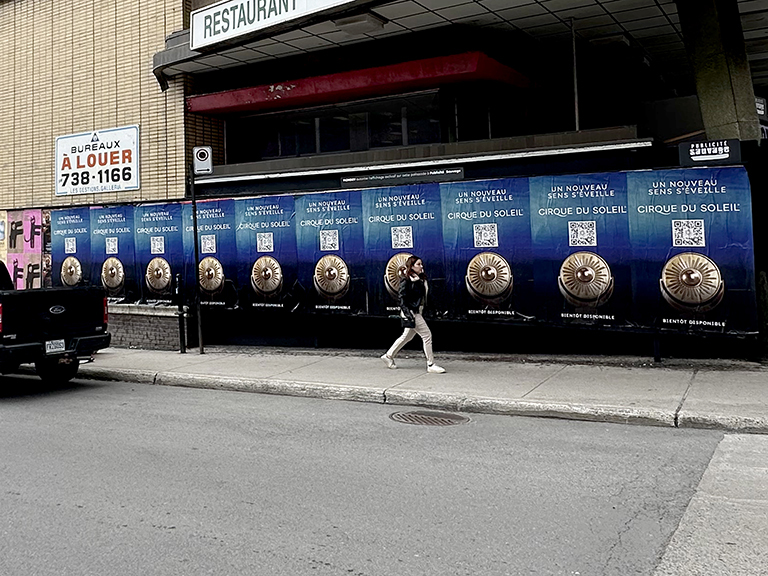
In guerrilla marketing, the campaign happens at night, on the street, in the neighborhoods your client has never visited. The crew works in hours when no one is watching. The posters go up on walls that exist only as addresses in a location list. For a client sitting in an office three time zones away, the only proof that any of it happened is the photography report.
This is why campaign photography is not an afterthought in guerrilla marketing. It’s the primary deliverable. Not the posters, not the impressions, not the creative — the photographs that document where the campaign was, what it looked like, and what the surrounding environment communicated about where your brand appeared. A guerrilla marketing campaign without professional photography documentation is essentially an unverified claim. A campaign with systematic, GPS-stamped, professionally composed photography is a proof of performance.
Our team treats campaign photography as a core discipline, not a supporting function. Every placement we execute gets documented. Every street team activation is photographed. Every stencil installation is logged with GPS coordinates and timestamp. This guide covers how we approach campaign photography, what the documentation standards mean for client reporting, and why the photography quality itself is a reflection of campaign quality.
The GPS Documentation Standard
GPS-stamped campaign photography is the current standard for professional guerrilla marketing documentation. Every photo in our campaign reports includes embedded geographic coordinates (latitude and longitude), a timestamp, and a location description. This metadata is non-editable in the camera’s native file and provides objective, verifiable proof that each image was captured at the specified location and time.
For a 100-poster wheatpaste campaign spread across Brooklyn, Manhattan, and Queens, GPS-stamped photography means the client can literally map every placement on a coordinate system and verify that the coverage matched the placement plan. This is not possible with non-GPS documentation or with photos that have been captured and transferred in ways that strip location metadata.
We use camera systems that embed GPS coordinates natively at capture time, not retroactively applied systems that can be manipulated. Our field crew documentation protocols require GPS confirmation before each photo series begins and verify location accuracy against the campaign placement map before moving to the next location.
Shot Types: The Complete Documentation Set
Professional guerrilla marketing campaign photography uses a standardized shot sequence for each placement that captures multiple perspectives and serves different reporting functions.
The Establishment Shot
The establishment shot is captured from sufficient distance to show the placement in its full geographic and visual context. For a wheatpaste poster on a building wall, this means capturing the entire building or block face that contains the placement, showing the surrounding street, adjacent buildings, and any nearby landmarks. The establishment shot tells the client: this is where we were, this is what the neighborhood looks like, this is the environment your brand inhabited.
Establishment shots should be captured at the natural viewing distance for the format — the distance from which a pedestrian would first see the installation. For a 48×72 wall installation, this might be 20-30 feet. For a large building mural, it might be from across the street. The goal is to replicate the audience’s visual experience, not to show the placement at maximum legibility.
The Close-Up Detail Shot
Close-up detail shots capture creative quality: the sharpness and accuracy of the print, the adhesion of the paste, the clarity of the brand message at close range. These shots confirm that the creative was executed at the quality level specified — the colors are accurate, the print is clean, the artwork is intact. Close-ups also provide the client with hero images that can be used in their own internal reporting and social media.
For wheatpaste campaigns, close-up shots should be captured within 2-3 feet of the installation and at an angle that minimizes reflection and lens distortion. The creative should fill the frame without being cropped.
The Environmental Context Shot
Environmental shots capture the placement in its active context: with foot traffic visible in the frame, with street activity providing scale and authenticity, with the full visual environment of the neighborhood present. These shots are often the most powerful in the client report because they answer the question clients are really asking: “Was anyone actually there to see it?”
Environmental shots are most effective when captured at peak foot traffic times — weekday commute windows, weekend afternoon shopping hours, post-event pedestrian flows. They should show natural, unposed pedestrian activity rather than staged compositions. The goal is to document the campaign’s actual audience environment, not to create marketing imagery for the agency’s portfolio.
The Scale Reference Shot
Scale reference shots help clients understand the physical size of installations relative to their environment. A person standing next to a 60×40 poster or walking past a multi-sheet mural provides the scale context that raw dimensions cannot communicate. For clients who have never visited the installation location, scale reference shots are often the most surprising element of the campaign report — the realization that the installation is much larger (or in a more prominent location) than they imagined from the location description.
Wheatpaste Campaign Photography: The Core Standard
A standard wheatpaste campaign produces 2-5 photos per placement: one establishment shot, one close-up, one environmental shot, and one or two additional angles as warranted by the placement’s visual environment. For a 100-poster campaign, this produces 200-400 individual images that are then curated for the client report.
Installation photography is captured immediately after each placement while the paste is still fresh and the creative is at peak condition. All installation shots are captured during or just after the overnight installation window — we do not wait until the following morning to photograph placements, as daylight condition changes and potential weather impact can alter the documentation.
Mid-campaign and end-of-campaign durability checks photograph the same placements 3-5 days into the campaign to document persistence and condition. These durability shots help clients understand the longevity of their investment and flag any placements that have been affected by weather, removal, or coverage by other postings.
Street Team and Brand Ambassador Photography
Street team activation photography documents the brand ambassador program in action: teams at their deployment locations, engagement moments with pedestrians (captured with appropriate consent considerations), material distribution, branded setup, and the overall activation environment. Street team photography should communicate energy and authentic engagement — the visual evidence that the program was executed by real people having real interactions.
Team Briefing Documentation
We photograph team briefing sessions at the start of each activation day, documenting the full team in branded uniforms with their materials. These shots confirm team size, branding consistency, and material readiness — the pre-deployment documentation that establishes the campaign’s starting point for each day’s report.
Activation Environment Shots
Activation environment shots capture the locations where teams deployed, showing the foot traffic context, the surrounding environment, and the team’s positioning relative to the pedestrian flow. These shots provide the geographic and environmental proof of performance that parallels the GPS documentation for placement campaigns.
LED Billboard Truck Photography
LED billboard truck photography documents the truck’s appearance during the campaign: the creative on the screens, the route environment, and the vehicle in context with the surrounding urban scene. Truck photography should capture both the static creative at full resolution and motion shots that communicate the truck’s presence in the traffic and pedestrian environment.
We capture LED truck photography from multiple angles and at multiple route points, including the highest-pedestrian-density moments of each circuit. Truck photography also documents the timing of route circuits, confirming that the vehicle was present in each target zone during the specified campaign hours.
Sidewalk Stencil Photography Standards
Sidewalk stencil photography documents the installed stencil at close range, from above (a bird’s-eye perspective showing the stencil design clearly), and from the pedestrian’s natural viewing angle approaching from the nearest natural approach direction. Stencil photography should be captured in the hours after installation, before foot traffic has worn the edges, to show peak quality and creative accuracy.
GPS documentation for stencil campaigns maps each stencil’s coordinates to within a few meters of its actual location, creating a geographic coverage map that clients can overlay with the neighborhood map to visualize campaign density and approach-route coverage.
Post-Campaign Reporting Format
Our post-campaign reports are delivered within 72 hours of campaign completion and include: a curated photo gallery of the strongest documentation images from each placement zone, a GPS placement map showing every documented location, placement counts by date and location zone, impression estimates based on pedestrian count data for each location, and a campaign narrative summarizing execution, observations, and notable field details.
Reports are delivered in formats compatible with client internal reporting systems and are designed to be presented to leadership and stakeholders without interpretation. The photography is the centerpiece — selected for visual quality, contextual richness, and the ability to communicate the campaign’s presence and scale to viewers who weren’t there to see it in person.
Frequently Asked Questions
What is street marketing campaign photography?
Street marketing campaign photography is the systematic documentation of guerrilla marketing campaign placements and activations using professional photography. It provides clients with visual proof of performance: where every poster was placed, what every stencil installation looked like, how each street team activation unfolded. GPS-stamped campaign photography is the primary reporting tool for street-level advertising campaigns.
What does GPS-stamped campaign photography mean?
GPS-stamped campaign photography means that each photo in the campaign report is embedded with geographic coordinates (latitude and longitude), a timestamp, and often a location description. This metadata confirms that each placement or activation was photographed at the specified address and time, providing verifiable proof of performance that the client can cross-reference against the campaign plan.
How many photos does a typical guerrilla marketing campaign report include?
Most guerrilla marketing campaign reports include 2-5 photos per placement for wheatpaste campaigns (establishment shot, close-up, environmental context) and 3-8 photos per activation day for street team programs. A 100-poster wheatpaste campaign typically produces 200-400 campaign photos. We curate the strongest images for client reports while retaining full documentation files for the client’s records.
What shot types should be included in guerrilla marketing campaign photography?
A complete set of guerrilla marketing campaign shots includes: (1) establishment shots showing the placement in context with surrounding environment, (2) close-up detail shots showing creative quality and condition, (3) environmental shots showing foot traffic, pedestrian proximity, or brand ambassador interactions, and (4) scale reference shots that help clients understand the physical size of installations relative to their surroundings.
How does campaign photography support ROI measurement?
Campaign photography supports ROI measurement by confirming placement quantity and quality, documenting environmental context that supports impression estimates, providing social media content that generates earned media from the campaign assets, and creating a verifiable record of campaign delivery that clients can use for internal reporting to stakeholders and leadership.
Does American Guerrilla Marketing provide campaign photography for all campaigns?
Yes. GPS-stamped campaign photography and post-campaign reporting is included in all American Guerrilla Marketing campaigns. Every placement, activation, and deployment is documented with professional photography. Clients receive a complete post-campaign report including curated photography, placement maps, impression estimates, and activation summaries within 72 hours of campaign completion.