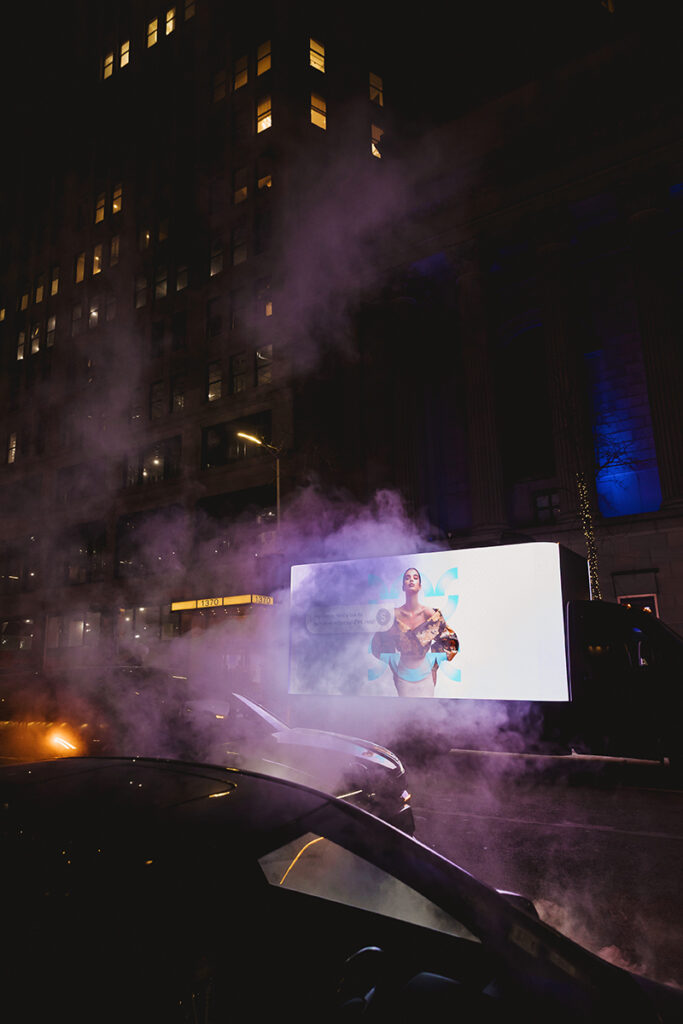
Dubai offers unique guerrilla marketing opportunities across its distinct neighborhoods and creative districts. This guide covers the campaign formats, key zones, and operational landscape for street-level marketing in Dubai.
Dubai is one of the world’s great cities for street-level brand campaigns. The combination of walkable neighborhoods, strong local culture, and receptive audiences creates conditions where well-executed guerrilla marketing campaigns reach influential demographics at genuine impression density.
We execute campaigns in Dubai for music labels, fashion brands, tech companies, food and beverage groups, entertainment platforms, and local businesses. This guide covers the key campaign zones, formats that work, and what professional execution looks like in this market.
Key Campaign Zones in Dubai
Dubai OOH Landscape: The UAE’s outdoor advertising market operates under the Dubai Media City and Dubai Municipality regulatory frameworks. Street-level campaigns are possible in specific zones with appropriate permits. The best neighborhoods for campaign deployment depend on your target demographic, campaign format, and creative positioning. We assess all variables before recommending a deployment map.
Wheat Paste Poster Campaigns in Dubai
Wheat paste poster campaigns are the most widely used street marketing format in Dubai. We execute placements on permitted private surfaces and licensed posting locations throughout the city’s key corridors. Every placement is documented with geo-tagged photography and reported to the client within 48 hours of installation.
Street Teams and Brand Ambassador Programs in Dubai
Street team activations in Dubai are most effective around major event venues, transit hubs, and high-density pedestrian corridors. We staff and manage teams of 2-40 people with GPS check-ins, photo documentation, and real-time reporting throughout each deployment.
The Dubai Regulatory Landscape
Key Campaign Districts: JBR (Jumeirah Beach Residence) creates a beachfront pedestrian environment. Downtown Dubai around the Burj Khalifa district draws massive tourist and resident foot traffic. We research the applicable regulations for each format and location before executing any Dubai campaign, ensuring compliance without limiting campaign reach.
Campaign Planning and Lead Times
We recommend a minimum of 3-4 weeks lead time for Dubai campaigns from brief to first installation. Multi-format programs require 5-8 weeks. Campaigns tied to specific event dates should be planned with additional buffer for production, permitting, and crew scheduling.
Why Campaign Quality Determines Results
In outdoor and street-level marketing, the quality of execution has a direct and significant impact on campaign performance. Unlike digital advertising where a poorly designed ad can be paused and replaced instantly, a physical campaign that’s poorly executed creates impressions that work against the brand rather than for it. Low-quality poster production, poorly positioned placements, or undertrained street teams all create negative brand associations that undermine campaign objectives.
We maintain quality standards across every campaign component because we’ve seen the performance difference between excellent execution and average execution in real-world campaigns. The investment in professional execution pays back in stronger brand impression quality, better audience response, and more reliable campaign documentation.
Campaign Brief Development
Every successful campaign starts with a clear, specific brief. The most common cause of underperforming campaigns is vague objectives that make it impossible to design a campaign architecture that achieves them. We work with clients to develop briefs that specify: the exact target audience (behavioral profile, not just demographic), the specific geographic target (neighborhood and corridor level, not just city), the campaign objective in behavioral terms (drive X action, not just “create awareness”), and the success metrics that will be used to evaluate campaign performance.
A strong brief produces a strong campaign. We’ve found consistently that campaigns with well-defined briefs outperform campaigns with vague briefs by significant margins across all formats, because the campaign architecture can be precisely calibrated to the actual objective rather than built around assumptions about what the client wants.
Cross-Channel Integration: Connecting Street-Level to Digital
Street-level campaigns create awareness and drive search behavior. Digital campaigns capture that intent and convert it to action. The most effective marketing programs integrate both, ensuring that consumers who encounter a brand through outdoor or street-level formats are subsequently reached by digital retargeting that captures their attention and drives conversion. We advise on the campaign architecture that connects physical impressions to digital outcomes at the brief stage.
QR codes in physical campaign materials provide direct attribution links between outdoor impressions and digital engagement. When a wheat paste poster or LED billboard includes a QR code with a campaign-specific URL, every scan creates a trackable data point that connects the street-level impression to downstream digital behavior. This attribution data is valuable both for measuring campaign ROI and for informing future budget allocation between outdoor and digital channels.
Geographic Targeting Precision
Modern street-level marketing campaigns are far more geographically precise than traditional outdoor advertising. Rather than buying a billboard on a highway that reaches a broad, undifferentiated audience, guerrilla marketing campaigns can be pinpointed to specific blocks, specific event approaches, or specific pedestrian corridors where the target demographic concentrates at specific times of day.
This geographic precision is one of the primary advantages of street-level marketing over traditional OOH: every dollar of campaign spend reaches the target audience rather than a mix of target and non-target audiences. We use neighborhood-level foot traffic data, demographic mapping, and local market knowledge to design deployment plans that maximize target audience reach within every campaign budget.
Campaign Velocity: When to Move Fast
Some campaign scenarios require fast deployment: a competitor has just launched in your market, a news event has created a relevant moment for your brand, or a time-sensitive promotion window is opening in 3 weeks. We have the infrastructure to deploy campaigns significantly faster than standard lead times in most markets, prioritizing crew availability, expedited print production, and accelerated surface scouting to compress the campaign timeline when urgency requires it.
We recommend contacting us as early as possible for time-sensitive campaigns, even before brief finalization. Early contact allows us to reserve crew and surface access so that the production and planning stages don’t create deployment timeline risk.
Reporting and Documentation Standards
Campaign reporting is a non-negotiable component of every AGM program. We don’t just execute campaigns. We document them thoroughly so that clients have proof of every placement, every deployment, and every distribution event that occurred during the campaign. This documentation serves three purposes: it confirms that the campaign was executed as agreed, it provides a visual record that can be used in internal presentations and marketing reports, and it gives us the historical data to calibrate future campaign planning for the same client and market.
Reporting is delivered within 48-72 hours of campaign completion for standard programs, and at agreed intervals throughout the campaign for longer-duration programs. We stand behind every placement we document and address any shortfalls promptly.
The Business Case for Guerrilla Marketing
Guerrilla marketing consistently delivers strong return on investment when executed professionally. The reasons are structural: physical campaigns operate in an environment with far less competitive saturation than digital advertising, where millions of brands compete for the same inventory. A well-placed wheat paste campaign in the right neighborhood reaches a concentrated target audience with a physical brand impression that persists in the environment for days or weeks, generating repeated exposures at a cost structure that’s highly competitive with comparable digital reach.
The second structural advantage is memorability. Research consistently shows that physical advertising generates stronger brand recall than digital advertising. When a consumer sees your brand on their street, in the neighborhood where they live and walk, it creates a real-world context for the brand that digital advertising cannot manufacture. That physical-world familiarity translates into greater receptiveness when the consumer encounters the brand in other contexts, including digital ones.
Third, guerrilla marketing creates organic social media amplification that multiplies the paid investment. Compelling street-level creative gets photographed and shared by the audiences who encounter it. In markets with strong social media documentation culture, like New York, Los Angeles, Miami, and Austin, this organic amplification routinely extends campaign reach by multiples of the original physical footprint. We track this amplification as part of our post-campaign reporting.
Understanding Your Target Audience at Street Level
The most common planning failure we see in guerrilla marketing is demographic targeting that isn’t specific enough to drive useful campaign decisions. “18-34 urban professionals” describes tens of millions of people across hundreds of neighborhoods. The campaign planning question is: where do the specific 18-34 urban professionals who are likely to buy your product actually walk, congregate, and spend their time in the target city?
Answering that question requires neighborhood-level audience intelligence, not just broad demographic data. We assess pedestrian corridor demographics using a combination of census tract data, business category mapping (what kinds of businesses are in this area and who do they attract?), public transit ridership profiles, and our own accumulated market knowledge from years of campaign execution. That neighborhood-level specificity is what allows us to allocate campaign budget to the corridors where the actual target audience is, not just the corridors that sound strategically appealing in a presentation.
We also consider behavioral targeting beyond demographics. The 32-year-old professional who goes to CrossFit, drinks craft beer, and browses sneaker releases is a different campaign target than the 32-year-old professional who goes to the farmers market, shops at Whole Foods, and attends gallery openings, even if their demographics are identical. Behavior-based geographic targeting, using the types of businesses in a neighborhood as a proxy for the behavioral profile of the audience, allows for precision that demographic data alone cannot provide.
Campaign Timing: When Guerrilla Marketing Lands Hardest
Timing is one of the most underappreciated variables in guerrilla marketing campaign planning. The same creative, in the same location, at the wrong time of year or the wrong point in the consumer’s decision journey, delivers dramatically weaker results than the same campaign at the optimal moment. We analyze timing as a core component of every campaign plan.
For brand launches, timing guerrilla campaigns to coincide with the beginning of the target audience’s consideration cycle is critical. For entertainment campaigns, the timing window before ticket sales open is optimal for awareness, while the final week before the event is optimal for action driving. For retail campaigns, the weeks immediately preceding peak shopping seasons (spring fashion, holiday, back to school) capture consumers at their highest purchase intent moment.
We also consider competitive timing. If a major competitor is known to be planning a campaign launch in the same market, getting your campaign into the market first creates the visual context for the subsequent competitive presence rather than the other way around. Early mover advantage in street-level marketing is real and worth planning around.
What Happens After the Campaign: Sustaining Momentum
One of the most common questions we hear after a successful campaign launch is: how do we maintain this momentum? The answer depends on the campaign objective, but generally involves a sustained presence program that keeps the brand visible in the target market without the full investment of a launch campaign.
For brands targeting ongoing consumer awareness in a specific market, monthly or quarterly wheat paste campaigns in core neighborhoods maintain the visual presence that builds long-term brand familiarity. For brands that launch seasonally, recurring pre-season campaigns create the anticipation that accelerates each new season’s sales velocity. For brands that have achieved initial awareness and are focused on retention, community event presence programs and ongoing brand ambassador activities maintain human-level brand connection in the target communities.
We design ongoing campaign programs that fit our clients’ budgets and objectives. The most effective ongoing programs are designed at the campaign launch stage, building the maintenance program into the initial campaign architecture rather than treating it as an afterthought.
The AGM Difference: What Sets Our Campaigns Apart
American Guerrilla Marketing executes street-level campaigns differently from most vendors in the market. The differences that matter most to our clients are: operational depth (we have installation crews with specific local knowledge in every major US market and many international cities, not a patchwork of subcontractors we’ve never met), documentation standards (every placement is photographed with geo-tagging, not a representative sample), creative collaboration (we bring format-specific expertise to every campaign brief, not just execution of whatever the client sends us), and campaign architecture experience (we design multi-format, multi-neighborhood campaign programs based on what actually works, not what sounds good in a proposal).
We’ve run campaigns for brands at every scale, from independent restaurant groups running their first neighborhood awareness program to major entertainment companies executing simultaneous 30-market campaigns. The process is the same regardless of scale: a detailed brief, a thoughtful campaign architecture recommendation, precise execution with real-time oversight, and thorough documentation that proves value delivered.
If you’re considering a street-level marketing campaign, we’d be glad to talk through what the right approach looks like for your specific brand, market, and objective. Contact us at the link below.
Field-Tested Insights: What We’ve Learned Running Hundreds of Campaigns
After executing campaigns for hundreds of clients across every major US market and several international cities, we’ve accumulated a body of field knowledge that informs every campaign we plan. Here are the insights that matter most for brands considering a street-level marketing investment.
The first is that neighborhood specificity beats broad coverage almost every time. A concentrated campaign in three highly targeted neighborhoods consistently outperforms a diluted campaign spread across eight. The impression frequency in the targeted zones builds genuine brand recognition; the diluted campaign creates scattered impressions that don’t compound into awareness the same way. When budget forces a choice, we always recommend going deep before going broad.
The second insight is that the best campaigns are planned backward from the consumer’s behavior, not forward from the brand’s comfort zone. The question is never “where should our brand be?” but rather “where is our target consumer actually walking, at what times, and what is their mindset in that environment?” Those answers drive placement strategy more reliably than any other input.
Third: creative that looks bold in a design presentation often fails on the street. The street visual environment is complex, competing, and constantly in motion. Creative that wins on the street is simple, high-contrast, and communicates its core message in under two seconds. We review campaign creative specifically for street performance before production, and we recommend modifications when we see elements that will underperform in the physical environment.
Building Long-Term Street Presence
The most valuable outcome of a successful guerrilla marketing campaign isn’t the awareness generated by a single execution. It’s the foundation for an ongoing street-level presence program that builds brand familiarity in target markets over time. The brands that benefit most from guerrilla marketing are those that treat it as a sustained channel, not a one-time activation.
We work with clients to design ongoing presence programs that fit their budgets and campaign calendars. A monthly wheat paste campaign in core neighborhoods, refreshed with new creative each cycle, builds the kind of cumulative visual brand presence that creates genuine consumer familiarity. That familiarity reduces friction at every other brand touchpoint, from digital advertising to retail shelf to direct sales conversations.
For brands with seasonal marketing patterns, we design campaign calendars that align street-level investments with peak consumer attention windows. Pre-season pushes that establish brand presence before competitors launch their campaigns, event-adjacent campaigns that intercept the target audience at high-attention moments, and post-peak retention campaigns that maintain awareness when competitive spending drops all contribute to a more efficient annual marketing investment.
Risk Management in Outdoor Campaigns
Every outdoor marketing campaign carries some degree of operational and regulatory risk. The risks that matter most are: creative that doesn’t land as intended with the target audience, placements that are removed faster than anticipated due to cleanup activity, weather events that damage installations before the target campaign period, and regulatory enforcement actions in specific locations.
We manage these risks deliberately. Creative is reviewed for street performance before production commits. Placement strategies account for expected cleanup cycles in specific neighborhoods. Weather-resistant materials are specified for markets and seasons where weather exposure is a campaign risk factor. And our local market knowledge in every major US market gives us current intelligence on regulatory enforcement patterns that inform placement decisions.
When unexpected issues arise during campaigns, we respond quickly. Placements that are removed before their expected duration are either re-posted (within the campaign scope) or documented for client notification. Street teams that encounter unexpected venue restrictions are redirected to adjacent deployment zones in real time. We manage campaigns dynamically, not rigidly, because the street environment doesn’t hold still.
Case for Investment: Calculating the True Cost of Street-Level Marketing
Comparing guerrilla marketing to digital advertising on a raw cost basis misses the most important distinction: what you’re buying. Digital advertising buys impressions that are often viewed in a high-distraction, low-receptivity context by an audience that may or may not be in a relevant mindset. Street-level advertising buys impressions in a real-world environment where the consumer is physically present, spatially oriented, and encounters the brand in the context of their daily life.
The real comparison is not cost-per-impression but cost-per-meaningful-impression: impressions that occur when the consumer is attentive, in a relevant physical context, and not simultaneously competing with other content for their attention. By that metric, well-executed street-level campaigns frequently deliver stronger ROI than the nominal cost-per-impression comparison with digital advertising would suggest.
We encourage clients to build a meaningful-impression framework for evaluating their campaign investment rather than defaulting to the raw impression metrics that digital advertising has trained the marketing industry to use. The inputs are different for physical campaigns, but the output, genuine brand awareness and consumer behavior change, is what ultimately matters.
How Technology Has Changed Street-Level Marketing
Street-level marketing has always been fundamentally physical, but technology has transformed how campaigns are planned, executed, documented, and measured. The changes over the past decade have made guerrilla marketing more precise, more accountable, and more measurable than at any previous point in the format’s history.
Planning has been transformed by geographic data. Foot traffic data from mobile devices, combined with demographic mapping and business category analysis, allows us to model pedestrian audience profiles in specific neighborhoods with much greater precision than was possible with census data alone. We can now identify the specific blocks where the target demographic concentrates at specific times of day, and build deployment plans that precisely target that intersection of geography, timing, and audience.
Execution has been transformed by GPS tracking and real-time communication. Every installation crew member carries a smartphone with GPS location tracking and a direct communication channel to the campaign management team. We can verify that crews are at the correct installation locations, monitor campaign progress in real time, and address any issues immediately rather than discovering them in a post-campaign audit.
Documentation has been transformed by geo-tagged photography and cloud-based reporting. Every placement photo is automatically time-stamped, geo-tagged, and uploaded to the campaign documentation system. By the time installation crews finish a shift, the placement photos are already organized and accessible to the campaign management team and the client. This transparency and accountability is something that simply wasn’t possible before smartphones and cloud storage made real-time photo documentation routine.
Measurement has been transformed by mobile device location data and digital attribution tools. When a street-level campaign runs in a specific neighborhood, mobile device location data can identify consumers who were physically present in the campaign zone during the campaign period. That data can then be matched against digital behavior (search queries, website visits, app downloads, purchase transactions) to identify behavioral changes that correlate with physical campaign exposure. The attribution isn’t perfect, but it’s substantially better than the pre-digital era where outdoor campaign ROI was measured primarily through before-and-after brand awareness surveys.
Coordination with Clients: How We Work
Every AGM client relationship begins with a briefing call or meeting that establishes campaign objectives, target audience, target geography, timeline, and budget parameters. From that brief, we develop a campaign architecture recommendation that specifies format mix, neighborhood targeting, creative specifications, timeline milestones, and expected campaign outcomes. The recommendation is presented to the client for feedback and refinement before any production or booking commitments are made.
Once the campaign architecture is approved, we move to execution. Creative files are provided by the client and reviewed by us for format-specific performance. Any modifications needed for street performance are flagged and discussed before production. Print production is managed through our vendor network, with quality checks before materials ship to installation crews. Installation scheduling is coordinated with client-provided launch date requirements and built backward through the production timeline.
During campaign execution, we provide daily or regular updates as appropriate for the campaign scale and duration. Client-facing updates include installation confirmation, photo documentation as it’s compiled, and any notable observations from the field. After campaign completion, the full documentation package is delivered within 48-72 hours: geo-tagged photography organized by neighborhood, campaign coverage map, and written summary report.
We assign a dedicated campaign manager to every program above a minimum scale threshold. That manager is the client’s single point of contact from briefing through final reporting, with full visibility into every operational component of the campaign. Clients don’t get bounced between departments or handed off mid-campaign. One person owns the relationship and the outcome.
Frequently Asked Questions
How does guerrilla marketing in Dubai work?
We plan, book, execute, and report on guerrilla marketing in Dubai campaigns from a single point of contact. After receiving your brief, we recommend a campaign architecture, manage all logistics and crew operations, and deliver documented reporting within 48-72 hours of campaign completion.
What markets do you cover for guerrilla marketing in Dubai?
We execute guerrilla marketing in Dubai campaigns in 100+ US markets and major international cities including Dubai. Contact us to discuss coverage in your specific target geography.
How much does a guerrilla marketing in Dubai campaign cost?
Campaign costs vary by market, duration, scale, and format requirements. We provide custom estimates after understanding your campaign objectives, target geography, and timeline.
How long does it take to launch a guerrilla marketing in Dubai campaign?
Standard campaigns require 3-4 weeks from brief to launch. Larger or multi-market programs need 5-8 weeks. We always build backward from your target date to ensure realistic and achievable timelines.
What reporting do you provide after a guerrilla marketing in Dubai campaign?
All campaigns include geo-tagged photography, coverage maps, and written summary reports. Reports are delivered within 48-72 hours of campaign completion or at agreed reporting intervals for longer programs.
Can you coordinate guerrilla marketing in Dubai as part of a multi-format campaign?
Yes. We regularly combine guerrilla marketing in Dubai with wheat paste campaigns, street teams, sidewalk stencils, and LED billboard trucks into unified multi-format programs with consistent creative, synchronized timing, and consolidated reporting.
What industries use guerrilla marketing in Dubai most?
Entertainment, food and beverage, fashion, tech, cannabis, real estate, and healthcare brands are among the most frequent users. The format’s ability to reach specific demographic concentrations makes it effective across multiple campaign objectives.
How do I get started with a guerrilla marketing in Dubai campaign?
Contact us with your campaign objectives, target market, demographic target, and timeline. We respond with a recommendation and preliminary estimate within one business day and move quickly from there to design, production, and execution.