
November 4, 2026
Street Marketing Agency: Where It Works and Where It Fails
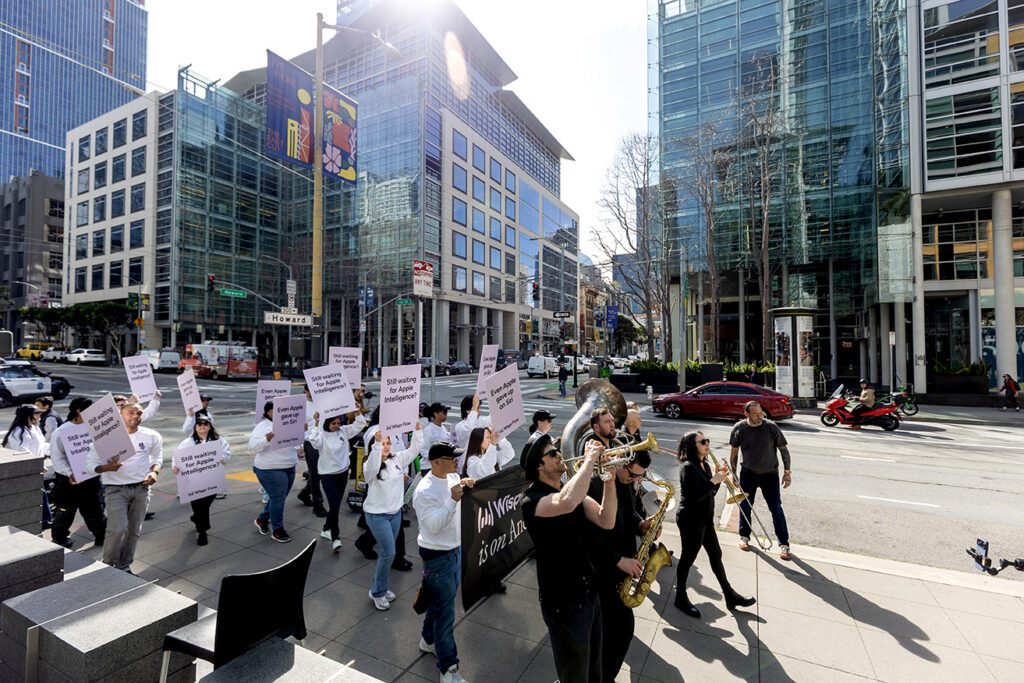
Most people who call us looking for a street marketing agency have already decided what they want. They have a deck. The deck has a photo of a wall in Brooklyn covered in identical posters, or a projection on a building at night, or a truck with a screen on it parked somewhere that looks like Los Angeles. They want that.
What they usually have not decided is where it runs, for how long, who maintains it, and what happens when half of it is gone in nine days.
That gap is the whole job. I have spent a lot of nights on sidewalks in New York, Chicago, Austin and Los Angeles with a paste bucket and a roller, and I can tell you the deck is never the hard part. The hard part is surface, timing, permission and the fact that a street is a shared space nobody controls.
This post is about where street marketing genuinely outperforms other media, and where it quietly fails. I am going to be blunt about the failures, because the failures are where agencies lose clients and clients lose faith in the channel.
I run campaigns at American Guerrilla Marketing. We do Poster Campaigns, Snipe Advertising, sidewalk decals and stencils, projection, LED Trucks and Street Teams, nationwide. Some of what follows will argue you out of a format. That is intentional.
What a street marketing agency actually does
The phrase covers a lot of ground, so let me define the work as we practice it.
A street marketing agency places physical or projected brand messaging into pedestrian environments, outside the owned-and-operated inventory that traditional out of home sells. That means construction hoarding, plywood, scaffold legs, utility boxes, loading doors, sidewalk surfaces, building facades at night, and mobile units moving through traffic.
The agency part matters more than people think. Anyone can paste a poster. What you are buying from an agency is route design, surface sourcing, permission work, crew scheduling, photo documentation, maintenance passes and removal.
In my experience, clients underestimate every one of those except the first.
A good brief gives us a product, a target audience, a window and a geography. A bad brief gives us a number of posters. If someone asks us for five hundred posters and nothing else, we will ask what you want to happen, because five hundred posters in the wrong six blocks is worth less than one hundred and twenty in the right two.
Where street marketing works
### Dense pedestrian corridors with slow foot traffic
The channel works where people walk slowly and look around. That is the entire mechanism. A poster on a construction wall on Lafayette Street in Manhattan gets read because people are ambling, window shopping, waiting at a crossing, or stuck behind a group of tourists.
The same poster on a six lane arterial in a car city is wallpaper.
Corridors I have seen consistently reward poster campaigns include lower Broadway and the stretch of Bowery around Houston in New York, Milwaukee Avenue through Wicker Park in Chicago, South Congress in Austin, Melrose and parts of Fairfax in Los Angeles, Valencia Street in San Francisco, and South Street in Philadelphia. These are not secret. They work because they combine walking pace, young audiences, a lot of eye level surface and a local culture that already reads the wall.
### Launches that need to feel like they came from the street
Street marketing is very good at manufacturing the impression that something is already happening. Music releases, streaming drops, sneaker and apparel launches, film and festival runs, app launches aimed at under thirty audiences, gallery and venue openings.
The format carries a credibility that paid digital cannot buy, precisely because it looks like it was not bought.
### Tight geographic objectives
If you need people within half a mile of one venue, street work is extremely efficient. We can build a saturation ring around a single block in a way no broadcast channel can.
I have run campaigns where the entire objective was to make four blocks around a venue feel completely taken over for ten days. That is a very achievable brief.
### Nighttime brand moments
Projection Advertising is the one format that reliably makes people stop and film. A large projected image on a blank wall, run for a few hours on a Thursday or Friday night in a district with evening foot traffic, generates more phone cameras per minute than anything else we do.
It also disappears when we turn it off, which is both its strength and its limitation.
### Moving coverage of events
LED Trucks & Mobile Billboards work when the audience is concentrated and stationary and you are not. Conference districts, stadium approaches, festival perimeters, convention centre loops. A truck circling a six block loop for six hours hits the same crowd repeatedly as they move between venues.
Where street marketing fails
### Suburban and car dominated geography
This is the most common bad brief we get. A client wants poster coverage in a metro that has almost no pedestrian surface. There is nothing to paste on, nobody walking past it, and the few surfaces that exist belong to businesses that will remove anything within a day.
We talk clients out of this constantly. If the audience is in cars, we steer to LED Trucks & Mobile Billboards or we tell them the geography is wrong for the channel.
### Campaigns that need precise measurement
Street marketing does not produce the measurement that a performance marketer expects. We document with geotagged photography, we log locations, we can report surface counts and maintained condition over time. What we cannot do is hand you a verified impression number, because nobody standing on that corner is counting.
I would rather say that plainly than invent a figure. If your approval process requires a hard reach number before sign off, this channel will frustrate you.
### Very short windows with no maintenance
A poster campaign that runs for four days and is never serviced is mostly a printing exercise. Street surfaces churn. Other material goes up over yours, weather hits, property managers clear walls, construction hoarding gets moved. Without a maintenance pass the campaign degrades from day one.
### Messaging that needs explanation
Anything requiring more than about seven words plus a brand mark does not survive the street. People are walking. They get roughly a second and a half of peripheral attention and maybe three seconds if something catches them.
We have had clients insist on putting a product feature list and a QR code on a poster. The QR code performs badly at eye level on a busy pavement because people will not stop in a stream of pedestrians to scan a wall. It performs better on Sidewalk Decals & Stencils where people are already looking down and often standing still at a crossing.
### Regulated or sensitive categories in residential areas
Some categories draw complaints fast, and complaints drive enforcement. We are careful about placement for anything that a neighbourhood association will react to. That is a judgement call we make before the brief is signed, not after.
Crew reality: what a night actually looks like
Here is the part most agency decks skip.
A standard poster install night for us runs two to four people. Two is a working minimum: one pasting, one on the bucket, roll and lookout. Four lets you split into two pairs and cover roughly double the ground.
We start late. Most installs begin between eleven at night and one in the morning, and run until around five. That is not for drama. It is because pavements are clear, parking is available, and surfaces are not blocked by delivery vans, café seating or crowds.
A pair working a dense corridor with pre-sourced surfaces will place somewhere in the range of forty to seventy sheets in a night, depending on walking distance between surfaces, whether they are building multi sheet blocks, and how much ladder work is involved.
Multi sheet blocks slow everything down. A single sheet takes well under a minute to hang once the paste is on the wall. A twelve sheet block takes a crew considerably longer because alignment matters and a crooked block looks worse than no block.
We mix our own paste. Wheat or starch based, cooked and cooled, thinned to the weather. In cold conditions it goes on thicker and grabs slower. In high humidity it stays open longer and you have more time to adjust alignment. In dry heat it skins fast and you have to work in smaller sections.
Every surface gets photographed on install. Location, time, condition. That photo set is the deliverable the client actually reads.
Surface truth: what holds and what does not
Plywood construction hoarding is the best surface in the business. It is porous, it is flat, it is usually at eye level, and it is typically controlled by one contractor you can ask.
Painted concrete and smooth block hold well. Rough brick holds poorly because the paste only contacts the high points and wind gets behind the sheet.
Anything with a sealed or glossy finish is a waste of material. Paste does not key into it. The sheet looks fine wet and curls off within two days.
Metal roll down shutters are a bad idea in both directions. They move, so the paste cracks, and they belong to a business owner who will be annoyed in the morning.
Scaffold legs and utility boxes take decal and sticker work better than paste.
Weather is the other variable. Light rain after the paste has cured is largely harmless and can even help the sheet lie flatter. Rain within the first two hours is a problem. Hard freeze during cure is a problem. Sustained wind on a large unbonded block is the single most destructive condition we deal with.
Realistic life expectancy on a well placed sheet in a good corridor is around two to four weeks before it is covered, faded or weathered enough to want replacing. In a heavily contested corridor it can be a week. In a quiet pocket it can be two months.
Anyone promising a fixed duration on a public surface is guessing.
Permission, ordinance and removal
This is a grey area, and I will not pretend otherwise.
Posting on outdoor surfaces sits in a space where rules vary by municipality, enforcement varies by district and even by month, and the governing factor is usually who owns the surface and whether they agreed.
What I can describe is how we reduce exposure.
We prioritise private surfaces with an owner or contractor who has given permission. Hoarding contractors, property managers, independent retailers and venues all control wall space and many are happy to have it used, sometimes for a courtesy arrangement, sometimes simply because a maintained poster wall looks better than a bare one.
We keep documentation. Who gave permission, for what surface, for what window.
We commit to removal. A removal pass at end of run is part of the scope, not an extra. Leaving material up after a campaign ends is how a corridor turns hostile to every crew that follows.
We avoid surfaces that are obviously sensitive: residential doors, active storefront glass, historic facades, signage, anything that interferes with sightlines or safety.
We tell clients that enforcement is inconsistent and that we cannot guarantee a surface will stay untouched. Anyone who tells you otherwise is selling certainty they do not have.
If a client needs absolute certainty of placement duration and zero exposure, the honest answer is permitted media, not street work. We will say that out loud.
What we talk clients out of
Buying volume instead of density. Spreading sheets thinly across a whole city produces nothing. Concentration in fewer corridors is what makes a campaign feel real.
Running during a holiday week. Foot traffic in commercial corridors collapses in the last week of December and around major holidays in most cities. The surfaces are the same, the audience is not there.
Using photography heavy artwork. Street posters are printed on uncoated stock and read at a glance in bad light. High contrast type and flat colour survive. Subtle photographic gradients turn to mud.
Skipping maintenance to buy more initial sheets. Every time. A smaller initial drop with two maintenance passes outperforms a larger drop with none.
Projection in a district with no evening foot traffic. Projection only works where people are out at night. A spectacular projection on an empty street is a video for your own social channels, which is a legitimate goal, but we want that stated up front.
Asking a street team to do a job a poster does better. Street Teams & Experiential is for conversation, sampling and data capture. If your goal is passive awareness, posters cover more ground.
How we scope a campaign
Scope on street work is driven by a handful of variables, none of them mysterious.
Surface count is the base unit. How many individual placements, and are they singles or blocks.
Geography drives crew time more than anything else. Walking distance between surfaces, parking availability, how far a crew drives between zones.
Run length determines how many maintenance passes are needed, and maintenance is recurring labour.
Permission work scales with how private you want the surface mix. A campaign built entirely on permissioned private walls takes more lead time and more sourcing hours than an opportunistic run.
Removal is a committed labour line at the end.
Production is separate from install. Stock weight, size, ink coverage and quantity all move it.
We walk clients through these variables before anyone talks numbers, because a surface count without a geography and a run length is meaningless.
Combining formats, which is where it gets good
The single highest performing structure I have run is a poster campaign anchoring a corridor, with an LED truck working the wider catchment on the two highest traffic evenings, and sidewalk decals at the three busiest crossings inside the ring.
The posters create the ambient sense of saturation. The truck extends reach to people who never walk that corridor. The decals catch people standing still at a light, which is the one moment pedestrians genuinely have spare attention.
If you are running a launch with a physical location attached, that combination is what I would propose.
For anything brand led with no venue, I would anchor on Wheatpasting & Poster Campaigns and add projection for one or two nights to generate the content assets your social team will want anyway.
Choosing an agency, practically
A few things I would ask anyone, including us.
Ask who physically installs. Some operators broker the work out entirely and have never seen the corridor. We install with our own crews and crews we have worked with repeatedly in each market.
Ask what documentation you get and when. Geotagged install photography within a day or two of the run is a reasonable expectation.
Ask what the maintenance schedule is and what triggers a replacement.
Ask what happens at the end of the run. If removal is not in scope, ask why.
Ask what they will not do. An operator who says yes to every geography and every format is not thinking about your campaign.
Frequently asked questions
Does a street marketing agency handle production as well as installation?
We do. Stock selection matters more than most clients expect, because street posters live outdoors on porous surfaces and get read in poor light. We specify uncoated stock that accepts paste from behind, size the sheets to the surfaces we have sourced, and build artwork guidance around high contrast type rather than fine photographic detail.
How long do posters actually stay up?
In a good corridor, a well placed sheet typically reads as fresh for roughly two to four weeks before weather, fading or other material covering it makes replacement worthwhile. Heavily contested corridors churn faster, sometimes within a week. Quieter pockets hold longer. Any fixed guarantee on a public surface is a guess, and we will not make one.
Is street poster advertising allowed?
It is a grey area. Rules vary by municipality, enforcement is inconsistent, and the decisive factor is usually surface ownership and whether permission was given. We reduce exposure by prioritising private surfaces with owner or contractor permission, documenting those agreements, avoiding sensitive locations, and committing to removal at the end of every run.
What size crew runs a typical install night?
Two to four people. Two is the working minimum, one pasting and one handling bucket, roll and lookout. Four splits into two pairs and roughly doubles ground covered. Installs usually start between eleven at night and one in the morning and finish around five, when pavements are clear and surfaces are not blocked.
Can you measure the results of a street campaign?
Not the way paid digital measures. We deliver geotagged install photography, surface logs, maintained condition reporting across the run, and removal confirmation. We do not supply verified impression counts, because nobody is counting pedestrians on that corner. If your approval process requires a hard reach figure, this channel will frustrate you.
Which cities suit street marketing best?
Dense walking cities with strong corridor culture. New York, Chicago, Los Angeles on specific stretches, San Francisco, Philadelphia, Austin, Boston, Seattle and Portland all support poster work well. Car dominated metros with little pedestrian surface are a poor fit, and in those markets we usually recommend LED Trucks & Mobile Billboards instead.
Work with us
If you have a launch, a venue, a tour or a release and you want a corridor to feel genuinely taken over, tell us the geography, the window and the audience. We will tell you honestly whether street work is the right channel, and if it is not, we will say so before you spend anything.
Request a campaign quote and we will come back with a route plan, a surface mix and a maintenance schedule rather than a stack of stock photography.

Ready to Run Your Campaign?
Call us or email us. We’ll tell you exactly what we can do in your market and what it costs.
Related Services
Explore similar advertising solutions offered by American Guerrilla Marketing.
American Guerrilla Marketing — Los Angeles
Street-level campaigns in Los Angeles and nationwide. Wheatpasting, LED trucks, street teams, and more.
(646) 776-2770
Related Articles
-
Interactive 3D Display Mode: An Honest Breakdown
November 4, 2026
-
Hanging Display Sign for a National Rollout
November 4, 2026
-
Experiential Marketing Agency: How It Actually Works
November 4, 2026
-
Birmingham Projection Advertising: How It Runs
November 4, 2026
-
Street Team Marketing: Where It Works and Where It Fails
November 4, 2026