
November 4, 2026
Experiential Marketing Agency: How It Actually Works
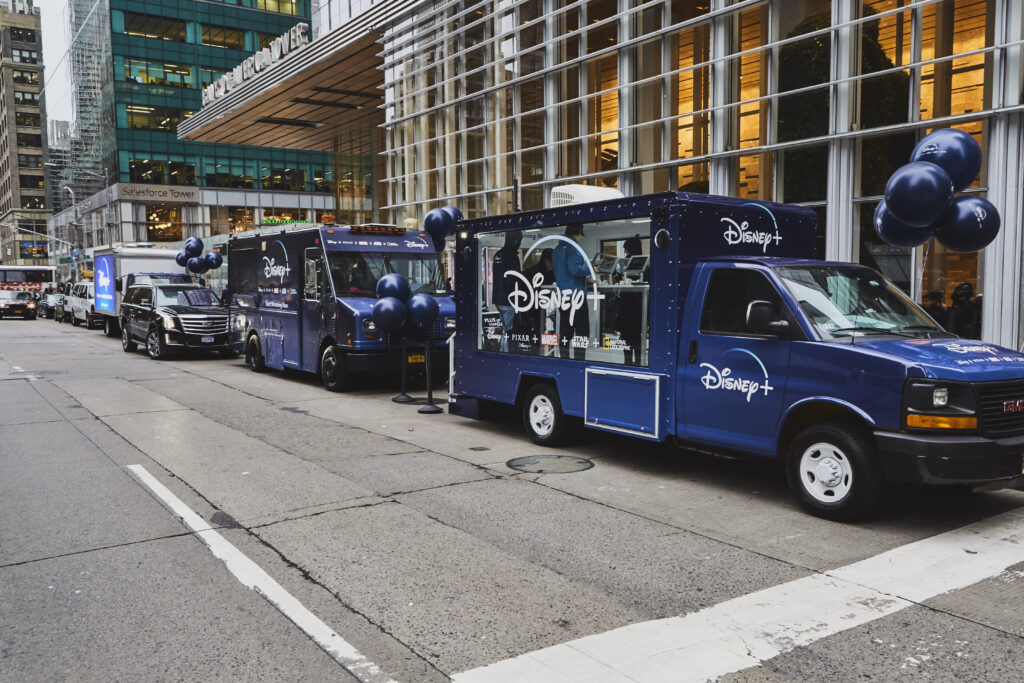
Most people who call us asking for an experiential marketing agency have already been sold a dream by a deck. The deck had a hero image of a crowd, a word like "activation" in forty-point type, and a timeline that assumed everything arrives on time and nobody gets moved along by a property manager.
I have stood on a sidewalk at 4am with a bucket of paste and a crew of four, and I have stood in a loading dock at 6am waiting for a freight elevator that the building swore would be available. Both of those mornings were experiential marketing. Only one of them looked like the deck.
This page is the operational version. What an experiential marketing agency actually does hour by hour, who is on the ground, what the street does to your plan, and where campaigns fall apart. I am not going to put numbers on anything here, because scope is what moves a campaign, not a rate card. I will tell you exactly what moves scope.
The buyer problem is almost always the same. Someone has a launch date, a region, and a vague instruction from above to "do something street level." They do not know whether they need bodies, surfaces, vehicles, light, or some combination. They do not know what gets permission and what does not. And they have been told by someone that it is all simple.
It is not simple. It is just knowable.
What an experiential marketing agency is actually responsible for
Strip away the language and the job has four parts.
First, deciding the format. That means choosing between people, printed surfaces, moving vehicles, projected light, or ground graphics. Each one reaches a different person in a different mood. A street team reaches someone who is willing to stop. A poster run reaches someone who is walking past and never stops. An LED truck reaches someone stuck in traffic who has nothing else to look at.
Second, securing the ground. Permission, property owners, building managers, event organisers, venue contacts. This is the part that eats the most calendar time and the part most buyers underestimate by a factor of three.
Third, running the install or the shift. Crew, call times, gear, routes, supervision, documentation.
Fourth, coming back for it. Removal, teardown, restoring the surface, collecting the gear, photographing the condition it was left in. Agencies that skip this part are the reason property owners stop saying yes to everybody else.
AGM does all four. The fourth one is the one I care about most, because it is the one that determines whether we can work that block again next quarter.
Street teams: the honest version of a brand ambassador shift
A street team shift looks easy from the outside. Hand people something. Smile. Go home.
Here is what it really involves. We build teams in pods, usually two to six people per corridor depending on footfall and how much the product requires explanation. A sampling shift where someone takes a sealed item and walks off moves fast, so two people can hold a busy corner. A shift where the ambassador has to explain an app, scan a code, or get a signup needs more bodies, because each conversation locks a person out of the flow for a minute or more.
Shift length matters more than people expect. We run most teams in blocks of three to four hours. Past four hours in cold or heat, energy drops and the conversations get shorter, and short conversations are what kill conversion. Two sharp shifts beat one long shift almost every time. I tell clients this before they book, and some of them do not believe me until they watch hour five.
Call times depend on the city's rhythm. Morning commuter shifts in financial districts want crew in place before the first heavy wave. Evening shifts near bar and venue corridors run late and need supervisors who are comfortable with crowds and know when to pull a team. In Manhattan we work corridors around Union Square, along Broadway in SoHo, and near the Williamsburg end of the Bedford Avenue foot traffic in Brooklyn. In Los Angeles the geography is different, because there is no single pedestrian spine. We work Abbot Kinney, the Melrose stretch, and the Hollywood Boulevard tourist corridor, and each one behaves like a separate city with its own crowd and its own hours.
Chicago Street Teams live and die by wind and by the river bridges. A team on Michigan Avenue in January is a different animal from a team on Milwaukee Avenue in Wicker Park in June. Austin concentrates hard around Congress Avenue and East Sixth, and during festival weeks the density changes so much that a plan written in a normal month becomes worthless.
Weather is not a footnote. Rain does not just reduce footfall, it changes posture. People walk faster, look down, and do not accept anything that requires a free hand. If your entire plan is sampling and the forecast turns, you need a fallback that works under an awning or inside a partner venue, or you need to move the date.
Where the ground permission actually comes from
This is the grey area, and I am going to be straight about it.
Sidewalks, plazas, transit entrances and public walkways are governed by local ordinance, and those ordinances are not consistent from one city to the next or even from one district to the next inside the same city. Some places treat handing out printed material on a public sidewalk differently from selling, differently from setting up any kind of structure, and differently again if a table, tent or amplified sound appears. Enforcement is inconsistent. One block gets no attention for a year and the next block has a business improvement district that calls somebody within ten minutes.
What I will not do is tell you something is legal or illegal. That is not my call and it varies by municipality. What I will tell you is how we reduce risk.
We work from private property wherever we can. A team standing on a plaza owned by a building, with the building's permission in writing, is on far steadier ground than a team standing on a contested public strip. We approach property owners, venue operators and event organisers directly and we get the permission on record. For printed surfaces we work construction hoarding, private walls and approved boards where the owner has agreed, not whatever happens to be flat.
We keep documentation. Call sheets, contact names, written approvals, and photographs of the site before and after. When somebody asks a crew what they are doing, the supervisor has an answer and a phone number, not a shrug.
We commit to removal. Every surface we put something on, we come back for. That is in the plan from day one, not bolted on at the end.
And we brief crews on how to behave when challenged. Nobody argues. The team moves. We document it and reassess the corridor. A corridor that pushes back twice stops being a corridor we use.
The install night, start to finish
Let me walk through a typical overnight poster install, because experiential and surface work usually share a calendar and the same crew leads.
Prep happens the day before. Paste gets mixed and left to cool and thicken. Posters get counted, sorted by site and bundled per route. Brushes, buckets, rollers, gloves, a scraper, water, bin bags and a torch go into each vehicle. Routes get printed, because phone batteries die in the cold.
The crew leaves between 1am and 2am for most city centre work. That window matters. Foot traffic is thin, parking is possible, and we are not working around people trying to get somewhere. We are usually finished and off the street before the first commuter wave.
A standard crew is two to four people. One pastes, one holds and aligns, one watches the street and handles the ladder or the access, and the lead runs the route and shoots the documentation. On tight corridors we split into two pairs and leapfrog.
A single poster on a clean, prepared, flat surface takes a couple of minutes once the crew is in rhythm. The time goes into everything around it: parking, carrying, deciding exactly where on a wall a piece sits, and dealing with the surface that is nothing like the photo somebody sent from a phone in daylight.
By sunrise the lead has a photo set, a site by site log, and a note of anything that failed or had to be skipped.
What surfaces actually do, and what fails
This is the part no deck ever covers honestly.
Smooth, sealed, non porous surfaces are the best friends we have. Clean plywood hoarding, painted metal, sealed concrete. Paste grabs, the poster lies flat, and it looks right from across the street.
Rough brick is a fight. The paper bridges across the mortar lines instead of sitting into them, so you get a textured, bubbled face and the edges lift first. It can be done, but it needs more paste, more working with the brush, and the result will never be as clean as a flat board.
Dust and grit are the real enemy, more than cold. A wall with surface dust will take a poster beautifully for about six hours and then release it in one sheet, because the paste bonded to dust rather than to the wall. We wipe or brush down anything that looks powdery.
Fresh or flaking paint is a trap. The poster holds fine and then takes the top layer of paint with it when it comes down. We avoid those surfaces entirely, which sometimes means walking away from a location a client specifically asked for.
Temperature sets a hard floor. Paste behaves badly in freezing conditions, because the water in it does what water does. Below freezing we either move the night or switch format. Heavy rain within the first few hours of an install is the other killer, because the bond has not cured and the paper takes on water and sags.
Lifespan, honestly: on a good protected surface with no weather event and no interference, a well pasted poster holds for weeks. On an exposed surface in a wet week, you are talking days. Anybody who promises you a fixed number without seeing the wall and the forecast is guessing.
Sidewalk decals behave differently again. They want clean, dry, properly cured concrete. Oil stains and loose grit kill adhesion instantly. Cold concrete does not take them well. Pressure washing or sweeping the spot first is not optional, and we build that time into the shift.
LED trucks, projection and when they beat bodies
Not every campaign should put people on a street.
LED Trucks earn their place when your audience is in cars or when you need a presence that moves between several locations in one evening. A truck circling a stadium district before a game, or holding a position on a busy avenue during the evening peak, delivers a large lit surface to people with nothing else to look at. Routes need planning against traffic, turn restrictions and where a vehicle is allowed to sit rather than roll. Sitting still on a street for long periods attracts attention of the wrong kind in many places, so most of our truck work is a loop, not a park.
Projection is the most weather dependent thing we do. It needs darkness, a usable surface, a power source or a generator, and air that is not full of rain. A wet night ruins the image and the gear hates it. Ambient light is the quiet killer: a wall that looks dark at 9pm can be washed out by a shop sign you did not notice on the site visit. We always visit at the hour we intend to run.
When a client asks me for projection in a bright, heavily lit commercial corridor in midsummer, with sunset after 8.30pm, I usually tell them the honest answer, which is that they will get a short usable window and a compromised image. That conversation loses us work sometimes. I would rather lose it there than on the night.
What we talk clients out of
A short list, from real conversations.
One city, one night, and expecting a measurable lift. Street level work builds through repetition across a corridor over weeks. A single night in a single neighbourhood produces photographs, not results. If the brief only allows one night, I will tell you the deliverable is content, and we should plan it as a content shoot, not as reach.
Covering an entire metro evenly. Spreading thin across a whole city makes the campaign invisible everywhere. Concentration in two or three corridors that your audience actually walks beats scatter every time.
Copy heavy artwork. A poster gets read in under two seconds by someone walking. Six words and a strong image will outperform a paragraph in every real world condition. Same for a truck panel moving through traffic.
QR codes as the only response path. They work when someone is standing still and warm. They fail at a bus stop in the rain and they fail entirely on a moving vehicle panel. Put a short memorable phrase in as well.
Chasing specific landmark walls. Clients send me photographs of famous corners and ask for exactly that spot. Often that surface belongs to someone who will not say yes, or it is maintained aggressively and anything goes up and comes down the same week. I would rather put your run on ten strong corridor surfaces with solid permission than one hero shot that lasts a night.
Festival week in Austin or any major convention week, booked late. Everything is contested, every surface and every crew is spoken for, and the plan you wrote in a quiet month does not survive contact. Book those windows far out or run the shoulder weeks.
Overnight projection in a residential block. Light into windows generates complaints fast, and complaints end campaigns.
How scope is actually built
Since I am not quoting numbers, here is what genuinely changes the size of a campaign. If you understand these, you can predict whether your idea is small or large without anyone telling you.
Surface count or shift count. The single biggest driver. Ten locations and a hundred locations are different animals.
Number of cities. Each city means separate crew, separate local knowledge, separate permission conversations, separate travel.
Run length. A one night install is a project. A six week programme with maintenance passes is an operation, and maintenance passes are where sustained campaigns live.
Crew size per shift. Driven by how much interaction each contact requires and how busy the corridor is.
Time of night and day of week. Overnight and weekend work costs more in crew terms than a weekday afternoon, everywhere.
Permission complexity. Private surfaces with cooperative owners move quickly. Multiple building managers, venue contracts and event organisers take weeks of calendar time before anybody touches a wall.
Production and materials. Poster stock and size, decal material and lamination, truck panel artwork, projection content. Larger formats and specialist materials take longer to produce and ship.
Removal and restoration. Always in the plan. The more surfaces you use, the bigger the return pass.
Documentation standard. A photo log of every site is standard for us. Full video capture and a produced recap is a separate production workload with its own crew.
Lead time. Rush work compresses permission and production, and compression is where quality goes.
Measuring it without pretending
I will not hand you an impressions number invented from a formula. Here is what we can actually report.
Site by site photographic documentation with locations and timestamps. Survival checks on later passes, so you know what held and what did not. Crew counts of real interactions on street team shifts, logged by shift rather than estimated. Scans and redemptions where a tracked code or unique phrase is used. Route logs for vehicle work.
What we cannot honestly give you is a precise audience figure for a wall. Anyone who does is modelling, not counting. I would rather give you a smaller set of real numbers than a big invented one.
Frequently asked questions
What does an experiential marketing agency actually do day to day?
Four things. Choose the format that fits your audience and city. Secure ground through property owners, venues and event organisers. Run the install or the staffed shift with a briefed crew. Then return for removal and documentation. The middle two get all the attention, but permission and removal are what decide whether a campaign runs smoothly.
How many people do you need on a street team shift?
Usually two to six per corridor. Simple handoffs where someone takes an item and walks on move quickly, so a small pod holds a busy corner. Anything requiring explanation, a scan or a signup locks each ambassador into longer conversations, so you need more bodies to keep pace with footfall.
Is street level advertising allowed where I want to run?
It is a grey area and it varies by municipality. Ordinances differ by city and sometimes by district, and enforcement is inconsistent. We reduce risk by working private surfaces with written owner permission, carrying documentation on site, briefing crews to move rather than argue, and committing to removal. We do not give legal advice.
How long does a wheatpasted poster last on the street?
On a clean, sealed, protected surface with no weather event, weeks. On exposed rough brick during a wet stretch, days. Surface dust is the most common cause of early failure, because the paste bonds to dust instead of the wall. Anyone quoting a fixed lifespan without seeing the surface is guessing.
What time of night do crews actually work?
Most overnight installs leave between 1am and 2am and finish before the first commuter wave. That window gives thin foot traffic and workable parking. Street team shifts follow the city instead, so commuter mornings in business districts and evenings near venue corridors, usually in blocks of three to four hours.
Which format should I choose if I only have one city?
Concentrate rather than spread. Pick two or three corridors your audience genuinely walks and run surfaces plus staffed shifts in the same footprint over several weeks. Repetition in a tight area beats thin coverage across a metro. If the schedule only allows one night, plan it as a content shoot.
Request a campaign quote
Tell us the cities, the window, and what the campaign has to achieve. We will tell you which format fits, which corridors are worth your attention, what permission will take, and what we would talk you out of before you spend anything.
If you are weighing formats, the easiest place to start is Street Teams & Experiential paired with Wheatpasting & Poster Campaigns in the same corridor. Bodies create the conversation, surfaces keep the name in front of the same people on the days the team is not there. The two together outperform either one running alone.
Request a campaign quote and we will build the scope around your corridor, not around a template.

Ready to Run Your Campaign?
Call us or email us. We’ll tell you exactly what we can do in your market and what it costs.
Related Services
Explore similar advertising solutions offered by American Guerrilla Marketing.
American Guerrilla Marketing — Los Angeles
Street-level campaigns in Los Angeles and nationwide. Wheatpasting, LED trucks, street teams, and more.
(646) 776-2770
Related Articles
-
Birmingham Projection Advertising: How It Runs
November 4, 2026
-
Street Team Marketing: Where It Works and Where It Fails
November 4, 2026
-
Projection Advertising From a Vehicle: How It Works
November 4, 2026
-
Scottsdale Projection Advertising: How It Runs
November 3, 2026
-
Pop Up Stand Up: The Operator’s View
November 3, 2026