Stadium Fan Engagement Ideas That Actually Work in 2026
Most fan engagement at stadiums is forgettable. Here is what we do instead, street-level, in-your-face, and worth photographing.
Stadium fan engagement ideas are easy to find online. Most of them are generic: digital signage upgrades, loyalty apps, photo booths in the concourse. Teams implement them, fans use them once, and the conversation ends there. We have been running street-level and venue-adjacent activations for entertainment clients for years, and the campaigns that stick are never the ones that live inside a stadium app.
The ideas that work happen where the energy already is: outside the main gates two hours before showtime, on the plaza where fans cluster before they go inside, along the approach streets where tailgating spills into sidewalks. Fan engagement is more than about what happens inside the bowl. It is about the full experience from parking lot to final whistle.
This guide covers the stadium fan engagement ideas we have actually run in the field, the formats that generate social sharing without a paid media push, and the structure we use to build activations that give fans something to talk about on the way home. We work across every major US market and a handful of international ones. These ideas come from real campaigns, not conference presentations.
The problem is not a lack of ideas. Most sports and entertainment marketing teams have more ideas than budget. The problem is placement. Fan engagement efforts get designed for the inside of the stadium, inside the concourse, inside the suites, inside the app, and that is where they stay. They miss the 90 minutes before the gate opens when fans are the most emotionally activated and the most socially connected they will be all day.
Outside Gate A at Dodger Stadium on Vin Scully Avenue, an hour before first pitch, you have 15,000 people moving through a concentrated corridor. They are in team colors, they are with their crew, they are taking photos. That is the moment. Not the between-inning activation on the video board. The moment is outside, on the street, before the experience officially starts.
We design activations that meet fans where they are. That means street teams, custom installations, sampling programs, and physical brand touchpoints that live in the plaza, the parking lot, and the approach blocks, more than on screens and apps inside the venue.
Pre-Gate Activation: The Hour Before Doors Open
The hour before gates open is the most underused window in stadium marketing. Fans are standing around, walking to the venue, or gathered at the plaza. They have nothing to do. They are looking for something to photograph or talk about. We fill that window.
Branded Street Teams on Approach Corridors
We station brand ambassadors in team gear or sponsor colors on the primary approach streets. For a game at United Center in Chicago, that means crews working the stretch of West Madison Street from Damen Avenue toward the arena. At Madison Square Garden, it means working 7th Avenue and 8th Avenue between 31st and 33rd Streets. Ambassadors hand out sponsor-branded items, stadium cups, rally towels, foam accessories, coupons for in-venue discounts, and create energy on a block that is already buzzing.
Street teams at this moment are more than distributing product. They are also gathering crowd footage, encouraging user-generated content by prompting fans to share with a specific hashtag, and directing foot traffic toward activation stations set up nearby. A good street team captain knows how to read the crowd energy and adjust their crew’s behavior to match it.
Custom Stencil Art on Plaza Pavement
Stadium plazas are often large, flat, and underutilized from a visual standpoint. We have placed custom chalk stencil artwork on plaza pavement before major games, team logos, player silhouettes, sponsor messages, countdown graphics, that give fans a natural photo backdrop before they enter. At a playoff game at Fenway Park, the brick-and-concrete approach on Yawkey Way becomes a natural canvas. At a Lakers game, the plaza in front of Crypto.com Arena has enough horizontal space for several large-scale stencil installations that fans have to walk through to reach the gate.
The geometry works in your favor. Fans are walking toward the venue with their phones out anyway. A bold stencil graphic on the pavement at the exact spot where they stop to take a selfie of the stadium facade gets into almost every photo taken at that location. It is passive but effective.
Sponsor Sampling Stations
Sponsor sampling activations outside the gate are almost always more effective than the same activation inside the concourse. Outside, fans have time. They are not rushing to their seats, they are not in line for a beer, they have a few minutes to interact with a brand. We have run sampling programs for beverage brands, snack companies, and technology sponsors in the approach zone at multiple venues. The keys are a visible footprint, a fast interaction that does not require a long commitment from the fan, and a leave-behind that makes it into the stadium with them.
Stadium Fan Engagement Ideas by Category
Not all engagement formats work for all venue types and all fan demographics. Here is a breakdown of the main formats we use and where each one fits best.
Branded Photo Installations: The Fan Engagement Format That Keeps Giving
A well-built photo installation outside a stadium generates fan content for the entire season. We have built custom photo walls, branded step-and-repeat structures, and freestanding installation pieces for teams and sponsors that get used in thousands of fan photos over the course of a full season. The math on these is compelling: a $4,000 branded installation that generates 3,000 tagged social media photos over the course of a season is producing exposures at a fraction of what a paid social campaign would cost to achieve the same reach.
The design has to look intentional and interesting. Generic step-and-repeat walls covered in sponsor logos perform poorly because fans do not want to look like they are posing at a sponsor activation. They want to look like they found something cool. The best photo installations we have built look more like public art than advertising. They incorporate the team’s visual identity in a way that feels aspirational rather than transactional, and they give fans a sense that the photo is theirs to own, not the brand’s.
For a sponsor activation at a soccer stadium, we designed a giant illuminated logo structure that read as street art from the outside but carried sponsor branding on the interior facing surfaces, visible in every photo without being the dominant visual element in the frame. Fans photographed themselves in front of what looked like team art. The sponsor logo showed up in the background of 80% of the photos. That balance is the goal.
Field note: The best photo installations we have built are the ones fans would photograph even if there were no brand involved. Start with something visually interesting, then work the brand into it. Never start with the brand and try to make it interesting. That order matters more than any other single design decision.
Post-Game Engagement: The Window Nobody Uses
Post-game is the least activated window in stadium marketing. Everyone packs up after the final whistle or buzzer and the fans are on their own for the walk back to transit and parking. That is a missed opportunity.
A post-game street team deployment on the exit routes can hand off sponsor product samples, deliver coupons for a sponsor restaurant or bar on the drive home, or distribute giveaway items that were not available at the pre-game activation. The crowd is emotionally high after a win (and emotionally charged after a loss, which creates its own engagement dynamic). They are walking in clusters, moving slower than they arrived, and still on their phones.
We have run post-game deployments on Flatbush Avenue outside Barclays Center after Brooklyn Nets games, on Mission Street outside Chase Center after Warriors games, and on Wacker Drive after Cubs games at Wrigley Field. The approach: two to four brand ambassadors per exit corridor, each carrying a portable bag or branded cart, making direct contact with exiting fans over a 30-to-45-minute window. Conversion rates on sampling are high in this window because fans are in a good mood and are looking for the experience to continue rather than end.
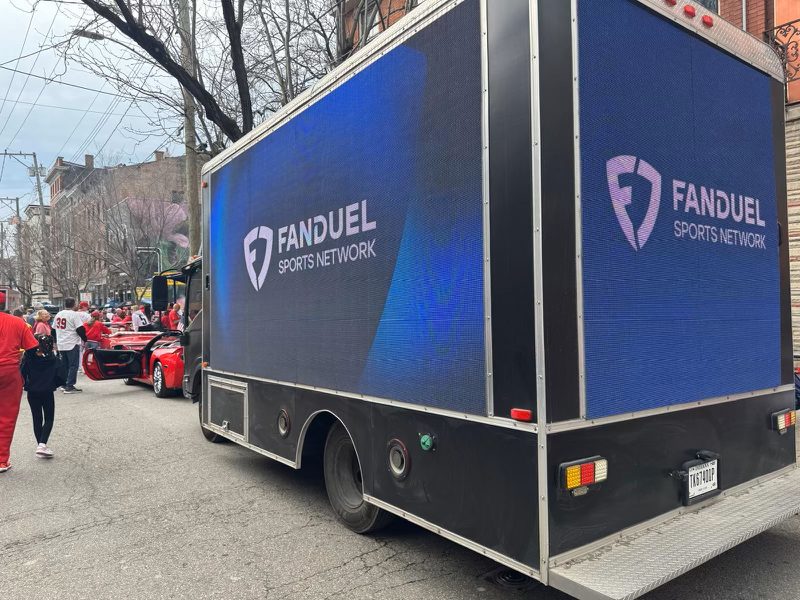
LED Truck Presence After the Game
An LED billboard truck parked on the primary post-game exit corridor delivers a sponsor message to the full exiting crowd. We have used this format for advertiser clients at NFL games, NBA playoff games, and large concert events. The truck positions 100 to 200 yards from the gate on the most-trafficked exit street, runs a looping sponsor message in bright animated display, and captures the organic attention of fans who are walking directly toward it. For events that draw 15,000 or more attendees, a two-hour post-game deployment on the right street corner delivers more eyeballs per dollar than most digital out-of-home placements in the same market.
Multi-Game and Full-Season Engagement Programs
Single-game activations are effective. Full-season programs are significant. A sponsor that activates at every home game, consistently, with the same brand presence in the same location, becomes part of the fan experience in a way that cannot be achieved with a one-time splash.
We have run multi-game programs for brands that wanted to build deep association with a team’s home game experience. The structure: a fixed activation location, always the same spot, always the same brand footprint, staffed at every home game by a consistent street team. Fans start to expect it. They tell their friends about it. It becomes a ritual rather than an interruption. By mid-season, fans are walking past the activation point and engaging unprompted because it is part of how they experience going to the game.
This approach requires commitment from the brand side, typically a minimum of 10 game dates for the association to form, but the value compounds over time in a way that individual game activations cannot replicate. The brand stops being “the sponsor” and starts being part of the matchday ritual.
Poster and Flyer Campaigns Around the Venue Neighborhood
For music and entertainment events at stadiums and arenas, a poster campaign in the surrounding neighborhood in the week before the show creates atmosphere. We place posters in the bars, cafes, and retail shops closest to the venue. On the blocks that fans will walk through to reach the arena. In the transit stations they will exit from. A well-placed poster campaign in the days before a sold-out show creates the feeling that the whole neighborhood is participating in the event, more than the venue block.
Activation tip: If you are running a street-level fan engagement campaign near a stadium, scout the venue on a non-game day first. Walk the approach routes. Identify where foot traffic clusters, where fans stop to photograph the stadium, and where the primary transit exits land. That reconnaissance changes your deployment plan more than any other planning step.
Digital Integration: Getting Fan Content Off the Street and Online
Street-level fan engagement generates physical moments. The goal is to turn those physical moments into digital content that extends the campaign’s reach. We build digital integration into every field campaign from the start.
The mechanism is always simple. A branded hashtag on every piece of team gear our ambassadors wear. A hashtag printed on the stencil installation in the plaza. A hashtag callout from the ambassador crew when a fan is photographing our installation. A hashtag on every giveaway item that makes it into the stadium. The hashtag is the bridge between the physical moment and the digital record of it.
When campaigns are running at scale, multiple cities, multiple game dates, multiple activation formats, we track hashtag performance and share it with the client team in weekly reports. We look at post volume, engagement rate on tagged posts, organic reach, and whether brand advocates are emerging from the fan base, fans who are posting repeatedly about the activation and amplifying it within their own networks.
Stadium Fan Engagement Ideas for Specific Venue Types
NFL Stadiums
NFL games draw the largest crowds of any North American team sport. The pre-game parking lot environment, tailgating culture, is a venue in itself. Sponsor activations in the tailgate zone, either as pop-up tents or mobile tour units, can reach fans who arrive three to four hours before kickoff. The challenge is the scale: a 70,000-seat stadium spreads fans across a large geographic area before the game. We prioritize the highest-density pedestrian corridors closest to the primary gate for street-level work.
NBA and NHL Arenas
Indoor arenas with capacities in the 18,000 to 21,000 range are our most common stadium engagement environment. The approach to an NBA arena in an urban setting is typically concentrated: fans converge on a small number of approach streets from transit stations. At Madison Square Garden, the pedestrian approach from Penn Station funnels most of the crowd through a narrow corridor. That concentration is an advantage. A small number of street team members in the right position can reach a very high percentage of the arriving crowd.
Concert Events at Stadiums and Amphitheaters
Concert audiences differ from sports fans in their receptivity to brand engagement. A sports crowd is already tribal and competitive, they are primed for activation. A concert crowd is often more relaxed and social in a different way. They are there for an experience, not a competition. Sponsor activations at concerts need to feel more experiential and less promotional. The approach that works: immersive photo moments, product sampling that feels like a gift rather than a pitch, and brand presence that enhances the pre-show atmosphere rather than interrupting it.
Measuring Stadium Fan Engagement
Fan engagement campaigns are measurable when they are built with measurement in mind. We track the following metrics across every campaign we run:
Brand ambassador contact count (direct fan interactions per deployment)
Samples distributed or giveaways handed off
Hashtag post volume during and after each game date
Social reach on tagged fan content
Photo installation engagement (photo count estimates from on-site observation)
Coupon or offer redemption rates if a promotional mechanic is included
The most important thing we tell clients before a campaign starts is to define success in advance. Know what you are measuring before the first deployment. Otherwise you are evaluating the campaign against a moving standard, which makes it impossible to judge whether the investment worked.
Frequently Asked Questions
What is the best stadium fan engagement idea for a limited budget?
Street teams are the highest-ROI engagement format at any budget level.
How far in advance do we need to plan a stadium fan engagement activation?
For a single-game activation, three to four weeks is enough lead time.
Can we run fan engagement activations on public sidewalks near a stadium?
Public sidewalk activations are the core of what we do.