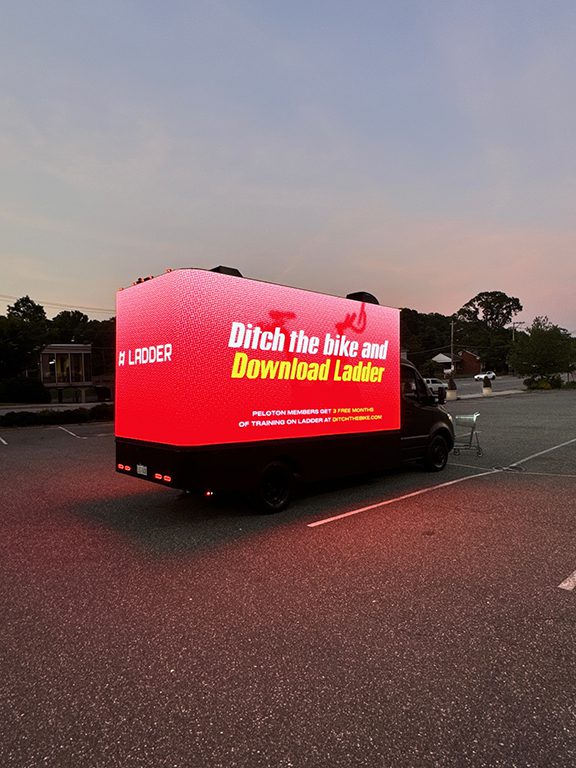
The most effective roadshow marketing programs are not the most elaborate ones — they are the ones with the sharpest strategic logic connecting format, route, and brand story to specific business objectives.
Roadshow marketing takes many forms across different categories, brands, and campaign objectives. The examples that are most instructive are not the ones with the largest budgets or the most elaborate vehicles — they are the ones where the strategic logic is clearest and the execution quality is highest. A $60,000 regional roadshow with a well-branded sprinter van and a sharp team can outperform a $300,000 tour with a spectacular custom vehicle and mediocre field execution, because the consumer encounter quality is what drives results, not the vehicle specification.
The examples and format patterns described in this article are drawn from the categories and approaches where roadshow marketing consistently generates strong results. They illustrate the range of what is possible and the strategic decisions that determine which format is right for which brand and which campaign objective.
Beverage Brand Roadshow: Functional and Premium Categories
Functional beverage brands — energy, hydration, recovery, focus, and related categories — have made roadshow marketing a core go-to-market approach, particularly for product launches and new market expansion. The roadshow format works especially well in this category because the most powerful purchase driver is taste experience, and getting a cold product sample into a consumer’s hands at the moment when the product’s benefit is most relevant — after a workout, during a commute, at a point in the day when the function the beverage provides (energy, calm, focus) is actually needed — delivers the ideal trial context.
The Vehicle Format
Most functional beverage roadshows use a branded step van or cargo truck with refrigeration capacity and a service window. The vehicle needs to keep product cold throughout the day across multiple stop locations. The service window creates a clear consumer interface — the brand is here, you approach the window, you receive a cold sample, you engage with the staff member behind the window. This format is simple, operationally reliable, and visually distinctive enough to attract attention in most environments.
The Routing Logic
Routing for a functional beverage roadshow is built around contexts where the product’s functional benefit is most relevant and most credible. For a performance recovery drink, that means: outside gyms and fitness centers during morning training hours, near sports fields and running paths on weekend mornings, at farmers markets where health-conscious consumers are already in a wellness mindset. For a focus or cognitive beverage, that means office districts during morning commute hours, near universities and coworking spaces, and at events that attract professional and entrepreneurial audiences.
The route should follow the brand’s retail distribution footprint closely enough that consumers who trial the product on Tuesday can walk into a retail location on Thursday and find it available. Generating trial in markets where the product is not yet on shelf is less efficient than activating in markets where the retail purchase conversion opportunity exists immediately after the trial encounter.
A Typical Routing Example: Northeast Launch Tour
A brand launching into natural and specialty grocery distribution in the Northeast might structure a six-city, four-week roadshow as follows: New York City (one week: Williamsburg and Midtown stops on weekdays, outdoor market stops on weekends), Boston (three days: Back Bay, Harvard Square, South End), Philadelphia (two days: Rittenhouse Square, Fishtown), Washington DC (two days: Georgetown, DuPont Circle, Capitol Hill area), and two additional markets based on distribution density. The vehicle routes within each city to locations pre-scouted for high foot traffic from the target health-conscious consumer demographic, with schedule structured around morning hours when the product’s functional benefits are most relevant.
Beauty and personal care brands have developed a distinctive roadshow format centered on service experiences rather than product sampling. The service experience tour typically uses a converted trailer or large vehicle with a designed interior that can accommodate one to four service stations — spaces where a trained beauty professional can offer shade matching, skin analysis, mini facial treatment, or other personalized beauty service to the consumer who visits the vehicle.
Why the Service Format Works
In the beauty category, trust is the primary purchase barrier. A consumer who is considering switching to a new skincare or makeup product needs to trust that the product is right for their specific skin type, tone, and concerns. A brand ambassador who can provide that personalized assessment — based on actual observation of the consumer’s skin, not just a generic product recommendation — creates the trust that enables purchase. The service experience converts skeptical shoppers at dramatically higher rates than standard sampling because it removes the uncertainty that prevents trial.
The Vehicle Build
A beauty service roadshow vehicle is significantly more elaborate than a sampling truck. The interior needs to be designed to create a private and professional service environment: good lighting for accurate color assessment, comfortable seating, clean work surfaces, adequate mirror placement, and storage for the service tools and products needed for the service menu. The exterior needs to communicate premium brand positioning strongly — this vehicle is representing the brand’s quality and aesthetic standards before anyone enters it.
The Market Selection Logic
Beauty service roadshows target markets with both strong target consumer presence and strong retail distribution for the brand. The activation generates the consumer relationship and the purchase intent. The retail partner nearby closes the sale. For premium beauty brands distributed through Sephora, Ulta, and independent specialty beauty retailers, coordinating activation locations to be adjacent to or near those partner retail locations maximizes the immediate purchase conversion opportunity from the service encounter.
The beauty service roadshow is one of the highest cost-per-interaction formats in experiential marketing — and consistently one of the highest trial-to-purchase conversion rates. The economics work because the interactions it creates are with exactly the right consumers in exactly the right mindset.
Food Brand Roadshow: Sampling Aligned with Distribution
Food brand roadshows are built around the combination of taste experience and retail proximity. A food product’s strongest marketing asset is the product itself — if someone tastes it and enjoys it, the purchase decision is as close to made as it can be without actually being at the cash register. The roadshow’s job is to create as many of those taste moments as possible with consumers who are close to a retail location where the product can be immediately purchased.
The most effective food brand roadshow vehicles have a preparation capability — the ability to serve the product in the way it is actually meant to be consumed rather than just distributing pre-portioned samples. A sauce brand that can show its product being prepared and served on the truck, rather than just handing out small cups of room-temperature sauce, delivers a dramatically better representation of the product’s quality. That preparation quality matters for brand activation roadshows in a way it matters less for pure awareness campaigns.
Tech and Consumer Electronics: Demo-Focused Roadshows
Consumer tech and electronics brands use roadshow marketing primarily for product demonstration rather than sampling. The goal is to get a consumer to actually use or experience the product — hold it, operate it, hear it, wear it — in a hands-on demo environment. The vehicle serves as a mobile demo center that delivers the in-store demo experience in locations and contexts where the target consumer is present but has not necessarily gone looking for the product.
Tech roadshows work particularly well for products where the in-store demo experience is poor — the product is in sealed packaging, the demo units are locked down and not operational, or the retail staff do not have deep enough product knowledge to guide the experience effectively. A mobile demo environment owned and operated by the brand, with staff selected specifically for product knowledge and demo delivery skill, consistently outperforms the typical retail floor demo experience for these products.
Roadshow Format Comparison by Category
Category
Vehicle Format
Primary Activation Type
Routing Logic
Functional Beverage
Refrigerated step van
Cold sampling in context
Gyms, parks, health corridors
Premium Beauty
Converted trailer
Service experience
Near retail partners; lifestyle neighborhoods
Natural Food
Step van or sprinter
Prepared product sampling
Natural grocery adjacencies; markets
Consumer Tech
Box truck or trailer demo unit
Hands-on demo
High-income urban areas; near retail partners
Apparel / Lifestyle
Custom or vintage vehicle
Limited drop; brand experience
Cultural neighborhoods; events
What the Best Roadshow Examples Have in Common
Looking across effective roadshow marketing programs, several consistent characteristics distinguish the ones that deliver strong results from those that generate activity without proportionate impact.
The route is built from audience data, not intuition. Every stop location was chosen because the right consumer is there at the right density at the right time, not because the location is convenient or well-known.
The vehicle format matches what the activation actually needs to do. A brand that needs to create a service experience does not use a sprinter van. A brand that needs to sample at high volume in many locations does not use a trailer that requires significant setup time.
The team is excellent and gets better over time. The traveling team that has been running the activation for three weeks in the fifth city knows things about how to engage consumers, position the vehicle, and adapt the interaction that the same team did not know in the first city. That accumulated learning is a competitive advantage that only the roadshow format generates.
The content strategy was built before departure. Every stop generates content, and that content has a plan: which platforms, which content types, what advance announcement format, how to engage user-generated posts, how to maintain posting cadence even on logistically intense days.
Regional vs. National Roadshow Marketing: Choosing the Right Scale
One of the most consequential decisions in roadshow marketing planning is determining the appropriate geographic scope for the program: a focused regional circuit covering four to eight cities in a defined geography, or a national program covering twelve or more markets across the country. The right scope depends on the brand’s distribution footprint, its financial capacity, and what specifically it needs the roadshow to accomplish.
Regional roadshows are appropriate for brands with regional distribution that want to build concentrated market presence in their existing footprint, for brands testing the roadshow format before committing to national programs, and for brands whose target consumers are geographically concentrated in a specific region. A Pacific Coast brand targeting the outdoor lifestyle consumer in California, Oregon, and Washington can achieve deeper market penetration with a focused West Coast roadshow than with the same budget spread across a national program that allocates only two days per city.
National roadshows are appropriate for brands with established national retail distribution that need consumer awareness support across their full distribution footprint, for product launches targeting a broad national audience, and for brands that have already demonstrated the roadshow format’s effectiveness in regional programs and are scaling the model. National programs require more sophisticated logistics, larger teams, and higher total investment, but they generate proportionally broader market impact.
The Mid-Tier Markets Case
A common mistake in roadshow planning is building a route that covers only the largest tier-1 markets — New York, Los Angeles, Chicago, Miami, maybe Austin — and skipping the tier-2 cities where the brand may actually have higher potential relative to current penetration. Markets like Denver, Seattle, Nashville, Raleigh, Minneapolis, and Salt Lake City consistently deliver strong results for brands with the right product-market fit because the competition for consumer attention is lower and the audience-to-brand alignment in these markets is often as strong as in the larger cities.
Brands that include two or three mid-tier markets in their roadshow route alongside the tier-1 anchors often find those mid-tier stops generate better per-event performance metrics than the larger markets, because the novelty of the activation is higher in cities where the consumer has fewer branded experience touchpoints competing for their attention. The mid-tier market stop that generates genuine excitement and strong social content can outperform a routine tier-1 market stop on almost every performance metric.
The Pre-Launch Window: Building Anticipation
One of the most underutilized opportunities in roadshow marketing is the pre-launch announcement window — the period before the vehicle rolls when the brand can build anticipation and audience for the tour through social content and outreach. Brands that use this window effectively arrive in each city with an audience already primed to attend, creating the lines and the crowd energy that make the activation photos and videos worth sharing.
Pre-launch content can include: teaser posts announcing the tour without specific city information (“We’re going on the road — where do you want us to bring [product]?”), city reveals done sequentially with supporting content that introduces each market’s cultural context, behind-the-scenes vehicle build content that shows the team preparing for the tour and creates investment in the process before it starts, and countdown-to-launch posts that create anticipation in the days leading up to each city’s activation date.
The engagement generated by pre-launch content serves multiple functions. It builds the social following that will amplify each city’s content when it is posted. It generates qualified audience attendance at each stop from consumers who are already interested in the brand. And it creates a trackable measure of market-by-market interest before the tour arrives — the cities that generate the most engagement on pre-launch content are the cities where the brand’s audience is most active and most likely to attend, which can inform final routing decisions and day-of logistics preparations.
Agency Selection and Program Management
The agency that manages your brand activation program is one of the most consequential choices in the entire program lifecycle. The difference between an agency that brings genuine strategic thinking and operational discipline to the work versus one that focuses primarily on winning the pitch and delivering adequate execution is the difference between a program that generates measurable business results and one that generates activity metrics and beautiful photos but limited commercial impact.
When evaluating agencies for any activation program, the critical questions are not about creative portfolio quality — it is relatively easy to find agencies with impressive portfolios. The critical questions are about operational infrastructure and measurement rigor. What does their field execution look like in practice? How do they recruit and train staff? What does their reporting cover, and does it include honest performance assessment alongside positive highlights? What is their track record on programs comparable in scope and category to yours?
The answers to these questions reveal the operational reality behind the portfolio. Agencies with genuine field execution infrastructure answer operational questions specifically, with reference to actual processes and actual program experiences. Agencies that are primarily creative shops become vague when the conversation moves from concept to execution, from pitch to delivery, from what the activation will look like to how it will actually be staffed, routed, and measured in the field.
Building the Right Program Budget
Budget allocation across a brand activation program involves decisions about where to concentrate investment for maximum impact. The common mistake is over-allocating to visual production and under-allocating to the elements that actually determine consumer encounter quality: staff recruitment and training, location scouting and research, data capture infrastructure, and measurement design.
A rough budget allocation framework for well-performing activation programs looks something like this: 25 to 35 percent on staffing (recruitment, training, daily rates, field management), 20 to 30 percent on production (vehicle or installation, branded materials, equipment), 15 to 20 percent on logistics (routing, permits, inventory, transportation), 10 to 15 percent on agency management fees, and 5 to 10 percent on measurement and reporting. Programs that allocate significantly differently from this framework — particularly those that allocate most of the budget to production and little to staffing and measurement — consistently underperform relative to their investment level.
The Consumer Psychology Behind Effective Activations
Understanding why activations work requires a basic familiarity with the consumer psychology principles that explain why direct physical encounters create different and more durable brand relationships than media exposure. These principles are not speculative — they are grounded in well-established research on human memory, decision-making, and trust formation.
Physical experience creates episodic memory. Episodic memory — memories of specific events and experiences — encodes differently and more durably than semantic memory — memory of facts and information. When a consumer samples a product from a branded truck and has a positive experience, they form an episodic memory of that event: the place, the time, the sensory experience, the conversation with the brand ambassador. That episodic memory is more likely to surface when the consumer is in a purchase context than the semantic memory of having seen an advertisement for the same product.
Direct experience creates product certainty. For most consumer products, the primary barrier to initial purchase is uncertainty about whether the product will meet expectations. Advertising reduces this uncertainty by providing information and social proof, but it cannot eliminate it entirely because the consumer has not personally experienced the product. Direct trial eliminates the uncertainty by providing the experience itself. A consumer who has tasted a food product and liked it has eliminated the primary barrier to purchase for that product. That elimination of uncertainty is the most direct and most effective conversion mechanism available in consumer marketing.
Human interaction creates trust. Consumers are naturally more skeptical of brand communication — which they correctly understand as self-interested — than of human-to-human communication. A brand ambassador who makes a genuine recommendation, answers questions honestly (including honest answers about what the product is not best suited for), and engages as a person rather than as a corporate voice creates a trust relationship that advertising cannot replicate. The interpersonal trust created through a high-quality activation encounter is one of the most valuable outcomes the activation generates.
The Role of the Environment in Activation Effectiveness
The physical environment where an activation takes place is not a neutral backdrop — it actively shapes how consumers perceive and respond to the brand encounter. A brand activation in a context that feels culturally aligned with the brand’s identity creates a positive amplification effect: the environment endorses the brand’s positioning by association. A brand activation in a context that feels culturally misaligned creates a dissonance that reduces the effectiveness of even excellent execution.
Environmental effects operate at multiple levels. At the market level, some cities have cultures that are more receptive to brand activations in general — more comfortable with street-level consumer engagement, more oriented toward discovery of new brands, more attuned to the aesthetic quality that distinguishes a well-executed activation from a generic one. At the neighborhood level, different areas within a city have distinct cultural characters that resonate differently with different brands. At the specific location level, the particular qualities of a specific spot — its sight lines, its traffic patterns, its relationship to surrounding retail and amenities — determine its performance as an activation venue.
Investing in location intelligence — building the knowledge of which specific environments resonate with which specific brands for which specific campaign objectives — is one of the most consistently impactful investments a brand can make in its activation program quality. This knowledge is built primarily through field experience: running programs in different locations and measuring the performance differences. It is also built through systematic pre-scouting and analysis before programs launch. Both approaches contribute to the location intelligence that enables brands to place their activation programs in environments that amplify rather than undermine their brand encounters.
Working with AGM on Your Activation Program
American Guerrilla Marketing designs, produces, and manages brand activation programs across all major U.S. markets. Our work spans pop-up events, mobile truck programs, retail activation campaigns, roadshow tours, sponsorship activations, and custom experiential installations. We have operated in New York City since the company’s founding and have built the field infrastructure, retailer relationships, and staff networks that make activation programs work reliably across the markets our clients need to reach.
Our process starts with understanding the specific business objective the activation program needs to achieve. We do not accept generic objectives. We ask: what specifically needs to happen in the consumer’s mind or behavior as a result of this program? Who is the specific consumer? Where are they? When are they most receptive? What encounter design will create the behavior change the brand needs? Those answers determine the program design, not the other way around.
Our production approach prioritizes execution quality over visual elaborateness. We have consistently found that a well-positioned activation with excellent staff and a quality consumer interaction delivers more commercial value than an elaborate production with mediocre execution. We invest the budget where it generates the most value in the consumer encounter, not where it photographs best in a portfolio.
Our reporting tells clients what actually happened in the field: interaction counts, product distributed, data captured, content generated, and an honest assessment of what worked and what would be done differently. We do not produce reports designed to justify the agency’s continued engagement. We produce reports designed to help clients make better decisions about how to invest in subsequent programs.
Every activation program we manage is covered by comprehensive field documentation: daily field reports during the program, photo documentation from every activation stop, and a post-program analysis that covers performance by location and market, staff observations, and specific recommendations for subsequent program cycles. Clients who engage with this reporting seriously run consistently better programs over time because the learning compounds.
We work with brands across food, beverage, beauty, personal care, technology, and lifestyle categories. We work with emerging brands that are building their consumer base from scratch and with established brands that are defending market position or expanding into new geographies. The strategic challenges are different at each stage, but the core operational principles — field execution quality, location intelligence, staff investment, measurement rigor — apply at every scale.
If you have a specific activation objective and you are trying to determine whether there is a program format and approach that can help you achieve it effectively and efficiently, we are worth a conversation. We will tell you honestly what we think will work and what we think will not, and we will give you a specific program recommendation that reflects our genuine assessment of what will produce the results you need.
Frequently Asked Questions
What are typical roadshow marketing examples by category?
Beverage brands use mobile sampling trucks and refrigerated step vans routed through gym-adjacent, park, and specialty retail locations. Beauty brands use converted trailers for service experiences traveling to key markets. Tech brands use mobile demo units to tour trade corridors and retail partner locations. Food brands use sampling trucks aligned with natural grocery distribution.
How do beverage brands typically structure roadshow marketing?
Beverage brand roadshows typically use a branded step van or truck with cold product sampling capability, routed through locations where the target consumer is in a high-receptivity context: gyms, parks, yoga studios, running events, farmers markets, and specialty grocery adjacencies. The route typically follows the brand’s distribution footprint to support retail sales conversion.
What makes a roadshow marketing campaign generate strong social content?
City-specific cultural moments (the vehicle photographed against an iconic location), genuine consumer reaction captures (people tasting and responding authentically), behind-the-scenes travel content (the vehicle on the road, the team in different cities), and pre-stop announcement posts that generate engagement before the vehicle arrives all contribute to strong roadshow social content.
Can a small or emerging brand afford roadshow marketing?
Yes, by using a modest vehicle format (sprinter van rather than custom trailer), limiting the tour to a focused regional route (four to six cities), and keeping staffing lean (two to three people). A well-planned regional roadshow with a sprinter van and small crew can be executed for $40,000 to $80,000 all-in and generate meaningful consumer encounters across several key markets.