Shopper Marketing Activations: Strategy and Execution at the Point of Purchase | American Guerrilla Marketing
Shopper marketing activations meet consumers at every stage of the decision process — from the moment before they enter a store to the moment after their first purchase — and each touchpoint makes the next one more effective.
The path to purchase is not a single moment — it is a sequence of decision points that begins before the shopper enters a store and extends through their first use of the product and beyond. Shopper marketing activations can influence this path at multiple stages: building pre-store brand awareness that primes the shopper for the in-store encounter, creating the in-store trial moment that converts consideration to purchase, and establishing the post-purchase relationship that turns a one-time buyer into a repeat customer.
Most brands activate only one point on this path — usually the in-store sampling moment. That single-point approach leaves significant conversion opportunity unrealized. The shopper who tries a product at an in-store sampling station and has a positive experience, but was not primed by any prior brand awareness, processes that encounter differently than a shopper who has already heard about the brand, seen it online, or encountered it near the store entrance before walking in. The prior awareness makes the in-store encounter confirmation rather than introduction, which is a more efficient path to purchase decision.
Building shopper marketing activations that work across the full path to purchase — not just at the point-of-sale sampling moment — is a more complex program design but consistently delivers better conversion economics over the full program lifecycle.
Pre-store activation creates brand awareness and purchase intent before the shopper enters the retail environment. Formats include: street-level sampling or brand events near the retail location that prime the consumer before the store visit; mobile truck activations in the neighborhoods near retail partners; geo-targeted digital advertising reaching consumers within a specific radius of the retail location; poster campaigns in the immediate vicinity of key retail locations; and community events or sampling programs at locations where the target consumer spends time before their retail shopping occasion.
Pre-store activation primes the shopper’s mental availability for the brand at the exact moment when they are about to make a purchase decision in the relevant category. A consumer who encountered a beverage brand’s truck in the park on Saturday morning, tried the product, and has a positive association with it, walks into the grocery store on Sunday and encounters the brand on the shelf with a different predisposition than a consumer encountering the brand for the first time at the shelf. The pre-store encounter made the shelf encounter familiar and positive before the purchase decision was being made.
Stage 2: In-Store Activation
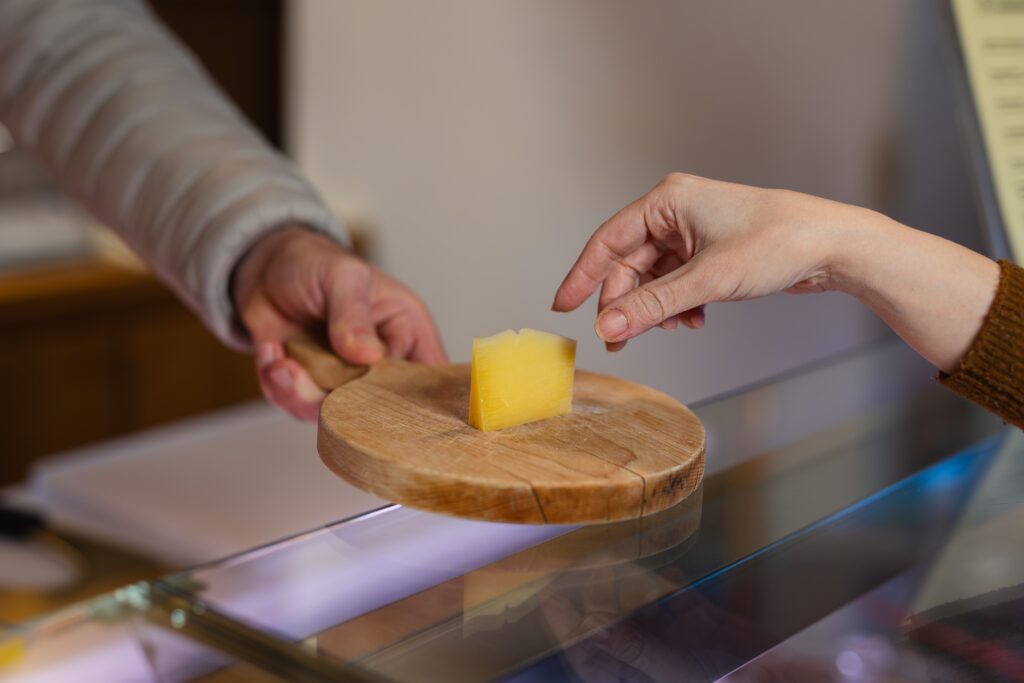
In-store activation is the core of most shopper marketing programs — the moment when a brand ambassador at or near the product’s shelf position engages the shopper directly, offers a sample or demonstration, tells the brand story, and directs the shopper toward the purchase decision. The quality of this moment is determined almost entirely by the quality of the brand ambassador delivering it.
The in-store activation moment works best when several conditions are in place simultaneously: the ambassador is positioned at or immediately adjacent to the product on the shelf; the sample genuinely represents the product at its best; the ambassador initiates the interaction proactively rather than waiting passively; the ambassador’s knowledge of the product allows them to answer real questions confidently; and there is a clear, low-friction call to action toward the purchase decision (pointing to the shelf, offering a first-purchase incentive, or both).
When these conditions are met, in-store activation consistently generates significant sales lift relative to non-activation periods in the same stores. When they are not — when the ambassador is passive, undertrained, positioned away from the shelf, or the sample is a poor representation of the product — the lift is minimal and the cost of the program is not justified by the results.
Stage 3: Post-Purchase Activation
Post-purchase activation captures the consumer relationship that the trial moment created and continues it through direct marketing communication. This requires data capture at the activation — an email address, a phone number, a social follow — that creates the channel for ongoing communication.
The post-purchase sequence matters as much as the initial capture. A follow-up email that arrives within 48 hours of the trial interaction, references the activation context, and provides useful information about the product (a recipe, a usage guide, a loyalty program invitation) reinforces the positive initial experience and increases the probability of a first purchase or a repeat purchase among consumers who bought on the spot. A generic promotional email arriving a week later with no reference to the activation encounter does less to build on the relationship the trial moment created.
The brands that get the most out of shopper marketing activations are the ones that treat every consumer interaction as the beginning of a relationship, not a transaction. The sampling moment is the opening. What happens in the 30 days after is the relationship.
Shopper Marketing Activation Program Design
Designing a shopper marketing activation program that operates across multiple stages of the path to purchase requires coordinating several elements that most single-format activation programs do not address together.
Audience mapping: Define the target consumer with enough specificity to make location and timing decisions across all stages of the program. Not just demographics but behavior: where do they shop, what times, how often, what other brands do they buy? The more specific the audience map, the better the activation touchpoints can be aligned to where that consumer actually is at each stage of their path to purchase.
Touchpoint sequencing: Determine the ideal sequence of brand encounters across the path to purchase. Which format should come first — pre-store awareness or in-store trial? How much time should elapse between pre-store and in-store encounters? What should the post-purchase follow-up contain and when should it arrive? The sequencing logic should reflect how the target consumer actually moves through their shopping process, not just what is operationally convenient.
Data capture architecture: Every activation touchpoint should capture data that enables the next touchpoint to be personalized and contextually relevant. Pre-store sampling captures email or social follow. In-store activation captures additional CRM data and purchase confirmation. Post-purchase follow-up can be personalized based on what the consumer interacted with and when. The data architecture needs to be built before the program launches, not retrofitted afterward.
Retailer alignment: The retail partner’s cooperation at the in-store stage amplifies the effectiveness of both the pre-store and post-purchase stages. A retailer who promotes the brand’s activation to their customer database, provides favorable shelf positioning, and offers in-store signage support during the activation period increases the conversion efficiency of every touchpoint in the program.
Shopper Marketing Activation by Retail Channel and Stage
Path Stage
Best Activation Format
Key Metric
Integration Requirement
Pre-Store Awareness
Mobile truck near retailer; outdoor poster campaign
Pre-store trial; brand recall
Proximity to retailer location
Store Entry
Exterior pop-up; entrance sampling
Traffic interception; pre-purchase intent
Retailer coordination for entry access
In-Store
Shelf-proximate sampling; demonstration
Conversion to purchase; sales lift
Retailer approval; shelf position
Post-Purchase
CRM follow-up; loyalty program
Repeat purchase rate; LTV
Data capture at activation; CRM automation
Building Retail Partner Relationships for Multi-Stage Programs
A shopper marketing activation program that operates across multiple stages of the path to purchase requires a more substantial retailer relationship than a single in-store sampling event. The pre-store elements need to be coordinated with the retailer’s awareness of the program, even if they are happening outside the store. The in-store element requires the standard activation scheduling and access. The post-purchase element may require the retailer’s data cooperation if the brand wants to close the loop on retail purchase conversions from activation-acquired CRM contacts.
Building this level of relationship takes time and consistent demonstration of program quality. Retailers become more cooperative partners with brands that demonstrate execution excellence, bring genuine consumer value to their shoppers, and invest in the retailer relationship beyond the minimum required to run the immediate activation. The brands that have the strongest shopper marketing programs are typically the brands that have invested the most deliberately in their key retail partnerships over time.
Advanced Shopper Marketing Activation Tactics
Brands that have run basic shopper activation programs and want to advance the sophistication and effectiveness of their shopper marketing investment can deploy several tactical approaches that significantly improve program outcomes without proportionally increasing program cost.
Category adjacency sampling is one of the most consistently effective advanced tactics in shopper marketing activation. Instead of sampling only at the brand’s own shelf location, this approach places sampling stations at adjacent category sections where the target consumer is shopping immediately before or after they would encounter the brand’s category. A pasta sauce brand sampling near the dry pasta section, a spice brand sampling near the protein section, a granola brand sampling near the yogurt section — each of these places the trial moment in the context of a complementary consumption occasion that increases the perceived relevance of the product.
Occasion-based messaging tailors the sampling interaction to the specific shopping occasion the consumer appears to be on. A shopper who has a cart full of fresh vegetables and proteins is clearly on a fresh meal cooking trip. A shopper with mostly packaged goods and snacks is shopping for convenience and ease. A shopper buying party supplies is preparing for an event. Brand ambassadors trained to read shopping context and adjust their product messaging accordingly consistently outperform those delivering the same scripted pitch to every consumer.
Multi-Store Coordinated Programs
For brands with broad retail distribution, coordinated multi-store activation programs that run simultaneously at multiple locations within a market create a concentrated market impact that single-store events cannot. A consumer who encounters the brand at a sampling event at their regular Whole Foods, sees the brand’s vehicle outside a Sprouts the following day, and receives a digital ad targeting them based on their proximity to the Sprouts location during the activation creates a multi-touchpoint brand encounter sequence that is far more impactful than any single exposure.
This multi-store coordination requires sophisticated logistical management — scheduling across multiple retailer events calendars, staffing across multiple locations, managing inventory for simultaneous events, and aggregating reporting from all locations in real time. The brands and agencies that have built this coordination capability have a significant competitive advantage in driving concentrated market impact from shopper activation investment.
Retailer Partnership Investment
The quality of the retailer relationship is one of the most significant determinants of long-term shopper activation program effectiveness. Retailers who view a brand as a genuine partner — rather than just another vendor requesting activation slots — provide meaningfully better support that amplifies program performance.
Better retailer partner support includes: preferred scheduling access during high-traffic periods (weekends, the week before major holidays, peak shopping seasons), co-promotion in retailer communications to their customer database before activation events, in-store signage support that draws shopper attention to the brand activation within the store, and favorable shelf placement that ensures the consumer who just sampled the product can find it immediately at the shelf without searching.
Building the retailer relationship that generates this level of support requires sustained investment in the partnership itself — not just the activation events. Regular communication with the retailer’s buying and marketing team. Sharing brand performance data that demonstrates the brand’s growth trajectory. Providing genuine consumer education value through sampling programs that improves the shopping experience for the retailer’s customers. Executing every activation with professionalism and compliance that makes the retailer’s operational team’s job easier rather than harder. The brands that do these things consistently develop retail partnerships that are genuinely valuable competitive assets.
Competitive Differentiation Through Activation Design
In categories with multiple brands running in-store sampling programs simultaneously — which describes most premium consumer goods categories in natural and specialty grocery — the design quality of the sampling interaction itself becomes a competitive differentiator. Consumers who are approached by multiple brand ambassadors in the same shopping trip will remember some encounters and not others. The ones they remember share specific characteristics.
Personalization makes an interaction memorable. An ambassador who asks a question — “Are you familiar with this product?” or “What do you currently use for this?” — and genuinely adjusts their response based on the answer creates a more personal and more memorable encounter than one who delivers a scripted pitch to every consumer regardless of their expressed needs or existing knowledge. Training brand ambassadors on consultative question techniques, rather than memorized pitches, consistently produces more memorable interactions and higher conversion rates.
Product knowledge depth also differentiates. A consumer who asks a real question about ingredients, certifications, sourcing practices, or usage recommendations and receives a confident, accurate, detailed answer develops more trust in the brand than one who receives a vague or incomplete response. In categories where the ingredient story or the sourcing practice is a key brand differentiator, ambassador knowledge depth is a competitive advantage that brands systematically underinvest in. The ambassador who can explain why the grass-fed certification matters, what the specific adaptogenic ingredients do and why, or how the cold-processing method preserves the product’s nutritional profile is selling the brand’s actual competitive advantage. The one who can only say “it tastes great” is not.
Agency Selection and Program Management
The agency that manages your brand activation program is one of the most consequential choices in the entire program lifecycle. The difference between an agency that brings genuine strategic thinking and operational discipline to the work versus one that focuses primarily on winning the pitch and delivering adequate execution is the difference between a program that generates measurable business results and one that generates activity metrics and beautiful photos but limited commercial impact.
When evaluating agencies for any activation program, the critical questions are not about creative portfolio quality — it is relatively easy to find agencies with impressive portfolios. The critical questions are about operational infrastructure and measurement rigor. What does their field execution look like in practice? How do they recruit and train staff? What does their reporting cover, and does it include honest performance assessment alongside positive highlights? What is their track record on programs comparable in scope and category to yours?
The answers to these questions reveal the operational reality behind the portfolio. Agencies with genuine field execution infrastructure answer operational questions specifically, with reference to actual processes and actual program experiences. Agencies that are primarily creative shops become vague when the conversation moves from concept to execution, from pitch to delivery, from what the activation will look like to how it will actually be staffed, routed, and measured in the field.
Building the Right Program Budget
Budget allocation across a brand activation program involves decisions about where to concentrate investment for maximum impact. The common mistake is over-allocating to visual production and under-allocating to the elements that actually determine consumer encounter quality: staff recruitment and training, location scouting and research, data capture infrastructure, and measurement design.
A rough budget allocation framework for well-performing activation programs looks something like this: 25 to 35 percent on staffing (recruitment, training, daily rates, field management), 20 to 30 percent on production (vehicle or installation, branded materials, equipment), 15 to 20 percent on logistics (routing, permits, inventory, transportation), 10 to 15 percent on agency management fees, and 5 to 10 percent on measurement and reporting. Programs that allocate significantly differently from this framework — particularly those that allocate most of the budget to production and little to staffing and measurement — consistently underperform relative to their investment level.
The Consumer Psychology Behind Effective Activations
Understanding why activations work requires a basic familiarity with the consumer psychology principles that explain why direct physical encounters create different and more durable brand relationships than media exposure. These principles are not speculative — they are grounded in well-established research on human memory, decision-making, and trust formation.
Physical experience creates episodic memory. Episodic memory — memories of specific events and experiences — encodes differently and more durably than semantic memory — memory of facts and information. When a consumer samples a product from a branded truck and has a positive experience, they form an episodic memory of that event: the place, the time, the sensory experience, the conversation with the brand ambassador. That episodic memory is more likely to surface when the consumer is in a purchase context than the semantic memory of having seen an advertisement for the same product.
Direct experience creates product certainty. For most consumer products, the primary barrier to initial purchase is uncertainty about whether the product will meet expectations. Advertising reduces this uncertainty by providing information and social proof, but it cannot eliminate it entirely because the consumer has not personally experienced the product. Direct trial eliminates the uncertainty by providing the experience itself. A consumer who has tasted a food product and liked it has eliminated the primary barrier to purchase for that product. That elimination of uncertainty is the most direct and most effective conversion mechanism available in consumer marketing.
Human interaction creates trust. Consumers are naturally more skeptical of brand communication — which they correctly understand as self-interested — than of human-to-human communication. A brand ambassador who makes a genuine recommendation, answers questions honestly (including honest answers about what the product is not best suited for), and engages as a person rather than as a corporate voice creates a trust relationship that advertising cannot replicate. The interpersonal trust created through a high-quality activation encounter is one of the most valuable outcomes the activation generates.
The Role of the Environment in Activation Effectiveness
The physical environment where an activation takes place is not a neutral backdrop — it actively shapes how consumers perceive and respond to the brand encounter. A brand activation in a context that feels culturally aligned with the brand’s identity creates a positive amplification effect: the environment endorses the brand’s positioning by association. A brand activation in a context that feels culturally misaligned creates a dissonance that reduces the effectiveness of even excellent execution.
Environmental effects operate at multiple levels. At the market level, some cities have cultures that are more receptive to brand activations in general — more comfortable with street-level consumer engagement, more oriented toward discovery of new brands, more attuned to the aesthetic quality that distinguishes a well-executed activation from a generic one. At the neighborhood level, different areas within a city have distinct cultural characters that resonate differently with different brands. At the specific location level, the particular qualities of a specific spot — its sight lines, its traffic patterns, its relationship to surrounding retail and amenities — determine its performance as an activation venue.
Investing in location intelligence — building the knowledge of which specific environments resonate with which specific brands for which specific campaign objectives — is one of the most consistently impactful investments a brand can make in its activation program quality. This knowledge is built primarily through field experience: running programs in different locations and measuring the performance differences. It is also built through systematic pre-scouting and analysis before programs launch. Both approaches contribute to the location intelligence that enables brands to place their activation programs in environments that amplify rather than undermine their brand encounters.
Working with AGM on Your Activation Program
American Guerrilla Marketing designs, produces, and manages brand activation programs across all major U.S. markets. Our work spans pop-up events, mobile truck programs, retail activation campaigns, roadshow tours, sponsorship activations, and custom experiential installations. We have operated in New York City since the company’s founding and have built the field infrastructure, retailer relationships, and staff networks that make activation programs work reliably across the markets our clients need to reach.
Our process starts with understanding the specific business objective the activation program needs to achieve. We do not accept generic objectives. We ask: what specifically needs to happen in the consumer’s mind or behavior as a result of this program? Who is the specific consumer? Where are they? When are they most receptive? What encounter design will create the behavior change the brand needs? Those answers determine the program design, not the other way around.
Our production approach prioritizes execution quality over visual elaborateness. We have consistently found that a well-positioned activation with excellent staff and a quality consumer interaction delivers more commercial value than an elaborate production with mediocre execution. We invest the budget where it generates the most value in the consumer encounter, not where it photographs best in a portfolio.
Our reporting tells clients what actually happened in the field: interaction counts, product distributed, data captured, content generated, and an honest assessment of what worked and what would be done differently. We do not produce reports designed to justify the agency’s continued engagement. We produce reports designed to help clients make better decisions about how to invest in subsequent programs.
Every activation program we manage is covered by comprehensive field documentation: daily field reports during the program, photo documentation from every activation stop, and a post-program analysis that covers performance by location and market, staff observations, and specific recommendations for subsequent program cycles. Clients who engage with this reporting seriously run consistently better programs over time because the learning compounds.
We work with brands across food, beverage, beauty, personal care, technology, and lifestyle categories. We work with emerging brands that are building their consumer base from scratch and with established brands that are defending market position or expanding into new geographies. The strategic challenges are different at each stage, but the core operational principles — field execution quality, location intelligence, staff investment, measurement rigor — apply at every scale.
If you have a specific activation objective and you are trying to determine whether there is a program format and approach that can help you achieve it effectively and efficiently, we are worth a conversation. We will tell you honestly what we think will work and what we think will not, and we will give you a specific program recommendation that reflects our genuine assessment of what will produce the results you need.
Frequently Asked Questions
What are shopper marketing activations?
Shopper marketing activations are active, experiential marketing programs designed to influence consumer purchase behavior at every stage of the path to purchase — from pre-store awareness through in-store trial and conversion to post-purchase loyalty building. They create direct brand encounters that are more engaging and more conversion-effective than passive shopper marketing tools like shelf displays or price promotions.
How do shopper marketing activations fit into a broader marketing program?
Shopper marketing activations work most effectively when integrated with the brand’s digital marketing, CRM, and retail partner programs. Pre-store digital marketing creates awareness before the shopper enters the store. The in-store activation creates trial and purchase. CRM follow-up captures and continues the relationship after the purchase. Each stage amplifies the others.
What is the path to purchase and how do activations influence it?
The path to purchase describes the sequence of consumer decision points from initial awareness of a product category need through brand awareness, consideration, trial, first purchase, and repeat purchase. Activations can influence this path at multiple points: pre-store activations build awareness and consideration, in-store activations create trial and first purchase, and CRM-connected activations support repeat purchase through follow-up communication.
What categories see the strongest results from shopper marketing activations?
Food and beverage, personal care, beauty, and wellness brands consistently see the strongest results from shopper marketing activations because these are categories where trial removes the primary purchase barrier (does it taste or work as expected) and where the in-store activation can create a direct, immediate conversion opportunity.