
September 12, 2026
Festival Brand Activations | American Guerrilla Marketing
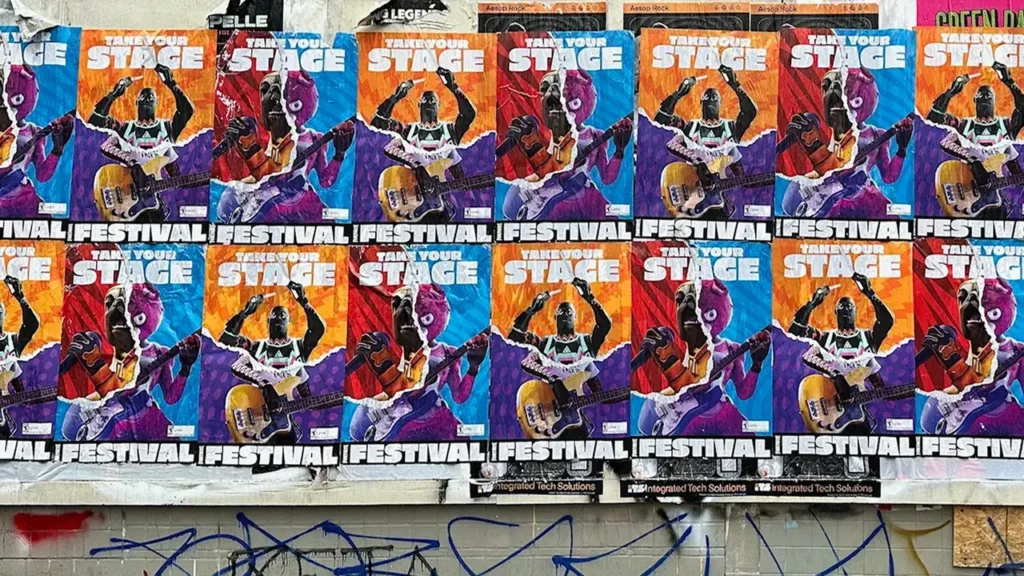
Festival brand activations put your brand in front of tens of thousands of engaged, emotionally open consumers over a few days. Getting that right requires more than a tent and a logo.
Festival brand activations represent one of the highest-stakes, highest-potential formats in consumer marketing. The conditions are specific: a concentrated audience of tens of thousands in a positive emotional state, gathered for a cultural experience they are invested in, with time and willingness to engage. That is a genuinely rare set of conditions to find in consumer marketing.
The challenge is that every significant brand with a marketing budget aimed at the same demographic has figured this out. The festival activation space at Coachella, SXSW, Lollapalooza, and Governors Ball is not empty territory. It is one of the most competitive brand environments in consumer marketing. Standing out requires a concept and an execution that earns consumer attention, not just occupies physical space.
We have planned and executed festival brand activations across the country for brands in beverage, beauty, apparel, tech, food, and consumer goods. This guide covers what makes festival brand activations work, what tends to go wrong, and how to build an activation approach that justifies the investment.
The Festival Brand Activation Opportunity
Festivals create a specific set of consumer conditions that most marketing environments do not replicate. Festival-goers are physically present in a defined space for multiple hours or multiple days. They are in a heightened social state — sharing the experience with friends, more open to new discoveries, more willing to engage with unfamiliar brands. The festival context signals discovery and cultural openness in a way that routine daily environments do not.
This creates genuine brand opportunity. A consumer who encounters a brand for the first time in a festival context — who tastes a new beverage at a well-designed activation, who gets a great product sample from an energetic brand ambassador, who spends ten minutes inside a beautiful branded installation — has a different quality of brand memory than a consumer who saw a banner ad online. The festival context infuses the brand encounter with the emotional register of the festival itself.
That is the opportunity. The challenge is earning it rather than assuming it.
What Festival Brand Activations Must Accomplish
Every festival brand activation should have a clear primary objective. Not two or three objectives — one. The most common primary objectives for festival brand activations are: product trial (get the product into people’s hands), brand awareness within a specific demographic, social content generation (get festival-goers to create and share content featuring the brand), and community building (deepen relationships with consumers who already know the brand). These objectives require different activation approaches, and trying to accomplish all of them simultaneously usually results in an activation that does none of them well.
The single most useful question to ask when evaluating a festival brand activation concept: if a festival-goer walked away with nothing from this activation — no product, no sample, no photograph — would the 90 seconds they spent there still be worth their time? If the answer is no, the concept needs work. The brand experience should provide value independently of any product transaction.
Brand Categories and Festival Activation Fit
| Brand Category | Natural Festival Activation Format | Primary Objective | Notes |
|---|---|---|---|
| Beverage (alcohol or non-alcohol) | Sampling bar, branded lounge | Product trial | High volume opportunity; sample quality and presentation critical |
| Beauty and personal care | Service experience, mini consultation | Trial + relationship | Touch-based service creates strong brand memory |
| Apparel and footwear | Custom product, limited drop, styling | Brand affinity, community | Festival-exclusive product creates urgency and collectibility |
| Food and snack | Sampling station, chef collaboration | Product trial | Sampling throughput and product relevance to festival eating pattern key |
| Technology and mobile | Charging station, interactive experience | Utility + brand awareness | Utility-first approach earns longer dwell time |
| Automotive | Premium lounge, VIP transport | Brand prestige, aspiration | Festival context suits aspirational positioning; test drive rarely practical |
Building the Activation Concept for Festival Fit
A festival brand activation concept that works at a corporate event does not automatically work at a music festival. The festival environment has a specific aesthetic register, a specific consumer emotional state, and specific physical and logistical constraints. Activation concepts need to be developed for the festival environment, not adapted from other contexts.
Cultural Fit
Every major festival has a cultural identity that its audience is protective of. Coachella has a specific aesthetic (desert luxury, art installation, fashion forward). SXSW has a specific cultural positioning (independent creative, anti-corporate authenticity, discovery). Lollapalooza has a Chicago neighborhood character. An activation that ignores or contradicts the festival’s cultural identity creates friction with the audience. An activation that contributes to it earns organic acceptance.
Cultural fit does not mean mimicking the festival’s aesthetic. It means understanding the values and sensibility of the audience and ensuring the activation reflects genuine respect for those values. A premium brand can succeed at a grassroots-feeling festival if the activation is thoughtful and useful. The same brand fails if the activation feels like a corporate imposition.
Visual Scale
Festival activations compete visually with stages, art installations, other brand activations, and the general visual density of a large outdoor event. Activations that are too small to be visible from a distance fail to draw traffic from the high-traffic pathways nearby. Height, color, distinctive form, and lighting (for events with evening programming) are the tools for creating the visual presence needed to attract consumer attention from across a crowded festival field.
Interaction Simplicity
Festival consumers make fast decisions about where to spend their time. An activation that takes more than a few seconds to understand — where the entry is, what happens inside, what the consumer gets — loses most of the potential audience before they even approach. The interaction design should be immediately obvious. Signage that explains the activation should be minimal because the design itself should communicate.
Dwell Time Design
Activation formats that create comfortable dwell time — shade, seating, something to eat or drink, entertainment — extend the consumer’s time with the brand well beyond the initial engagement. A consumer who spends 20 minutes in a well-designed branded lounge has a fundamentally different brand experience than one who receives a sample and moves on. Designing for dwell time is designing for brand memory formation.
Production Planning for Festival Brand Activations
Festival brand activation production involves a specific set of planning and logistics considerations that differ from indoor event production.
Site surveys are essential. Visiting the festival site during a prior edition of the event, or obtaining detailed site plans and photos from the festival operator, is necessary before finalizing the activation design. Assumptions about surface conditions, access points, adjacent brand placements, and sight lines that are made without site information regularly result in expensive last-minute production changes.
The production schedule must account for the festival’s controlled site access. Setup and breakdown windows are determined by the festival operator, not the brand. Production timelines that assume unlimited site access will fail. Build the production schedule backward from the festival operator’s confirmed access windows.
Material logistics for festival sites require more lead time than standard event production. Shipping to festival sites often involves freight coordination (not courier delivery), storage arrangements at the site or nearby, and physical handling equipment that the brand team needs to arrange independently. Product inventory needs to be sized for the full multi-day event, with a clear plan for resupply if volumes exceed expectations.
Weather is the most common festival activation disruption. Build weather contingency into the production plan before the event, not during it. That means structural elements rated for wind loads above what the forecast shows, rain protection for electronics and product, non-slip surfaces for flooring if rain is possible, and a clear protocol for what the activation does if weather conditions require temporary shutdown. Activations that have not planned for weather scramble reactively when conditions change. Activations that have planned for it adapt without losing production value.
Staffing and Brand Ambassador Performance
The quality of brand ambassador performance at a festival brand activation has more impact on consumer experience than any other variable. A beautifully designed activation staffed with disengaged or poorly briefed ambassadors delivers a mediocre experience. A simpler activation staffed with genuinely enthusiastic, well-trained ambassadors can outperform it consistently.
Festival staffing selection should prioritize energy management, cultural fluency with the specific festival audience, and genuine product knowledge. Brand ambassadors who fit the cultural context of the festival are more credible to the audience than those who do not. A brand ambassador at a music festival should be someone the festival-goer would plausibly encounter there as an attendee.
Training needs to cover brand story and product knowledge, the specific interaction script and objectives for the activation, the festival’s culture and the appropriate tone for communication within it, documentation expectations (photo documentation, consumer count tracking), and escalation procedures for situations that require management intervention.
Post-Festival Reporting
The documentation generated during a festival brand activation — consumer interaction photos, staff observation logs, product distribution counts, social content captures — gets compiled into a post-campaign report that demonstrates execution against plan and consumer engagement quality.
For brands that activate across multiple festivals in a season, the post-festival report from each event informs the planning for subsequent events. Location performance, consumer response patterns, staffing effectiveness, and production issues identified at one festival improve the quality of planning and execution at the next.
Activation Build Quality for Festival Environments
Festival brand activation builds face a production environment that is fundamentally different from indoor event builds. Materials that hold up perfectly in a climate-controlled ballroom may fail in outdoor heat and UV exposure. Structures that are stable on hard flooring become unstable on festival grass. Electronics that work flawlessly in normal conditions overheat when enclosed in a festival tent on a hot afternoon.
Specifying materials and structural systems for festival builds requires explicit attention to the outdoor conditions the build will face. UV-stable materials resist color fading and material degradation from sun exposure over multiple activation days. Materials rated for outdoor temperature ranges relevant to the specific festival location (desert heat for Coachella, Chicago August heat for Lollapalooza) prevent the electronics and adhesive failures that surprise brands with builds designed for controlled environments.
Structural anchoring for festival tents and freestanding elements needs to account for wind loads that exceed what typical indoor event structures are rated for. A tent that anchors adequately for an indoor venue may become a hazard at an outdoor festival with afternoon wind gusts. Festival build specifications should require outdoor-rated anchoring, guying, and ballasting for all freestanding structural elements.
Sampling Product Quality at Scale
The quality of the product experience delivered during a festival sampling activation is often compromised in ways that undermine the entire investment in production and staffing. A beverage that should be served cold, served warm in a paper cup on a hot day, delivers a negative product experience. A food product sampled in a portion so small that the consumer cannot actually assess its flavor delivers an uninformative trial. A beauty product sampled without appropriate hygiene protocols leaves consumers uncomfortable rather than converted.
Product quality standards for festival sampling should specify: the serving temperature and how it will be maintained throughout a 10-hour activation day, the portion size that accurately communicates the product’s quality and flavor profile, the serving vessel (branded cup, plate, or packaging that reinforces brand identity), and any hygiene protocols specific to the product type and serving environment.
These are not details — they are the consumer’s direct experience of the product. The festival activation investment is entirely predicated on delivering a product trial that converts consumer curiosity into brand preference. A poor product experience at the activation is worse than no trial at all because it creates a specific negative memory rather than neutral non-awareness.
Activation Safety Planning
Festival activations require safety planning that covers the specific hazards of outdoor event environments. Heat-related illness is a genuine risk for staff working 10 to 14 hour days in sun and high temperatures. Crowd management around high-demand activations can create physical safety concerns. Electrical safety for outdoor power systems requires specific protocols that indoor events do not.
Pre-event safety planning should identify: the nearest first aid station within the festival, the heat illness response protocol for staff, the emergency contact chain for escalating medical or safety issues, and the festival’s own emergency procedures and how the brand activation team interfaces with them. These plans should be communicated to all activation staff, not filed away in the event documentation and never discussed.
Activation Brand Training for Festival Staff
Brand ambassador training for festival activations needs to be specific to the festival environment, not generic brand training adapted for festival use. Festival ambassadors should understand the specific festival audience — who attends this festival, what they value, what their cultural context is — and be able to present the brand in a way that feels authentic to that audience rather than transplanted from a different context.
The training should also cover the physical demands explicitly: standing for long periods, managing consumer interactions in noisy outdoor environments, maintaining energy and enthusiasm through a full festival day in outdoor conditions. Ambassadors who arrive on Day 1 without understanding the physical demands of festival work are often less effective than expected by midday and significantly less effective by the end of Day 2. Setting realistic expectations and providing genuine preparation for the physical context improves sustained performance quality across the full event.
The Role of Creativity vs. Utility in Festival Brand Design
Festival brand activation concepts exist on a spectrum between pure creativity (the activation is interesting and beautiful but has minimal utility for the consumer) and pure utility (the activation solves a real consumer problem but lacks creative identity). The strongest activations balance both — they are genuinely useful and genuinely interesting. But when forced to choose, utility outperforms creativity in festival environments most of the time.
A consumer who has been standing in sun for four hours and encounters a brand offering shade, cold water, and phone charging will stop, engage, and remember the brand regardless of how visually distinctive the design is. A consumer who encounters an elaborate branded art installation with no obvious utility will photograph it and move on. The transaction time for a utility-led activation is longer, the consumer’s emotional state is more receptive, and the brand association is stronger because the brand is associated with relief rather than spectacle.
That said, creativity without utility has produced some of the most documented and media-amplified festival activations of the past decade. When the creative concept is genuinely surprising or beautiful enough that consumers photograph and share it at scale, the reach extends far beyond the in-person audience. The creativity-first approach works when the creative quality is genuinely high — not just competent, but actually remarkable. For activations that cannot achieve that bar, utility-first is the more reliable path to measurable consumer impact.
Long-Term Festival Activation Strategy
Brands that activate at the same festival for multiple consecutive years build a compound advantage that first-time activators cannot access. Returning festival-goers recognize the brand’s presence as a consistent feature of the event. The brand becomes part of their festival experience rather than a new commercial presence they are encountering for the first time. This familiarity creates a warmer consumer starting point for each subsequent year’s activation.
Multi-year festival relationships also improve the quality of the brand’s activation space and sponsorship terms. Festival operators value long-term sponsors who provide revenue certainty. Brands that commit to multi-year relationships negotiate from a stronger position in discussions about activation space placement, sampling rights, and supporting benefits. The compounding effect of multi-year presence means that the third year of a festival sponsorship is typically delivering more consumer value per dollar than the first year, even with comparable investment levels.
Earning Consumer Permission vs. Demanding Attention
The most effective festival brand activations operate on the principle of earning consumer permission rather than demanding consumer attention. In a festival environment saturated with brand presences, the brands that earn permission are the ones whose activation offers something genuinely worth the consumer’s time — shade, cold water, a delightful product experience, a service that helps. The brands that demand attention through volume, scale, or aggressive ambassador approaches generate consumer avoidance rather than engagement.
Permission-based festival activation is a strategic posture, not a passive one. It requires understanding what the specific festival audience values and designing an activation that provides it. It requires staffing with ambassadors who are genuinely inviting rather than intercepting. And it requires the confidence to let the quality of the activation do the work rather than compensating for a weak concept with louder or more intrusive consumer engagement tactics.
Brands that consistently earn consumer permission at festivals build lasting positive brand associations. Consumers remember brands they encountered at festivals as contributing to the experience, not interrupting it. That memory is the foundation of the brand preference change that makes festival activation investment return more than its cost over time.
The compounding value of consistent festival presence cannot be replicated by a single large activation. A brand that appears at the same festivals year after year builds a presence that feels earned rather than purchased. Festival-goers who have encountered the brand at three consecutive editions of the same event have a fundamentally different relationship with it than those who encountered it once. Building that relationship requires commitment, not just investment.
Post-Festival Consumer Follow-Through
The consumer who positively experienced a brand activation at a festival leaves the event with a warm brand impression and no immediate mechanism to purchase unless the brand has created one. Post-festival consumer follow-through is the program element that converts festival brand affinity into actual consumer behavior.
Follow-through mechanisms can include: a QR code at the activation that connects consumers to a post-festival offer redeemable at retail, a text or email capture at the activation that enables the brand to send a follow-up communication after the festival, a social campaign that uses the festival’s hashtag community to reach people who attended and might recognize the brand from the event, and coordinated retail activations in the festival market in the weeks following the event to capture consumers who are actively looking for the product they tried at the festival.
Brands that plan the post-festival follow-through as an integral part of the festival activation strategy — not an afterthought added when someone asks about conversion — generate measurably better trial-to-purchase conversion rates from their festival investments. The consumer is warmest toward the brand immediately after the festival encounter. Following up while that warmth is fresh is more effective than waiting until the memory has faded.
Frequently Asked Questions
What makes festival brand activations different from other brand experiences?
Festival brand activations operate in environments where consumers are in a distinctly receptive emotional state — open, social, and present. The challenge is that dozens of other brands are competing for the same attention. Success requires a concept that is genuinely worth stopping for.
How do brands build cultural credibility through festival activations?
Brands build festival credibility by contributing to the cultural experience rather than simply inserting a commercial presence. Artist collaborations, commissioned installations, community-relevant programming, and service-first activations create genuine value for festival-goers rather than asking for their attention without reciprocating.
What types of brands benefit most from festival activations?
Beverage, beauty, apparel, tech, and consumer goods brands historically see the strongest results from festival activations because their products are directly relevant to the festival consumption experience. Brands whose products are less obviously connected to the festival context can still succeed with the right creative concept.
How should festival brand activations be documented?
Dedicated photo and video documentation from every day of the festival, geo-tagged location records, staff reports on consumer interactions, and product distribution tallies provide the documentation base. A post-campaign summary report compiles this into a deliverable for brand decision-makers.

Ready to Run Your Campaign?
Call us or email us. We’ll tell you exactly what we can do in your market and what it costs.
Related Services
Explore similar advertising solutions offered by American Guerrilla Marketing.
American Guerrilla Marketing — Los Angeles
Street-level campaigns in Los Angeles and nationwide. Wheatpasting, LED trucks, street teams, and more.
(646) 776-2770
Related Articles
-
Street Poster Advertising Ottawa: A Complete Campaign Guide
September 17, 2026
-
Activation Marketing: How Brands Win at Street Level
September 13, 2026
-
Experiential Marketing Firms Chicago | American Guerrilla Marketing
September 12, 2026
-
Pop Up Experiential
September 12, 2026
-
Mobile Pop Up
September 12, 2026