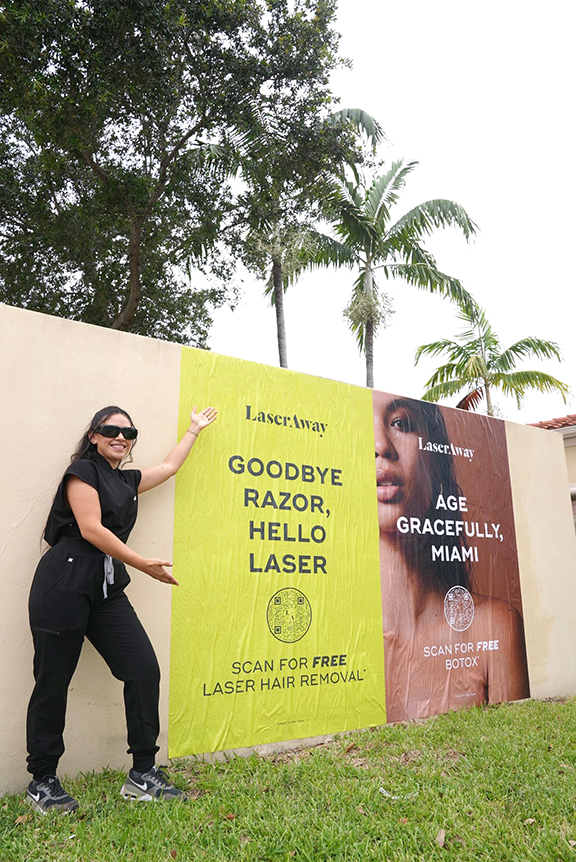
Events concentrate audiences. A music festival, a major trade show, a championship sporting event, a film festival: each one temporarily places tens of thousands of people with shared characteristics in a defined geographic area, moving through predictable routes, staying in a limited zone of accommodation and entertainment. An event-based guerrilla marketing campaign exists to intercept that concentrated audience before, during, and after the event window.
The scouting for an event-based campaign is time-constrained and geographically specific in a way that neighborhood saturation campaigns are not. You know the event dates. You know the venue. You know the approximate audience size and composition. The scouting task is to map how that audience will move, identify the highest-value points on that movement pattern, and build a location network that is in place and performing before the first attendee arrives.
At American Guerrilla Marketing, based in Industry City, Brooklyn, NY, we have scouted event-based campaigns around conventions, festivals, and sporting events across the country. The methodology below is what we use. Call (646) 776-2770 to discuss an upcoming event in your campaign calendar.
Mapping Audience Movement Before the Scout Begins
Before a scout goes into the field, the campaign team builds an audience movement map. This is a geographic model of how attendees will arrive, move through the event area, and depart. The map is built from publicly available information: venue location, nearby hotel inventory, transit routes serving the venue, rideshare pickup zones, parking facilities, and the locations of food, entertainment, and hospitality that typically draw event audiences during off-hours.
The movement map identifies the primary approach corridors, the secondary gathering zones, and the accommodation concentration areas. These three zones, approach, adjacent gathering, and accommodation, form the geographic scope of the event-based scout.
Approach Corridors
Approach corridors are the routes attendees travel from their point of arrival (hotel, transit station, parking) to the venue. These corridors are the highest-value intercept points for ambassador deployments and for printed formats like wheatpaste posters and sidewalk stencils, because the audience is in transit mode and not yet engaged with the event’s own programming.
The most valuable windows on approach corridors are the morning arrival sessions for multi-day events and the opening session window for single-day events. Attendees who have not yet set their agenda for the day are more receptive to external brand messages than those who are returning from an earlier session with their attention already engaged.
Adjacent Gathering Zones
Adjacent gathering zones are the restaurants, bars, coffee shops, and public spaces where the event audience congregates during breaks, before and after sessions, and for informal networking. These zones are distinct from the venue itself and often more accessible for brand messaging without venue restrictions.
For a convention like NRF at the Javits Center or CES at the LVCC, the adjacent gathering zones are the restaurant and bar clusters that form in proximity to the venue during the event days. The audiences here are relaxed, their defenses are lower than inside the venue, and they have time for a longer conversation or a more considered look at a well-placed poster.
Accommodation Zones
For events that draw attendees from outside the local market, the hotels where those attendees stay are a significant campaign asset. Hotel lobbies, hotel bars, hotel restaurants, the walking route from the hotel to the venue, the shuttle pickup zones: all of these are within the accommodation zone that event-based campaigns should target.
Hotel zone scouting identifies the specific hotels with the highest event audience concentration, the internal and external spaces within those hotels where campaign formats can be deployed (lobby take one cards, hotel bar sampling, exterior approach route posting), and the timing windows that maximize visibility to the event audience specifically rather than the hotel’s general guest population.
Field Scouting for Event Campaigns
The field scout for an event campaign happens against the movement map. The scout walks the approach corridors at the times of day that correspond to the event schedule, identifies posting surfaces and ambassador positioning points on those corridors, and assesses them against standard quality criteria: surface, visibility, posting history, enforcement environment.
Timing the Scout Walk
For recurring annual events, scouting during the previous year’s event is the most accurate method. Walking the approach corridors while the event is actually running shows the real foot traffic pattern, the real competition for attention on the surfaces, and the real enforcement posture that the city adopts during the event period. Many cities increase enforcement activity around major events, which means a location that would be acceptable during non-event periods may not be acceptable during the event window.
For events we are scouting for the first time, we go to the venue during a comparable period, ideally another event at the same venue or a normal business day that gives us a baseline foot traffic picture, and we use that baseline plus the known event audience scale to project which corridors and which surfaces will be highest value during the event.
Surface Assessment for Temporary Campaigns
Event-based campaigns have a defined lifespan: the event window. This changes the surface assessment criteria slightly. Surfaces that would be rated lower for a sustained six-week campaign may be acceptable for a three-day event window because the enforcement risk tolerance is different when the campaign has a defined natural end point.
Similarly, surfaces that require significant preparation for long-term campaigns may be acceptable for a short window with lighter prep. The trade-off is between preparation investment and campaign duration. For a three-day event, investing in surface preparation that adds $500 per location is harder to justify than for a six-week campaign where that preparation supports a much longer earning period.
Ambassador Positioning for Event Campaigns
Ambassador deployments are the most time-sensitive element of event-based campaigns because they require the team to be in the right place at the right time to intercept the highest-value audience windows. The ambassador positioning brief is specific to the event schedule, not just the general geography.
For a trade show, the morning arrival window at the venue approach and registration area is the highest-value session for outside-the-venue ambassadors. Our brand ambassador agency deployments at major conventions are scheduled against the registration opening time, the lunch break, and the end-of-day session when attendees are transitioning to the adjacent hospitality zone.
For a music festival, the highest-value windows are different: pre-event entry, breaks between headliner sets, and the post-event exit flow are the key intercept moments. The ambassador brief adapts to the specific event format.
Mobile Format Integration for Event Campaigns
Event-based campaigns are the strongest use case for mobile formats like LED billboard trucks. A truck running the approach corridor to a convention center during the morning arrival window creates a high-visibility impression exactly when the target audience is concentrated on that route. The mobile format lets you follow the audience concentration rather than waiting for the audience to come to a fixed location.
We schedule truck routes around the event program. For a convention, the truck runs the approach corridor during morning arrival (7:30-10am), transitions to the adjacent hotel and restaurant zone during the lunch break, and returns to the venue approach for the afternoon arrival of day-two attendees. The schedule is built from the movement map before the event opens.
Sidewalk stencils on the approach corridors create persistent impressions that the truck cannot: the stencil is there at 6am before the truck is running, and still visible at 11pm after the truck has completed its route. The combination of static and mobile formats provides coverage across the full event day that no single format achieves alone.
Post-Event Closeout
An event-based campaign needs a defined closeout plan. Posters and stencils that remain after the event audience has left are no longer serving their purpose. They may also create enforcement friction if the city is cleaning up event-related materials. We build closeout timelines into every event campaign plan, specifying which formats will be removed, when, and who is responsible for the removal.
For wheatpaste campaigns in markets where removal is not required (the posters will be covered by subsequent posting naturally), the closeout is primarily an ambassador and truck demobilization. For campaigns with printed vinyl or other more persistent materials, a removal crew is scheduled for the day after the event closes.
The closeout also includes the final documentation pass: GPS-confirmed photography of all posting locations at end-of-event, monitoring notes on any locations that were removed or covered during the event window, and a performance summary that feeds into the post-campaign report.
Frequently Asked Questions
What is an event-based guerrilla marketing campaign?
An event-based guerrilla marketing campaign is a street-level campaign timed to the duration of a specific event, using the event’s concentrated audience as the primary target. The campaign deploys locations around the event venue, approach routes, and adjacent accommodation and hospitality zones where the event audience is present.
How do you scout locations for an event-based campaign?
Event-based scouting starts by mapping the audience movement patterns associated with the event: where attendees arrive from, which approach routes they use, where they eat and stay, and how they move between the venue and their accommodations. Scouting then identifies the highest-value intercept points on those routes and in those adjacent zones.
How far in advance should you scout for an event campaign?
Scout 3-6 weeks before the event if possible. This allows time for any necessary property owner permissions, permit applications, and material production before the event window. For recurring annual events, the location list from the previous year is updated and confirmed rather than built from scratch.
What types of events support the strongest guerrilla marketing campaigns?
Events with large, concentrated, relatively homogeneous audiences work best: music festivals, conventions and trade shows, major sporting events, fashion weeks, film festivals, and large-scale conferences. The audience concentration and predictable movement patterns create high-value intercept opportunities that dispersed events do not.
How do you time campaign deployment for a multi-day event?
For a multi-day event, deploy before the event opens so the audience arrives into an already-active campaign environment. Prioritize the highest-traffic day for ambassador and active formats. Reduce monitoring and staffing intensity on lower-traffic days. Plan for removal or restock on the final day so the campaign does not run into the post-event dead zone.
What is the best format for event-based guerrilla marketing?
The format depends on the event duration and audience movement pattern. Wheatpaste posters and sidewalk stencils cover approach routes at low cost. Brand ambassadors at intercept points create direct engagement. LED billboard trucks create high-visibility mobile impressions that follow the audience concentration.