
November 19, 2026
Que Es Un Display: Street Advertising Formats Explained
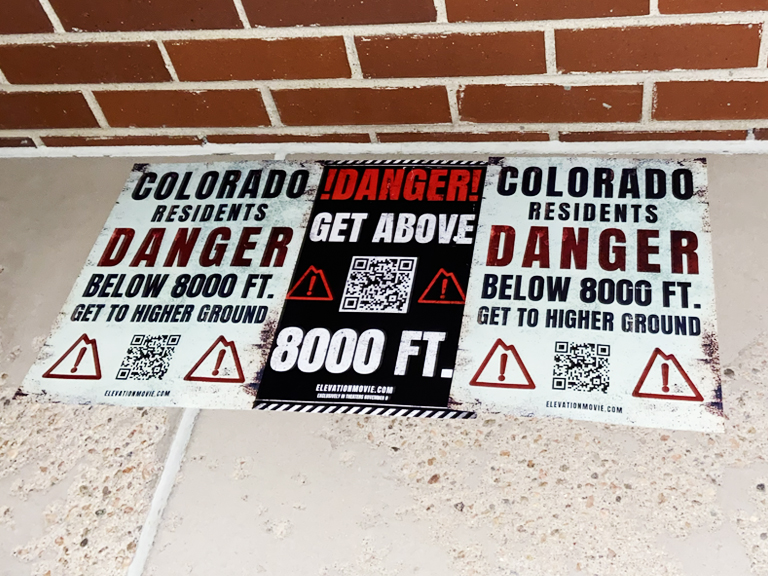
Every few weeks somebody emails us asking for “a display” and means something completely different from the last person who used the word.
One buyer means a printed poster panel on a construction hoarding. Another means a retail cardboard unit sitting next to a register. A third means a digital screen. A fourth, usually a bilingual marketing lead working across US and Latin American markets, types “que es un display” into a search bar because the English trade vocabulary and the Spanish one do not line up cleanly.
They do not line up because the word is doing too much work. In Spanish-language marketing usage, “display” usually points at a physical presentation unit or a screen. In US outdoor advertising, it usually points at any advertising face that occupies a surface in public. Those are overlapping circles, not the same circle.
I run install crews. I have stood on sidewalks in Chicago at four in the morning with a bucket of paste and a brush, and I have run a projection rig off a generator in a parking structure in downtown Phoenix. The reason I care about this definition problem is practical, not academic. When a client says “display” and I hear something different, we scope the wrong campaign and somebody wastes a night.
So this page is the version I actually give people on the phone. What the word covers, which physical formats sit underneath it, how each one gets installed, what fails, and which ones I talk clients out of.
No theory. Just what the crew does.
What the word covers, in plain terms
A display, at the simplest level, is a surface that carries a message and is placed where people will see it.
That definition is deliberately wide because the industry uses it widely. It splits into a few honest categories.
Static printed displays. Paper or vinyl carrying artwork, applied to a flat surface. Poster Campaigns, snipe panels, hoarding wraps. The message does not change until somebody physically changes it.
Illuminated or projected displays. Light throwing an image onto a building face, pavement, or structure. Nothing is attached to the surface. The display exists only while the equipment runs.
Mobile displays. The face moves. LED Trucks and mobile billboard units drive a route instead of waiting for an audience to pass a fixed point.
Ground displays. Sidewalk decals and stencils. The surface is horizontal, under people’s feet, which changes almost everything about how it behaves.
Human displays. Street Teams. People carrying, handing, demonstrating. The display is a conversation rather than a surface.
Those five are what AGM actually builds and installs. When somebody asks me “que es un display” in an outdoor advertising context, I walk them down that list and ask which problem they are solving. The answer is usually obvious within a minute.
What I do not do is pretend a retail point-of-sale unit and a street poster campaign are the same product because the same word covers both. They share nothing operationally. One is a shipping and merchandising exercise. The other is a crew, a city, and a window of darkness.
Static printed displays: the format most people mean
When a buyer in the US market says “display” and they are talking about the street, they almost always mean printed paper on a vertical surface.
This is the core of Wheatpasting & Poster Campaigns, and it is the format I know best.
Here is what the night actually looks like. A two-person team is a minimum. One pastes, one spots. The spotter is not optional and is not there for show. They watch the street, they watch traffic, they carry the roll, they handle the ladder on taller placements, and they are the reason the paster can keep their back to the street and work fast.
For a dense corridor run we send three to five crews out at once, each two or three people, covering different districts of the same city on the same night so the campaign appears everywhere at once rather than creeping across a week.
Start time is typically between midnight and two in the morning. We want foot traffic low enough that we are not working around people, and we want enough darkness left to finish. In Northern cities in winter that window is generous. In Phoenix in July we start earlier and finish before the heat does anything useful to the paste.
A single standard poster panel goes up in under two minutes once the crew has rhythm. The time cost is not the pasting, it is the walking and the driving between surfaces. On a tight corridor like a few blocks of a commercial strip, a crew can place a lot of faces quickly. Spread those same faces across a sprawling metro and the same count takes three nights.
That is the single biggest thing buyers get wrong about scope. They count posters. We count surfaces, distance, and nights.
Surfaces: what holds and what wastes your money
Paste is not magic. It bonds well to some things and badly to others, and no amount of enthusiasm changes that.
Holds well: raw plywood construction hoarding, unpainted or matte-painted concrete, brick that has been sealed or painted smooth, existing poster build-up (layers of old paper actually make an excellent substrate), metal roll-down gates with a matte finish.
Holds badly: glossy painted metal, anything with a silicone or oil-based coating, raw unsealed brick with deep mortar lines, anything dusty, anything with flaking paint. If the top layer of the surface is already failing, your poster leaves with it.
Do not bother: glass that somebody has to clean, historic masonry, anything a property owner has told us is off limits, anything with active water running down it.
Temperature is the other hard constraint. Paste needs to dry. Below freezing it does not dry, it freezes, and when the ice releases the next afternoon the paper peels off in sheets. We do not run paste campaigns in deep winter in Minneapolis or Buffalo without either a heated additive approach, a sheltered surface, or an honest conversation about moving the campaign to a different format for that window.
Rain within the first couple of hours after install is the other killer. Paste that has had a night to cure handles rain fine, and a cured poster can shrug off weather for weeks. Paste that has had twenty minutes turns into a grey slide down the wall.
Humid coastal cities behave differently from dry ones. In Miami and New Orleans the cure is slower and the paper stays pliable longer, which is good for adhesion and bad for crisp edges. In Denver and Albuquerque the paste flashes off fast and you have a narrower working time per sheet before it starts to grab.
How long does a static display hold? On good surface in fair weather, several weeks is normal and longer happens. On a bad surface in bad weather, you can lose faces the first night. Any operator who gives you one number for every city is guessing.
Projected displays: a display that leaves nothing behind
Projection Advertising is the format that most confuses people who learned the word “display” in a retail context, because nothing is installed at all.
A projection rig is a high-output projector, a power source, a sightline, and somebody standing with it the whole time. We run these from a vehicle, a rooftop with owner permission, or a ground position in a plaza.
Crew is usually two to three. One operator on the rig, one managing power and cable, one handling the ground, which in practice means talking to building security, answering questions from passers by, and keeping the equipment from getting bumped.
The run window is dictated by darkness, not by ordinance. There is no usable projection before full dark. In a Northern city in December you can start before five in the afternoon and catch commuter foot traffic. In a Southern city in June you are waiting until nine and the crowd has thinned. That seasonal asymmetry is a real planning input and almost nobody accounts for it.
What kills a projection: ambient light. A building face across from a bright retail frontage will wash out no matter how much output you throw at it. Light coloured, matte, flat surfaces read best. Glass reads terribly. Heavily textured brick eats detail, so artwork for brick needs to be bold shapes and heavy type, not fine line work.
Wind matters more than people expect, because a rig that vibrates produces an image that visibly shakes at distance. Rain is a hard stop for the equipment.
The honest trade-off with projection: it is the only format with effectively zero removal obligation and zero surface risk, and it is also the only format that disappears the second you switch it off. It buys attention and content, not duration. Clients who want a presence in a neighbourhood for a month are better served by paper. Clients who want a night of footage and a crowd are better served by light.
Ground displays: decals and stencils
Sidewalk Decals & Stencils put the display underfoot, and the physics are entirely different.
Concrete sidewalk is porous, dirty, and walked on. Surface prep is most of the job. We sweep, we degrease where needed, and on older concrete we sometimes have to accept that adhesion will be partial. A decal applied to gritty pavement has made contact with the grit, not the slab.
Crew of two moves quickly on decals, maybe a minute or two per placement including prep, more on bad concrete. These are daytime jobs more often than not, because you need to see the surface, and because a crew kneeling on a sidewalk at noon reads as maintenance rather than as anything else.
Wear is the whole story. A decal on a low-traffic plaza edge can last months. The same decal in the middle of a transit entrance walkway gets scuffed to illegibility in a couple of weeks. Rain, grit, and winter salt accelerate everything. In cities that salt heavily, anything on the ground between December and March is on borrowed time.
Removal is part of the service and should be part of the scope. We plan for it, and we document the surface before and after.
Mobile displays: the face that comes to the audience
LED Trucks & Mobile Billboards solve a different problem. Static displays wait. Mobile displays hunt.
If your audience is concentrated at a known place and time, an event exit, a stadium, a convention hall, a campus on a specific evening, a routed truck puts a large bright face directly in front of them and then leaves.
Crew is a driver plus, for most campaigns, a second person managing the route, logging placements, and capturing documentation. Route design is where the value sits. A truck circling an arena for three hours before doors is worth far more than a truck on a highway where nobody can read it.
Where mobile fails: dispersed audiences, slow traffic corridors where the unit sits still and burns hours for a handful of impressions, and clients who want a month of presence. A truck is an event tool.
Permission, ordinance, and the grey area
This is where I have to be careful and honest at the same time.
Outdoor posting sits in a grey area in most of the United States. Rules on signage, posting, and temporary advertising vary by municipality, sometimes by district within a municipality, and enforcement is inconsistent in a way that genuinely surprises people. Two cities with similar ordinance language can behave completely differently in practice.
What actually determines exposure is usually not a single rule. It is surface ownership, whether you have permission from whoever controls that surface, local ordinance character, and how the format is perceived by the people who live and work on that block.
I will not tell you a format is legal or illegal, because that is not a call I am qualified to make and because the answer genuinely differs block to block.
What I will tell you is how we reduce risk.
We seek permission from property owners wherever the surface allows it. We prioritise private surfaces with a known controller over ambiguous public infrastructure. We commit to removal and we actually do it. We photograph every placement with location and timestamp so there is a record of what went where and in what condition the surface was. We keep a do-not-post list per city covering surfaces where an owner, a business, or a neighbourhood association has asked us not to return, and we honour it permanently.
We also decline work. If a client wants placement on a surface we know is sensitive, we say no and offer an alternative. That is not caution for its own sake. A campaign that creates a complaint costs the client more than the faces were worth.
Anyone who tells you a street format carries zero risk anywhere in the country is selling you something. The honest position is that risk is manageable, locally variable, and mostly a function of permission and behaviour.
What AGM talks clients out of
One display format when the brief needs two. A buyer asks for posters in six cities. Half those cities have the corridor density to make paper work. Half do not, and would be better served by a routed LED truck or a street team at a specific event. Spreading posters thin across a metro with no walkable core is the most common way campaigns waste money.
Artwork designed for a screen. The single most frequent fix we request. Fine type, low contrast, and a logo in the corner read fine on a laptop and vanish at twelve feet on a dim street at night. Street artwork needs one idea, heavy contrast, and type you can read from across a road.
Deep winter paste in Northern cities. If a client insists on January paper in a cold, wet metro, I explain what will happen and offer projection or mobile instead. Sometimes they insist anyway. We document the risk in writing first.
Chasing the maximum face count. More posters on bad surfaces in low-traffic blocks is worse than fewer posters on good surfaces in high-traffic blocks. We would rather shrink the count and raise the quality of placement.
Short-notice nationwide launches. Multi-city work needs crew scheduling, surface scouting, and print lead time. A client asking for ten cities next week will get a worse campaign than one asking for six cities in three weeks.
Projection in washed-out locations. If the scouting photos show a bright frontage opposite the target wall, I say so before anyone books a rig.
What a good display brief actually contains
If you are scoping work, give an operator these and you will get a real answer instead of a vague one.
The outcome you want, not the format you assume. Say “we need people arriving at this launch on this date” rather than “we need two hundred posters”.
Cities, and within each city the neighbourhoods or corridors that matter to you.
Dates, including the date the message stops being true. Campaigns tied to an event date need the install timed so the message is up while it still means something.
Artwork status and who can change it. If the art is locked and unreadable at distance, that constrains everything downstream.
Any surfaces, areas, or associations that are off limits for brand-safety reasons.
Whether you need documentation. We photograph as standard, but if you need a structured proof set for a client or a partner, say so up front so the crew logs it the way you need.
Choosing between formats
Short version of how I advise.
If you need sustained neighbourhood presence over weeks, printed paper on good surfaces is the workhorse. Nothing else gives you that duration per unit of effort.
If you need one night of spectacle and content to reuse, projection.
If you need to reach a crowd that will be in one place at one time, a mobile unit or a street team.
If you need to reinforce a route people walk every day, ground decals, accepting that they wear.
Most strong campaigns use two of those together. Paper builds the ambient presence over weeks and a mobile unit or a projection night creates the spike. That combination is what I recommend most often, and it is usually what clients mean when they ask for “a display” and then describe something bigger than one.
Frequently asked questions
What does “display” mean in outdoor advertising?
It means any surface or device carrying an advertising message in a public setting. In street-level work that covers printed poster panels, projected images, sidewalk decals, mobile LED units, and staffed street teams. The word is used loosely across industries, so it is worth confirming which physical format somebody means before scoping any campaign around it.
Is a display the same thing as a poster campaign?
Not exactly. A poster campaign is one kind of display. The broader term also covers projection, ground decals, and mobile units. If you say “display” to an install crew, expect a follow-up question about surface, duration, and city, because those three answers determine which format you are actually describing.
How long does a printed display last on the street?
On a suitable surface in fair weather, several weeks is a normal expectation and longer happens on sheltered walls. Poor surface preparation, freezing temperatures, or rain within the first hours after install can cut that to days. Any operator quoting a single duration for every city and season is not accounting for real conditions.
What time of night does an install crew work?
Most paste work starts between midnight and two in the morning, when foot traffic is low and there is enough darkness left to finish. Projection runs after full dark, which varies hugely by season and latitude. Sidewalk decal work is often done in daylight because the crew needs to see the surface clearly.
Is street posting allowed where I want to run?
It is a grey area that varies by municipality, and enforcement is inconsistent even between similar cities. The practical factors are surface ownership, permission from whoever controls that surface, and local ordinance character. We work from permissioned and private surfaces where possible, document every placement, and commit to removal.
Can I combine formats in one campaign?
Yes, and it usually performs better. A common pattern is printed poster coverage building presence across several weeks, with a projection night or a routed LED truck creating a concentrated spike around a launch date. Combining a sustained format with an event format covers both duration and attention without stretching either one past what it does well.
Request a campaign quote
Tell us the outcome, the cities, and the dates. We will tell you which display format fits, which one we would talk you out of, and what the install actually involves on the ground. If a format will not work in a given city in a given season, you will hear that before you commit to it.
Request a campaign quote and we will scope it honestly.

Ready to Run Your Campaign?
Call us or email us. We’ll tell you exactly what we can do in your market and what it costs.
Related Services
Explore similar advertising solutions offered by American Guerrilla Marketing.
American Guerrilla Marketing — Los Angeles
Street-level campaigns in Los Angeles and nationwide. Wheatpasting, LED trucks, street teams, and more.
(646) 776-2770
Related Articles
-
Experiential Advertising: How It Actually Works
November 19, 2026
-
New Orleans Projection Advertising: Corridors and Rules
November 19, 2026
-
Experiential Marketing Agency Sydney: Timelines
November 19, 2026
-
Guerrilla Projection Campaign Logistics: How It Installs
November 19, 2026
-
Guerilla Marketing Advertising: How It Works
November 19, 2026