
November 19, 2026
Planning LED Trucks & Mobile Billboards in Boulder, Colorado
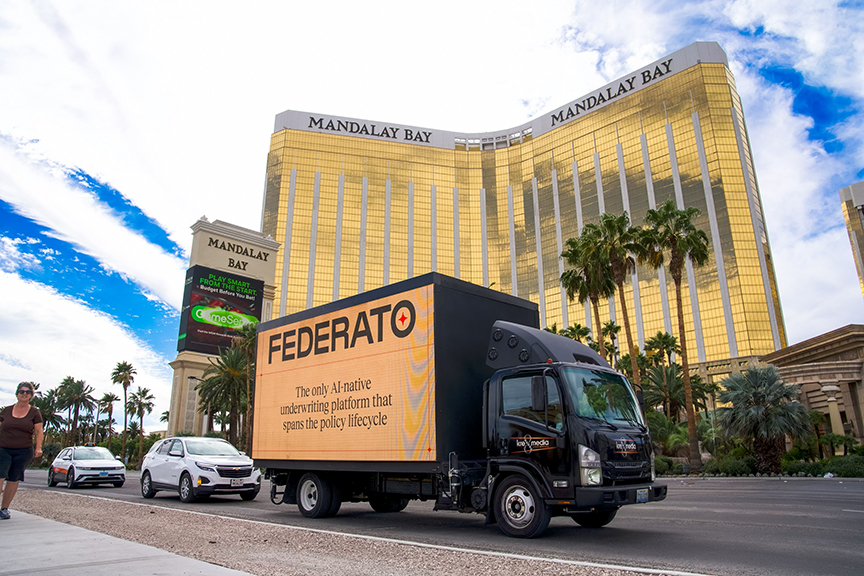
Boulder is the market where I most often tell clients that a mobile billboard is either exactly the right format or completely the wrong one, with very little in between.
The reason is geography. Boulder has a small, dense, genuinely walkable core that a truck cannot enter and does not serve well. Wrapped around that core is a ring of arterial corridors carrying almost all of the city's actual vehicle movement. Those two environments want completely different advertising formats, and the LED truck only belongs in one of them.
Get that distinction right and a mobile campaign here works hard. Get it wrong and you have paid for a vehicle to drive in circles past the same two thousand people until they are sick of it.
That second failure is more common in Boulder than anywhere else I work, and it is a direct consequence of the city being small.
I am Livy Phillips. I plan LED Trucks & Mobile Billboards for AGM nationally. Boulder is a city I like running this format in, with conditions attached, and the conditions are the useful part of this page.
A walkable core wrapped in driven arterials
Start with where a truck can physically and usefully go.
The Pearl Street Mall is out. It is a four-block pedestrian promenade from 11th Street to 15th Street, closed to vehicles since the 1970s, brick paved and holding public park status. No vehicle format reaches it directly. What a truck can do is work the perimeter and the cross-streets at either end, where downtown traffic actually moves, and catch people approaching or leaving the promenade rather than on it.
Canyon Boulevard is the most useful downtown corridor for this format. It is a wide arterial running along the southern edge of the downtown core, it carries real traffic volume, and it has the width that makes a side-mounted screen readable from the adjacent lanes rather than from an awkward angle. Broadway is the other primary spine, running north to south through the city and past the western edge of the campus area.
East of downtown, the city's main vehicle corridors are 28th Street and 30th Street running north to south, with Baseline Road, Colorado Avenue, Table Mesa Drive and Iris Avenue crossing them. Foothills Parkway runs along the eastern side of the city, and the Diagonal Highway heads out toward the northeast. Folsom Street runs between Valmont Road and Colorado Avenue and passes the stadium area, which matters enormously on game days.
That is the real map for a mobile campaign here. 28th Street in particular is Boulder's commercial vehicle spine: retail, hotels, services, and the traffic that goes with them. If a client wants reach among people who drive in Boulder rather than people who walk in Boulder, that corridor and the cross-streets off it carry most of them.
University Hill is a mixed case. The Hill runs along 13th Street from Broadway down toward College Avenue, and it is tight, busy with pedestrians and not a comfortable truck environment. The useful approach there is working Broadway and Baseline Road on the edges and positioning for dwell rather than attempting the interior streets.
There is one Boulder-specific complication worth planning around. The city has been running a sustained programme of improvement work across its core arterial network, with projects along 28th Street, 30th Street, Baseline Road, Broadway and Colorado Avenue among others. That work means lane closures, shifting configurations and construction zones on exactly the corridors a mobile campaign wants.
It cuts both ways. Construction slows traffic, and slow traffic is dwell time, which is good for a screen. It also makes route timing unpredictable and removes places to pull over. We check current project status before building a route here rather than working from a map.
The frequency trap: a truck laps this city too fast
This is the single most important planning point in this market and almost nobody raises it unprompted.
Mobile billboard value is usually sold on repetition. In a large city the route is long enough that each lap reaches a mostly different population.
Boulder does not work that way. The commercially relevant area here is compact. The downtown core, the campus edge and the main retail corridor are close together, and a truck working them continuously will pass the same drivers, the same cyclists and the same pedestrians repeatedly within a single afternoon.
Past a certain point that stops building recognition and starts building resentment. People notice the vehicle is going round again. In a city with Boulder's level of civic attentiveness, that gets talked about, and not in a way that helps the brand.
So our route design here deliberately works against the instinct. We build longer loops that include stretches with genuinely different traffic populations, pulling in the corridors toward the eastern side of the city rather than circling the core. We slow the lap rate. We use dwell positions, where the vehicle is stationary in a legitimate spot near a destination for a period, rather than treating continuous motion as the goal. And we cap daily hours on the core more tightly than a client's instinct would.
A shorter, better-timed run in Boulder outperforms a long one, and I will make that argument even when the client is keen to buy more hours.
Altitude sun, winter dark, and what the screen actually looks like
LED screens live or die on contrast against ambient light, and Boulder's conditions are unusual at both ends.
Daytime here is bright in a way that catches people out. The altitude means less atmosphere filtering sunlight, the city gets sun on the large majority of its days, and the light has a hard, direct quality to it. For a screen, that is the toughest possible viewing environment. A panel that reads perfectly on an overcast afternoon in a humid city can look washed and grey on a clear Boulder midday, particularly when the sun is behind the viewer and falling directly on the screen face.
Three practical consequences.
Screen brightness specification matters more here than in most markets. A high-output panel is not a luxury on a Boulder daytime route.
Creative has to be built for the conditions. High contrast, large type, bold flat colour fields, minimal fine detail. Subtle gradients and dark-on-dark artwork disappear in direct high-altitude sun. We will ask for creative changes on a Boulder brief where we might not elsewhere.
Route direction interacts with sun angle. A route that puts the screen face into direct afternoon sun loses much of its value on those legs, so we plan direction of travel against the sun.
The other end of the day is where this format gets strong. At Boulder's latitude, darkness in December arrives before five in the afternoon. That means the entire evening commute, the evening retail period and the early evening social hours all happen in conditions where an LED screen is at its best. A winter evening route here is genuinely striking, and the screen carries much further in the dry, clear air than it would in a hazy market.
In midsummer the reverse applies. Usable darkness does not arrive until well after nine, by which time traffic has thinned considerably. Summer campaigns in Boulder are daytime campaigns by default, which puts you back into the brightness problem, so the creative and the screen specification have to carry it.
The seasonal conclusion is that late autumn through winter is an underrated window for mobile work in Boulder, which is useful because that is exactly when the physical street formats here are least reliable.
Wind, snow and a high-sided vehicle on the Front Range
A mobile billboard is a tall, flat-sided vehicle, which means it is a sail, and Boulder sits in one of the windier urban positions in the country.
The city is right against the foothills, which makes it prone to powerful downslope windstorms, most frequently from late autumn through early spring. These are the warm dry chinook events that come over the mountains and accelerate down the eastern slope, and high wind warnings here in winter are routine rather than exceptional.
For this format that is a hard operational limit, not an inconvenience. A high-profile vehicle in a strong crosswind is not something we run, and the corridors most exposed to it are the open stretches on the eastern side of the city where there is little built shelter. Foothills Parkway and the open sections of the main north to south corridors are more exposed than the sheltered downtown grid.
So every Boulder winter schedule carries contingency days as standard. We watch the wind forecast the way operators elsewhere watch rain, and we will stand a route down. Pushing through a wind event buys a day that produces nothing and carries risk we will not accept.
Snow and ice are the second factor. The Front Range swings hard, with a daytime high near fifty over an overnight low near ten being an ordinary winter pattern, so roads go through repeated melt and refreeze cycles. Morning routes in winter can meet ice on corridors that were wet and clear the previous afternoon. Road treatment means sand and chemical melt products across the arterials, which coats a vehicle quickly and means the screen face and the vehicle both need attention during a multi-day flight to stay presentable. A filthy truck carrying a premium brand is worse than no truck.
Cold also affects the hardware. LED panels tolerate cold well, but condensation during temperature transitions and power system performance need attention. We keep systems at stable temperature through a shift rather than cycling them, and plan power margins assuming reduced winter output.
One more local point. Boulder has extensive cycling infrastructure and an unusually high share of people moving by bike, with ongoing work adding protected bike lanes along its arterial corridors. That is an audience at eye level moving slowly past your screen, which is valuable. It also means narrower vehicle lanes and fewer places to pull in safely. Dwell positions here get chosen with cyclists in mind, which rules out spots that would be fine in a car-dominated city.
Permission and route character in a city that notices
This is a grey area, and the shape of the grey here is different from the poster and decal formats.
A mobile billboard operates on public roads, which puts it in a different relationship with a city than something attached to a wall. Municipalities vary considerably in how they treat vehicle-based advertising.
The City of Boulder's current provisions relating to vehicle advertising, and how the city is currently applying them, should be confirmed directly with the city for any specific campaign. I am not going to characterise a rule I have not read in its present form, and confident claims about this from anyone are a reason for more questions rather than fewer.
What I can describe is character, and Boulder's character is relevant here in a way it is not everywhere.
This is a small, affluent, highly educated city with a strong environmental identity and an unusually engaged resident population. Residents here pay attention to the public realm and they organise. A diesel vehicle circling the core carrying an advertisement is a visible presence in a city where a significant share of the population has chosen to move by bike and has opinions about vehicle traffic downtown.
I raise that with clients directly because it affects outcomes. A mobile campaign that is perceived as intrusive in Boulder can generate exactly the kind of local conversation a brand does not want, particularly a brand that is itself positioned around outdoor or sustainability values. That is not a rule, it is a reputational reality, and it argues for restraint in route density and hours rather than maximum exposure.
Our operating posture:
Dwell positions are chosen where the vehicle has a legitimate right to be and is not obstructing traffic, pedestrians or cycle movement. Private lots with owner permission are better than marginal street positions, and in Boulder they are often available near the corridors worth working.
Route hours are capped on the core rather than run to the limit of the day.
Crews operate conservatively around pedestrians and cyclists, and the vehicle is kept clean and presentable through the flight.
Event-day positioning is arranged with the relevant venue or property rather than assumed.
The university campus is a separate jurisdiction with its own rules for vehicle access and activity, and we do not treat campus roads as an extension of the public street network.
Event days, game days and closed streets
Boulder's calendar affects this format more directly than any other, because the events that create the biggest audiences are frequently the events that close the roads.
Home football at Folsom Field is the strongest mobile opportunity in the Boulder year. Autumn home game days reshape traffic across the campus edge and University Hill, concentrating large numbers of people into predictable approach and departure patterns on corridors including Folsom Street, Broadway and Baseline Road. A truck positioned on an approach route before a game, and working the departure flow after, reaches a genuinely large and attentive audience. Autumn also brings early darkness for evening games, which is when the screen is at its best.
Term start is the second strong window. The Hill empties over summer and refills sharply when the autumn term opens, and the arrival period puts unusual volume on the corridors around campus, much of it families in cars. Unlike most student-facing formats, this one reaches the people doing the driving as well.
The late-May compression is the trap. In one recently published cycle, commencement fell at the start of May, the Boulder Creek Festival ran a long weekend later in the month along the creek and around Central Park, and the city's mass-participation road race landed on the same weekend. Those days produce the biggest crowds Boulder sees all year, and clients ask for the truck to be in the middle of them.
It cannot be. A road race closes roads. A multi-day festival closes streets and fills the surrounding area with event infrastructure, pedestrians and parking pressure. The corridors a truck needs are either shut or gridlocked. The right call on those dates is either to work the outer approach corridors well away from the closures, catching arriving traffic, or to accept that this is a week for a format that lives on foot rather than on wheels. Event dates move annually, so check the current published calendar, and the local visitor bureau's high-capacity dates list is the best single planning document for this market.
Endurance events add their own closure days through the summer, and they follow the same logic. Large participation, closed roads, poor truck access.
Winter evenings are the quiet strength. No closures, early darkness, retail and social traffic on the corridors, and a screen that looks its best. Weather contingency is the trade.
Crew logistics are simple relative to other markets. Boulder is compact, so a driver and a single operator handle most flights, and repositioning between the downtown perimeter, the campus edge and the eastern corridors is quick. Overnight parking needs arranging in advance, because convenient downtown options for a large vehicle are limited.
What we talk Boulder clients out of
Maximum hours on the core. The single most common request and the one I resist hardest. Boulder is small enough that saturation arrives quickly, and past that point you are annoying the audience you paid to reach. Fewer, better-placed hours win here.
Expecting the truck to serve the Pearl Street Mall. The promenade is pedestrianised and will not be reached by a vehicle format. If the campaign's target is people on the mall, the answer is a format that works on foot, and we will say so rather than selling a route that circles a place it cannot enter.
Running during the late-May weekend. Closed roads and gridlock. Great week to be visible in Boulder, poor week to be visible from a truck.
Subtle or detailed creative. High-altitude direct sun flattens anything that is not high contrast with large type. We ask for creative built to the conditions and a client who declines will get a weaker result on the daytime legs.
Ignoring the wind forecast. A high-sided vehicle in a Front Range downslope event is not something we run. Contingency days are planned, not improvised.
Midsummer evening routes. Clients picture the truck working a warm Boulder evening, and darkness does not arrive until well after nine, by which time the corridors are quiet. Summer is a daytime format here.
A truck-only Boulder campaign for a brand positioned on sustainability. This is the awkward one and I raise it anyway. In this specific city, with this specific population, a vehicle-based campaign can sit poorly against that kind of positioning. Sometimes the right advice is a different format, and I would rather give it than take the booking and watch it go sideways.
The natural pairing here is Street Teams & Experiential. A mobile screen is good at reach and poor at depth. Parking the vehicle in an arranged position near a game-day approach and putting a small team alongside it converts attention into interaction, and gives the truck a reason to be stationary rather than circling.
Frequently asked questions
Can an LED truck reach downtown Boulder?
It can reach the streets around downtown but not the Pearl Street Mall itself, which is a pedestrian promenade closed to vehicles. Routes work the perimeter, the cross-streets at either end and Canyon Boulevard, catching people approaching or leaving the core. If your target is specifically people on the promenade, a format that works on foot is the better answer.
How many hours a day should a truck run in Boulder?
Fewer than in a larger market. The commercially relevant area here is compact enough that a vehicle laps it quickly, so repetition turns into irritation faster than clients expect. We build longer loops that include genuinely different traffic populations, use stationary dwell positions near destinations, and cap core hours deliberately rather than running to the limit of the day.
Which corridors actually work for mobile advertising here?
Canyon Boulevard and Broadway for the downtown and campus edge, 28th Street as the main commercial vehicle spine, with 30th Street, Baseline Road, Colorado Avenue and Folsom Street carrying useful cross-traffic. Ongoing arterial improvement work affects several of these, so current project status gets checked before a route is built rather than assumed from a map.
Does the weather stop a campaign?
Wind does. Boulder gets powerful downslope windstorms from late autumn through early spring, and a high-sided vehicle in a strong crosswind is not something we operate, particularly on the exposed eastern corridors. Snow and refreeze cycles also affect morning routes and coat the vehicle with road treatment, so cleaning is scheduled into multi-day winter flights.
When is the best time to run this format in Boulder?
Autumn home game days at Folsom Field and the start of the academic term are the strongest windows, with evening darkness arriving early enough to show the screen well. Winter evenings are underrated and face no event closures. Avoid the late-May festival and race weekend, when the roads a truck needs are closed or gridlocked.
Is vehicle advertising permitted in Boulder?
It is a grey area that varies by municipality, and current City of Boulder provisions and how they are applied should be confirmed directly with the city for any specific campaign. Beyond the rules, Boulder’s environmental identity and engaged residents mean route density and conduct affect how a campaign is received, which is why we plan for restraint rather than maximum exposure.
Request a campaign quote
A mobile campaign in Boulder is decided by three questions. Are you trying to reach people who drive here or people who walk here. What time of year is it, because that governs both darkness and road conditions. And is there an event in your window that opens the city up or shuts it down.
Tell us the audience, the dates you are considering and the creative you have. We will come back with corridors that are genuinely worth working given current construction, a route and dwell plan built to avoid the saturation problem this city creates, a screen and creative specification suited to the light conditions in your window, and a schedule with wind contingency built in.
If the honest answer for your brief is that Boulder wants a different format, you will hear that on the first call.
Request a campaign quote and we will plan the route properly.

Ready to Run Your Campaign?
Call us or email us. We’ll tell you exactly what we can do in your market and what it costs.
Related Services
Explore similar advertising solutions offered by American Guerrilla Marketing.
American Guerrilla Marketing — Los Angeles
Street-level campaigns in Los Angeles and nationwide. Wheatpasting, LED trucks, street teams, and more.
(646) 776-2770
Related Articles
-
Mobile Billboard Advertising Rates: What Drives Scope
November 20, 2026
-
LED Trucks & Mobile Billboards in Virginia Beach
November 20, 2026
-
Planning LED Trucks & Mobile Billboards in Sacramento
November 20, 2026
-
LED Truck Billboard: How It Actually Works
November 20, 2026
-
Electronic billboard companies: How It Actually Works
November 20, 2026