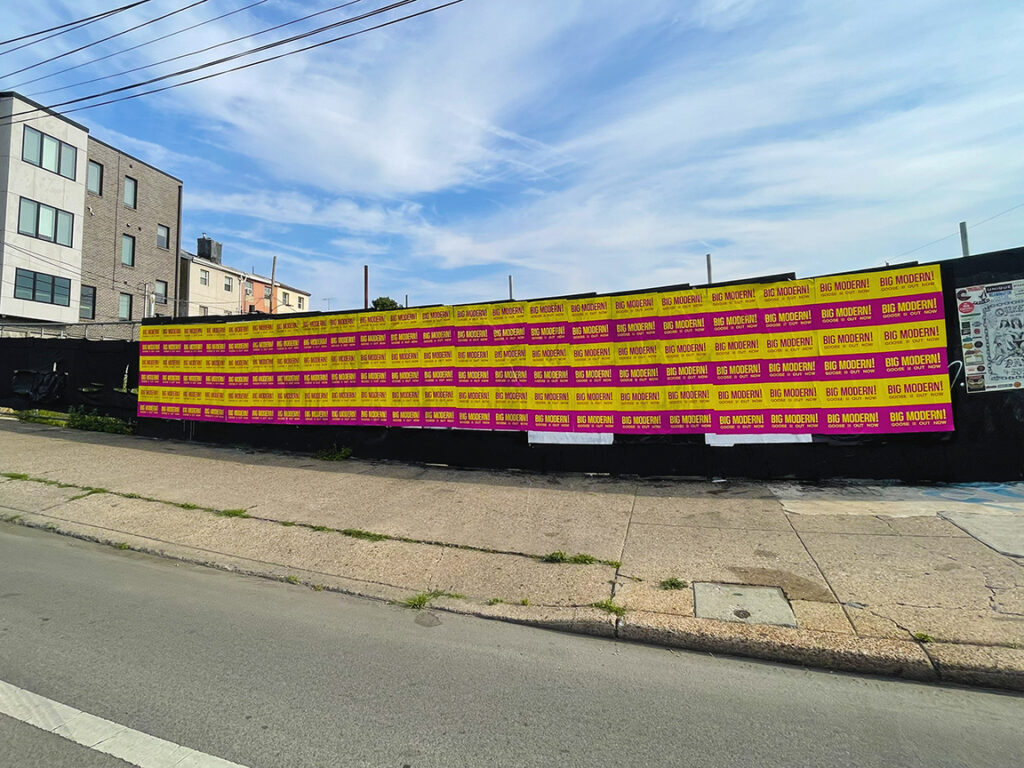
The best locations in any outdoor advertising market are not available to everyone. They are held by operators who spent years building relationships with the property owners who control those surfaces. For brands running poster campaigns, this reality means that campaign quality is often less about creative execution and more about which operator has which walls locked down through legitimate, documented relationships with property owners who grant access.
Our team at American Guerrilla Marketing has spent years building wheat paste poster campaigns across 50+ U.S. markets. In every market, the operators who consistently deliver the best placements are those who treat property owner relationships as a long-term strategic asset, not a transactional exchange to be managed on a campaign-by-campaign basis. This guide explains how those relationships work, how they are built during the scouting process, and why they matter more than almost any other variable in campaign planning.
If you are running campaigns that depend on high-quality surface access, understanding the property owner relationship layer of location scouting is the difference between campaigns that consistently deliver and campaigns that constantly scramble for adequate placements at the last minute.
Why Property Owner Relationships Are the Competitive Moat in Outdoor Advertising
Outdoor advertising locations are a finite resource. In any given neighborhood, there are only so many walls, so many building faces, so many construction hoarding panels that carry meaningful foot traffic exposure. Operators who have formal access agreements with property owners control that supply. Everyone else competes for the remainder.
This supply dynamic is what makes property owner relationships a genuine competitive moat rather than a nice-to-have. A brand that partners with an operator who has deep, documented property relationships in a target market gets access to surfaces that their competitors’ campaigns simply cannot reach. That surface quality difference compounds over time, because campaigns that run in better locations generate better organic amplification, better foot traffic response, and better overall ROI.
The Risk Profile Difference Between Permitted and Unauthorized Placements
Campaigns that rely on unauthorized placements carry meaningful removal risk. An unauthorized poster can be removed within hours by a property owner, a city crew, or a competing operator. A permitted placement on a surface with a formal access agreement runs for its full intended duration, generating the impression volume the campaign was planned around.
For brands with legal compliance requirements, documented property owner relationships are not optional. They are the baseline standard for operating within a risk-managed advertising framework. Our guerrilla marketing operations treat documented property access as standard practice rather than an exceptional accommodation.
How Property Owner Relationships Are Built During Scouting
Location scouting is the primary opportunity to initiate property owner relationships. A scout walking a block with a clipboard and a camera is also the right person to knock on a door, introduce themselves, and begin the conversation that eventually leads to a formal access agreement. Separating scouting and property outreach into sequential phases wastes the natural momentum of the initial contact.
First Contact: What to Say and What Not to Say
The first conversation with a property owner is not a negotiation. It is an introduction. The goal is to establish who you are, what you do, why their surface might be a good fit for professional poster placement, and whether they are open to hearing more. Coming in with a pitch for a specific campaign, specific dates, and a proposed fee structure at the first contact creates unnecessary pressure and often closes doors that could have remained open with a softer approach.
The most effective first contact for property owners covers four points: you are a professional advertising operator, you work with legitimate brands, you are interested in their surface for future campaigns, and you take care of installation and clean removal. If they are open to continuing, you schedule a follow-up to discuss terms. If they are not, you thank them and leave a card. In both cases, you have made a professional impression that may pay off when circumstances change on their end.
Documentation of Initial Conversations
Every property owner conversation during a scouting walk should be logged immediately. The log should capture the property address, the owner or manager name, contact information, their level of interest, any concerns they raised, and the agreed next step. This documentation allows you to follow up accurately and professionally, which is itself a signal of reliability that distinguishes serious operators from opportunistic ones.
The Access Agreement: What to Include and Why
Verbal agreements with property owners are a liability in professional outdoor advertising. They create ambiguity about duration, permitted poster formats, removal responsibilities, and compensation. A formal access agreement eliminates that ambiguity and protects both parties.
Core Agreement Components
A functional property access agreement includes: the precise surface location identified by address and a surface description or diagram, the permitted poster format (size, substrate type, and installation method), the campaign duration or an ongoing arrangement with notice terms, compensation if any, removal responsibilities and timeline, and liability language that protects the property owner from damage claims related to the installation. The agreement should be signed by both parties and retained in the operator’s files against the possibility of any future dispute.
Short-Term vs. Long-Term Access Structures
Some property owners prefer campaign-by-campaign agreements tied to specific dates and specific brands. Others prefer an ongoing arrangement where the operator has standing access to install professional advertising placements, with periodic check-ins and compensation on a monthly or quarterly basis. Long-term access structures are more valuable operationally because they allow campaigns to be planned against known surface availability rather than subject to per-campaign renegotiation.
Compensation Structures That Work
Compensation for property access varies widely by market, surface visibility, and owner type. In high-demand neighborhoods of major cities, monthly fees for a high-visibility wall can reach several hundred dollars. In secondary markets, the same surface may be available for far less or for no fee at all in exchange for professional installation and clean removal. Offering a reasonable monthly fee proactively, before the owner asks, often produces better long-term terms than waiting to be quoted a price.
Managing Property Owner Relationships Between Campaigns
The mistake most operators make with property owner relationships is treating them as a transaction that ends when the campaign ends. Relationships that are only activated when a campaign is needed are relationships that erode over time. Property owners who feel like they are being used on a transactional basis are property owners who eventually accept better offers or stop returning calls.
Post-Campaign Clean Removal as Relationship Capital
Clean, professional removal of poster material after every campaign is the single most important maintenance action for property owner relationships. An owner who watches a crew remove old material cleanly, leaving the surface in at least as good condition as before installation, is an owner who becomes a willing long-term partner. An owner who watches material peel and accumulate on their building becomes an obstacle. Our team schedules and photographs clean removal as part of every campaign close-out process.
Periodic Check-Ins and Relationship Maintenance
Check-ins between campaigns do not need to be elaborate. A brief call or message noting that the operator has upcoming campaigns in the area and wants to confirm the owner is still open to working together is sufficient. These check-ins serve two purposes: they reinforce the relationship and they give the owner a chance to flag any changes on their end, such as planned renovations or changes in building ownership, before they create campaign complications.
Handling Relationship Problems Professionally
When something goes wrong, whether a poster was installed without proper authorization, a removal was delayed, or a surface was damaged during installation, the owner response is defined almost entirely by how quickly and professionally the operator addresses it. A rapid, honest response that includes a concrete remedy plan converts most property owner complaints into temporary setbacks rather than relationship endings. Avoiding or minimizing problems causes exactly the permanent relationship damage that prompt response prevents.
Building a Property Owner Network in a New Market
Entering a new market without an existing property owner network is a challenge that requires a structured approach. The fastest path to surface access in a new market is not starting from scratch but identifying which surfaces have existing posting history and tracing back to the operators or property owners associated with those surfaces.
Reading the Market From the Street
A scout walking a new market for the first time can assess the existing property relationship landscape visually. Surfaces with consistent, professional poster installations are surfaces with existing operator relationships. The format, substrate quality, and installation consistency of those posts tell you what kind of operator is active in that space and what access arrangement they likely have. That intelligence shapes the outreach strategy for new surface development.
Leveraging Local Business Networks
Local business improvement districts, neighborhood associations, and commercial real estate brokers often have existing relationships with property owners along high-traffic commercial corridors. An introduction through these networks carries more credibility than a cold approach and can accelerate the relationship-building process significantly. Our street team activation work often creates natural touchpoints with local business communities that feed directly into scouting relationship development.
Property Owner Relationships and Campaign Quality Outcomes
The measurable impact of strong property owner relationships on campaign quality is significant and consistent. Campaigns that run on permitted, relationship-backed surfaces outperform unauthorized campaigns on multiple dimensions.
Duration and Impression Delivery
A permitted placement runs for its full intended duration. An unauthorized placement may run for anywhere from a few hours to a few days before removal. The difference in impression delivery between a two-week permitted run and a two-day unauthorized run is enormous and directly affects campaign ROI regardless of how well the creative executes.
Surface Quality and Placement Positioning
Property owners who have formal relationships with operators often maintain their surfaces better than owners who are indifferent to what appears on their walls. A clean, well-maintained surface produces better visual impact for the poster creative, better photography for campaign documentation, and a better brand association for the advertiser.
Frequently Asked Questions
Why do property owner relationships matter in location scouting?
Property owner relationships give campaigns access to premium surfaces that are unavailable to operators who rely on unauthorized placements. They also reduce removal risk, create recurring placement opportunities, and provide legal protection for brands that require documented permission for outdoor advertising.
How do you approach a property owner for poster placement permission?
The most effective approach is in person during business hours, leading with a professional introduction, a clear explanation of what will be posted, the duration of placement, and any compensation arrangement. Follow-up documentation confirming the agreement should be sent the same day.
Do property owners typically charge for poster placement access?
It varies by market and owner type. Some property owners in high-demand areas charge monthly fees ranging from $50 to several hundred dollars per surface. Others grant access for free in exchange for professional installation and clean removal. Building a long-term relationship often results in better terms over time.
What is a wall license agreement for outdoor advertising?
A wall license agreement is a written contract between an advertising operator and a property owner that defines the terms of poster placement access: the surface location, allowed poster formats, duration, compensation, and removal responsibilities. These agreements protect both parties and are standard practice for professional campaign operators.
How do you maintain property owner relationships between campaigns?
Maintaining property owner relationships requires consistent communication, professional clean-up after every campaign, prompt payment of any agreed fees, and periodic check-ins even when no campaign is active. Owners who receive professional service and respectful communication consistently renew access agreements.
What makes a location more valuable from a property owner relationship standpoint?
Locations with long-term, stable access agreements are more valuable than technically superior locations with uncertain tenure. A slightly lower-traffic surface with a reliable, documented access agreement will consistently outperform a high-visibility surface with no property owner relationship and high removal risk.
How long does it take to build a solid property owner network in a new market?
Building a property owner network in a new market takes anywhere from three months to a year of consistent outreach and relationship development before you have reliable access to a meaningful number of quality surfaces. Entering a new market with an established operator who already has those relationships compresses that timeline significantly.