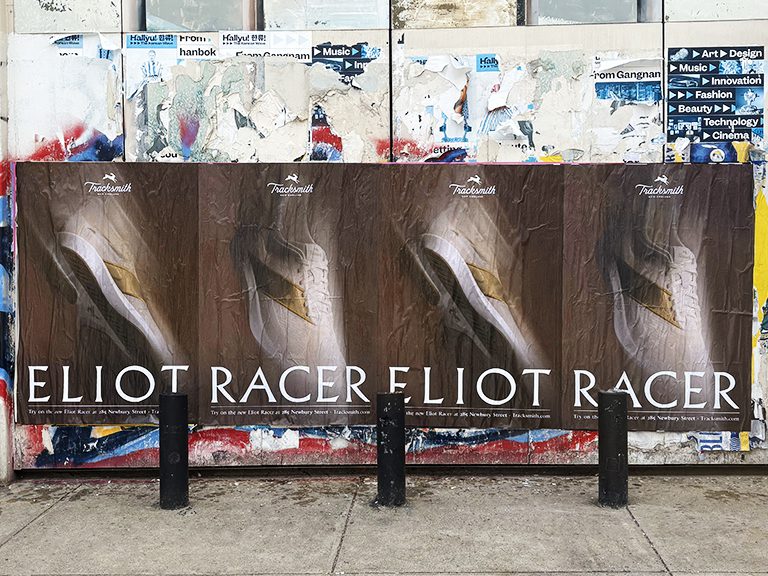
A professional postering service handles everything from surface scouting to installation to documentation, so your campaign hits the street clean and on schedule.
A postering service is a company that installs printed advertising posters at street level on your behalf. They manage the locations, the paste, the crew, and the record of where everything went. You provide the printed posters and the campaign brief. They handle the logistics that turn those posters into a visible, documented street presence.
That is the simple version. The actual service involves a lot more than it sounds. Professional postering requires location knowledge built over years of working specific neighborhoods, paste formulation adjusted for weather and surface conditions, installation technique that keeps posters on the wall for weeks rather than days, and documentation standards that produce a usable post-campaign report. Get any of those elements wrong and the campaign underperforms in ways the client may not even notice until the posters are gone.
American Guerrilla Marketing has been running professional postering campaigns since our founding. We work in New York City, Los Angeles, Chicago, Miami, Austin, and other major markets. We have executed campaigns for fashion brands, record labels, tech startups, consumer goods companies, streaming platforms, and event promoters. This piece explains how our postering service works, what makes the difference between a campaign that performs and one that just takes up space on a wall, and how to evaluate any postering service you are considering hiring.
A professional postering service is not just a labor contractor who shows up with paste and posters. The service covers the full chain of campaign execution from pre-installation planning through final documentation delivery. Here is what that chain looks like.
Pre-Campaign Consultation and Brief Review
Before any scouting or scheduling begins, we review the campaign brief with the client. This includes understanding the target audience, campaign objectives, timeline, format preferences, and any geographic constraints. A postering campaign for a streetwear launch has different geographic logic than a campaign for a tech product launch. The brief informs every subsequent decision.
We also advise on format selection based on the markets targeted and the surfaces available in the target neighborhoods. Clients sometimes arrive with format decisions already made based on what they printed for a previous indoor campaign. We review whether those decisions hold up in the outdoor postering context and recommend changes when needed.
Neighborhood Scouting
Scouting is where campaign geography gets built. Our teams walk the target neighborhoods to identify available surfaces, assess adhesion conditions, and map the placements that will reach the right audience. Scouting is not optional. The difference between a campaign that runs in the right locations versus one that runs wherever the crew could find an empty wall is the difference between a targeted media buy and a random distribution.
In New York City, scouting covers specific blocks and surfaces in neighborhoods selected based on the audience profile. A campaign targeting 20-to-30 year olds with interest in streetwear and music will scout differently than a campaign targeting young professionals in finance. The scouting data becomes the installation map.
Print Coordination
We have established relationships with print vendors who understand the paper specifications required for outdoor wheatpaste campaigns. If the client is handling printing independently, we provide specific paper stock and weight requirements based on the campaign’s format, season, and market. Printing on the wrong stock is the most common source of campaign failure for clients who manage their own print production. A glossy coat or the wrong paper weight can sink an otherwise well-planned campaign.
Installation
Installation day is when the campaign goes physical. Our crews arrive at the starting point with paste, brushes, posters, and water equipment. They execute the pre-planned route, assessing each surface, pre-wetting, applying base coat, positioning and pressing each poster, applying the top coat, sealing all edges, and photographing each placement before moving to the next location.
A professional installation crew in a dense urban market like New York City can complete 60 to 100 standard-format placements in a full working day with proper route planning. Larger campaigns run across multiple installation days. Multi-city campaigns coordinate crews in each market simultaneously or in sequence depending on the client’s timing requirements.
Campaign Documentation and Reporting
Every campaign produces photo documentation from every placement. Clients receive a campaign report showing where each placement went and what it looked like on installation day. For larger campaigns, we provide geo-tagged placement maps alongside the placement photos so clients can visualize the full campaign geography. Documentation is a standard deliverable, not an optional add-on at extra cost.
AGM Field Note: Documentation Photos Become Marketing Assets
Clients consistently use campaign documentation photos as marketing content. A strong photo of a brand poster on a Bushwick wall or a Fairfax Ave construction barrier is compelling content for the brand’s own social channels. We shoot each placement knowing the photos serve double duty: as campaign accountability and as brand content. The documentation is worth keeping.
How to Evaluate a Postering Service Before You Hire
Not every company that calls itself a postering service or a street marketing company runs professional campaigns. Some are individual operators with no crew depth, no location expertise, and no real documentation standards. Others are professional operations with years of market experience and institutional knowledge of the neighborhoods where they work. Knowing how to tell the difference protects you from wasting a campaign budget on substandard execution.
Request Documentation from Past Campaigns
The most direct test is asking to see campaign reports from past work. Not stock photos. Not client testimonial pages. Actual photo documentation from real campaigns showing real placements at real locations. A professional postering service can produce these immediately. If a company is slow, vague, or defensive when asked to show past work, that is a clear signal about what your documentation will look like.
Ask About Specific Target Neighborhoods
Ask where the service would recommend posting your campaign based on your audience profile, and listen to how specific they get. A professional postering service in New York City should be able to name specific streets in Williamsburg, specific blocks in Crown Heights, specific corridors in the East Village based on the audience you describe. If the answer is “high-traffic areas across the city” or “wherever we can find space,” that is not a professional postering service. That is someone who will fill your order with whatever surfaces they can find on install day.
Understand Their Crew Structure
How many people do they send on an installation? What is their daily capacity per crew? A single operator running a campaign alone cannot deliver the same quality or speed as a two-person professional crew. For campaigns over 50 placements, the crew structure matters for both quality control and campaign timing. Ask specifically how many people will be on your installation crew and what their daily placement capacity is for your format size and target geography.
Paper and Paste Specifications
Ask what paper weight and stock they recommend for your campaign’s format and market. Ask what paste formula they use and how they adjust it for weather conditions. A professional postering service has specific, defensible answers to these questions based on real field experience. An operator working without that experience will give you generic answers or suggest you just handle printing yourself however you want.
Timeline and Scheduling
How far in advance do they need to schedule? What is their lead time for a campaign of your size in your target market? What happens if the weather is wrong on the scheduled install date? Professional operations have clear answers: typical lead time, weather contingency protocols, rescheduling policies. Vague answers on scheduling logistics create execution risk on your campaign.
Evaluation Question
Strong Answer
Weak Answer
Can you show past campaign documentation?
Yes, immediately, with real placement photos
Vague, shows only testimonials or stock images
Where would you target for my audience?
Specific streets and blocks named by neighborhood
“High traffic areas” or “wherever we can find space”
What paper do you recommend?
Specific weight, specific stock type, reason given
“Whatever you order is fine”
What is your crew size per campaign?
Specific number, daily placement capacity stated
Vague, “depends on the day”
What is your weather contingency?
Clear protocol for rain delays and rescheduling
No clear answer
What does documentation include?
Photo of every placement, geo-tagged maps for large campaigns
“We’ll send you some photos”
Markets Where Professional Postering Drives Results
Not every city has the same street poster culture or the same quality of available surface inventory. Here is how postering campaigns perform in the markets where we work most actively.
New York City
New York is the most active street poster market in the country. Construction barriers in every active borough, painted brick throughout Brooklyn, plywood hoardings and utility surfaces across all five boroughs. The subway system delivers massive daily pedestrian traffic to specific street corridors, creating reliable audience concentration that plannable campaigns can reach consistently.
The Brooklyn neighborhoods with the highest concentration of relevant street audiences for culture, fashion, and lifestyle brands are Bushwick, Williamsburg, Crown Heights, and Park Slope. Manhattan’s strongest postering corridors for these same audiences are the Lower East Side, the East Village, and SoHo. Long Island City and Astoria in Queens deliver working professional audiences in transit.
New York campaigns can run year-round. Winter requires weather monitoring and paste formula adjustments for low-temperature conditions. Summer requires early morning or evening installs to avoid heat-driven paste failure. Spring and fall are the easiest installation seasons with the most consistent conditions.
Los Angeles
Los Angeles has a strong visual street culture concentrated in a smaller number of specific corridors than New York. Fairfax Avenue between Melrose and Beverly is one of the most active outdoor postering zones in the country. The Arts District in downtown LA, Melrose Avenue near Highland, and Silver Lake along Sunset all carry strong street culture audiences.
LA’s climate allows campaigns year-round with minimal weather risk. The challenge in Los Angeles is the car-centric layout, which means campaign zones need to be genuinely pedestrian-active rather than just high-traffic in the automotive sense. We concentrate placements in the specific blocks where foot traffic concentrates, not on arterial roads where people drive past at 40 miles per hour.
Chicago
Chicago’s primary street postering culture centers on Wicker Park, Logan Square, and Ukrainian Village in the near northwest, and River North and the West Loop for professional and business-oriented campaigns. The Milwaukee Avenue corridor through Wicker Park and Logan Square is one of the most consistent postering environments in the Midwest.
Chicago’s winters are genuine limiting factors. November through February installation windows are constrained by temperature, and campaigns in those months require careful scheduling around cold snaps. Spring through fall operations in Chicago are excellent.
Miami
Wynwood dominates Miami’s street art and poster environment. Little Haiti, the Design District, and Brickell each serve different audience profiles for brands with specific demographic targets. Miami’s year-round warm weather and strong tourism audience make it an effective market for awareness campaigns that want both local and visitor reach in the same placements.
Austin
Austin’s poster culture is concentrated around the 6th Street entertainment corridor and South Congress Avenue. East 6th Street has developed into a strong cultural postering zone as the neighborhood has grown. The city’s tech industry presence creates a dual audience of music and culture enthusiasts and tech professionals that many of our clients target simultaneously.
Postering Service Pricing: What to Expect
Postering service pricing varies by market, campaign volume, format size, and scope of services included. Here is a realistic framework for planning campaign budgets.
Installation-only pricing assumes the client supplies ready-to-install printed posters. Design and printing are separate costs.
Small campaigns (single city, focused geography): These campaigns typically run in one to two days with a two-person crew. Contact AGM for package pricing based on format and market.
Mid-scale campaigns (multi-neighborhood, single city): These campaigns span multiple neighborhoods and two to four installation days. Documentation is included in the base service. Contact AGM for package pricing.
Large campaigns (200 to 500 placements, single or multi-city): These are project-specific. Contact us directly for large-scale campaign pricing. Multi-city campaigns involve coordination across markets and typically require four to six weeks of lead time for planning and crew coordination.
Print costs depend on format size, paper stock, quantity, and turnaround requirements. Rush printing adds a premium to standard print pricing. Contact AGM for a complete quote including print.
AGM Field Note: All-In vs. Modular Service
Some clients want a fully managed service: we handle the brief, the design direction, the printing, the installation, and the documentation, and they receive the finished campaign report. Others have in-house design and production teams and need installation and documentation only. We work both ways. Modular pricing lets you pay for what you need without paying for services you already have covered internally.
How Professional Postering Campaigns Get Measured
The measurement question comes up on every first campaign. Street advertising sits in the physical world, and physical world measurement is less automated than digital. But it is not unmeasurable. Here is how we approach campaign measurement with our clients.
QR Code Integration
Embedding a campaign-specific QR code in the poster design creates a direct measurement path from street to digital. Each scan is a data point representing a person who stopped, engaged, and pulled out their phone. Unique URLs behind each QR code allow downstream tracking of what those scanners did after they arrived at your destination, whether that was app download, site visit, sign-up, or purchase.
Branded Search Monitoring
After a street campaign goes live, branded search queries from the target geography increase measurably. This is visible in Google Search Console at the query and location level. The search spike confirms that the physical placements are driving brand awareness at the scale and in the locations where the campaign ran. We advise clients to pull Search Console data before and after campaigns to establish this baseline comparison.
Social Monitoring
Street campaigns generate organic social shares. People photograph strong creative, post it to Instagram stories, TikTok, and X with neighborhood context or brand tags. Setting up social listening for the campaign hashtag, brand handle, and install neighborhood names before the campaign launches allows you to capture organic amplification data during and after the campaign period.
Campaign Reports with Placement Photos
The standard documentation deliverable, photo documentation from every placement, provides a visual record of the campaign that serves multiple purposes: client accountability, internal reporting, and content for brand social and PR use. These photos are a tangible asset of the postering service and should be expected as standard output from any professional operation.
How Different Brand Categories Use Postering Services
A postering service delivers street-level presence, but what that presence means and how it is used varies significantly by brand category. The format is flexible enough to serve very different campaign objectives, and understanding how it applies to specific categories helps brands plan campaigns that match the channel’s actual strengths.
Fashion and Apparel
Fashion brands were among the earliest commercial adopters of professional postering services as a deliberate advertising strategy. The alignment between streetwear culture and the visual tradition of paste-up advertising made postering a natural channel for fashion brands trying to reach young urban consumers with cultural credibility rather than just commercial presence.
For fashion campaigns, location selection is as much a brand statement as the creative. Posting in Williamsburg, in Bushwick, or on Fairfax Avenue communicates that the brand is part of those cultural geographies rather than advertising at them from outside. We work with fashion clients to select neighborhoods that match the specific cultural positioning of each collection or campaign, not just the broad demographic profile of young urban consumers.
Fashion postering campaigns typically involve strong creative direction and high-quality printing. The visual quality of the poster matters more for fashion than for most other categories because the audience is visually sophisticated and reads design quality as a proxy for brand quality. Investment in the print spec and the creative execution pays off disproportionately in this category.
Music and Entertainment
Music industry postering has a long and well-established tradition. Show bills and tour posters have been going up on city walls for over a century. The paste-up poster is part of the visual vocabulary of music promotion in a way that is not true for any other advertising format. When a music artist’s campaign appears on the walls of the East Village or Melrose Avenue, it is participating in a tradition that the target audience recognizes and responds to as authentic promotion.
Music campaigns often run in waves tied to the release cycle. A first wave two to three weeks before the release date builds awareness and presence in the target neighborhoods. A second wave on or just after the release date reinforces the message when audience attention is highest. The two-wave structure requires advance planning but produces significantly better results than a single burst of placements because it builds frequency rather than creating a one-time exposure moment.
Consumer Technology
Tech startups and consumer technology brands use postering services differently from fashion and music clients. The creative is typically more message-forward: bold value propositions, app store badges, QR codes linking to download pages. The geographic strategy often concentrates around transit hubs, co-working corridor streets, and residential areas in neighborhoods where the target user profile concentrates.
For tech companies launching in a new city, a concentrated postering campaign in the right neighborhoods creates the ground-level brand familiarity that reduces friction to product adoption. Seeing a product name and messaging multiple times in the places you move through your city accelerates recognition that makes a later digital encounter feel familiar rather than cold.
Food, Beverage, and CPG
Consumer packaged goods brands entering new markets use postering services as market entry signals. A beverage brand launching in New York City that covers key blocks in Crown Heights, Williamsburg, and the Lower East Side within the first two weeks of market entry creates ground-level presence that precedes retail distribution awareness. People see the brand on the wall before they see it on the shelf, which means the first retail encounter happens with some existing familiarity rather than from zero.
For CPG brands, QR code integration in poster creative is particularly valuable because it creates a direct link from the physical placement to a brand website, product locator, or promotional landing page. The combination of physical awareness and digital conversion path makes postering more measurable for CPG campaigns than for brand-only awareness work.
Common Mistakes Brands Make with Their First Postering Campaign
First-time postering clients make predictable mistakes. Here are the ones we see most often and how to avoid them before the budget is committed.
Choosing the cheapest option without asking qualification questions: The cheapest postering service is usually cheap for a reason. Lower crew standards, no scouting, minimal documentation. Run through the evaluation questions above with any vendor before making a decision on price alone.
Printing on the wrong stock: Clients who manage their own printing sometimes choose paper based on cost or previous project experience. Glossy coated stock, thin newsprint, or photo paper all fail at wheatpaste installation. Use uncoated cover or text stock in 70 to 80 pound weight for outdoor campaigns.
Underestimating required placement volume for the target geography: Clients sometimes set budgets based on what they can afford rather than what the geography requires to make an impact. A 20-placement campaign spread across a large neighborhood feels invisible. Concentrate on fewer zones with more placements per zone to achieve density that registers.
Not tracking digital signals before and after: Many campaigns run without establishing a measurement baseline before installation. Pull branded search data, direct traffic, and social mention volume for the two weeks before the campaign. Compare to the same windows during and after. Without the baseline, you cannot show the lift the campaign produced.
Designing for screens, not streets: Poster creative that was designed for digital use and then “scaled up” for street printing frequently fails at street scale. Text too small, contrast too low, too many elements competing for attention. Street poster design is its own discipline. Invest in it or brief a designer with actual outdoor advertising experience.
Frequently Asked Questions
What is a postering service and what does it include?
A professional postering service covers the full process of outdoor street poster installation: location scouting, installation scheduling, paste preparation, crew-executed installation with proper technique, and post-campaign photo documentation. Some services also include print coordination, design direction, and multi-city campaign coordination. What is included depends on the service provider and the scope of the campaign.
How much does a professional postering service cost?
Campaigns are priced by poster package and market. Print costs are separate from installation costs and depend on format, quantity, and paper specification. Contact AGM for a custom quote.
How far in advance do I need to book a postering service?
For small to mid-size campaigns in a single city, two to three weeks of lead time is sufficient for planning, scouting, and scheduling. For large campaigns or multi-city rollouts, four to six weeks minimum is recommended to allow proper crew coordination and print production timing. Rush campaigns are possible with shortened lead times but may involve premium pricing and reduced geographic precision.
What neighborhoods does American Guerrilla Marketing target for campaigns in New York City?
Our primary New York City campaign zones include Williamsburg, Bushwick, Crown Heights, the Lower East Side, the East Village, SoHo, Long Island City, Astoria, and the Meatpacking District. Specific neighborhood selection for each campaign is driven by the client’s target audience profile. We recommend target zones based on where the intended audience actually spends time rather than where surface inventory happens to be available.
Can a postering service work for a national campaign?
Yes. Multi-city campaigns involve coordinating installation crews across multiple markets on the same timeline or in sequence. We coordinate campaigns across New York, Los Angeles, Chicago, Miami, Austin, and other major markets. National rollouts require additional lead time for logistics and crew coordination but follow the same location scouting and documentation standards as single-city campaigns.
What poster sizes work best with a postering service?
18×24 and 24×36 inches are the standard formats for outdoor wheatpaste campaigns. Both sizes work well across the surface inventory available in major US cities and install efficiently, allowing a professional crew to complete high placement volumes in a single day. Larger multi-panel or mural-scale installations are available for high-priority feature placements but take significantly longer per location and are priced separately.
How does weather affect the postering service schedule?
Rain within 12 to 18 hours of installation weakens the paste bond before it cures. Our standard protocol is to monitor forecasts and schedule installations during dry windows. When a planned install day falls on a predicted rain day, we reschedule to the nearest viable weather window. We notify clients of weather-related schedule changes as early as possible. Summer campaigns are often scheduled for early morning or evening to avoid midday heat. Winter campaigns are scheduled for the warmest part of the day.
What documentation comes with a professional postering service?
Standard documentation includes photo documentation from every placement organized into a campaign report. Photos show each placement as installed, from context distance and close-up. For larger campaigns, geo-tagged placement maps showing the full campaign geography are included alongside the placement photos. Campaign reports are delivered within a few days of installation completion.
Does a postering service handle printing, or do I supply the posters?
We can handle both. Clients who have in-house design and production teams supply print-ready posters on the recommended stock spec, and we handle installation and documentation. Clients who need a fully managed service can have us coordinate print production through our vendor network using the correct paper spec for the campaign. We advise on format, stock, and print spec for clients managing their own production.