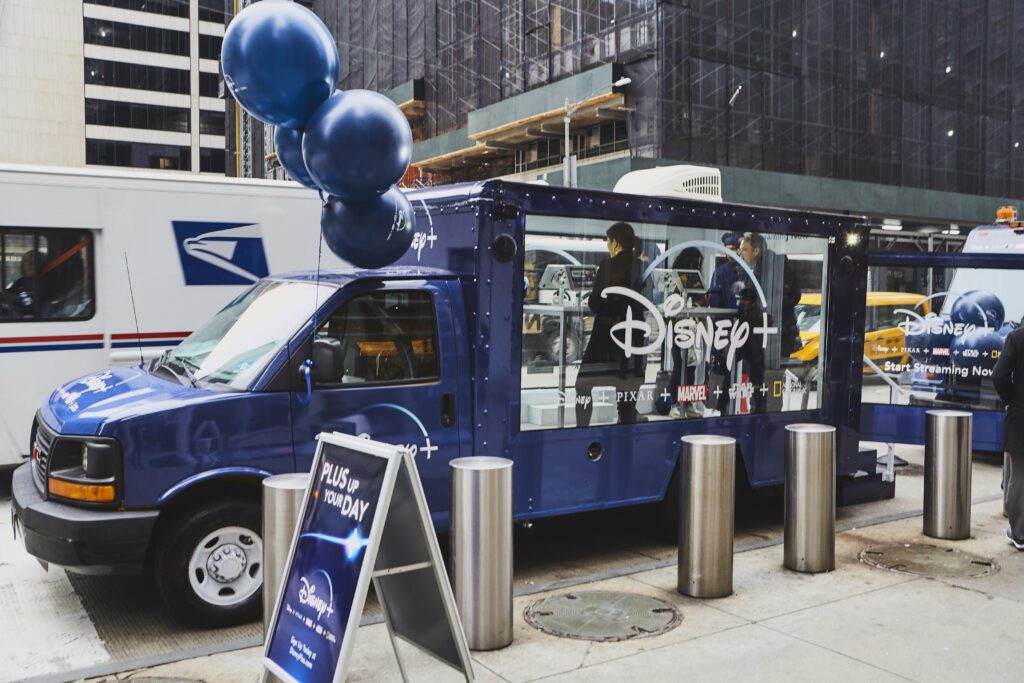
Most pop-ups show up. The good ones create an encounter. There’s a difference between setting up a table with a retractable banner and actually building something that stops a pedestrian mid-stride and makes them want to engage, share, or come back. The gap between those two outcomes is almost entirely in the planning.
Pop-up marketing has become a standard tool for brand activations, product launches, and market entry campaigns because it does something digital advertising fundamentally cannot: it creates a physical, human experience with a brand. That experience generates memories, social sharing, and purchase intent in ways that no banner ad or sponsored post can replicate. But executing it well requires understanding what makes a pop-up worth stopping for.
Our team has run hundreds of pop-up activations for consumer brands, entertainment companies, tech products, food and beverage launches, and retailersgoing physical for the first time. This guide reflects what we’ve learned about what makes a pop-up work and what makes it an expensive table on a sidewalk that no one approaches.
The Core Difference: Physical Presence vs. Brand Encounter
Physical presence is the minimum. Your team shows up, sets up, and occupies a location. Brand encounter is the goal: a person stops, engages, learns something about your product, picks up a sample or a piece of branded merchandise, and leaves with a feeling about your brand that wasn’t there an hour ago.
The conversion from presence to encounter is driven by three variables: the right location (foot traffic that matches your audience), the right format (an activation design that actually invites approach), and the right staff (brand ambassadors who can create genuine human connections rather than just hand things to whoever walks by).
Our brand ambassador team is trained in engagement protocols that make the difference between a pop-up that generates 200 genuine interactions and one that distributes 500 items to people who immediately toss them. The numbers look different on paper; the results are completely different in reality.
Site Selection: Where Your Pop-Up Lives Determines Whether It Works
Site selection is the single most important pre-execution decision in pop-up marketing. A great pop-up in the wrong location is invisible. An average pop-up in the right location gets engagement simply because the audience is there.
Matching Location to Audience Demographics
Total foot traffic is not the right metric for site selection. The right metric is foot traffic that matches your target audience’s demographic profile. A $400 skincare pop-up on a high-commuter subway corridor will get ignored. The same pop-up on the pedestrian block in front of a Lululemon or a Erewhon will get engagement because the audience is already self-selecting for premium wellness products.
We use pedestrian count data, retail adjacency analysis, and our own market knowledge to identify locations that match both the volume and the demographic composition of a brand’s target audience. For brands new to a market, we recommend a scouting day before committing to a location.
Event Adjacency: The Pop-Up Multiplier
The single fastest way to increase pop-up engagement volume is to deploy adjacent to a relevant event. A food brand sampling in front of a farmers market gets ten times the qualified engagement of the same activation on a random retail block, because the farmers market audience has self-selected for food interest. Similarly, deploying a street-level activation adjacent to a relevant conference, festival, or sporting event concentrates your target audience in a specific geographic zone for a specific time window.
Transit Adjacency: High Volume Baseline
Transit station exits are reliable high-volume locations for pop-up activations because they produce concentrated pedestrian pulses during commute windows. The challenge is that commuters are often in motion with purpose, making them harder to slow down than weekend leisure pedestrians. Transit-adjacent pop-ups need a compelling hook: a free sample of something genuinely appealing, a fast interactive experience, or a giveaway that’s worth stopping for.
Format Selection: Building an Activation Worth Approaching
The format of your pop-up is the physical expression of your brand encounter. It includes everything from the structure and visual design to the product or experience being offered. The most common mistake is prioritizing brand visibility over human invitation: building something that looks impressive from a distance but gives a passerby no clear reason to approach.
Sampling Activations
Product sampling is the most reliable pop-up format for consumer packaged goods and food and beverage brands. It works because the exchange is intrinsically clear: approach the table, receive something to eat or drink, form an opinion about the product. When the product is good, sampling creates immediate brand preference in a way that no advertisement can match.
Effective sampling pop-ups are staffed by trained brand ambassadors who can deliver a brief, enthusiastic product message during the sample handoff. The window is 10-20 seconds. A good ambassador makes those seconds count. A disengaged staff member turns the sample into a vending machine transaction with no brand memory attached.
Experiential Installations
Experiential pop-ups create an environment for people to enter and interact with, rather than just walk past. These range from branded photo opportunities (simple but social-share-generative) to fully immersive environments with product demonstrations, games, or creative interactions. The investment is higher, but the depth of brand encounter and the social media footprint are significantly greater.
For experiential activations, we integrate social sharing mechanics deliberately: a photo opportunity with a branded frame, a QR code linking to content, or an on-brand social challenge that rewards sharing. These mechanics extend the pop-up’s reach beyond its physical footprint.
Branded Product Giveaways
Quality branded merchandise that people actually want to keep is a pop-up format that creates lasting brand impressions after the activation ends. A tote bag, a reusable cup, a useful tech accessory with a brand mark on it travels through a city with its carrier for weeks or months. We source branded items for distribution programs and can handle fulfillment, staffing, and deployment for branded giveaway activations.
Staffing Your Pop-Up: The Human Element That Makes or Breaks It
A pop-up’s success is almost completely determined by the quality of its staff. The physical setup, the location, the creative — all of those matter. But the person who represents your brand in the 15-second interaction with a passing pedestrian is the actual deliverer of the brand encounter. Staffing matters more than almost any other variable.
Brand Ambassador Qualifications
Good pop-up brand ambassadors are warm but not pushy, knowledgeable but not robotic, and capable of reading a pedestrian’s interest level within two seconds. They smile when someone walks by and says hi even if the person doesn’t stop. They don’t block the sidewalk or create pressure. They create magnetic attraction rather than obligation.
Our brand ambassador network spans 50+ U.S. markets. We brief ambassadors on product knowledge, talking points, and engagement protocols before every activation. For multi-day campaigns, we run daily check-ins to address what’s working and adjust approach based on field feedback.
Staffing Ratios
For most street-level pop-ups, we recommend a minimum of two brand ambassadors per activation point to allow one person to engage while the other manages materials, handles setup issues, and maintains energy. Solo brand ambassadors fatigue faster and create bottlenecks during high-volume windows. For activations with complex product demonstrations or multi-station setups, the ratio increases accordingly.
Pop-Up Campaign Documentation and Reporting
Documentation is the bridge between what happens on the street and what lands in a client report. Every pop-up activation we execute is photographed with GPS-stamped timestamps. Staff log interaction counts throughout the day. Sample/product distribution is tracked against targets. Social monitoring tracks organic sharing during the activation window.
The report a client receives after a pop-up campaign should tell the story of what happened, where, and what it produced. Impression estimates, engagement counts, distribution numbers, and social reach all factor into the complete picture. We include representative photography from multiple activation points in every report.
Multi-City Pop-Up Rollouts
Pop-up campaigns can be scaled across multiple markets simultaneously or sequentially. A brand launching nationally might run coordinated pop-ups in New York, Los Angeles, Chicago, San Francisco, and Austin in the same week, creating a national social media moment from distributed activations. Our team coordinates multi-city campaigns from our Industry City, Brooklyn, NY operations base, managing market-specific logistics, staffing, and reporting for each city through a single point of contact.
Multi-city rollouts benefit from centralized creative and messaging consistency while allowing market-specific location and timing optimization. We handle all coordination so the client brand team receives a single integrated report rather than juggling seven city-specific agency relationships.
Combining Pop-Ups with Supporting Street Campaigns
Pop-ups perform better when surrounded by supporting street-level campaign elements. Wheatpaste poster campaigns in the blocks surrounding the pop-up location prime the audience before they arrive. Sidewalk stencils create directional wayfinding to the activation. LED billboard trucks circling the area during the activation window drive additional foot traffic from adjacent blocks.
Integrated campaigns that combine a pop-up core with surrounding street formats consistently produce higher engagement than standalone activations because they create a coordinated brand presence across an entire zone rather than a single point of contact.
Frequently Asked Questions
What is pop-up marketing?
Pop-up marketing is a form of brand activation that creates a temporary physical presence in a high-traffic public location. Pop-ups range from staffed sampling tables and branded product experiences to full experiential installations occupying retail spaces, vacant storefronts, or street corners. The defining characteristic is that they appear unexpectedly and run for a limited time, creating urgency and novelty that drives engagement.
How do you choose a location for a pop-up marketing activation?
Location selection for a pop-up should be driven by foot traffic data for your specific target demographic, proximity to your audience’s natural movement patterns, and zoning or permitting requirements for the format you’re planning. High-pedestrian commercial streets, transit adjacencies, event zones, and busy park perimeters are typical starting points. The best locations are those where your audience is already present and receptive, not locations that simply have high total volume.
What permits do you need for a pop-up marketing activation?
Permit requirements vary by city and format. Most cities require a temporary use permit or special events permit for staffed pop-up activations in public spaces. If you’re serving food or beverages, health department permits apply. Tented structures typically require additional approvals. Our team handles permit research and application for all markets we operate in.
How much does a pop-up marketing campaign cost?
Pop-up marketing costs range widely based on format, duration, and market. A single-day sampling activation in a major market with a branded table, three staff, and branded materials typically runs $2,500-$5,000 all-in. Multi-day activations with custom builds, large staff, and giveaway products can reach $25,000-$75,000+. Our team can scope a pop-up to fit a range of budgets.
How do you measure the success of a pop-up marketing campaign?
We measure pop-up success through several metrics: direct engagement counts (how many people interacted with staff), sample/product distribution volume, lead captures if the format includes a registration component, social media impressions generated by organic sharing, and foot traffic estimates for the location during the activation window. All field activities are documented with GPS-stamped photography and staff logs.
What types of brands benefit most from pop-up marketing?
Pop-up marketing works across categories but is particularly effective for consumer packaged goods launching new products, food and beverage brands entering new markets, entertainment companies promoting releases, retail brands building physical presence before permanent store openings, and tech products that benefit from hands-on demonstration. Basically any brand that wants to create a genuine human encounter with its product at street level.