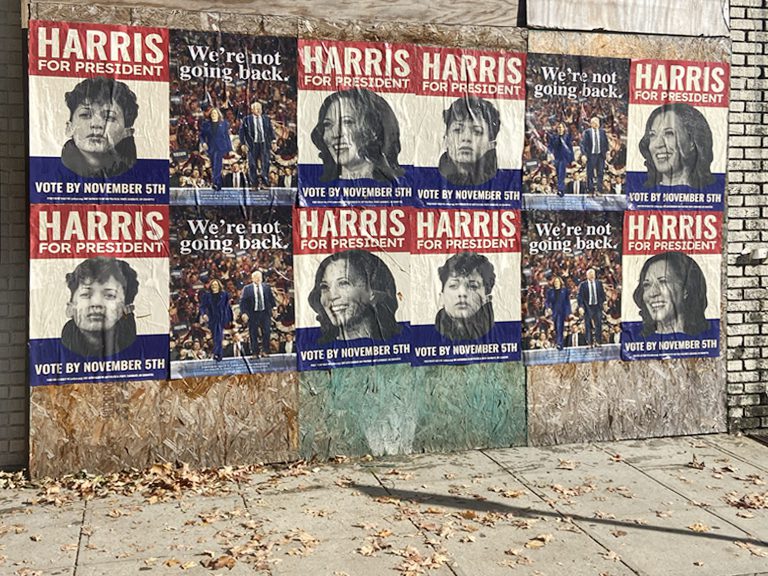
Political campaigns have used street-level marketing since long before the term “guerrilla marketing” existed. The yard sign, the parade float, the canvasser going door to door: these are the original formats of street-level brand building, applied to the specific objective of winning votes. What has changed over the decades is not the basic effectiveness of ground-level voter contact but the sophistication with which campaigns can plan, deploy, and measure these programs.
Our team works with political campaigns, issue advocacy organizations, and ballot initiative committees on street-level marketing programs that build candidate visibility, increase name recognition, and generate the community presence that signals a campaign’s organizational strength to undecided voters. Street-level tactics are most valuable in competitive races where digital advertising saturation has reduced its marginal impact, in dense urban districts where pedestrian voters are reachable through foot traffic programs, and in races where physical presence in the community is itself a signal of organizational competence.
This guide covers the primary street marketing formats for political campaigns, how to sequence them across the campaign calendar, the legal framework governing political street marketing, and how to build a ground-level program that complements digital outreach rather than duplicating it.
Why Street Marketing Matters in Political Campaigns
The argument for street-level political marketing is not that it replaces digital advertising, television, or direct mail. It is that it does something those channels cannot do: it places the candidate’s name and message in the physical environment where voters live, work, and move daily. Repeated physical exposure to a candidate’s name and message builds familiarity and favorability through mechanisms that are distinct from digital impression delivery. The neighbor’s yard sign seen every morning on the walk to the subway is processed differently than the digital banner ad served between social media posts.
Research on political campaign effectiveness consistently shows that personal voter contact is the highest-return voter mobilization tactic available. A street team canvassing program that generates genuine face-to-face conversations with undecided voters in the right precincts outperforms broadcast advertising at a fraction of the cost in competitive legislative and local races. The limitation of personal contact is scale, which is why it works in combination with formats that provide broad visual presence while the street team handles targeted personal engagement.
Yard Signs and Poster Programs
Yard signs are the most deployed format in political street marketing and the one with the most documented name recognition effect. Research on yard sign effectiveness shows consistent results: yard sign programs in competitive districts increase the candidate’s name recognition by five to ten percentage points among voters who regularly encounter the signs on their daily routes. In races decided by margins under five points, that recognition lift is meaningful.
Yard sign programs require a volunteer and supporter network to place signs on private property with owner permission. Signs placed without property owner permission create negative impressions rather than positive ones, generate complaints, and can result in material removal and negative press coverage. The sign network must be built through campaign outreach, not through unauthorized placement.
Poster Programs in Commercial and Urban Districts
In urban districts where single-family residential yard signs are less applicable, poster programs on commercial surfaces with property owner permission extend the campaign’s physical presence into commercial corridors and mixed-use neighborhoods. Candidate posters on permitted commercial surfaces in high-foot-traffic corridors reach voters on their daily commute routes and shopping corridors, generating impression frequency comparable to what yard signs provide in residential neighborhoods.
Street Team Canvassing Programs
Street team canvassing is the most labor-intensive and most effective ground-level tactic in political campaigns. A well-trained canvassing team conducting door-to-door voter contact in targeted precincts generates conversion rates on voter persuasion and turnout motivation that no passive format can match. The challenge is scale: canvassing requires enough trained volunteers or paid staff to cover the target precincts at meaningful density in the weeks before Election Day.
Our brand ambassador programs can be deployed for political canvassing in high-foot-traffic public spaces rather than door-to-door residential programs: at transit station exits during morning and evening commutes, at farmers markets and community events, at high-pedestrian commercial corridors in the campaign’s target precincts. Street-based canvassing is not a substitute for door-to-door but it reaches voters who are out in the community rather than at home, which covers a segment of the electorate that door-to-door misses during working hours.
Voter Registration and Get Out the Vote Programs
Street team programs for voter registration and get-out-the-vote (GOTV) initiatives operate on the same foot traffic deployment model as commercial street teams. The target locations are transit exits, university campuses, community centers, public parks on weekend afternoons, and any location that concentrates eligible unregistered voters or low-propensity registered voters in the campaign’s target demographic. Teams are equipped with registration materials, voter information resources, and training on the campaign’s core messages.
Sidewalk Stencil Programs for Political Campaigns
Sidewalk stencil programs for political campaigns are effective for name recognition building on high-foot-traffic pedestrian corridors within the candidate’s target district. Chalk-based stencil programs on public sidewalks are legally protected political speech in most jurisdictions when the material is water-soluble and the placement does not block pedestrian access. This protection derives from First Amendment political speech protections that courts have applied to temporary sidewalk chalk expression in numerous cases across the United States.
Campaign stencils should include the candidate’s name and a simple message or call to action: vote date, polling location reminder, or the campaign’s core theme. Overly complex stencil designs lose legibility at sidewalk viewing scale. Simple, bold typography with the candidate’s name and election date generates better recognition than detailed illustrative designs.
Proximity to Polling Locations
Most states prohibit campaign materials, including stencils and yard signs, within a specified distance of polling locations on Election Day and during early voting periods. The distance varies by state, typically from 25 to 100 feet from the polling place entrance. Campaign stencil programs must research applicable buffer zones in each jurisdiction before deploying near voting locations.
The Legal Framework for Political Street Marketing
Political campaign materials are subject to the same property and public space regulations as commercial advertising, with the important addition of campaign finance disclosure requirements. The legal framework operates on several levels that campaigns must understand before deploying street-level programs.
Property Law
Placing campaign materials on public property without authorization is illegal in virtually all jurisdictions and typically violates municipal littering or posting ordinances. Placing materials on private property requires permission from the property owner, who has full rights to grant or refuse permission regardless of political considerations. Courts have consistently upheld property owner rights to restrict campaign signage on their property.
First Amendment Protections
Political speech in public spaces is broadly protected under the First Amendment, but protection does not eliminate location-specific restrictions. Time, place, and manner restrictions that are content-neutral, narrowly tailored, and leave open alternative channels of communication are constitutionally permissible even for political speech. This means that a city can restrict the placement of signs on public property as long as the restriction applies equally to all content and is not targeted at political speech specifically.
Campaign Finance Disclosure
Campaign materials including street-level marketing must comply with applicable campaign finance disclosure requirements, which in most jurisdictions require a paid for by disclaimer identifying the campaign committee that authorized and funded the materials. Requirements vary by federal, state, and local race. Legal counsel for the campaign should confirm applicable disclaimer requirements before producing campaign materials.
Building the Ground-Level Campaign Calendar
Political street marketing follows a specific calendar logic tied to the election date. The general framework: yard sign distribution begins four to six weeks before Election Day; poster programs begin three to five weeks out; street team canvassing intensifies in the final three weeks; sidewalk stencil programs deploy in the final ten days; and GOTV street team programs run in the 72-hour window before Election Day with maximum volunteer mobilization.
This calendar reflects the voter decision timeline: most voters are not paying close attention to local or state races until three to four weeks before the election, which means campaign materials deployed earlier than that window accumulate impressions on audiences that are not yet in active decision mode. The final three weeks are when name recognition and positive impression accumulation from earlier deployment begins to influence vote choice.
Frequently Asked Questions
What is political street marketing?
Political street marketing refers to ground-level campaign tactics deployed to build candidate visibility, voter awareness, and community support outside of digital and broadcast channels. Formats include yard signs, street team canvassing, sidewalk stencil programs, poster campaigns, and event-based activations in high-foot-traffic areas within the candidate’s target districts.
Are street marketing tactics effective for political campaigns?
Street-level tactics are most effective for political campaigns in dense urban districts where voters are reachable through pedestrian foot traffic, and in competitive races where establishing physical presence in the community signals strength and organizational capacity. Research consistently shows that repeated physical brand exposure increases name recognition and favorability.
What street marketing formats work for political campaigns?
Street team canvassing and voter contact programs are the highest-return format because they create direct voter engagement. Yard sign and poster programs build name recognition through repeated visual exposure. Sidewalk stencils in high-foot-traffic areas create low-cost impressions on voter approach routes.
What are the legal restrictions on political street marketing?
Political campaign materials are subject to the same property regulations as commercial advertising. Placing materials on public property without authorization is illegal. Placement on private property requires owner permission. Campaign materials must comply with applicable campaign finance disclosure requirements including paid-for-by disclaimers.
How far in advance should political street marketing be planned?
Political campaign street marketing should begin planning six to eight weeks before the target deployment date. Major pushes typically align with the 30-day window before Election Day, with canvassing and street team programs intensifying in the final two weeks. Yard sign distribution should begin four to six weeks before Election Day.
Does American Guerrilla Marketing work with political campaigns?
Yes. We work with political campaigns, issue advocacy organizations, and ballot initiative committees on street-level marketing programs. Our services include street team deployment, poster campaign production and installation, sidewalk stencil programs, and coordinated multi-format ground-level campaign execution. Contact us at (646) 776-2770.