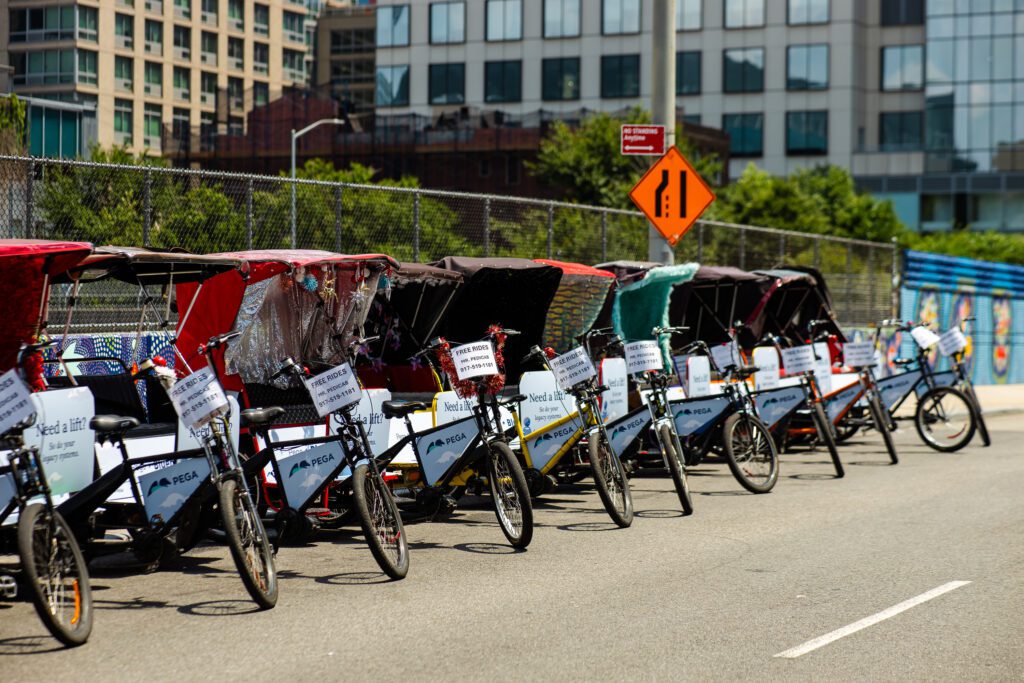
Chicago’s pedicab market operates in a city that combines one of the largest convention markets in North America with a dense lakefront tourism zone and a robust summer outdoor culture that fills the city’s parks, beaches, and entertainment corridors from May through October. The concentration of convention attendees from McCormick Place and the Lakeside Center moving through the downtown hotel zone, combined with the tourist population visiting Navy Pier, Millennium Park, and the Magnificent Mile, creates an audience density in Chicago’s core that makes pedicab advertising genuinely effective for brands targeting these demographics.
Our team plans and executes pedicab advertising programs in Chicago as part of broader guerrilla marketing campaigns that may also include wheatpaste poster placements, street team activations, and LED billboard truck routes across the city’s primary campaign zones. This guide covers the Chicago pedicab market, where pedicabs operate and what audiences they reach, how to integrate pedicab advertising into a broader campaign architecture, and the operational framework for running a compliant, documented Chicago pedicab program.
Chicago pedicab advertising is a format that delivers high-quality impressions in specific contexts where traditional outdoor advertising either cannot reach (inside Millennium Park near the Bean, on Navy Pier) or faces extreme competition. When the target audience and the deployment zone align, the format performs exceptionally well and generates strong social media documentation from passengers and bystanders who photograph and share the experience.
Chicago’s Pedicab Operating Environment
Chicago pedicabs operate under the City of Chicago’s transportation network regulations, which require operator licensing and vehicle registration. Pedicab operations concentrate in the zones where their slow-speed, passenger-carrying model fits the existing pedestrian and leisure culture of the neighborhood.
Unlike some other major cities where pedicabs operate only in a single zone, Chicago’s pedicab geography is distributed across several distinct operating environments that correspond to the city’s different leisure and tourism zones. This distribution creates both an opportunity and a planning challenge: campaigns can reach multiple distinct audiences by coordinating pedicab deployment across different zones, but the campaign planning must account for the different audience characteristics and operating hours in each zone.
Primary Pedicab Operating Zones in Chicago
Navy Pier and Lakefront
Navy Pier is Chicago’s most-visited tourist attraction and the primary anchor of the city’s lakefront leisure economy. The pier draws more than nine million visitors annually and generates concentrated foot traffic on the Navy Pier grounds and the surrounding lakefront paths. Pedicabs operating in the Navy Pier zone carry passengers between the pier entrance, the River North hotel cluster, and the pedestrian lakefront path running north toward the Gold Coast. Brand creative on pedicabs in this zone reaches the tourist and leisure audience that constitutes Navy Pier’s primary visitor population: families, domestic tourists, international visitors, and the convention attendees who include Navy Pier activities in their Chicago visit.
Magnificent Mile and Gold Coast
The Magnificent Mile corridor on North Michigan Avenue from the Chicago River to Oak Street Beach is Chicago’s premium retail and hotel zone. Pedicabs operating on Michigan Avenue and the parallel streets of Rush Street and State Street carry leisure passengers between the Magnificent Mile’s hotels, restaurants, and attractions. The Gold Coast neighborhood immediately north of the Magnificent Mile adds an upscale residential and dining audience. Brand creative in this zone reaches a higher-income, fashion-forward demographic than the Navy Pier tourist audience.
The Loop and Millennium Park
The Loop is Chicago’s downtown business and cultural district, centered on the blocks bounded by the elevated train loop from Wacker Drive to Congress Parkway. Millennium Park, on the eastern edge of the Loop at Michigan Avenue and Randolph Street, is one of the most photographed public spaces in the city and draws millions of visitors annually for the Cloud Gate sculpture, Crown Fountain, and the Grant Park music pavilion. Pedicabs operating in the Loop and Millennium Park zone serve both the tourist population visiting these iconic sites and the convention attendee population staying in the Loop’s hotel cluster.
The Millennium Park zone is particularly valuable for pedicab advertising because the park itself is an advertising-free environment for conventional formats. A pedicab carrying brand creative past the Bean and through Grant Park places brand messaging within an experience that generates high-quality social content from both passengers and the bystanders who photograph the sculpture surroundings.
River North
River North, immediately north of the Chicago River and west of the Magnificent Mile, is Chicago’s primary restaurant and nightlife district. The concentration of upscale restaurants, bars, and clubs along Franklin Street, Wells Street, and the surrounding blocks draws a professional and leisure audience with strong purchasing power from 5pm through midnight on weekdays and through 2am on weekends. Pedicabs in River North serve passengers traveling between restaurants, hotels, and entertainment venues within the neighborhood and connecting to the Loop and Magnificent Mile zones.
Wrigleyville and the North Side
On Cubs home game days, Wrigleyville transforms into one of the highest-density pedestrian zones in the city. The concentration of tens of thousands of baseball fans on Clark Street, Addison Street, and the surrounding blocks creates a valuable activation context for pedicab advertising. Campaigns targeted to sports audiences, consumer brands with sports marketing strategies, or brands seeking a mass-market Chicago audience find Wrigleyville game days among the highest-return deployment windows.
Integrating Pedicab Advertising with Street-Level Campaigns
Pedicab advertising in Chicago performs best as a component of a broader campaign rather than a standalone format. The format’s reach limitation relative to other outdoor advertising formats means it works most effectively when paired with complementary formats that extend geographic coverage while the pedicabs deliver high-quality impressions in their specific operating zones.
A typical integrated Chicago campaign architecture for a convention-targeted program might combine: pedicab wraps providing eye-level presence in the Loop, Millennium Park, and River North zones; wheatpaste posters in the Wicker Park and Bucktown neighborhoods where convention attendees’ personal leisure interests draw them; street team activations at the McCormick Place pedestrian exits and at the convention hotel entrances on Michigan Avenue; and LED billboard trucks on Michigan Avenue and LaSalle Street during the convention day’s peak movement windows.
Seasonal Considerations for Chicago Pedicab Advertising
Chicago’s climate makes pedicab advertising a seasonally limited format in a way that does not apply to most other outdoor advertising formats. Pedicab operations in Chicago are active from approximately May through October, with the peak season running from Memorial Day weekend through Labor Day. Early May and late October programs are possible but generate reduced passenger volume as temperatures limit the appeal of open-air pedicab transport.
Summer weekends from June through August are the highest-value windows for Chicago pedicab advertising in the Navy Pier and Magnificent Mile zones. Convention season windows from September through November generate high-value opportunities in the Loop and convention hotel zones even as the lakefront tourist season winds down. Planning a Chicago pedicab program should account for the seasonal calendar and align the deployment window with the activation environment that best serves the campaign’s audience targets.
Documentation and Campaign Reporting
Our pedicab advertising programs in Chicago include GPS route documentation for each vehicle throughout the campaign period, photographic documentation of wrapped vehicles in operation at key locations, and post-campaign reporting delivered within five business days of campaign completion. Riders logs, where available from the pedicab operator, provide additional data on passenger volume and route coverage. This documentation package gives clients a complete record of campaign delivery to support post-campaign analysis and future budget decisions.
Frequently Asked Questions
What is pedicab advertising in Chicago?
Pedicab advertising in Chicago places brand creative on the exterior panels of pedal-powered passenger cabs operating in tourist and entertainment zones including Navy Pier, the Magnificent Mile, the Loop, Millennium Park, and River North. The format reaches tourists, convention attendees, and leisure visitors at slow speeds at eye level.
Where do pedicabs operate in Chicago?
Chicago pedicabs primarily operate in Navy Pier and the surrounding lakefront, the Magnificent Mile from the Chicago River to Oak Street Beach, the Loop and Millennium Park zone, River North’s restaurant and nightlife corridor, and Wrigleyville during Cubs game days.
How much does pedicab advertising in Chicago cost?
Chicago pedicab advertising programs typically run $4,000 to $18,000 depending on the number of vehicles, campaign duration, and whether the program includes street team or experiential elements. Contact our team for current pricing based on your campaign scope.
What types of brands use pedicab advertising in Chicago?
Tourism and hospitality brands, Chicago convention exhibitors, entertainment companies, food and beverage brands, and consumer goods brands targeting the tourist and leisure audience in Chicago’s downtown and lakefront zones are the primary users of pedicab advertising in the city.
When is the best time to run pedicab advertising in Chicago?
Pedicab advertising in Chicago operates most effectively from May through October, during the city’s outdoor leisure and tourist season. Peak windows are summer weekends from June through August, Cubs home game days at Wrigley Field, and major Chicago convention weeks when large attendee populations move through the downtown zone.