
November 20, 2026
LED Truck Billboard: How It Actually Works
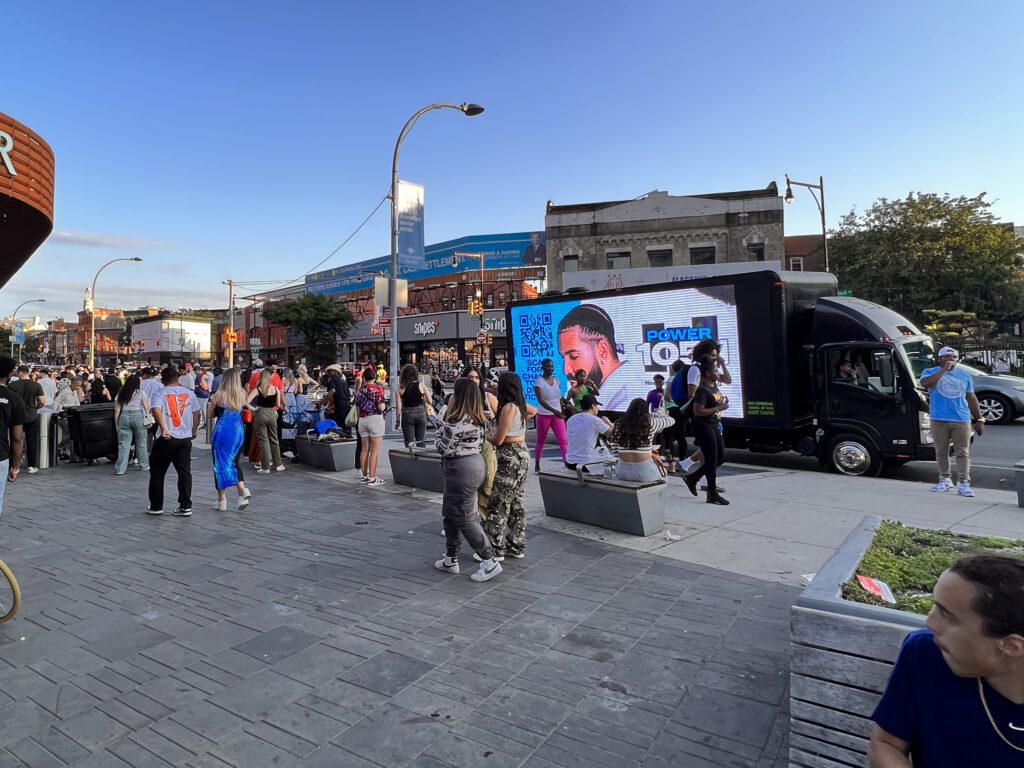
Search this term and you get a strange mix. Rental vendors listing fleet sizes, a few truck sale listings, and at least one music magazine that has nothing to do with any of it. The search results are confused because the intent is confused. Some people want to hire a screen on wheels for a week. Some people want to own one.
Those are completely different decisions and almost nobody writes about both honestly, so I am going to.
I run campaigns on these trucks. I do not sell trucks. That shapes my bias and you should know it going in. But I have spent enough time standing next to screens at night in Los Angeles, New York, Chicago, Atlanta, Miami, Nashville and Las Vegas to tell you what the hardware actually does, which specifications matter at street distance, and which ones are marketing noise.
This is the technical version. Pixel pitch, brightness, screen size, power, creative specs, the grey areas around operating one, and when owning makes sense versus hiring a run.
What the hardware actually is
An LED truck billboard is a box truck or a purpose built chassis carrying LED panels, usually on both flanks and often on the rear. The panels are modular, assembled in a grid into one continuous display per side. Behind them sits a controller and a media player, and behind that sits a generator, because a screen of this size will not run off the vehicle's own electrical system for a shift.
The screen is not a television. It is an outdoor LED matrix built from discrete modules, each one a small array of surface mounted diodes. Modules are replaceable individually, which matters, because a single dead module on a flank is a visible black rectangle in the middle of your creative and a crew that carries spares can swap it in a yard in under an hour.
The generator is the part nobody mentions in sales material and the part that shapes real operations. It needs fuel, it makes noise, it has to be positioned so the exhaust is not sitting in a crowd, and in quiet residential areas it is often the thing that attracts attention before the screen does.
Pixel pitch, explained properly
Pixel pitch is the distance in millimetres between the centres of adjacent LEDs. P5 means five millimetres. P4.9 means four point nine. Smaller number, more pixels in the same physical area, finer image.
The part that sales pages skip is that pixel pitch only matters in relation to viewing distance. There is a rough working rule in this industry: the minimum comfortable viewing distance in metres is approximately the pitch number. A P5 screen resolves cleanly from about five metres out. Closer than that and a viewer starts to see individual diodes and the image breaks into dots.
For a truck, that rule is almost always satisfied. Your audience is on a sidewalk across a traffic lane, or on a patio, or in a car behind you. They are rarely closer than five metres and usually a lot further. Which means a P5 panel is entirely adequate for street advertising, and a P3 panel, which costs considerably more to build and to repair, delivers resolution that nobody on that sidewalk is in a position to perceive.
I have had clients ask specifically for the finest pitch available because finer sounded better. At street distance it is money spent on detail the audience physically cannot resolve. The exception is a truck intended to be parked in a pedestrian plaza or at an event where people walk right up to it. Then tighter pitch earns its keep.
What matters much more than pitch, for almost every campaign, is brightness and contrast.
Brightness, and why daytime is the real test
LED brightness is measured in nits. An indoor screen might run a few hundred. An outdoor screen built to fight daylight runs into the thousands.
Nighttime is easy. Any outdoor rated screen is overwhelmingly the brightest thing on a dark street, and we routinely run them dimmed after dark. That is not cost saving. An over bright screen at night blooms, loses edge definition and becomes harder to read, not easier. It also draws complaints and attention from enforcement faster than anything else a truck does.
Daytime is where screens get exposed. Direct afternoon sun striking a panel at an angle washes contrast out badly. This is the single most common disappointment for first time LED buyers. They approve creative on a monitor in an office, the truck runs at two in the afternoon in July, and the thing they see in the proof photography is a grey rectangle with a faint shape in it.
Two things fix it and neither is a hardware upgrade.
First, creative built for the condition. Light backgrounds, dark heavy type, extreme contrast, no subtle gradients, no thin fonts, no dark imagery with dark text over it. A white field with black type reads in direct sun. A moody dark photograph with white script type does not, at any brightness.
Second, routing that respects the sun. The flank facing into direct low sun will always read worse than the shaded flank. On an afternoon route we know which side is the strong side and we plan direction of travel so the good side faces the heavy sidewalk where we can.
If a campaign is going to live or die on midday performance in a very bright market, I will say plainly that static printed panels with high contrast will out read an LED screen in that specific condition. I have talked clients out of LED for exactly that reason.
Screen size and what is typical
Flank screens on a standard box truck conversion commonly land somewhere around the dimensions of the cargo box side, which in practice gives a tall, wide landscape display running most of the usable length. Rear screens tend to be roughly square and smaller.
Bigger is not automatically better. A larger screen means more panels, more weight, more power draw, a bigger generator, and more surface for crosswind to push against. It also means the vehicle gets taller or longer, which affects where it can legally and practically go. A truck that cannot make a turn in SoHo or fit under a parking structure at a venue is a truck with a routing problem no screen size compensates for.
The thing that actually determines readability is not screen area. It is type size relative to screen height and the contrast behind it. A modest screen with a brand mark occupying a third of the height and six words of enormous type will beat a huge screen carrying a busy layout, every single time, at every distance.
Rear screens are the underrated asset. The rear panel is the one seen by drivers sitting in stopped traffic behind you, which is the only audience with enough sustained attention to read a second line of copy or scan a code. We put the detail on the rear and the single idea on the flanks.
Creative specs and what the loop should look like
Artwork is built to the native pixel dimensions of the screen, not to a print size. Your designer needs the exact pixel grid for each panel before anything is laid out, because flank and rear are different shapes and a file stretched to fit looks exactly like a file stretched to fit.
Motion is the reason to hire an LED truck instead of a static one, and most clients overuse it. A loop that cuts every two seconds gives a pedestrian nothing to hold. The viewer gets one glance, lands mid transition, and takes away nothing.
What works is long holds and few changes. A still frame carrying the core message for six to ten seconds, one clear movement or reveal, then the next frame. Across a whole loop, three or four creatives maximum. If you have eight messages, you have no message.
Text on motion needs to be larger than text on a static panel, not the same size, because the eye is tracking movement and reading at once.
Video with audio is almost never worth it. You cannot broadcast sound in most of the places you would want to, between the generator noise and local noise rules, so assume the screen is silent and design for silence.
The ability to change creative mid campaign from a phone is genuinely useful and underused. Running a different message on the Thursday night block than on the Saturday afternoon block costs nothing once the files exist.
Renting a run versus owning a truck
Two different businesses.
Hiring a run means you get the vehicle, the driver, the screen, the generator, the fuel, the insurance, the route planning, the compliance checks, the proof photography and someone else's problem when a module fails on a Friday night. You pay for the days you use. You scale up to several markets by adding units rather than buying them. You do not own a depreciating specialist vehicle.
Owning a truck means a build, which is a chassis plus panels plus controller plus generator plus integration, typically ordered with a deposit and delivered after a build period of some weeks. Then it means everything that follows: a licensed driver, fuel, commercial insurance appropriate to an advertising vehicle, storage with power, routine maintenance on both vehicle and screen, spare modules, and someone whose job is to know the ordinance situation in every market you operate in.
The honest decision rule is utilisation. Owning starts to make sense when a screen would be on the street most days of most months, continuously, for your own messaging. That is the profile of an organisation with permanent, ongoing, high frequency outdoor needs in a home market. It is not the profile of a brand running a launch, a tour, a conference week or a seasonal push.
Most people asking about buying are actually describing a campaign, not an operation. When I hear that, I say so. We do not sell trucks, so I have no reason to push you either way, and I would rather you not buy a vehicle you will park for eleven months.
The other thing nobody warns buyers about is the operations knowledge. The vehicle is the easy part. Knowing which blocks in which cities are worth running, at which hour, and which are going to produce a problem, is the expensive part, and it does not come with the chassis.
The grey area around operating one
I will not tell you that operating an LED truck billboard is legal or illegal, in any market, because it is not that simple and no vendor should be making that claim to you.
Mobile advertising sits in a grey area that varies by municipality. Some cities address advertising vehicles directly through sign codes. Many reach them instead through parking and standing rules, which is where most real friction happens. Some apply noise ordinances that catch the generator rather than the screen. A few have provisions aimed specifically at illuminated or animated displays near controlled intersections, because a bright moving image near a traffic signal is a category regulators pay attention to.
Enforcement is inconsistent. It differs between cities, between districts inside one city, and between an ordinary Tuesday and a festival weekend on the same block. Event perimeters, stadium districts and convention grids frequently carry temporary restrictions that override how a street normally behaves.
What we do about it is operational rather than legal. We check restrictions and sensitive zones before a route sheet is finalised. We route around known problem areas. We dim at night, which improves readability and reduces friction at the same time. We do not park where standing is prohibited and describe it as an activation. When a client wants long stationary time, we find private property and get the owner's permission, because a private lot with a documented yes is a different situation entirely from a public curb. We keep route sheets, GPS logs, permissions and timestamped photography, so if a question arrives later there is a record.
None of that is legal advice. If your campaign carries real regulatory exposure, have your own counsel look at the market before you book.
What fails, and what we push back on
Dark creative. The most common failure by a distance. Dark backgrounds look sophisticated on a designer's monitor and vanish in daylight. We ask for the light background version every time.
Too many frames in the loop. Three or four creatives. Long holds. If a client sends twelve, we cut it with them rather than for them.
Fine pixel pitch requested for street work. Resolution nobody on that sidewalk can resolve. We explain the viewing distance rule and spend the scope somewhere it shows.
Midday runs in very bright summer markets. Washed out panels and empty sidewalks at the same time. We shift those markets late.
Freeway routes. Requested because the vehicle counts look enormous. Nobody reads a flank screen at highway speed across three lanes. We will not build a route on interstate miles.
Residential blocks late at night. The generator plus a bright moving screen in a sleeping neighbourhood produces complaints, not awareness.
One truck, one shift, expecting a market result. A single run is a photograph. Frequency on the same corridors is what makes this register.
Audio. Assume silence. Design for it.
Where an LED truck stops being the right tool
Sometimes the client wants scale and impact at night and a truck is not actually the best way to get it.
Projection Advertising is the format I point people toward when the goal is a very large, very bright image after dark on a fixed high value site rather than a moving panel across a route. A projected image on a permitted wall is dramatically larger than anything a truck can carry, it has no generator parked in a crowd, and on the right surface at the right hour it dominates a block in a way a vehicle cannot. It is strictly a night format and it depends entirely on surface and permission, which is why it is not a universal answer, but when a client describes wanting something enormous and cinematic and the whole campaign is after dark, a truck is usually not the shape of that idea.
The honest position is that an LED truck is a mobility tool. If mobility is not what the campaign needs, something else is simpler to run and better in result, and I would rather route you there than sell you a screen you did not need.
Frequently asked questions
What pixel pitch do I need for street advertising?
Pitch matters relative to viewing distance, and the working rule is that minimum comfortable viewing distance in metres roughly equals the pitch number. Street audiences are almost always beyond that, so P5 class panels are adequate for most campaigns. Tighter pitch earns its keep only when people walk right up to the screen at events or in plazas.
Can the screen be read in daylight?
Yes, with the right creative. Direct sun flattens contrast badly, so light backgrounds with heavy dark type read well and dark imagery with thin light type disappears. We also plan direction of travel so the shaded flank faces the heavy sidewalk. In extremely bright markets at midday, static printed panels can genuinely out read a screen.
Should I rent a run or buy a truck?
It comes down to utilisation. Owning makes sense when a screen would be on the street most days of most months for your own ongoing messaging. A launch, a tour, a conference week or a seasonal push is a campaign, not an operation. Owning also brings driver, fuel, insurance, storage, maintenance and spare modules with it.
How long should each creative stay on screen?
Longer than most people expect. Six to ten seconds per frame, one clear movement, and three or four creatives across the whole loop. Fast cutting means a pedestrian gets one glance and lands mid transition with nothing to hold. Text on motion also needs to be larger than text on a static panel.
What powers the screen?
A generator carried on the vehicle, not the truck’s own electrical system. That means fuel, routine servicing, exhaust positioning away from crowds, and noise. The generator is often what draws attention in quiet areas before the screen does, and it is a real factor in where a truck can sensibly be stationed.
What happens if a panel fails mid campaign?
LED modules are individually replaceable, so a dead module shows as a black rectangle rather than killing the whole screen. A crew carrying spares can usually swap one in a yard between shifts. Asking whether a provider stocks spare modules for their panel type is a fair question and the answer tells you a lot.
Request a campaign quote
Tell us the market, the dates, the hours your audience is actually outside, and what you need them to walk away knowing. We will tell you whether an LED screen is the right instrument, what the creative has to do to survive daylight, and how the route should be built.
If static panels or a different format would serve you better, we will say that instead.
Request a campaign quote and we will give you a straight answer.

Ready to Run Your Campaign?
Call us or email us. We’ll tell you exactly what we can do in your market and what it costs.
Related Services
Explore similar advertising solutions offered by American Guerrilla Marketing.
American Guerrilla Marketing — Los Angeles
Street-level campaigns in Los Angeles and nationwide. Wheatpasting, LED trucks, street teams, and more.
(646) 776-2770
Related Articles
-
Planning LED Trucks & Mobile Billboards in Sacramento
November 20, 2026
-
Electronic billboard companies: How It Actually Works
November 20, 2026
-
LED Trucks & Mobile Billboards in Milwaukee, Wisconsin
November 20, 2026
-
Mobile Outdoor Advertising: How It Actually Works
November 20, 2026
-
Mobile LED Screen Rental: Timelines, Permits and How
November 19, 2026