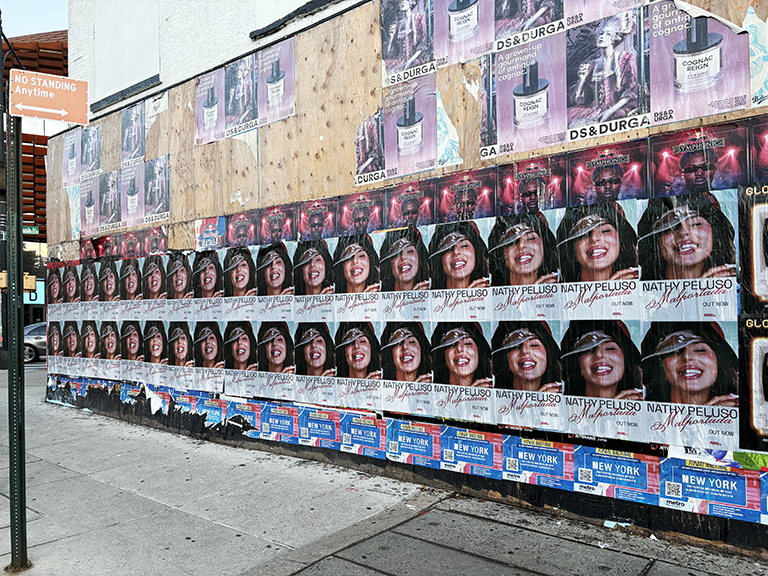
An out-of-home advertising agency helps brands plan, buy, coordinate, and execute advertising in physical environments outside the home. Traditional OOH includes billboards, transit advertising, and other established media inventory. Alternative OOH adds street-level formats that can create more concentrated visibility around neighborhoods, events, venues, and specific audience groups.
The right approach depends on where your audience spends time, what the campaign needs to accomplish, the target market, and the available budget.
What Does an Out-of-Home Advertising Agency Do?
An OOH advertising agency helps turn a campaign objective into a physical media strategy.
Depending on the campaign, an agency may handle:
- Market and audience research
- OOH media planning
- Location research
- Inventory selection
- Vendor coordination
- Media buying
- Creative coordination
- Production
- Installation
- Field execution
- Campaign documentation
- Performance reporting
Traditional OOH agencies often focus heavily on established inventory such as billboards and transit media.
An alternative OOH agency may also manage street posters, wheatpasting, sidewalk advertising, brand ambassadors, projections, mobile advertising, and experiential campaigns.
The important difference is not simply the format. It is how the agency connects the format, location, audience, timing, and campaign objective.
Traditional OOH vs. Alternative OOH
Traditional and alternative OOH are not competing approaches. They can work together.
Traditional OOH
Traditional OOH typically includes established advertising inventory such as:
- Static billboards
- Digital billboards
- Bus shelters
- Transit advertising
- Kiosks
- Airport advertising
- Rail and subway advertising
These formats can be useful when a brand needs broad visibility, established inventory, and large-market reach.
Alternative OOH
Alternative OOH uses more flexible and street-level formats, including:
- Street posters
- Wheatpaste campaigns
- Sidewalk stencils
- Sidewalk decals
- Brand ambassadors
- Sampling
- Projection advertising
- LED billboard trucks
- Experiential activations
- Mobile OOH
These formats can be particularly useful when a campaign needs concentration around specific neighborhoods, events, cultural areas, campuses, entertainment districts, or retail corridors.
When Should a Brand Use an Alternative OOH Agency?
Alternative OOH can make sense when broad traditional inventory is not enough to reach the right audience.
Product Launches
A launch may need concentrated visibility around the locations where the target audience lives, works, shops, or attends events.
Street posters, mobile OOH, ambassadors, and experiential activations can create additional exposure around the launch area.
Entertainment and Cultural Campaigns
Music, film, fashion, nightlife, and entertainment campaigns often benefit from being visible where the relevant audience actually spends time.
Instead of relying entirely on broad citywide advertising, a campaign can concentrate placements around venues, nightlife corridors, campuses, and cultural districts.
Neighborhood Marketing
Some campaigns are not trying to reach an entire city.
They may only need to dominate a few neighborhoods or corridors.
Alternative OOH can concentrate campaign activity around those specific locations.
Event Marketing
OOH can support events before and during the event itself.
Possible tactics include:
- LED billboard trucks
- Street posters
- Wheatpasting
- Transit advertising
- Street teams
- Brand ambassadors
- Experiential activations
The goal is to put the campaign in the physical path of the audience.
Challenger Brands
Smaller or emerging brands may need to create a strong physical presence without relying entirely on premium traditional billboard inventory.
A carefully planned combination of street-level and mobile formats can create visibility across a focused geographic area.
Alternative OOH Formats
An alternative OOH agency can combine multiple formats depending on the campaign.
Street Posters
Street posters can build repeated visibility throughout a specific neighborhood or urban corridor.
They are commonly used for:
- Product launches
- Entertainment
- Music
- Fashion
- Restaurants
- Events
- Retail campaigns
The strength of street posters is repetition. A campaign can place multiple posters throughout the same target area so the audience encounters the message repeatedly.
Wheatpaste Advertising
Wheatpaste campaigns use large-format posters installed on permitted surfaces.
They can create a highly visual presence in neighborhoods, entertainment districts, retail areas, and cultural corridors.
A wheatpaste campaign can be planned around a defined number of locations, geographic zones, campaign dates, production requirements, and installation requirements.
Sidewalk Stencils and Decals
Sidewalk advertising places a campaign directly into the pedestrian environment.
Depending on the market and campaign, formats can include:
- Sidewalk stencils
- Sidewalk decals
- Ground graphics
- Pedestrian-level messaging
These formats can be useful when proximity to a store, venue, event, or destination matters.
Brand Ambassadors and Sampling
Brand ambassadors bring a human element to OOH.
Teams can distribute:
- Product samples
- Promotional materials
- Coupons
- QR codes
- Event information
- Product information
This format is particularly useful when the campaign needs direct interaction rather than passive exposure.
Projection Advertising
Projection advertising can place branded creative on large visible surfaces in selected locations.
It can be used for:
- Events
- Product launches
- Entertainment
- Cultural campaigns
- Nighttime activations
The feasibility of projection campaigns depends on the location, property permissions, equipment, and local requirements.
LED Billboard Trucks and Mobile OOH
Mobile OOH allows advertising to move through selected areas rather than remaining in one fixed location.
LED billboard trucks can be routed around:
- Stadiums
- Convention centers
- Concert venues
- Retail districts
- Nightlife areas
- Trade shows
- Product launch locations
Route planning is an important part of the campaign because the value comes from reaching the right areas at the right time.
What Should a Good OOH Agency Understand?
A strong OOH agency should understand more than advertising inventory.
It should understand:
- Geography
- Audience movement
- Traffic patterns
- Pedestrian behavior
- Local market conditions
- Production requirements
- Installation logistics
- Campaign timing
- Format limitations
- Local permissions and regulations
- Campaign reporting
The agency should also be able to explain why a particular location or format makes sense.
A large billboard is not automatically the best choice simply because it has high visibility.
The right placement is the one that connects the campaign with the intended audience and objective.
How to Choose an Out-of-Home Advertising Agency
Before selecting an OOH agency, ask several practical questions.
Does the agency understand your audience?
The agency should be able to explain where your target audience is likely to encounter the campaign.
Can the agency recommend multiple formats?
A strong agency should be able to compare traditional and alternative OOH rather than automatically recommending the same format for every campaign.
Does the agency understand the local market?
Local knowledge matters for location selection, production, installation, permissions, traffic patterns, and campaign logistics.
Can the agency manage execution?
Ask who is responsible for production, installation, field crews, campaign monitoring, and documentation.
Does the agency provide campaign documentation?
For physical campaigns, documentation can help confirm where and when the campaign was executed.
Can the agency support multiple markets?
If the campaign will expand beyond one city, it is useful to work with an agency that can coordinate execution across multiple markets.
Questions to Ask Before Hiring an OOH Agency
Before signing an agreement, ask:
- Which OOH formats do you specialize in?
- Which markets can you execute in?
- Who handles production?
- Who handles installation?
- How are locations selected?
- Are permits or property permissions required?
- What campaign documentation do you provide?
- How do you measure campaign delivery?
- Can you combine multiple OOH formats?
- Can you manage campaigns across multiple cities?
- What information do you need to prepare a proposal?
The answers should make it clear who owns each part of the campaign.
Why Choose AGM for Alternative OOH?
American Guerrilla Marketing focuses on physical advertising campaigns that connect brands with people in real-world environments.
AGM can support campaigns using formats such as:
- Street posters
- Wheatpasting
- Sidewalk advertising
- Brand ambassadors
- Experiential marketing
- LED billboard trucks
- Mobile OOH
- Traditional billboard advertising
- Transit advertising
The advantage of combining these formats is flexibility.
A campaign can use traditional OOH for broad visibility while using street-level tactics to concentrate attention around specific neighborhoods, venues, events, or audience zones.
AGM’s role is to help determine which combination makes sense for the campaign rather than treating every campaign as a standard billboard purchase.
AGM’s OOH Campaign Process
A successful campaign starts with the objective rather than the advertising format.
1. Campaign Brief
Define the objective, target audience, market, timing, budget, and desired outcome.
2. Market and Audience Planning
Identify the locations and environments where the target audience is most likely to encounter the campaign.
3. Format Selection
Determine whether the campaign should use traditional OOH, alternative OOH, or a combination of formats.
4. Location Planning
Evaluate potential locations and campaign zones based on visibility, audience relevance, timing, and execution requirements.
5. Creative Coordination
Ensure the creative is appropriate for the selected format and viewing environment.
6. Production and Execution
Coordinate production, installation, field crews, mobile routes, or other campaign logistics.
7. Campaign Documentation
Document campaign execution through appropriate field reporting and placement documentation.
8. Campaign Review
Review the campaign against its original objectives and identify opportunities for future campaigns.
Can Traditional and Alternative OOH Work Together?
Yes.
A campaign can use traditional OOH for broad reach and alternative OOH for concentrated local impact.
For example:
Billboards can establish broad market awareness.
Street posters can increase frequency within target neighborhoods.
LED trucks can create mobile visibility around an event.
Brand ambassadors can create direct interaction.
Experiential activations can turn awareness into participation.
The formats should have different jobs rather than simply duplicating the same message.
How Much Does an OOH Agency Cost?
There is no standard OOH agency price.
The total campaign cost can depend on:
- Market
- Advertising format
- Number of placements
- Campaign duration
- Production
- Installation
- Media inventory
- Field staffing
- Mobile campaign requirements
- Creative requirements
- Reporting requirements
A small neighborhood campaign can have a very different budget from a multi-market OOH campaign.
The most useful way to establish a budget is to define the target market, audience, campaign objective, formats, and duration before requesting a proposal.
How Do You Know Which OOH Format Is Right?
Start with the objective.
If the goal is broad awareness, traditional billboard or digital OOH may make sense.
If the goal is neighborhood saturation, street posters or wheatpaste may be more appropriate.
If the goal is event visibility, mobile OOH and street teams can provide concentrated exposure.
If the goal is direct interaction, brand ambassadors or experiential marketing may be stronger.
For larger campaigns, combining formats can create a more complete physical media strategy.
Out-of-Home Advertising Agency FAQs
What does an out-of-home advertising agency do?
An out-of-home advertising agency helps brands plan, purchase, coordinate, execute, and measure advertising campaigns in physical environments outside the home. Depending on the agency, this can include billboards, transit advertising, street posters, wheatpasting, mobile OOH, brand ambassadors, and experiential campaigns.
What is the difference between traditional OOH and alternative OOH?
Traditional OOH generally uses established media inventory such as billboards, transit shelters, and digital displays. Alternative OOH uses more flexible and street-level formats that can be concentrated around specific neighborhoods, events, venues, or audience groups.
When should a brand use an alternative OOH agency?
An alternative OOH agency can be useful when a campaign needs concentrated neighborhood visibility, cultural relevance, event support, street-level engagement, or a physical presence beyond standard billboard inventory.
Can an OOH agency combine multiple street-level tactics?
Yes. Depending on the campaign, an agency can combine street posters, wheatpasting, sidewalk advertising, brand ambassadors, projection advertising, LED trucks, and other OOH formats into one coordinated campaign.
How do I choose the right OOH advertising agency?
Look for an agency that understands your target audience, can recommend the right formats, understands the markets where you want to advertise, manages execution, and provides clear campaign documentation and reporting.
Can an OOH agency manage campaigns in multiple cities?
Yes. Agencies with national market coverage can coordinate campaigns across multiple cities, helping maintain consistent planning, production, execution, and reporting across markets.