Open Retail Sampling Solutions: How Brands Win at In-Store and Street-Level Trial
American Guerrilla Marketing — Field Notes
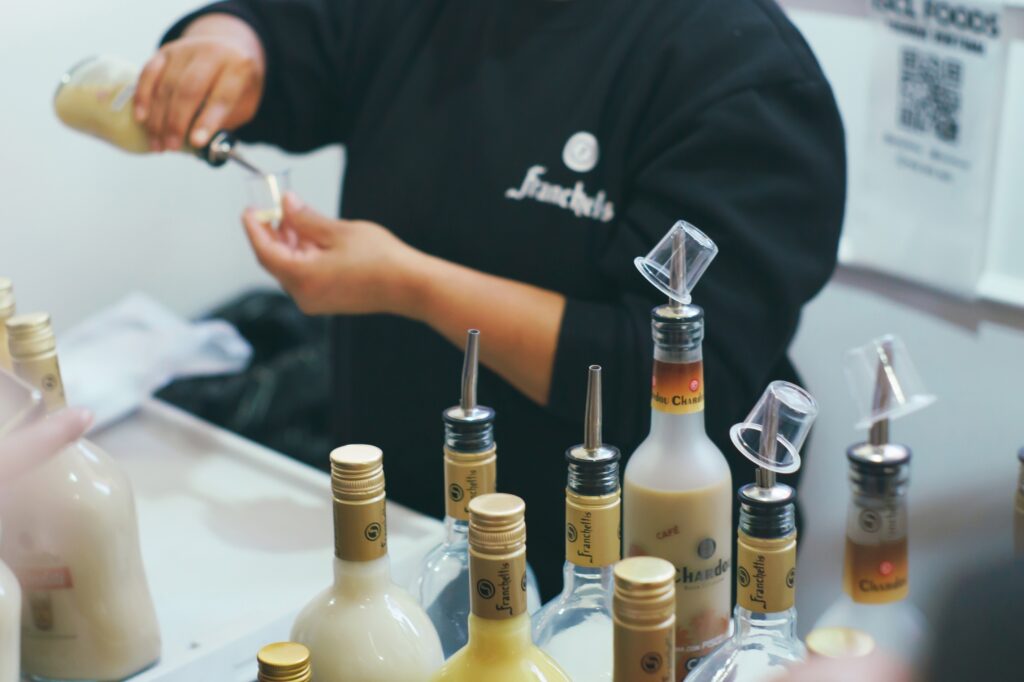
Open retail sampling is one of the most effective tactics available to consumer brands that need to drive trial and purchase at the point of sale. When a shopper in a grocery aisle, a natural food store, or a specialty retail environment gets to taste, touch, or experience a product before buying it, the conversion rate from that moment to a purchase is significantly higher than from any form of remote advertising. We build and run open retail sampling solutions for brands across North America.
The term open retail refers to sampling that happens in the aisles, perimeters, and common areas of retail stores rather than in controlled demonstration stations or behind a service counter. It is the most accessible and highest-impact form of in-store sampling because it meets the shopper exactly where they are making purchase decisions, rather than pulling them away from that environment to a separate engagement zone.
We have run open retail sampling programs in grocery chains, natural food stores, specialty retail, convenience chains, club stores, and independent retailers across dozens of markets. We know how to work within each retail environment’s specific protocols, how to design a sampling setup that maximizes shopper engagement without disrupting store operations, and how to turn a moment of trial into a motivated purchase decision.
This guide covers the full scope of open retail sampling: what it is, how it works, what it costs, and how to build a program that drives real sales lift rather than just sampling volume.
AGM Field Note: A consumer who tries your product in the aisle where it lives on the shelf is two steps away from a purchase. Your sampling team’s job is to make those two steps feel inevitable.
Open retail sampling is not just showing up with a tray of product. An effective program involves significant planning, precise execution, and rigorous follow-through. Here is what a complete open retail sampling solution looks like from the inside.
Retail Coordination
We coordinate directly with store management and brand management teams to schedule sampling dates, confirm product availability, and ensure that the right inventory is on the shelf and priced correctly before the sampling team arrives. A sampling program that drives trial but finds empty shelves or incorrect pricing at the point of sale wastes every interaction it generates. Retail coordination is non-negotiable in our process.
Demo Specialist Deployment
We deploy trained demo specialists who are briefed specifically on your product, your brand voice, your target consumer, and the key messages that convert trial to purchase. A demo specialist who can answer a shopper’s question about allergens, sourcing, preparation, or ingredient sourcing on the spot is dramatically more effective than one who is working from a script they only half-remember. We train for knowledge, not just delivery.
Sampling Station Setup and Management
We design and manage the physical sampling setup within the store’s constraints and aesthetic. This includes equipment for food preparation and temperature management where needed, branded signage and table covers that catch shopper attention, and a setup that is compact and efficient enough to work within the retail environment without disrupting store traffic flow.
Shopper Engagement and Conversion
The key skill in open retail sampling is converting a shopper who accepts a sample into a shopper who puts the product in their cart. Our demo specialists are trained specifically on the conversion conversation: what to say after the sample is given, how to address the most common objections and questions, and how to make the purchase feel like a natural next step rather than a sales pitch.
Data Collection and Reporting
We track samples distributed, shopper interactions, direct purchase observations, and shopper feedback on each deployment day. We compare sales data before and after sampling days when available from the retail partner. Our reporting gives you a clear picture of the sampling program’s direct impact on store performance.
Retail Environment
Best Sampling Format
Primary Objective
Grocery chain (conventional)
Aisle demo station, perimeter table
Trial, direct purchase conversion
Natural and specialty food
Education-focused demo with tasting
Brand story, ingredient education, purchase
Club stores (Costco, Sam’s)
High-volume sampling station
Mass trial, bulk purchase conversion
Convenience stores
Quick-grab sampling near point of entry
Impulse trial, brand awareness
Specialty retail (beauty, wellness)
Experience-based demo
Brand experience, premium positioning
Independent retailers
Personalized demo, relationship-building
Community connection, recurring purchase
The Conversion Science Behind Retail Sampling
Open retail sampling works because it removes the two biggest barriers to first purchase: unfamiliarity and risk. A shopper who has never bought your product before has two reasons to pass it by. They do not know if they will like it. And they do not want to spend money on something that might disappoint them. Sampling eliminates both barriers simultaneously. The shopper now knows they like it, and the trial was free. The decision to purchase becomes a much smaller leap.
The placement of sampling within the retail environment amplifies this effect. When a shopper tries your product standing two feet from the shelf where it lives, the path from positive trial experience to purchase is as short as physically possible. Every foot of distance between the sampling station and the product’s shelf location costs conversion rate. We work with retail partners to position sampling as close to the product location as store protocols allow.
Timing within the shopping visit also matters. A shopper who has just entered the store and is still assembling their mental list is more open to impulse additions than a shopper who is in checkout mode and moving toward the registers. We position sampling programs at the beginning of the shopping process when possible, particularly for products that are additions to the cart rather than replacements for something already on the list.
Building a Multi-Store Retail Sampling Program
For brands with distribution across multiple retail locations in one or more markets, a coordinated multi-store sampling program amplifies the impact of each individual sampling event. Here is how we structure these programs.
We start by mapping the full distribution footprint: which stores carry the product, what the current velocity is at each location, and which stores represent the highest opportunity based on traffic, category performance, and distribution gaps. We use this map to prioritize the sampling schedule, focusing first on the stores where the most opportunity exists and where sampling is most likely to produce measurable sales lift.
We then build a rolling deployment schedule that cycles through priority stores at a frequency that maintains momentum without over-sampling any single location. The right frequency depends on the product and the market, but we generally recommend sampling a given store no more often than once every two to four weeks to preserve the novelty factor that drives trial rates.
For multi-market programs, we manage field teams in each market under a unified campaign brief and reporting framework. Every market’s data is captured in the same format so that performance across markets can be directly compared and the program can be continuously optimized based on what is working where.
AGM Field Note: The best retail sampling programs we have run are not one-time events. They are rolling programs with consistent presence, consistent data collection, and continuous optimization. The brands that treat sampling as an ongoing channel rather than a one-time tactic see dramatically better long-term results.
Sampling Rate Card Reference
Our product demo specialists are available at two tiers based on campaign scope and requirements.
The Standard tier starts at $389.99 per 6-hour shift and includes basic feature and benefit demonstrations, customer greeting, light Q&A, sample and collateral distribution, setup and breakdown, GPS pins, photo proof, and standard briefing. A minimum of five deployment days applies.
The Premium tier starts at $589.99 per 6-hour shift and includes high-level demonstrations, deeper talking points and multi-step product walkthroughs, light crowd management, hourly updates, full field reporting, appearance-matched selection, and an on-site field manager. A minimum of three deployment days applies.
Add-ons include overtime at $65 per hour, additional demo specialists at the applicable tier rate, travel days at $275 per day, hotel per diem at $65 per day, and demo tables, signage, and video crew at quoted rates. Contact us for a custom program proposal.
Common Open Retail Sampling Mistakes
We see brands lose significant sampling budget to avoidable mistakes. Here are the most common ones and how to avoid them.
Under-stocked shelves on sampling days. A shopper who wants to buy after tasting your product cannot buy if the shelf is empty. Confirm inventory levels with the store before every sampling date. This seems obvious but it is one of the most commonly missed steps.
Wrong-fit demo specialists. A demo specialist who does not fit the brand or the product category creates friction rather than removing it. A specialist running a premium skincare sampling program needs to look and speak the part. Fitting the specialist to the brand is as important as fitting the brand to the retail environment.
No conversion prompt. Handing a sample to a shopper without any follow-through is a missed opportunity. The specialist should always give the consumer a clear reason to pick up the product now: a current promotion, a limited-time bundle, a coupon available at the register. Something that creates urgency around the purchase decision.
No follow-through on data. Every sampling event generates valuable consumer feedback. If that feedback is not captured, analyzed, and used to improve the program, the campaign is operating blind. We build data collection into every sampling program from the first day.
Frequently Asked Questions About Open Retail Sampling
How do we get approval to sample in a retail store?
Sampling authorization comes from the retailer’s store management or from a coordinated arrangement between the brand’s sales team and the retail buyer. In some cases, retailer-managed demo programs provide a structured channel for brand sampling. We work through whatever access pathway is most efficient for your specific retail relationships. For brands working through a distributor, we can coordinate the sampling authorization as part of the program setup.
What products are best suited for open retail sampling?
Food and beverage products with a clear taste benefit are the strongest fit for retail sampling. Personal care products with a sensory experience, household products with a demonstrable superiority, and consumer electronics with a hands-on advantage also perform well. The product needs to have a quality that is best communicated through direct experience rather than a package description.
How many samples should we budget per shift?
In a standard grocery environment, a well-positioned and actively engaged demo specialist can distribute 150 to 250 samples per 6-hour shift, with interaction count typically running 20 to 30 percent higher than samples actually consumed. High-traffic club stores can push higher. Specialty retail environments with longer dwell times tend to run lower volume but higher conversion rate. We calibrate sample quantity to the specific environment and traffic pattern.
Can retail sampling work for a brand new to the store?
Yes, and it is one of the best ways to accelerate trial for a new distribution win. When a brand enters a new retail account, the first few months are critical for establishing velocity. Sampling during that window drives the kind of trial numbers that secure shelf space and demonstrate to the buyer that the product can move. We recommend launching a sampling program within the first few weeks of any significant new retail distribution win.
How do we know if the sampling program is actually driving sales?
We compare point-of-sale data from sampling days against non-sampling days and against the same period in prior months when available. The lift calculation is straightforward: what was the velocity on days with sampling versus days without it. We also capture direct purchase observation data from our demo specialists as a field-level corroboration of the sales data. Most brands see a meaningful same-day sales lift on sampling days.
Can sampling programs be combined with in-store promotional events?
Yes, and combining them often produces better results than either tactic alone. A sampling program running alongside a price promotion, a display feature, or a buy-one-get-one offer amplifies the conversion rate from trial to purchase because the consumer has both a sensory reason and a financial reason to buy now. We coordinate timing and messaging across sampling and in-store promotional elements as part of integrated retail marketing programs.
What is the minimum program duration for retail sampling?
A minimum of three to five sampling days is needed to generate statistically meaningful data on program performance. One-day programs can be executed but they function more as a one-time event than as a program with the ability to optimize and compound results. We recommend planning for a minimum of two weeks of sampling activity spread across multiple store locations to generate data worth acting on.
Can open retail sampling programs run in multiple markets simultaneously?
Yes. We manage multi-market retail sampling programs with coordinated deployment, unified briefing documents, and centralized reporting that makes cross-market performance comparison straightforward. We have run programs spanning thirty or more store locations across five or more markets simultaneously. The logistics are manageable when the planning is thorough and the field management structure is clear.
Do you supply the sampling materials and equipment?
We can source sampling tables, branded signage, tablecloths, serving equipment, and branded uniforms as part of the program. For food products requiring temperature management, coolers and chafing equipment are included in program planning. We work with your brand standards team to ensure all materials are on-brand before any sampling day. Custom materials outside our standard kit are quoted separately.
Starting Your Retail Sampling Program
The best retail sampling programs are built around a clear sales objective: a specific store, a specific product, and a specific target for velocity improvement. Bring that clarity to the first conversation and we can build a program that connects directly to the sales metrics your retail partners care about.
We work with emerging brands, established national brands, and everyone in between. The program scales to your distribution footprint and your budget. Contact us to build your retail sampling solution.
Retail Sampling and Shelf Placement Strategy
The relationship between a retail sampling program and a brand’s shelf placement strategy is more important than most brands recognize. Sampling at a store where your product is in a poor shelf location, buried in a secondary aisle position without eye-level placement, drives trial that cannot efficiently convert to purchase. Before investing significantly in a retail sampling program, ensure that your shelf position at the target store is strong enough to support conversion.
The ideal scenario is a retail sampling program that runs alongside a shelf improvement initiative: the sampling program drives consumer demand and the improved shelf position captures that demand at the point of decision. When both are working together, the combined impact on velocity is significantly stronger than either alone.
For brands working with retail category managers, a strong sampling program with documented velocity lift data is one of the best tools for securing better shelf positioning. Showing a category manager that your brand lifts category sales on sampling days gives them an incentive to place your product where more consumers will naturally encounter it.
Building Retailer Relationships Through Sampling
A well-run sampling program is not just a consumer marketing tactic. It is also a retailer relationship tool. Store managers and department buyers who see consistent, well-organized, clean, and results-oriented sampling programs from a brand develop a different relationship with that brand than they do with brands that occasionally send a table and someone who barely knows the product.
Our demo specialists are trained to be excellent in-store partners as well as excellent consumer ambassadors. They communicate clearly with store staff, maintain a clean and organized sampling station, respect store protocols and timing, and leave the store in better shape than they found it. This professional conduct builds the kind of retailer relationship that secures future sampling dates, better placement, and promotional partnership opportunities.
We have seen brands build from being an unknown item on a bottom shelf to a featured product with prime end-cap placement through a combination of consistent sampling presence and the retailer relationships that come with professional, results-oriented in-store execution. That trajectory is one of the most concrete long-term returns from a sampling program that a brand can build.
AGM Field Note: Every sampling shift is a 6-hour audition with the store management team. The brands that treat it that way, with professional execution and genuine respect for the retail environment, are the ones that get invited back and get better placement as a result.
Sampling at Club Stores
Club stores like Costco and Sam’s Club represent a distinct retail sampling environment with specific requirements and high potential for volume. The consumer at a club store is already in a high-purchase-quantity mindset. They are buying in bulk and they are receptive to adding new products to their cart in larger quantities than they would at a conventional grocery store. A successful sampling moment at a club store can result in a multi-unit purchase that a regular grocery store sampling moment would not.
The challenge is the volume requirement. Club store sampling programs need to handle significantly higher traffic than conventional grocery sampling programs. The demo setup needs to be efficient, the product quantity needs to be adequate, and the ambassador needs to be comfortable managing a high-volume interaction environment where multiple consumers may be sampling simultaneously. We staff club store sampling programs with ambassadors who have experience in high-volume demo environments and design setups specifically for the club store format.
Retail Sampling for New Product Distribution Wins
When a brand secures a new retail distribution account for the first time, the first few months are critical. The retail buyer extended an opportunity based on the brand’s pitch. Now the brand needs to demonstrate that the product can generate the velocity that justifies continued shelf space. Retail sampling during this critical window is one of the strongest tools available for establishing the velocity that secures the relationship long-term.
A new-to-retail sampling program is different from a maintenance-phase sampling program in its urgency and its design. The objective is not just to generate trial but to build the purchase history at that specific store that the buyer will see when they review category performance. Every sample that converts to a purchase during this window is a data point that strengthens the brand’s position in the buyer’s next reset review.
We have run new-distribution sampling programs for emerging brands at grocery chains, natural food retailers, and club stores. The cadence is typically more intensive than a maintenance program: we recommend sampling two to four times per month at each new account during the first three to six months of the relationship, rather than the once-monthly frequency that might be appropriate once the product is established. The intensive early sampling investment pays dividends in the form of continued and expanded distribution that a slower launch would not have secured.
Private Label and Store Brand Competition
One of the ongoing challenges for branded consumer products in retail is competition from private label alternatives, which typically offer a lower price point and similar category positioning. Sampling programs are one of the most effective ways for branded products to establish a quality and experience differential that justifies the premium over private label alternatives.
When a consumer tastes your product and tastes the store brand equivalent in the same shopping trip, the quality difference can be immediately perceptible. A well-positioned sampling program that creates that direct comparison moment gives the brand an opportunity to make its quality case in the most direct way possible. Ambassadors briefed on the competitive environment can handle the price comparison question with confidence, directing the conversation back to the quality and experience differentials that make the brand worth the premium.
What Our Clients Say About Working With AGM
We let the results speak, but client feedback shapes how we build every subsequent program. The pattern we hear most consistently is that the combination of ambassador quality, active field management, and reporting specificity separates our programs from what brands experienced with other field marketing providers. Ambassadors who are thoroughly briefed and genuinely engaged with the brand produce interactions that clients recognize as qualitatively different from what less disciplined programs deliver. Management that is visibly present in the field rather than checking in remotely from a desk produces performance consistency that brands notice in the data. And reporting that tells a brand exactly what happened, where, and why gives them the information they need to justify the investment and build the next program with confidence.
We are not the cheapest option in the market. We are not trying to be. We are the option that produces results you can measure, report internally, and build on. For brands that have been through a disappointing sampling or street team program and want to understand what the right partner relationship looks like, we are ready to have that conversation honestly.
Next Steps
Whether you are planning your first field marketing program or your fiftieth, the path to a program that produces results is the same: a clear objective, a specific target consumer, an honest budget assessment, and a partner with the field infrastructure and management discipline to execute at the quality level the investment requires.
We are that partner. Call us at (646) 776-2770 or email [email protected]. We will ask the right questions, give you honest answers about what is achievable in your market and timeline, and build you a program that earns its budget. American Guerrilla Marketing has been doing this work in cities across North America for years. We know what works. Let us put that knowledge to work for your brand.