
September 12, 2026
OOH Activation | Out-of-Home Campaigns That Drive Real Engagement
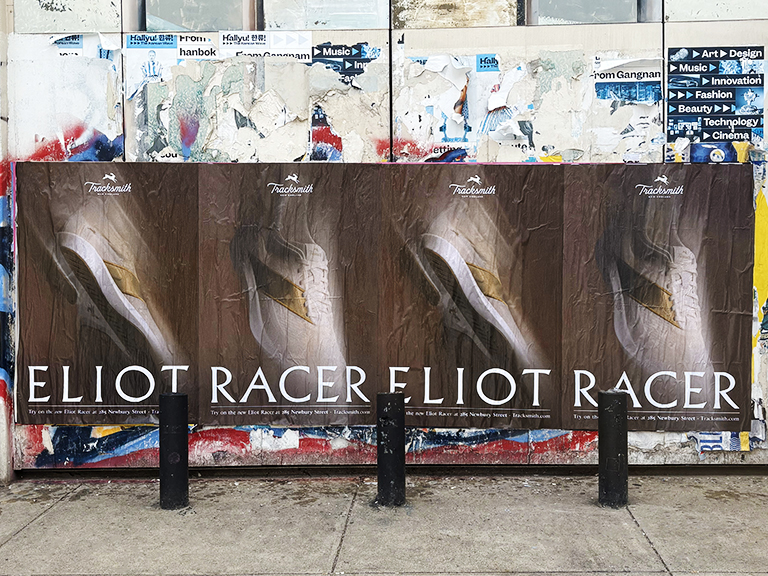
Standard OOH asks the audience to look. An activation asks them to stop, engage, and remember — and that difference shows up clearly in how they respond.
Out-of-home advertising has always occupied public space. A billboard on a building, a transit poster in a subway station, a banner on a fence — these formats ask one thing from the audience: look at this. The communication is one-directional. The brand broadcasts. The audience receives.
An OOH activation changes that dynamic. Instead of asking the audience to passively receive a message, it creates a moment they can interact with, photograph, share, or participate in. The physical placement becomes a scene. That scene becomes content. The content travels far beyond the people standing in front of it.
American Guerrilla Marketing builds OOH activations for brands that need more than a bought media face. This article breaks down what an activation actually involves, what types exist, and how to build one that earns its budget.
Defining OOH Activation
The term is used loosely enough that it can mean almost anything with an outdoor component. For clarity, here is how we define it: an OOH activation is any out-of-home placement or campaign that adds an interactive, participatory, or experiential element beyond passive display. The display is not the whole thing — it is the entry point.
This can be as simple as a printed installation designed to be photographed (a bold mural, an oversized prop, a statement message in a highly trafficked location). Or it can be more complex: an interactive digital kiosk, a pop-up space, a street team coordinated with a large-format display, a sampling experience happening under a billboard. The common thread is that something happens beyond the display itself.
The Difference Between OOH and an OOH Activation
A standard OOH buy means you are purchasing a media face — a specific location for a specific duration — and running creative on it. The decision is about media buying: which location, which size, which market, which timing. The creative that goes on it is important, but the format is fixed.
An OOH activation starts from a different question: what do we want people to actually do? Do we want them to photograph this and post it? Do we want them to walk up and interact with it? Do we want them to receive something — a sample, a piece of creative, a piece of information — because they are physically in front of this placement? The format and the media buy are chosen to serve that action, not the other way around.
AGM Field Note: The best activations we have built started with one clear behavioral objective. Not “we want people to see our brand” but “we want people in SoHo this Saturday to photograph themselves in front of this installation and post it.” That specificity changes every subsequent decision: location, scale, creative design, staffing, and timing.
Types of OOH Activations
Activations take many forms. The right form depends on the brand, the budget, the timeline, and the audience. Here are the formats we work with most frequently.
Mural and Installation Activations
A large-scale painted mural or a sculptural installation that becomes a destination. The creative is designed to be photographed. The location is chosen because it already draws foot traffic or because the installation itself will draw people. This is one of the most durable formats — a mural continues to work as long as it exists, generating photo documentation and social content from everyone who passes by and stops.
The challenge with murals is that they require physical space — a wall with the right dimensions and the right surroundings, in the right neighborhood. Negotiating that space is part of the work. Some property owners welcome murals as improvements to blank walls. Others require compensation. The process varies significantly by city and neighborhood.
Experiential Pop-Ups
A temporary physical space — a booth, a container, a designed environment — that appears in a public location for a short window. Pop-ups can include product sampling, hands-on demonstrations, custom photo opportunities, or any other experience the brand wants to deliver in person. The location is temporary; the experience is concentrated.
Pop-ups work best when they create genuine value for the people who encounter them, not just exposure for the brand. A pop-up that gives away product samples, provides entertainment, or offers something people actually want to engage with will outperform one that is simply a brand presence in public space.
Street Team Activations with OOH Anchors
A coordinated campaign where a street team works a neighborhood simultaneously with a large-format outdoor placement. The billboard or building wrap creates broad visual awareness; the street team creates direct personal contact. The combination means the person who receives a flyer or a sample from the street team has also already seen the brand on the building around the corner.
The coordination matters. A street team working a block that has no nearby OOH presence is just a street team campaign. The OOH anchor gives the street team interaction more context — the person they approach has seen the visual, which makes the introduction feel less cold.
Digital Interactive Installations
Touchscreen kiosks, motion-triggered displays, QR-code activations, or augmented reality experiences tied to a physical placement. These formats add a technological layer that static creative cannot provide. They can collect information, deliver personalized responses, or create experiences that would be impossible with printed creative alone.
The risk with interactive digital formats is complexity. Every additional layer of technology is another potential failure point. We have seen ambitious interactive installations fail because the touch interface froze, the connection dropped, or the motion sensor was not calibrated for outdoor light conditions. Simple interactive mechanisms tend to be more reliable in field conditions than complex ones.
Transit and Commuter Activations
Focusing an activation in and around transit infrastructure — subway stations, bus stops, train platforms. The audience here is captive, predictable, and often slightly bored, which makes them unusually receptive to well-placed creative. Transit activations can include station dominations (buying multiple ad faces within a single station), platform takeovers, or coordinated combinations of indoor and outdoor placements along a commuter route.
What Makes an OOH Activation Actually Work
The format does not guarantee success. Plenty of OOH activations produce beautiful photos for the brand’s internal deck and not much else. The ones that generate real audience response and earned media have a few things in common.
They Earn Attention
An activation that asks nothing of the audience beyond awareness is not really an activation — it is just creative outdoor advertising. The formats that succeed offer something worth stopping for. That might be aesthetic beauty, genuine surprise, entertainment, or tangible value. But the audience needs a reason to stop and engage, and “because our brand is there” is not a reason.
They Are Located Where the Right Audience Already Is
Activation location is not about where a wall is available or where media inventory is cheapest. It is about where the specific target audience is concentrated, at the right time, in a mindset receptive to the experience. A beauty brand activation in a neighborhood where the target demographic does not live, work, or spend time will generate foot traffic from the wrong people — or no foot traffic at all.
They Are Designed to Be Shared
The most efficient OOH activations create content that the audience distributes on their own. A person who photographs themselves in front of a distinctive installation and posts it has just delivered your brand message to their entire network. Building that sharability in from the start — the right backdrop, the right lighting, the right creative hook — is not accidental. It is intentional design.
They Are Staffed Appropriately
Many activations benefit from live staff presence. Not necessarily a hard-sell approach, but people who can answer questions, facilitate the experience, capture documentation, and make the activation feel like a curated event rather than an abandoned installation. An activation with good creative but no people around it often feels empty, even if the creative is strong.
AGM Field Note: Documentation is not an afterthought — it is part of the deliverable. Every OOH activation AGM runs generates a photo and video documentation package. This is how the activation lives beyond the physical moment: in social posts, in pitch decks, in follow-up campaigns, and in brand content libraries.
OOH Activation vs. Experiential Marketing: What Is the Difference?
These terms are sometimes used interchangeably, but they describe overlapping categories rather than the same thing. Experiential marketing is a broader discipline that includes any marketing that creates a direct, physical brand experience for the audience. OOH activation is the subset of that discipline that is rooted in out-of-home placement — the outdoor environment is not just a backdrop but an integral part of the campaign design.
A pop-up store inside a shopping mall is experiential marketing but not OOH activation. A pop-up on a public street corner, designed around a large-format banner or building wrap, is both. The distinction matters when you are briefing vendors or building budgets — OOH activation has specific media buying, production, and logistics components that pure experiential does not always require.
Comparing OOH Activation Formats
| Format | Audience Interaction | Documentation Potential | Complexity | Duration |
|---|---|---|---|---|
| Mural / installation | Passive + photo | High | Low-medium | Weeks to months |
| Street team + OOH anchor | Direct personal contact | Medium | Medium | Hours to days |
| Experiential pop-up | High, hands-on | High | High | 1-3 days typical |
| Interactive digital | Direct digital engagement | Medium | Very high | Days to weeks |
| Transit domination | Passive, repeated | Medium | Low (media buy) | Weeks |
Planning and Lead Times
OOH activations require more lead time than standard media buys because they involve physical construction, coordination of multiple vendors, and in many cases negotiation of specific site access. The more complex the activation, the more lead time it needs.
Simple Street-Level Activation
A banner, some street team coordination, and printed materials can be assembled in one to two weeks if the creative is ready and the location is pre-approved. This is the fastest end of the spectrum.
Mural or Painted Installation
Wall identification, property negotiation, permit coordination (where required), artist booking, and the physical painting process typically take four to eight weeks from the initial brief. Rushing this process creates quality problems and logistical gaps.
Complex Build-Out
A custom fabricated installation, a multi-location coordinated campaign, or an interactive technology build needs eight to twelve weeks of lead time at minimum. Production, testing, logistics, staffing — each of these has its own timeline, and they often depend on each other sequentially.
What Can Go Wrong
Activations in public space introduce variables that controlled indoor events do not face. Weather is the obvious one. A pop-up planned for an outdoor space during a rainstorm needs a contingency. Physical installations can be damaged overnight. Street team placement can be restricted by local business associations or property managers. Interactive technology can fail in sunlight or cold.
None of these are reasons to avoid the format. They are reasons to plan with contingencies. Every activation brief should include answers to: what happens if the weather is wrong? What happens if the primary location is unavailable? Who is the on-site point of contact if something needs to be resolved quickly?
Working with a vendor who has executed activations in the specific market you are targeting is worth more than working with a larger vendor who has never run anything on the streets you are working on. Local knowledge — what actually works on that corner, how the local enforcement environment operates, where the foot traffic actually goes — is a meaningful operational advantage.
Measuring OOH Activation
OOH activation does not measure the way digital advertising measures. You will not have click-through rates or attribution data. What you will have is photo documentation from the activation itself, social media content generated by people who engaged with the activation, foot traffic data if you have a physical location nearby, and qualitative feedback from staff who were present.
The more useful framework is to define success criteria before the activation runs. What does a successful activation look like? A specific number of photos from the field? A particular level of social sharing? A measurable increase in foot traffic to a nearby store? Foot traffic at the activation site during operating hours? Establish the criteria in advance, then measure against them.
Photo documentation from AGM campaigns is delivered as a post-campaign report with geotagged, timestamped images from throughout the activation, plus any field notes on audience engagement and notable moments.
OOH Activations in the New York Market
New York is the most complex and the most rewarding market for OOH activation. The density of foot traffic in neighborhoods like SoHo, the Meatpacking District, Lower Manhattan, and the rapidly developing areas of Brooklyn and Queens means that a well-placed activation reaches a genuinely large and diverse audience in a short window.
The complexity comes from the density of decision-makers and community members. Property owners, local businesses, city agencies, and neighborhood associations all have opinions about what happens on the sidewalk in front of their spaces. Navigating those relationships is part of the work. AGM has existing relationships in multiple New York neighborhoods that make this navigation faster and less adversarial than starting from scratch.
Outside New York, we coordinate activations in Los Angeles, Chicago, Miami, and other markets through a network of local production partners who understand the specific operational environment of those cities.
How OOH Activations Earn Earned Media
One of the most significant developments in OOH activation over the past decade is the way that a well-designed physical campaign can generate media coverage and social sharing that extends the campaign’s reach far beyond the audience who physically encountered it. A striking building installation in SoHo that gets featured in a design publication reaches an audience of tens of thousands of people who were never within physical sight of the wall. A clever street-level activation that gets filmed and posted on social media reaches the followers of everyone who shares it.
This earned media potential is not accidental — it is a design consideration that should be built into any OOH activation brief. What would make this worth photographing? What would make this worth talking about? What aspect of this installation would prompt someone to share it with their network? These questions are not secondary to the campaign objectives — they are often the primary mechanism by which a well-executed OOH activation achieves its full impact.
Designing for Documentation
Designing an OOH activation for documentation means considering not just what the installation looks like in person but what it looks like in a photograph or short video. The backdrop matters. The lighting conditions at different times of day matter. Whether there is a clear visual framing that makes a compelling image matters. These considerations do not require compromising the work aesthetically — in fact, installations that are both visually strong in person and visually strong in documentation tend to be the ones that have the clearest creative vision overall.
Color plays a particular role here. High-contrast, bold color combinations photograph distinctively and are immediately identifiable in a social feed where the human eye is making rapid judgments about what to stop scrolling for. Installations that use a single dominant color — particularly unusual, brand-specific colors that are not commonly seen in the urban environment — tend to generate more spontaneous photography than more muted or complex color approaches.
The Role of Timing in OOH Activations
Timing an OOH activation correctly is as important as choosing the right location and the right format. The same installation in the same location will perform differently based on the time of year, the day of the week, and the cultural moment in which it appears.
Cultural Calendar Alignment
Activations that align with relevant cultural moments — seasons, holidays, trending conversations, industry events — benefit from the heightened attention and receptivity that these moments create. A fashion brand activation during New York Fashion Week reaches an audience that is already in fashion mode and is actively looking for brand presence in the city. A food brand activation during a major culinary event reaches foodies in a peak engagement period. The cultural calendar provides natural windows of elevated audience receptivity for specific categories.
This does not mean every activation needs to be tied to a cultural event. Standalone activations that create their own moment through the quality of the work can be equally effective. But for brands that have a clear alignment with a specific cultural calendar event, timing the activation to coincide is a straightforward way to multiply the organic attention the campaign receives.
Day-of-Week and Time-of-Day Optimization
The right time to run an OOH activation depends on when the target audience is present in the specific location. A financial district activation aimed at professional workers should run during business hours Monday through Friday. A nightlife district activation should run Thursday through Saturday evenings. A family-oriented neighborhood activation should run on weekend afternoons. The mismatch between a campaign’s target audience and the timing of the activation is one of the most consistent causes of underperformance in OOH work.
Measuring OOH Activation Success
Measurement in OOH activation is a genuine challenge, and any vendor who promises precise attribution data for outdoor campaigns is overstating what the medium provides. But imprecise does not mean unmeasurable. A well-planned OOH activation can be evaluated against realistic criteria that reflect what the format can actually deliver.
Documentation and Reach
The most basic measurement for an OOH activation is documentation: the quantity and quality of photos and video from the campaign period, showing the activation in context with the urban environment and the audience engaging with it. This is the evidence that the activation happened and looked as intended. For campaigns where documentation value is a primary objective, the documentation itself is a campaign deliverable.
Social Amplification
If the activation is designed to generate organic social sharing, tracking the social content that results from it provides a measure of that specific objective. This is not always straightforward — some activations generate sharing from accounts that do not tag the brand — but monitoring brand mentions, location tags, and visual searches for distinctive creative elements gives a reasonable indication of how much social sharing the activation generated.
Foot Traffic and Business Outcomes
For activations designed to drive foot traffic to a nearby location, measuring foot traffic during the activation period against the pre-campaign baseline provides a direct evaluation of that objective. Point-of-sale data, new customer acquisition rates, and direct customer reports (“I saw your installation on the corner”) are other forms of direct business outcome measurement that, while imprecise, provide real indication of whether the activation was connecting with the audience.
Brand Awareness Surveys
For larger activations with brand awareness objectives, pre- and post-campaign brand awareness surveys in the target geographic area measure whether the campaign moved the awareness needle. These surveys are more expensive to run and require advance planning to establish a baseline before the campaign launches, but they provide the most rigorous available measure of an activation’s awareness impact.
OOH Activations at Different Budget Levels
OOH activations do not require massive budgets to be effective. The format scales from small guerrilla interventions costing a few thousand dollars to major multi-location productions with six-figure budgets. Understanding what is achievable at different investment levels helps brands calibrate their expectations and their campaign design accordingly.
Small-Scale Activations
A small-scale OOH activation — a concentrated poster campaign in a specific neighborhood, a single well-designed street-level installation, a one-day street team in a high-traffic area — can be designed and executed for a fraction of what a major multi-location campaign costs. The trade-off is reach: a small-scale activation reaches fewer people but can reach them with more intensity and specificity than a broadly distributed campaign. For brands with narrow target audiences or limited geographic focus, small-scale activations are often the most efficient option.
Mid-Range Activations
A mid-range activation might involve a building wrap or mural in a prominent location combined with some street-level support elements and a small field team for documentation and interaction. This scale allows for a genuine visual landmark moment in a target neighborhood while remaining accessible for brands that are not at enterprise marketing budgets. The creative investment at this level should be proportional — a strong, well-produced piece of work is more valuable than multiple mediocre pieces at the same budget.
Large-Scale Activations
Major brand activations involving multiple locations, custom fabrication, interactive technology, and large coordinated teams represent the upper end of the format’s scale. These campaigns benefit from the full range of the format’s capabilities but require the planning, production, and coordination expertise that smaller operations cannot provide. For brands running at this scale, the vendor selection decision — which agency and production partner to trust with the campaign — is the most consequential single decision in the process.
Working with American Guerrilla Marketing
American Guerrilla Marketing is a New York-based outdoor advertising agency specializing in street-level, alternative, and non-traditional OOH formats. We have built campaigns across all five New York City boroughs, in the surrounding metropolitan area, and in other major markets through our production network.
Our work spans building wraps and painted murals, mobile billboard campaigns, wheat paste and poster campaigns, street team activations, and multi-format campaigns that combine several of these elements into a coordinated market presence. Every campaign we build comes with full photo documentation delivered post-campaign, so clients have a complete record of what ran, where, and when.
If you have a campaign objective that requires physical presence in a specific urban market, we can build a plan around it. Start with the brief: who is the audience, what geographic area, what campaign window, and what does success look like. We will take it from there.
Frequently Asked Questions
What makes an OOH activation different from standard outdoor advertising?
Standard OOH is a passive display – people see it as they pass. An OOH activation adds an interactive, participatory, or experiential layer that prompts the audience to stop, engage, share, or respond. The placement becomes a moment rather than just a message.
What does an OOH activation typically cost?
Costs vary widely based on format, market, and duration. A simple street-level activation with printed creative and a small team runs much less than a large-format LED installation with interactive elements. Budget ranges from a few thousand dollars for guerrilla-scale work up to six figures for complex multi-location builds.
How long does an OOH activation run?
Activations can run from a single day to several weeks. Event-tied activations are often one to three days. Brand awareness activations typically run one to four weeks. The key is matching the duration to the objective – a product launch benefits from a concentrated burst, while a brand awareness build needs sustained presence.
Can OOH activations be documented for social media?
Yes, and this is often one of the primary objectives. A well-executed OOH activation generates photos and video that can be shared on brand channels, picked up by passersby who post their own content, and used in digital ad creative. The physical activation and the digital documentation work together.
What cities does AGM run OOH activations in?
AGM runs OOH activations primarily in New York City and the broader tri-state area, with the ability to coordinate campaigns in other major markets including Los Angeles, Chicago, and Miami. New York is our core operational base.

Ready to Run Your Campaign?
Call us or email us. We’ll tell you exactly what we can do in your market and what it costs.
Related Services
Explore similar advertising solutions offered by American Guerrilla Marketing.
American Guerrilla Marketing — Los Angeles
Street-level campaigns in Los Angeles and nationwide. Wheatpasting, LED trucks, street teams, and more.
(646) 776-2770
Related Articles
-
Street Poster Advertising Ottawa: A Complete Campaign Guide
September 17, 2026
-
Activation Marketing: How Brands Win at Street Level
September 13, 2026
-
Experiential Marketing Firms Chicago | American Guerrilla Marketing
September 12, 2026
-
Pop Up Experiential
September 12, 2026
-
Mobile Pop Up
September 12, 2026