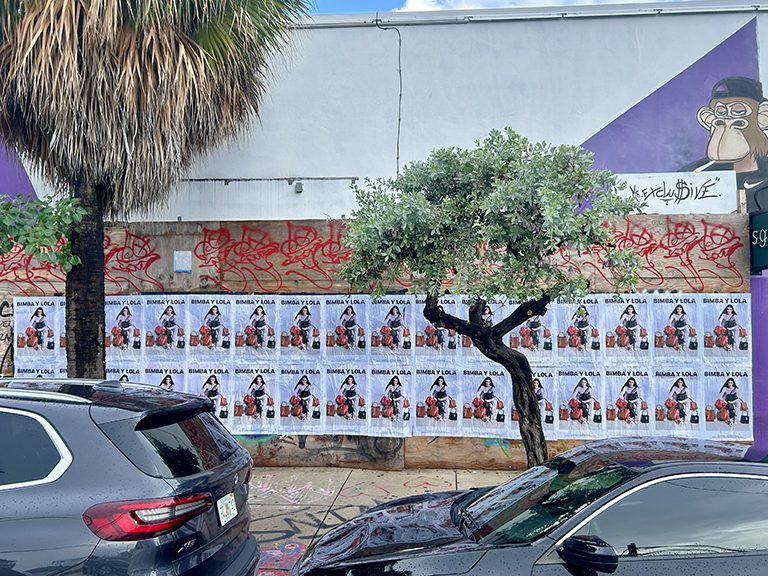
Running a street-level campaign in one city is a logistics problem. Running the same campaign across 10, 20, or 30 markets simultaneously is a systems problem. The difference matters because the failure modes are completely different. A single-city campaign fails when one crew misses a deployment or one surface falls through. A multi-city campaign fails when the coordination infrastructure between markets breaks down — when creative inconsistency surfaces, when reporting comes back incomplete, or when a market goes dark because the local operator was not properly briefed.
Our team has executed multi-city campaigns across 50+ U.S. markets. The campaigns have ranged from 10-market simultaneous wheatpaste pushes for DTC consumer brands to 30-market combined format deployments for entertainment companies launching national properties. The operational architecture we have built for these campaigns reflects what we have learned from doing this work at scale, not from theory.
This guide covers how multi-city guerrilla marketing campaigns are structured, how we manage creative consistency and operational coordination across markets, what the reporting infrastructure looks like, and what the common planning mistakes cost you when they surface at the execution stage.
The Architecture of a Multi-City Campaign Brief
Every multi-city campaign starts with a brief that is specific enough to execute against in any of the target markets without market-specific interpretation. Vague briefs create market-specific variation — each local operator makes slightly different decisions about surface selection, placement timing, and audience targeting, and the campaign diverges across markets as it runs.
A complete multi-city brief specifies: the precise target audience (not “young adults” but a specific age range, employment profile, and behavioral cluster); the format mix for each market (wheatpaste only, or combined with street teams, stencils, or mobile billboards); the neighborhood targets in each market (specific named neighborhoods with the rationale for each); the deployment schedule including market launch sequence and execution dates; creative files organized by format with all size variations included; and the documentation requirements for post-campaign reporting.
When we receive a brief that lacks specificity in any of these areas, we push back with a discovery questionnaire before accepting the scope. An incomplete brief at the planning stage becomes an inconsistent campaign at the execution stage, and inconsistent execution at a national scale is expensive to diagnose and fix after the fact.
Market Selection: How We Tier Markets for National Campaigns
Not all markets deserve the same investment level in a multi-city campaign. We work with clients to tier markets into primary, secondary, and support categories based on audience density, brand presence, revenue potential, and competitive activity in each geography.
Primary markets — typically the five to eight cities with the highest audience concentration or strategic importance — receive the full format stack: wheatpaste poster campaigns, street team programs, and mobile billboard routes. Secondary markets receive a focused format (typically wheatpaste plus one additional element). Support markets receive a simplified execution designed for maximum impact at minimum cost.
Tiering allows national campaign budgets to concentrate resources where they drive the most return while maintaining consistent brand presence across the full geographic footprint. A brand that spreads its budget evenly across 30 markets achieves thin coverage everywhere. A brand that concentrates its budget in 10 primary markets and uses simplified executions in the remaining 20 achieves real impact in the markets that matter most while maintaining visible presence nationally.
Surface Scouting Across Multiple Markets
Every market has different surface conditions, legal environments, and audience movement patterns. What works in Brooklyn does not automatically translate to Austin, Phoenix, or Atlanta. Our wheatpaste campaign operators in each market maintain current surface intelligence — they know which walls are active, which landowners permit flyposting, and which surfaces produce the highest impression rates in their specific neighborhoods.
For multi-city campaigns, we conduct advance surface scouting in each market before confirming the campaign scope. This scouting phase produces a market-specific placement plan that feeds the unified campaign brief. The client sees the proposed placement zones for each market before the campaign launches, giving them the opportunity to confirm or redirect before crews are deployed.
Surface intelligence is perishable. A wall that was available for flyposting six months ago may have a new tenant, a construction fence, or a property management change that has altered its accessibility. We do not rely on historical surface lists — every multi-city campaign gets fresh scouting in every market, typically two to three weeks before the launch date.
Creative Consistency Across Markets
Brand consistency is the most frequently compromised element of multi-city campaigns executed through fragmented vendor relationships. When each market is managed by a different local operator without centralized creative control, the campaign brand identity diverges through minor decisions made independently — different print vendors using different color profiles, crews making placement decisions that affect how the creative is viewed, local adaptations that drift from the approved brand standards.
We maintain creative consistency in multi-city campaigns through a centralized print production process. For wheatpaste campaigns, all panels are produced from the same print files at a single production facility and shipped to each market operator pre-produced. No local print variation is possible because there is no local print decision to make. Crews receive finished materials; their job is deployment, not production.
For street team programs across multiple markets, we provide a unified brand ambassador training guide that covers the brand message, the audience profile, and the specific conversational approach for the campaign. Market-specific briefing notes address local context — the name of the convention the team is working, the local event schedule, any region-specific product messaging — but the core brand presentation is standardized across all markets.
Crew Coordination Across Markets
Managing crews in 10 or more markets simultaneously requires operational infrastructure that most single-market operators do not have. We operate from a central operations hub in Industry City, Brooklyn, New York, that maintains real-time communication with all active market operators during campaign deployment periods. Every market operator reports in at the start of deployment, mid-campaign, and at completion each night. Any surface or crew issue is escalated immediately and addressed without waiting for a scheduled check-in.
Our operator relationships are established, not ad hoc. We do not source local crews from one-time subcontractors for major multi-city campaigns. Our network includes operators we have worked with across dozens of campaigns, who understand our documentation standards, our brief format, and our quality expectations. The consistency of the operator relationship is what produces execution consistency across markets.
For street team programs in multiple markets, we source and brief teams through our established ambassador network in each city. Teams are supervised by field captains who maintain direct communication with our operations hub throughout each deployment day. Real-time field reporting allows us to identify and address issues — an understaffed zone, a surface access problem, a weather event requiring schedule adjustment — before they compound.
Deployment Sequencing: Simultaneous vs. Rolling Launches
Multi-city campaigns can launch simultaneously across all markets on a single date or roll out in market-by-market sequence over a planned window. The right approach depends on the campaign objective.
Simultaneous launches are appropriate for product launches, national events, or campaigns where the cultural moment is time-sensitive. A DTC brand launching a new product wants the campaign to hit every market in the same week so the national social conversation about the launch reinforces market-level campaigns everywhere simultaneously. A film studio campaign tied to a release date needs the street presence to be up before opening weekend in every target market at the same time.
Rolling launches are appropriate when campaign budgets must be staged, when the brand is entering markets sequentially based on sales priorities, or when operational constraints — crew availability, print production lead time, surface scheduling — require phased execution. Rolling launches allow each market’s campaign to be dialed in based on learnings from earlier markets. If a specific placement zone underperforms in the first five markets, we adjust the approach in the subsequent 15 before they launch.
Multi-Format Campaigns Across Multiple Markets
The most effective multi-city campaigns combine multiple formats rather than deploying a single format nationally. The format mix for each market is determined by the audience profile and the campaign objective in that specific geography, not by a one-size-fits-all approach.
A New York campaign might concentrate on wheatpaste poster campaigns in Brooklyn and the Lower East Side combined with LED truck routes through Midtown during commute hours. A Los Angeles campaign might focus on wheatpaste in Silver Lake and Echo Park combined with street team programs at Melrose and Fairfax. A Chicago campaign might use wheatpaste in Wicker Park and Pilsen combined with sidewalk stencils on the Magnificent Mile.
The format selection process starts with the audience geography in each market and works backward to the formats that most efficiently reach that geography at the available budget. We do not default to the same format in every market because markets are not the same. Our value in multi-city planning is the market-specific knowledge that produces better format decisions than a generic national approach would achieve.
Legal and Regulatory Coordination
Every U.S. market has different regulations governing outdoor advertising formats — wheatpaste, stencils, street teams, and mobile billboards all operate under different legal frameworks that vary by city, county, and state. Multi-city campaign planning requires a regulatory review for each market to ensure the planned campaign elements comply with local standards and do not expose the brand to enforcement risk.
We conduct a regulatory review as part of the pre-campaign planning process for every multi-city engagement. This review covers the permit requirements for each format in each market, the permitted surfaces for temporary outdoor advertising, and the enforcement environment in each city. Where permits are required, we manage the permit application process. Where format limitations require creative adjustments, we flag those early so the campaign brief is adapted before production begins.
Unified Reporting for Multi-City Campaigns
One of the most common pain points for brands running multi-city campaigns through fragmented vendor relationships is reporting. Different operators produce reports in different formats, with different levels of documentation detail, on different delivery timelines. Assembling a coherent picture of the campaign’s total performance from fragmented market reports is time-consuming and frequently incomplete.
We deliver a single unified post-campaign report covering all markets, organized by market with standardized sections: geo-tagged photography at each placement location, a written placement log with surface descriptions and timestamps, crew activity notes, and an impression estimate for each market. A cross-market summary section aggregates total impression estimates, documents notable field observations, and identifies any execution deviations from the original plan.
Reports are delivered within 72 hours of the final campaign deployment across all markets. For campaigns running on rolling schedules, we deliver interim reports for each market within 48 hours of that market’s completion, with a final consolidated report when all markets have wrapped.
Common Planning Mistakes and How to Avoid Them
The most frequent multi-city campaign planning failures we see fall into consistent patterns. Inadequate lead time is the most damaging — campaigns booked four weeks before launch in 15 markets cannot be properly scouted, properly briefed, or properly crewed in most markets. Surface options are constrained, crews are second-choice, and the campaign executes below its potential.
Vague market selection is the second most common problem. “Cover the top 20 markets” without market-specific neighborhood specification forces each operator to make geographic decisions that may not align with the brand’s actual audience in each city. A media brand targeting podcast listeners will not have the same neighborhood priorities in Los Angeles as a fitness brand targeting CrossFit demographics — but both could be told to cover “the top 20 markets” with equally vague results.
Budget misallocation across market tiers destroys impact. Spreading a $200,000 budget equally across 25 markets produces thin, low-impact coverage everywhere. Concentrating that budget in 10 primary markets produces real campaign density where it matters most, with simplified support executions in secondary markets maintaining presence without diluting the primary spend.
Technology Infrastructure for Multi-City Campaign Operations
Managing a multi-city campaign at scale requires real-time visibility across all active markets simultaneously. Our operations infrastructure combines field reporting apps that push geo-tagged documentation from each market as deployments happen, a central operations dashboard that tracks campaign progress by market and format in real time, and a direct communication channel between our Brooklyn operations hub and all active market operators. Clients with access to our client-facing status interface can monitor campaign progress in their own markets without waiting for scheduled reports.
This technology layer is not optional infrastructure for multi-city campaigns — it is the operational foundation that makes consistent execution across dozens of simultaneous markets possible. A campaign manager in Brooklyn cannot personally supervise a wheatpaste crew in Houston at 3 a.m. without digital field reporting that creates accountability and documentation in real time. The technology is what scales the human judgment that makes campaigns effective into operations that function across 20 or 30 markets at once.
For clients with their own project management and campaign tracking systems, we can configure our reporting outputs to feed their platforms directly. We do not require clients to use our reporting interface if they have existing infrastructure that serves their organizational reporting needs better. Flexibility in reporting format is part of what working at scale across diverse client organizations requires.
International Multi-City Campaigns: Extending Beyond the U.S.
Multi-city campaign planning principles apply internationally with additional complexity layers: regulatory environments differ significantly by country, creative localization requirements add a production step that domestic campaigns do not require, and operator network quality varies more widely across international markets than across U.S. markets with established guerrilla marketing infrastructure.
For brands running campaigns in North American and European markets simultaneously — a common structure for music labels, fashion brands, and DTC e-commerce brands with significant European audiences — we coordinate the full program from our Industry City, Brooklyn, New York operations hub, working with established operators in each European city through the same briefing and documentation standards we apply to U.S. markets. The reporting format is consistent across all markets, and the post-campaign deliverable covers all U.S. and European markets in a single unified document.
International campaign coordination requires additional lead time beyond the 8 to 12 week recommendation for U.S.-only programs. We recommend 12 to 16 weeks for programs covering both U.S. and European markets, with the additional time allocated to creative localization review, regulatory compliance checks in each European market, and operator coordination across multiple time zones. Brands that treat international multi-city campaigns with the same lead time as domestic programs consistently run into preventable execution problems in the final weeks before launch.
Frequently Asked Questions
What is multi-city campaign planning for street-level marketing?
Multi-city campaign planning is the process of designing, briefing, and executing a street-level or guerrilla marketing campaign across multiple geographic markets simultaneously or in coordinated sequence. It requires unified creative direction, market-specific surface scouting, coordinated crew deployment, and consolidated reporting across all markets.
How many markets can AGM cover simultaneously?
We actively cover 50+ U.S. markets with established operator relationships. For simultaneous national campaigns, we have executed deployments across 20 to 30 markets in the same week. Campaign scale depends on lead time, market selection, and format requirements.
How far in advance should a multi-city campaign be planned?
We recommend 8 to 12 weeks for campaigns covering 10 or more markets. This allows for complete surface scouting in each market, crew confirmation, creative production, and client approval cycles without rush fees or compromised operator quality.
How does creative consistency work across multiple markets?
We maintain creative consistency through centralized art direction and a master creative package that all market operators work from. All print materials are produced centrally and shipped to each market pre-produced. Market-specific adaptations are managed through a controlled variation process that preserves brand identity.
What does multi-city guerrilla marketing cost?
A 10-market wheatpaste campaign covering three to five days per market typically runs $40,000 to $90,000 including production. A 20-market combined format campaign runs $100,000 to $250,000 depending on format mix and crew size per market. We provide detailed proposals within 48 hours.
How is reporting consolidated across multiple markets?
We deliver a unified post-campaign report covering all markets in a single document with geo-tagged photography, placement logs, and execution summaries for each market. The report includes a cross-market summary with total impression estimates and key field observations.
What formats work best for multi-city campaigns?
For more on this topic, see our guide to Impactia Metairie LA: Street-Level Marketing in the New….
For more on this topic, see our guide to college marketing campaigns.
Wheatpaste poster campaigns are the most scalable multi-city format. Street team programs, sidewalk stencils, and LED truck routes can all be coordinated nationally but require more market-specific customization. The best format mix depends on your audience profile and campaign objective in each market.