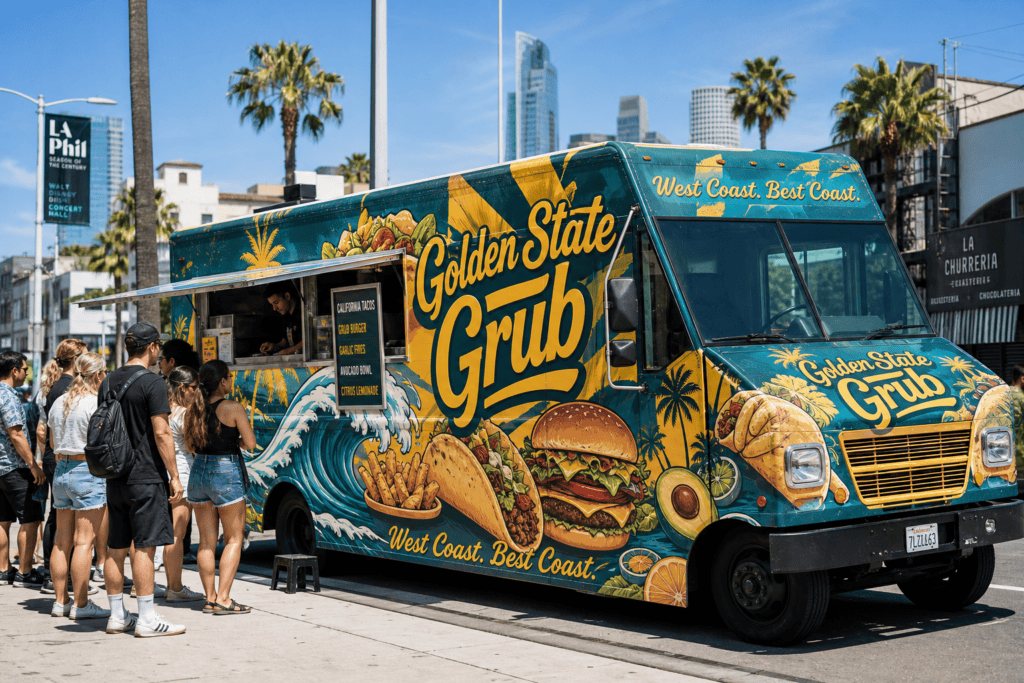
Mobile Pop-Up Store | American Guerrilla Marketing
A mobile popup store takes the core elements of brand retail and makes them mobile: go to consumers instead of waiting for them to find you. Here is how to build one that actually sells.
A mobile popup store is a traveling retail environment. It takes the elements that make any retail store work, product display, knowledgeable sales staff, point-of-sale capability, and a brand environment that makes consumers want to buy, and puts them in a vehicle that can go wherever the brand’s consumers are. Instead of a fixed address and a fixed audience, the mobile popup store covers neighborhoods, cities, events, and markets, creating sales opportunities in dozens of consumer contexts over the course of a program.
For direct-to-consumer brands building a customer base, mobile popup stores create the kind of first-purchase moment that converts a digital follower into a paying customer. For established brands looking to build presence in new markets, mobile popup stores create direct consumer contact before retail distribution launches, seeding demand that drives sell-through when the product hits shelves. For any brand that wants to create genuine consumer relationships rather than just consumer contacts, the mobile popup store is one of the most commercially direct formats available.
At American Guerrilla Marketing, we have built and managed mobile popup store programs across consumer goods, food and beverage, beauty, and apparel categories. This guide covers everything from vehicle selection to inventory management to location strategy to performance measurement.
The Commercial Distinction: Popup Store vs. Brand Activation
Not all mobile marketing formats are created equal from a commercial standpoint. A sampling activation is designed to generate product trial. A mobile brand activation is designed to create brand engagement. A mobile popup store is designed to generate purchase. This commercial focus changes everything about how the program is planned and executed.
A mobile popup store has a POS system and products priced for sale. It has staff trained for retail conversion, not just brand education. It carries inventory that moves in and out rather than samples that get distributed. It tracks revenue, units sold, and conversion rates rather than just consumer contacts. It has a commercial objective that is specific enough to evaluate against: did we sell enough product to cover program costs and contribute to brand growth, or not?
Brands that approach mobile popup stores with the discipline and rigor they apply to other retail channels get significantly better results than those that treat them as a hybrid between an event activation and a brand awareness exercise. The commercial seriousness of the approach matters. Mediocre execution at a great location will consistently underperform excellent execution at a modest location, but excellent execution at a great location is the combination that produces programs worth repeating.
Vehicle and Store Configuration
The physical configuration of the mobile popup store determines what retail experience is possible and sets constraints on operational logistics. The right configuration is determined by the brand experience, the product range, and the operational environments the store will encounter on its tour.
Interior Retail Environments
Vehicles large enough to admit consumers into the interior, step vans, box trucks, and custom trailers, allow for the most complete retail experience. Consumers can browse at their own pace, pick up and examine products, have private conversations with staff, and make purchase decisions without the social pressure of an outdoor display where passersby can observe. For brands selling higher-ticket items or products that require extended consumer decision time, an interior retail environment is worth the additional vehicle size and cost.
Interior retail environments need visual merchandising that works in a small space. Low ceiling heights in most vehicles require creative display solutions. Limited floor space requires careful product curation so that the display does not feel cluttered. Lighting is important because many vehicle interiors do not have good natural light, and dim or yellow-tinted lighting makes product presentation difficult for food, beauty, and apparel products.
Exterior Retail Setups
For smaller vehicles that do not accommodate consumer entry, or for programs that need the flexibility to deploy in locations where a full-size vehicle is impractical, an exterior retail setup using branded tables, canopy systems, and display fixtures creates the shopping environment adjacent to the vehicle. This approach is more flexible operationally and allows the store to access a wider range of venues, but it is weather-dependent and provides less brand environment quality than a purpose-built interior.
Hybrid Configurations
Many effective mobile popup stores use a hybrid approach: the vehicle provides a base with branding, interior storage, and staff workspace, while the shopping experience extends into an exterior activation setup around the vehicle. This hybrid allows for greater display capacity than the vehicle alone and creates a more visible retail presence in the activation environment. The exterior setup can be sized appropriately for the location, expanded at large events and condensed at smaller markets.
The store environment communicates the brand before a single product is touched or a single word is spoken. A well-designed mobile popup store tells the consumer immediately what kind of brand this is and whether it is worth their time. Do not underinvest in the physical environment relative to what the product and price point warrant.
Product Strategy for Mobile Popup Stores
Product strategy for a mobile popup store is different from product strategy for fixed retail or e-commerce. The mobile context has specific constraints that should shape what you sell and how you present it.
Curation Over Completeness
A mobile popup store should carry a curated selection of the brand’s most compelling, most accessible, and most retail-appropriate products, not the full catalog. Consumers at a mobile popup store are making relatively quick decisions in a social and somewhat stimulating environment. A focused selection of ten to twenty SKUs allows consumers to navigate to a purchase decision more easily than a comprehensive catalog of fifty or more items. The curation should represent the brand’s identity clearly and lead with the products most likely to drive trial and repeat purchase.
Price Point Accessibility
Mobile popup store pricing should include an accessible entry point product that allows price-sensitive consumers or first-time brand discoverers to make a low-risk purchase. Not every product sold from the mobile store needs to be a loss leader, but having at least one product at a price that does not require deliberation from the consumer increases overall conversion rates and creates more customer relationships at each activation stop.
Bestseller Prominence
Products with the strongest track record of conversion and the highest likelihood of generating repeat purchase should be given the most prominent display position. The hero product, the one that best represents what the brand is about and that has consistently demonstrated consumer appeal, should be featured front and center in every activation location. Supporting products complement the hero but do not compete for the same primary display real estate.
Bundling and Incentive Structures
Bundling multiple products at a modest discount relative to purchasing individually is one of the most effective techniques for increasing average transaction value at mobile popup stores. A consumer who is considering purchasing one item can often be moved to a bundle purchase if the pricing communicates clear value. Bundles also introduce consumers to a broader range of the product line, which increases the probability of discovering a second or third product they want to repurchase after the initial encounter.
Location Type
Typical Daily Revenue Range
Best Product Categories
Consumer Profile
Premium farmers market
$1,200 – $4,000
Food, beverage, beauty, artisan goods
Premium-oriented, discovery mindset
Neighborhood arts fair
$800 – $3,000
Artisan, apparel, small home goods
Creative, community-oriented consumers
Fitness event (finish line)
$1,000 – $3,500
Nutrition, hydration, performance apparel
Health-focused, achievement-oriented
Music festival vendor area
$2,000 – $8,000
Beverage, snacks, lifestyle brands
Youth, lifestyle, social consumers
Specialty retail street fair
$1,500 – $5,000
Wide range, especially DTC brands
Urban, quality-oriented shoppers
Staffing Mobile Popup Stores
Mobile popup store staff are retail employees operating in a field environment. They need the product knowledge and brand enthusiasm of a brand ambassador combined with the sales competence and transaction handling skill of a retail associate. This combination is specific enough that not every candidate for a brand ambassador role will be effective as a mobile popup store staff member.
Recruitment for mobile popup store programs should specifically screen for retail experience or strong sales aptitude, alongside the brand alignment that all activation staff require. Pre-activation training should cover the full product range in detail, key consumer messages, the sales approach philosophy (service-oriented, not transactional), transaction handling procedures, and inventory management responsibilities during the activation day.
The staffing ratio for a mobile popup store depends on the size of the retail environment and the volume of consumer traffic at the planned locations. As a general guideline, one staff member can effectively manage ten to fifteen simultaneous consumer interactions in a well-organized exterior setup, or five to eight in a vehicle interior. For programs at high-traffic events, additional staff are needed to avoid wait times that reduce conversion.
Measuring Mobile Popup Store Performance
Revenue is the primary performance metric for a mobile popup store, but it is not the only one. A comprehensive performance measurement framework includes: total revenue per activation stop, units sold by SKU, conversion rate from consumer contact to purchase, average transaction value, customer records captured, and cost per customer acquired. These metrics together provide a basis for evaluating program commercial performance and for making the location, product, and staffing decisions that improve it over time.
Comparison of performance across location types reveals which consumer contexts produce the best commercial results for the specific brand and product category. A mobile popup store that performs at $500 per day at street fairs and $2,500 per day at specialty food markets is telling the brand something important about where its consumer is concentrated and where its program investment should be focused in future seasons.
Post-program tracking of customer lifetime value for mobile popup store customers versus other acquisition channels provides the most complete picture of the program’s commercial value over time. Brands that track this metric consistently find that mobile popup store customers are among their most valuable customers, with higher repurchase rates and higher lifetime spend than customers acquired through digital advertising alone.
Building a Multi-Season Mobile Popup Store Strategy
The value of a mobile popup store program compounds over time as the brand accumulates market knowledge, builds event relationships, and develops the consumer familiarity that comes from consistent presence in specific markets and communities. A brand running its third season of mobile popup store programming in a specific set of markets has operational advantages, consumer recognition, and event access that its first-season competitors cannot match.
Building toward this multi-season advantage requires treating each season as both a revenue-generating program and a learning and relationship-building investment. First season programs should emphasize learning: which locations work, which products sell, which staff approaches convert best, which markets deserve more investment. Second and subsequent seasons should apply that learning systematically while continuing to test and refine the program elements that have not yet been fully optimized.
AGM works with brands on exactly this multi-season development framework. We help brands build the program infrastructure, the market knowledge, the event relationships, and the operational systems that allow mobile popup store programs to improve consistently over time rather than starting from scratch with each new campaign cycle.
Mobile Popup Stores and Consumer Discovery Psychology
The mobile popup store creates a specific psychological context that differs meaningfully from fixed retail or e-commerce. Understanding this context helps brands design and operate their mobile stores more effectively.
Novelty is the first psychological factor. A mobile popup store is inherently unusual in any consumer environment. Consumers notice it, are curious about it, and approach it at a higher rate than a conventional retail store in the same location. This novelty effect creates an initial attention advantage that a well-designed mobile store can convert into genuine consumer engagement.
Scarcity and temporality are the second factor. The consumer knows the mobile popup store is not going to be there tomorrow. This temporal scarcity reduces the procrastination that kills retail conversion and increases the probability of an immediate purchase decision. The consumer who is genuinely interested in a product but not certain enough to commit may tip into purchase at a mobile popup store because the alternative is not finding the product somewhere else next week; it is missing the opportunity entirely.
Social proof is the third factor. Other consumers engaging visibly with the mobile store attract additional attention and increase the social validation of approaching and purchasing. A small group gathered around a well-positioned mobile store in a market creates a social magnet effect that a store with normal foot traffic does not generate. Staff who understand this effect can amplify it by creating visible moments of consumer enthusiasm and engagement.
Trust through human connection is the fourth and most commercially significant factor. A consumer who has had a face-to-face conversation with a knowledgeable, genuine brand representative, who has looked them in the eye, asked and answered questions, and received an honest recommendation, has a trust relationship with the brand that no digital interaction creates. This trust drives first purchase and, critically, reduces the post-purchase cognitive dissonance that leads to returns and negative reviews. Mobile popup store customers who made their purchase through a positive human interaction are consistently more satisfied with their purchase than those who made the same purchase through a digital channel.
Operations: What a Day on the Mobile Popup Store Looks Like
Understanding the operational rhythm of a mobile popup store day helps brands set realistic expectations and avoid the planning mistakes that create problems in the field.
Setup typically begins sixty to ninety minutes before the activation opens to consumers. During this window, the vehicle is positioned and secured, the exterior setup is assembled and secured, product is loaded into the display areas, the POS system is initialized and tested, staff are briefed on the day’s goals and any location-specific considerations, and the store environment is prepared to the standard that represents the brand appropriately. A staff team that has done this multiple times develops a setup routine that makes the process reliable and efficient.
During the activation, staff are managing multiple simultaneous responsibilities: engaging consumers who are browsing, handling purchases efficiently, restocking product as display quantities diminish, maintaining the visual quality of the store environment, and managing any operational issues that arise. Field managers monitor activation performance in real time and can make tactical adjustments, such as repositioning the exterior setup, redirecting staff resources, or modifying the consumer approach protocol, based on what they observe.
Documentation happens throughout the activation day: photos of the setup and consumer interactions at each stage of the day, consumer contact counts logged at regular intervals, and any significant observations about location performance, consumer response, or operational issues documented for the field report. Consistent documentation discipline is a hallmark of professionally managed mobile popup store programs and the basis for the performance reporting that allows brands to evaluate their investment.
Teardown and vehicle transit to the next stop follow the activation close. Teardown for most exterior setups runs thirty to sixty minutes. The vehicle is cleaned and restocked for the next activation day. Field reports are completed and submitted. Any issues that require management attention before the next activation are communicated to the program management team promptly rather than waiting for the next scheduled check-in.
Integrating Your Mobile Popup Store with Digital Channels
The mobile popup store creates several natural integration points with digital marketing channels that brands often underutilize. Building these integrations into the program from the start multiplies the commercial impact of each activation stop.
Social media integration starts with creating a photo-worthy environment at the mobile store. A consumer who photographs themselves or the store and shares it on social media is delivering both user-generated content and social proof to their network. The cumulative social sharing from a multi-city mobile popup store program can generate significant brand awareness among the audiences of the consumers who engage. This awareness compounds the program’s commercial impact beyond the direct sales generated at each stop.
Email capture at the point of purchase builds a CRM asset from each activation stop. Customers acquired through mobile popup store programs have above-average lifetime value and above-average email engagement because their relationship with the brand began with a direct personal encounter. Designing a simple, frictionless opt-in process into the purchase transaction, such as an email field in the POS receipt flow, converts each purchase into a CRM asset without requiring additional consumer effort.
Digital retargeting in the markets where the mobile popup store activates creates a multi-touchpoint consumer experience for consumers who engaged with the store but did not purchase. A consumer who stopped at the mobile store, tried the product, but did not buy that day will often see brand digital advertising in their feed in the days that follow and make a purchase online or at retail. This retargeting requires geographic targeting capabilities and coordination between field activation timing and digital campaign management.
Choosing the Right Agency to Run Your Mobile Popup Store
Running a mobile popup store program requires operational expertise that most brands do not have internally. The right agency partner has market knowledge across your target cities, a staffing model built on recruited and trained retail staff rather than temp placements, operational systems that maintain consistent execution quality across multiple stops and markets, and a documentation and reporting practice that gives you a clear view of program performance.
Ask prospective agency partners for specific examples of mobile popup store programs they have run: which cities, which market types, what product categories, what revenue levels. An agency with genuine mobile retail experience will give you specific, detailed answers. One without it will speak in generalities about field marketing capabilities that do not distinguish between a sampling activation and a retail program.
AGM has managed mobile popup store programs for brands across categories including food and beverage, personal care, apparel, and consumer goods. We understand the commercial discipline that separates a productive mobile retail program from an expensive brand awareness exercise, and we build that discipline into every program we manage.
Frequently Asked Questions
What is a mobile popup store?
A mobile popup store is a branded vehicle configured as a traveling retail environment that brings the brand’s product selection and shopping experience directly to consumers at markets, events, and neighborhoods across multiple locations and markets.
How is a mobile popup store different from a sampling activation?
A sampling activation focuses on product trial at high volume without a commercial transaction. A mobile popup store is configured as a genuine retail environment where the primary consumer action is purchase. The store has visual merchandising, POS systems, inventory for sale, and staff trained for retail sales rather than just sampling distribution.
What types of brands benefit most from mobile popup stores?
Direct-to-consumer brands without physical retail, brands entering new geographic markets, established brands looking to create direct sales opportunities outside their existing retail footprint, and brands whose products benefit from in-person discovery and trial before purchase. Food, beverage, beauty, apparel, and artisan consumer goods are the most common categories.
How much revenue can a mobile popup store generate per day?
Revenue per activation day varies significantly based on location type, product category, price point, and program execution quality. A well-positioned mobile popup store at a premium weekend market can generate $1,500 to $5,000 in daily sales. High-performing festival or event activations may generate $5,000 to $15,000 per day. Average day rates across a full program typically run $800 to $3,000 depending on location mix and product category.
What operational support does AGM provide for mobile popup store programs?
AGM manages the full operational scope: vehicle strategy, route and location planning, event access and vendor applications, staff recruitment and retail training, field management, inventory logistics support, documentation, and post-campaign reporting including sales data analysis.