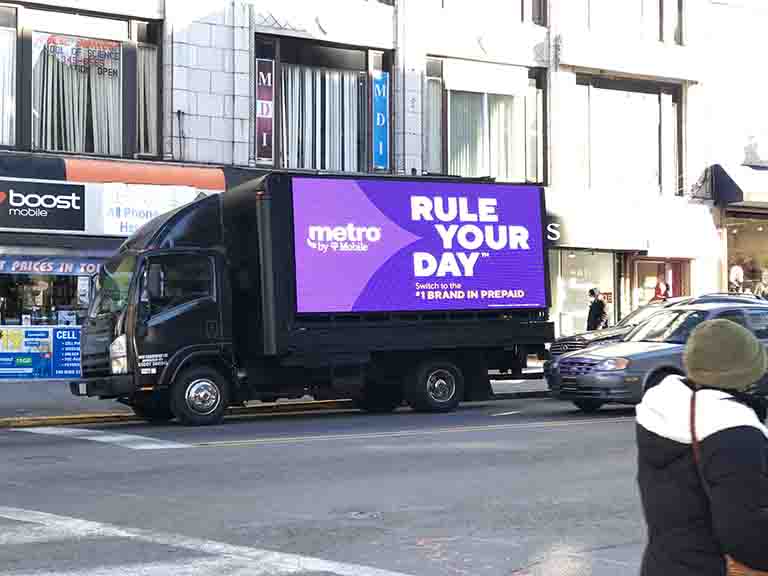
The mobile event marketing company you choose will be the public face of your brand in the field. Here is what to look for, what to avoid, and how to evaluate an agency that will actually deliver.
The mobile event marketing company you choose will have their staff representing your brand at every event stop on your campaign. Their vehicles will carry your brand graphics through city streets. Their logistics decisions will determine whether your activation runs on schedule or falls apart in the field. Choosing the wrong partner is not a minor inconvenience; it is a brand problem that plays out in front of real consumers in real markets.
At American Guerrilla Marketing, we have operated mobile event marketing programs across dozens of markets and have been brought in to rescue campaigns that other agencies mismanaged. We understand what the operational realities of this work look like from the inside, which is why this guide is written with more candor than most agency sales materials contain.
A mobile event marketing company plans, coordinates, and executes brand activation programs using branded vehicles and touring units at events and in consumer environments. The full scope of work includes vehicle sourcing and branding, event calendar research and selection, vendor applications and event access negotiations, field staff recruitment and training, route planning and logistics, real-time field management, documentation, and post-campaign reporting.
The strongest companies own or operate the entire chain. They do not outsource event access negotiations to one vendor, vehicle management to another, and staffing to a third-party temp agency. They have integrated operational capability that maintains quality control across all elements of the program. Fragmented execution, where different vendors manage different components with minimal coordination, is one of the most common causes of mobile event marketing failures.
The scope also includes the less glamorous operational work that makes campaigns run: getting vehicles serviced before departure, building contingency plans for location failures, managing staff callouts on activation days, and ensuring that documentation is captured completely at every stop even when things go sideways. This unglamorous work is where the difference between a strong agency and a weak one is most clearly visible.
The Most Important Questions to Ask
Which Specific Markets Have You Operated In?
Market knowledge cannot be acquired from a map or a database. An agency that has run campaigns in Chicago understands that city’s event calendar, neighborhood dynamics, parking restrictions, consumer behavior patterns, and operational conditions in a way that cannot be replicated through research. Ask for specific campaigns in specific cities. Ask which neighborhoods they activated in. Ask which events they have worked with in those markets. An agency with genuine multi-market experience will give specific, detailed answers. An agency relying on subcontractors will be vague about these specifics.
This matters because the tactical decisions that determine activation quality, where exactly to position on a given street, what time to arrive at a specific event location, how to adapt when a planned stop does not produce the expected traffic, require local knowledge. An agency managing remote markets through subcontractors cannot make those decisions in real time with the precision that a market-experienced team can.
How Is Your Field Staff Recruited and Trained?
There are two fundamentally different staffing models in this industry. Some agencies recruit, train, and manage their own brand ambassador staff. Others place orders with staffing platforms and temp agencies who send available bodies with no brand-specific training or accountability to the agency beyond the day rate. The difference in execution quality between these two models is enormous.
Trained agency staff know the brand they are representing. They have been briefed on the product, the key messages, the target consumer, and the specific activation protocols. They have been through a selection process that screened for brand alignment and consumer engagement skills. They have accountability to the agency that places them, which creates performance expectations that temp placements typically do not face.
Ask specifically: who recruits your brand ambassadors? Who trains them on our brand? Who manages them in the field on activation days? What is the protocol when a staff member performs below standard? What is the backup plan when a staff member does not show up? Strong agencies have clear, specific answers to all of these questions.
Show Me Your Documentation from Past Campaigns
The documentation package an agency delivers after a campaign is the tangible proof of what they executed. Ask to see examples from past campaigns. A strong documentation package includes: photo documentation from each activation location showing the branded unit and consumer interactions, GPS-verified deployment logs showing where and when the team was at each location, consumer contact data and product distribution counts, and a narrative post-campaign summary that provides context for the numbers.
An agency that cannot show you examples of strong documentation from past campaigns is either not producing strong documentation or is protecting client confidentiality in a way that prevents sharing examples. Both warrant follow-up. If the agency says they cannot share documentation examples due to confidentiality, ask if they can share redacted or anonymized examples that show the format and thoroughness of their reporting. If they still cannot produce examples, that is a signal.
Walk Me Through Your Contingency Planning Process
Vehicle breakdowns happen. Staff call out sick. Event access is denied at the last minute. Planned locations are blocked by construction or competing events. Weather turns an outdoor activation into a logistical crisis. These are not rare edge cases; they are common realities on mobile event marketing campaigns. How the agency handles them determines whether a problem becomes a minor inconvenience or a full campaign failure.
Ask the agency to describe their contingency planning process in detail. Ask for a specific example of a major operational problem they encountered on a campaign and how they resolved it. Strong agencies have protocols, they have backup resources, and they have a culture of solving problems in the field rather than escalating them to the client as crises. The way an agency talks about problems they have solved tells you more about their operational competence than the way they describe campaigns that went perfectly.
How Do You Manage Vehicle Maintenance Across a Multi-Week Tour?
The activation vehicle is the single point of failure for the entire program. A vehicle breakdown that is not managed quickly can take an entire activation day offline and create cascading schedule problems. Mobile event marketing companies with serious operational infrastructure have vehicle maintenance schedules built into every tour plan, including pre-departure inspections, mid-tour service checkpoints, and established relationships with breakdown response services in every market on the tour route.
If an agency’s answer to this question is “we have roadside assistance,” that is insufficient for a professional mobile campaign. They should have specific protocols, specific service relationships, and a clear process for what happens if the vehicle is out of service for more than a day.
The agencies that produce the best mobile event marketing campaigns are the ones that have solved every operational problem before it occurs on your campaign. Ask them specifically what problems they have already solved. If they cannot name any, they have not run enough campaigns to have found them yet.
Red Flags in the Evaluation Process
Certain patterns in how agencies present themselves and respond to questions signal operational weaknesses that will appear in the field.
National Presence Claims Without Specifics
An agency that claims to “operate in all major markets” or to have “a national network of brand ambassadors” but cannot give you specific campaigns in specific cities is relying on a claim rather than a record. Ask for specifics. If they pivot away from specifics and back to the general claim, that is a red flag.
Staffing Model Deflection
If an agency deflects the staffing model question or gives vague answers about how they find and train field staff, they are probably using temp placements. This is not always disclosed because it is a known weakness. Press on this question until you have a specific answer about the process, not a general assurance that they only work with “experienced brand ambassadors.”
No Documentation Examples
An agency that declines to show documentation examples without a good reason is either not producing strong documentation or has something to hide about the quality of their past work. This is a genuine red flag. Ask for it twice. If you cannot get examples by the second ask, remove the agency from consideration.
Pricing That Does Not Account for Real Costs
Mobile event marketing has hard costs: vehicles, fuel, maintenance, event access fees, travel, staff rates, logistics. An agency offering pricing significantly below market rate is cutting one or more of these costs in ways that will show up in campaign quality. Understand specifically what is and is not included in any pricing before evaluating it against competitors.
Evaluation Criterion
Strong Agency Response
Weak Agency Response
Market experience
Specific cities, events, neighborhoods
“We operate nationally”
Staffing model
In-house recruitment, training, management
Staffing platforms, temp agencies
Documentation
Full packages with sharable examples
Minimal reporting, no examples available
Contingency planning
Specific protocols + past examples
“We handle issues as they come up”
Vehicle maintenance
Maintenance schedule, service relationships
“We have AAA / roadside assistance”
Pricing transparency
Line-item breakdown of what is included
Lump sum with no breakdown
How Mobile Event Marketing Companies Price Their Work
Understanding pricing structures helps brands evaluate proposals accurately and identify potential gaps between what is priced and what is actually needed for quality execution.
Day Rate Plus Expenses
The agency charges a daily management fee plus actual costs for vehicle, staff, product, event access fees, and travel. This structure is transparent and auditable but requires detailed scope definition upfront. Brands using this structure should request detailed cost estimates for all major expense categories and build in a contingency budget for real-world variations.
Fixed Project Fee
A single fee covers the full defined campaign scope. This provides budget certainty but requires the scope to be very precisely defined upfront. Any scope changes, additional markets, additional activation days, different vehicle requirements, typically require contract amendments and may be priced at premium rates. Fixed fee structures work best when the brand knows exactly what it wants and the scope is unlikely to change.
Retainer Plus Per-Event Costs
A monthly retainer covers ongoing program management, event calendar maintenance, vendor relationships, and planning work, while individual activation events are priced separately at a per-event or per-day rate. This structure works well for brands running sustained programs across a season or year. The retainer relationship allows for more integrated planning and better event access over time, and the per-event pricing keeps activation costs tied to actual activation volume.
What the Best Mobile Event Marketing Companies Have in Common
Across the companies that consistently produce strong mobile event marketing results, certain traits appear consistently.
They have deep market knowledge that comes from years of operating in specific cities, not from research or from managing subcontractors. Their field managers have personal relationships with the venues, event organizers, and neighborhood contexts that allow them to navigate operational challenges that newer agencies or out-of-market agencies cannot.
They invest in their staff. Their brand ambassadors are not interchangeable warm bodies; they are selected for brand alignment, trained on specific client brands, and managed to performance standards that reflect the quality of the brand they are representing. Staff investment is the single biggest difference between a mobile event marketing company that produces consistent results and one that produces inconsistent ones.
They treat documentation as a core product. Their post-campaign reports are detailed, honest, and provide brand leadership with a genuine basis for evaluating performance and making future investment decisions. They do not pad documentation with impressive-looking but uninformative metrics; they provide the specific evidence that allows the brand to assess what the campaign actually accomplished.
They are honest about their own limitations. They do not oversell markets where they lack genuine experience. They tell clients when a campaign scope exceeds what a given budget can support quality execution at. They raise problems early rather than discovering them at campaign launch. This honesty is often uncomfortable in a sales process, but it is the foundation of a client relationship that produces good work.
How AGM Approaches Mobile Event Marketing
At American Guerrilla Marketing, we have been running mobile event marketing programs since the company’s founding. We have operated campaigns in New York, Los Angeles, Chicago, Miami, Atlanta, Dallas, Houston, Boston, Philadelphia, Washington D.C., San Francisco, Seattle, Austin, Nashville, and dozens of other markets. We have our own field managers, our own training systems for brand ambassador staff, and our own documentation protocols that we apply to every campaign.
We do not subcontract field management in markets we operate in. When we take on a mobile event marketing campaign, our team manages it. This means clients have a single point of accountability for everything that happens in the field, and we take that accountability seriously.
We also build contingency planning into every campaign from the start. Vehicle maintenance schedules, backup location plans for underperforming stops, weather protocols for outdoor activations, staff backup rosters: these are not afterthoughts. They are built into the operational plan before the first activation day.
Working with Mobile Event Marketing Companies: What to Expect
The engagement process with a professional mobile event marketing company starts with a brief: your brand, your consumer, your target markets, your campaign timeline, and your budget parameters. A strong agency responds with a strategy that reflects genuine understanding of your brand and your consumer, not a standard proposal template with your logo added.
From the initial brief to campaign launch, a well-run mobile event marketing engagement includes a planning phase that covers event calendar research and selection, vendor access negotiation, vehicle logistics, staff recruitment and training, documentation protocol establishment, and contingency planning. This planning phase typically takes four to twelve weeks depending on program complexity.
During execution, the agency should provide regular communication about field performance: daily reports from active activation days, real-time communication about any problems or changes that arise, and ongoing photo documentation that allows brand leadership to see the program in action without being present in the field. Post-campaign, the agency delivers a comprehensive report that covers all performance data and provides the brand with a clear record of what was accomplished.
Red Flags After Campaign Launch
Even after a campaign begins, certain signals indicate that the agency is not managing it at the level the brand should expect. Delayed or incomplete field reports signal inadequate documentation systems. Staff behavior that does not reflect the brand brief signals inadequate training. Locations that consistently underperform without the agency adapting the strategy signal field management that is reactive rather than proactive.
The most serious post-launch red flag is silence. An agency that goes quiet during a campaign, providing minimal communication and limited documentation, is typically managing problems rather than reporting them. Professional agencies communicate problems early, propose solutions, and keep clients informed even when the news is not good. An agency that surfaces problems only when they cannot be concealed any longer is not a trustworthy partner.
AGM maintains transparent, real-time communication with clients throughout all campaigns we manage. Field managers have direct communication lines with client contacts, and significant field developments, positive or negative, are communicated promptly. This transparency is not just a service standard; it is the foundation of a client relationship that produces better work over time because both sides have the same information about what is happening in the field.
What Strong Mobile Event Marketing Companies Do Differently
The operational patterns that distinguish strong mobile event marketing companies from mediocre ones are consistent enough to be instructive. Understanding these patterns helps brands evaluate agencies more accurately and set expectations for what professional program management looks like.
Strong agencies lead with problems, not solutions. When they present a program proposal, they start by articulating the specific consumer challenges the brand faces and the specific outcomes the program is designed to produce. Agencies that lead with their vehicles, their staff roster, or their production capabilities before establishing a clear understanding of the brand’s situation are optimizing for what impresses in a pitch rather than for what works in the field.
Strong agencies are granular about location strategy. They do not say they will “find great locations in Chicago”; they say they will activate at Wicker Park Fest, outside Green City Market, and at two specific fitness studio locations on the north side during the morning workout window. This level of specificity reflects genuine market knowledge and genuine activation planning rather than placeholder promises.
Strong agencies track field performance in real time and communicate what they observe. They do not wait until the post-campaign report to tell the client that activation days three through five in a given market underperformed because the planned locations had lower consumer traffic than expected. They communicate this during the program and propose adjustments before more days are lost to underperforming locations.
Strong agencies treat the post-campaign report as a genuine analytical document. It tells the brand what worked, what did not, and why. It provides specific evidence for decisions the brand should make about future investment: which markets to prioritize, which event types produced the best results, which staff configurations were most effective. A post-campaign report that is primarily a collection of photos and a consumer contact number is not a strategic document; it is a receipt for services rendered.
Building the Right Partnership Structure
The right engagement structure for a mobile event marketing company depends on your program volume and timeline. For single campaigns, a project-based engagement with a clear scope and deliverables is appropriate. For brands with ongoing activation needs across multiple seasons or markets, a retained partnership produces significantly better results because it allows the agency to build genuine market knowledge, staff relationships, and event access that improve program quality over time.
Retainer relationships also change the dynamic of the working relationship from transactional to collaborative. An agency on retainer is invested in the brand’s long-term success, not just in executing a single campaign. They bring proactive ideas, flag market opportunities before they need to be sought out, and invest in the institutional knowledge about the brand that makes each successive program more effective than the last.
AGM works with several clients on a retainer basis for exactly these reasons. The programs we run for retained clients consistently outperform comparable project-based programs on a per-dollar basis because the accumulated market knowledge, staff quality, and event relationships that the retained relationship builds do not need to be rebuilt from scratch each time.
Frequently Asked Questions
Which Specific Markets Have You Operated In?
Market knowledge cannot be acquired from a map or a database. An agency that has run campaigns in Chicago understands that city’s event calendar, neighborhood dynamics, parking restrictions, consumer behavior patterns, and operational conditions in a way that cannot be replicated through research. Ask for specific campaigns in specific cities. Ask which neighborhoods they activated in. Ask which events they have worked with in those markets. An agency with genuine multi-market experience will give specific, detailed answers. An agency relying on subcontractors will be vague about these specifics.
How Is Your Field Staff Recruited and Trained?
There are two fundamentally different staffing models in this industry. Some agencies recruit, train, and manage their own brand ambassador staff. Others place orders with staffing platforms and temp agencies who send available bodies with no brand-specific training or accountability to the agency beyond the day rate. The difference in execution quality between these two models is enormous.
How Do You Manage Vehicle Maintenance Across a Multi-Week Tour?
The activation vehicle is the single point of failure for the entire program. A vehicle breakdown that is not managed quickly can take an entire activation day offline and create cascading schedule problems. Mobile event marketing companies with serious operational infrastructure have vehicle maintenance schedules built into every tour plan, including pre-departure inspections, mid-tour service checkpoints, and established relationships with breakdown response services in every market on the tour route.