Marketing Brand Activation Ideas | American Guerrilla Marketing
The activation ideas that produce results are not the most elaborate ones. They are the ones built on clear consumer insight, executed in the right place, by the right people, at the right time.
Most brand activation ideas sound reasonable in a meeting. They look plausible in a deck. They get approved by decision-makers who nod along and sign off. And then they hit the real world and fall completely flat. Not because the concept was inherently bad, but because the people designing it were thinking about what would look impressive rather than what would actually engage a real consumer in a real environment.
At American Guerrilla Marketing, we have run enough activations to know what separates the ones that deliver from the ones that disappoint. It is rarely the budget. It is rarely the creative concept. It is almost always the combination of consumer insight, location strategy, and execution quality. This guide covers the activation ideas that actually work, broken down by format, with the logic behind each one.
Before listing specific ideas, it helps to understand what makes any activation idea worth pursuing. There are four tests worth applying to every concept.
Does it reach the right consumer at the right moment?
A strong activation idea puts the brand in front of the right consumer when that consumer is most receptive. A protein supplement brand that activates outside a gym at 6am is reaching a highly relevant consumer in a moment of genuine need. The same brand activating at a shopping mall on a Tuesday afternoon is reaching an unfiltered audience with low probability of relevance. The idea is the same. The context is completely different, and the context determines the outcome.
Does it create a genuine product experience?
Activations that generate a real product experience, a taste, a hands-on demo, a conversation with someone who actually knows the product, convert at dramatically higher rates than activations that are purely visual. If the consumer can try the product, taste it, feel it, see it work, or hear a knowledgeable explanation of what it does, the activation is doing its job. If the consumer can only look at a branded structure and walk away, the activation is doing something closer to outdoor advertising than to experiential marketing.
Is there a clear consumer action?
Every activation idea should be tied to a specific action you want the consumer to take. Try this sample. Scan this code. Visit this retailer. Follow this account. Sign up for early access. The activation should be designed to make that action easy, obvious, and desirable. Activations without a clear consumer action produce pleasant memories and nothing else.
Can it actually be executed in the field?
An activation idea that requires conditions that rarely exist in the real world is not a useful activation idea. If it depends on perfect weather, a perfectly clean urban location with zero competitive clutter, and consumers who have unlimited time to spend with your brand, it will fail in practice. Good activation ideas are built for the real field environment: variable weather, competing claims on consumer attention, time pressure, and the hundred other realities of executing marketing in public spaces.
The best activation idea is the simplest one that puts your product in the right consumer’s hands at the right moment. Complexity is not a substitute for consumer insight.
Sampling-Based Activation Ideas
Sampling is the most direct form of brand activation and often the highest-return format for brands in categories where the product experience is the primary driver of conversion.
Morning Commuter Sampling at Transit Exits
Deploying sampling teams at subway exits, bus stops, or transit hubs during the morning commute window creates high-volume consumer contact with the demographic most likely to adopt a new brand. The consumer is already in motion, they have limited time for extended engagement, and the transaction needs to be fast and easy. Samples need to be portable, individually packaged, and appropriate for immediate consumption or easy transport. Staff should be brief, energetic, and focused on getting the product into hands rather than delivering a full brand pitch in a thirty-second window.
This format works particularly well for beverage, snack, energy product, and personal care brands. The volume of contacts per hour is high, and the relevance to commuters varies by product but is generally strong for consumables.
Post-Workout Sampling at Fitness Locations
Sampling at gym exits after classes or workout sessions creates one of the most contextually relevant consumer moments available for health, nutrition, and performance brands. The consumer has just exercised. They are in a heightened state of physical awareness, they are thinking about recovery and nutrition, and they are in exactly the mindset where a well-positioned health product is genuinely welcome rather than intrusive.
The logistical requirements include understanding the class schedule of the target locations, positioning staff at the right exit points, and managing the sample supply chain for products that may need to be kept cold. AGM has run post-workout sampling programs at CrossFit gyms, boutique fitness studios, and running events across multiple markets.
Farmers Market and Specialty Retail Adjacency
Farmers markets and specialty retailers draw a consumer profile that over-indexes heavily for natural, premium, and effective brands. Activating adjacent to these locations provides access to a self-selected audience that is already in a discovery mindset, already comfortable spending on premium products, and already predisposed toward the kinds of brands that typically use experiential activation. This format is especially effective for natural food, beverage, personal care, and wellness brands.
Event-Adjacent Sampling
Major events, runs, cultural festivals, concerts, sporting events, create concentrated consumer gatherings with predictable demographic profiles. An athletic wear brand at a half-marathon finish line. A snack brand at a film festival. A beverage brand at an outdoor concert. Each of these represents a moment where the brand can reach a high concentration of the right consumer in a context that amplifies the brand’s relevance. AGM’s event calendar knowledge across major markets allows us to build sampling programs that align with the most valuable event moments for a given brand.
Mobile and Touring Activation Ideas
Mobile activation ideas are built around bringing the brand to the consumer rather than waiting for the consumer to come to the brand.
Neighborhood Circuit Tour
A neighborhood circuit tour deploys a branded vehicle or mobile activation unit through a series of neighborhoods in a single city over one to three days, making stops at specific high-traffic locations within each neighborhood. The routing is built around consumer density, not around convenience or aesthetics. Stops might include a location near a park where the target consumer spends weekend mornings, a corner near a coffee shop they frequent, a spot adjacent to a farmers market or specialty grocer.
The key to this format is the micro-routing work. Knowing which specific streets in Williamsburg or Wicker Park or Silver Lake have the highest relevant foot traffic at which times requires the kind of neighborhood-level knowledge that most activation planning does not include. AGM builds routing plans based on direct market knowledge, not just on general traffic data.
Multi-City Launch Tour
For brand launches and new product introductions, a multi-city mobile tour creates market-by-market momentum and builds consumer trial before retail distribution rolls out. The strategic logic is simple: consumers who have already tried and liked a product are far more likely to purchase it when they encounter it on a shelf. A tour that precedes retail availability by three to six weeks creates a pull-through effect that can significantly accelerate sell-through after launch.
Multi-city tour planning requires careful coordination of vehicle logistics, staff management across markets, product supply chain, and documentation protocols that maintain consistency across all markets while allowing for local adaptation in response to consumer feedback and field conditions.
College Campus Circuit
For brands targeting younger consumers, a college campus circuit provides access to a concentrated, highly social demographic in the environments where they spend most of their time. The best campus activations are timed to natural moments of high student engagement: move-in week, fall welcome events, football home games, spring festivals. Staff for campus activations need to feel peer-level to students; the activation fails if it feels corporate or inauthentic in a campus environment.
Residential Neighborhood Activation
For CPG brands with retail distribution, activating in residential neighborhoods on weekend mornings creates access to consumers in their natural environment. A branded mobile unit parked near a community park or a busy neighborhood coffee shop on a Saturday morning can reach the exact consumer who will be standing in front of your product in the grocery store later that afternoon. The sample they received that morning changes the likelihood of that grocery store purchase.
Activation Idea
Best Consumer
Best Market
Primary Goal
Transit exit sampling
Urban commuters
Dense cities (NYC, Chicago)
High-volume trial
Post-workout sampling
Fitness-oriented adults
All major markets
High-relevance trial
Farmers market adjacency
Natural/premium consumers
Suburban + urban
Category-aligned trial
Neighborhood circuit tour
Neighborhood residents
Urban / dense suburban
Local market coverage
Multi-city launch tour
Category enthusiasts
National priority markets
Pre-retail trial at scale
College campus circuit
Students 18-24
Major university cities
Youth market adoption
Experiential and Pop-Up Activation Ideas
Experiential activations create brand environments that allow consumers to engage more deeply with the brand story and product. The best ideas in this format create genuine experiences, not just aesthetically interesting spaces.
Product Tasting or Demo Experience
A curated product experience format, where consumers try multiple products or product configurations in a sequence guided by knowledgeable staff, creates a depth of engagement that sampling alone cannot match. The consumer leaves with actual product knowledge, not just a single taste. This format works especially well for food, beverage, beauty, and wellness brands where the range of the product line is part of the value proposition.
Skill or Knowledge Transfer Event
Brands that have genuine expertise associated with their category can build activations around transferring that expertise to consumers. A cooking brand that runs a cooking demonstration. A skincare brand that provides skin analysis and product recommendations. A fitness brand that runs a training session. These activations work because they deliver real value to the consumer, value that exists independent of the commercial transaction, and that value builds brand credibility in a way that pure sampling cannot.
Community Event Sponsorship with Brand Integration
Rather than building a standalone activation from scratch, some of the most effective brand activation ideas involve integrating the brand into a community event that already has the right audience. Local runs, outdoor film screenings, neighborhood markets, music events, and sports leagues all attract concentrated gatherings of specific consumer profiles. A brand that sponsors and integrates into these events authentically reaches consumers in a context where the brand fits naturally rather than imposing itself on an unrelated space.
Neighborhood Pop-Up in an Unconventional Location
Locating a pop-up activation in an unconventional but contextually relevant space can create a surprise and memorability that a conventional activation venue does not. A brand associated with outdoor life activating in a public park. A food brand activating in a community garden. A fitness brand setting up on the roof of a co-working space. The location choice communicates something about the brand’s identity and creates a story that the activation itself might not generate.
The most memorable activations we have run were not the most expensive. They were the ones where the idea, the location, and the consumer moment all lined up. When those three things connect, the activation feels inevitable.
Retail Activation Ideas
Retail activation ideas operate at or near the point of purchase and are designed to convert consumer interest into buying behavior.
In-Store Demo Program
A staffed in-store demo program at retail gives the brand a direct presence at the point of purchase. Staff demonstrate the product, answer questions, and provide samples or trial opportunities to consumers who are already in a buying mindset. The proximity to the shelf means that consumers who have a positive product interaction can immediately convert to purchase. Well-executed in-store demo programs consistently drive unit velocity increases during the demo period and sustained lift afterward.
Retailer Partnership with Event Tie-In
Tying a retail activation to a local event creates a temporal urgency that standard in-store programs do not have. A brand that activates at twenty grocery stores in Chicago during the week of a major sports event, with themed displays and in-store sampling, creates a moment that feels relevant and timely rather than generic. The event provides the reason for the activation, and the activation provides the brand with a reason to be present in the consumer’s life at a moment when they are spending more time at retail.
Loyalty and Trial Conversion Program
Retail activations designed to convert trial consumers into repeat purchasers are among the highest-return activation investments available. A consumer who tries a product for the first time in a sampling activation is not yet a customer; a consumer who purchases the product a second time is. Building a retail program specifically designed to bridge that gap, through in-store sampling tied to a coupon or incentive for a second purchase, for example, can significantly improve the long-term ROI of the broader sampling and activation program.
Street-Level and Guerrilla Activation Ideas
Street-level activation ideas use the density and character of urban environments to create consumer contact in the places where people actually spend time.
A well-deployed street team in the right neighborhood is one of the most cost-effective activation formats available. Staff move through the neighborhood, engaging consumers naturally, distributing samples or materials, and creating genuine encounters with the brand. The key variables are neighborhood selection, staff quality, and the clarity of the consumer interaction protocol. Street teams that wander without direction or that operate in the wrong neighborhoods are wasted spend. Street teams deployed with precision in the right places at the right times create meaningful consumer volume.
Unexpected Installations in Urban Spaces
An unexpected brand installation in an urban space can create a memorable encounter that generates organic conversation and social sharing. The installation should be genuine to what the brand is, not just visually striking. A brand associated with craft and making might install a live production demonstration in a public square. A brand associated with outdoor adventure might install a small climbing wall in an urban park. The installation communicates the brand’s identity through action rather than messaging.
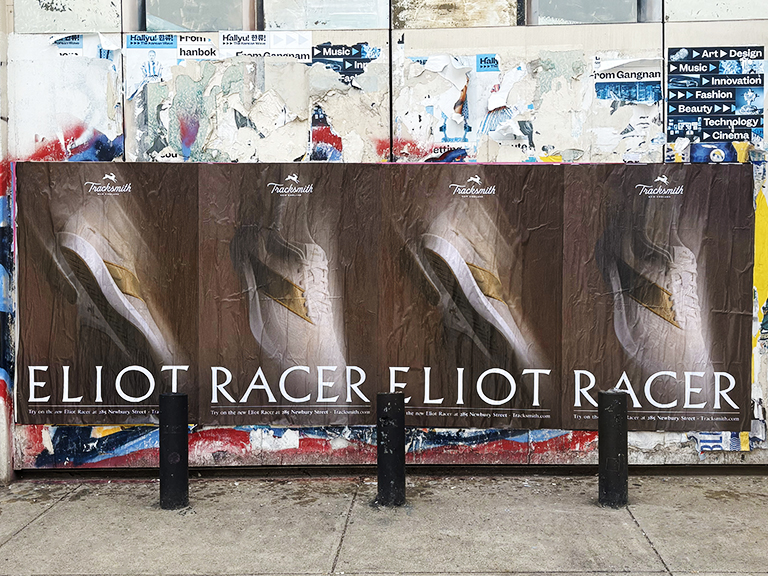
Neighborhood-Specific Poster and Brand Presence Campaign
A poster campaign using wheat paste or other formats in neighborhoods where the target consumer is concentrated, combined with a street team presence and potentially a pop-up, creates a multi-touchpoint brand presence within a specific geographic area. This kind of concentrated geographic approach, sometimes called a neighborhood takeover, is especially effective for new brands trying to establish credibility in specific cultural communities, or for established brands trying to reach a new demographic segment through their own neighborhood.
Activation Ideas by Brand Stage
The right activation idea also depends on where the brand is in its development cycle. Early-stage brands have different needs and constraints than established national brands.
Early-Stage Brands
For brands in the early stages of building consumer awareness and trial, the priority is getting the product in front of the right people in the most relevant possible context. Concentration over diffusion is the operating principle: choose one market, choose the best neighborhoods and venues in that market, deploy with precision, and generate the deepest possible consumer engagement rather than spreading thinly across multiple markets with minimal impact in any of them.
Early-stage brands also benefit from founder involvement in activations. A founder who shows up at a farmers market to sample their own product and talk about why they made it creates an authenticity that a paid brand ambassador cannot replicate. That authenticity builds the kind of brand loyalty that scales when the brand does.
Mid-Stage Brands
Brands with established distribution in one or more markets and growing consumer awareness are ready to invest in broader activation programs. Multi-city tours, retail demo programs across key accounts, and event-based activations tied to the brand’s category culture are all appropriate at this stage. The focus shifts from establishing initial trial to building frequency and habit formation among consumers who have already tried the product.
National Brands
For national brands with broad distribution and awareness, activation investment is often focused on category occasions, event properties, and retail programs tied to seasonal or cultural moments. The objective is no longer primarily trial generation; it is reinforcing preference, creating new occasions for engagement, and maintaining the kind of direct consumer contact that keeps the brand culturally relevant in ways that advertising cannot sustain on its own.
The Common Thread Across Successful Activation Ideas
Looking across all the activation ideas that actually produce results, one pattern is consistent: they start with the consumer rather than with the format. The question is never “what kind of activation should we do” but rather “where is our consumer, when are they most receptive, and what format creates the most genuine brand encounter in that specific context.”
A sampling program at a gym is not just a sampling program. It is a decision to meet a health-oriented consumer in the context that makes your product most relevant to them, at the time of day when that relevance is highest. A neighborhood pop-up in a specific Brooklyn neighborhood is not just a pop-up. It is a decision to place the brand in a community whose values and identity align with what the brand stands for. The location is the message, as much as the product or the staff or the creative.
When you internalize this consumer-first logic, activation ideas stop feeling like a checklist of formats and start feeling like a natural consequence of understanding your consumer. The right idea becomes obvious when you know enough about who you are trying to reach and where they live and spend time. The work then shifts from coming up with ideas to executing the right one with enough precision and discipline that it actually lands.
AGM works with brands through exactly this process. We start with the consumer insight. We map the formats that fit that insight and that operational context. We eliminate the ones that do not fit the brand’s identity or budget. What remains is a focused, executable activation plan that is specific enough to produce results and flexible enough to adapt to real field conditions. That is the difference between an activation idea and an activation program.
Frequently Asked Questions
Does it reach the right consumer at the right moment?
A strong activation idea puts the brand in front of the right consumer when that consumer is most receptive. A protein supplement brand that activates outside a gym at 6am is reaching a highly relevant consumer in a moment of genuine need. The same brand activating at a shopping mall on a Tuesday afternoon is reaching an unfiltered audience with low probability of relevance. The idea is the same. The context is completely different, and the context determines the outcome.
Does it create a genuine product experience?
Activations that generate a real product experience, a taste, a hands-on demo, a conversation with someone who actually knows the product, convert at dramatically higher rates than activations that are purely visual. If the consumer can try the product, taste it, feel it, see it work, or hear a knowledgeable explanation of what it does, the activation is doing its job. If the consumer can only look at a branded structure and walk away, the activation is doing something closer to outdoor advertising than to experiential marketing.
Is there a clear consumer action?
Every activation idea should be tied to a specific action you want the consumer to take. Try this sample. Scan this code. Visit this retailer. Follow this account. Sign up for early access. The activation should be designed to make that action easy, obvious, and desirable. Activations without a clear consumer action produce pleasant memories and nothing else.
Can it actually be executed in the field?
An activation idea that requires conditions that rarely exist in the real world is not a useful activation idea. If it depends on perfect weather, a perfectly clean urban location with zero competitive clutter, and consumers who have unlimited time to spend with your brand, it will fail in practice. Good activation ideas are built for the real field environment: variable weather, competing claims on consumer attention, time pressure, and the hundred other realities of executing marketing in public spaces.